Industrial Sterilizer
CN → US| HS Code | Tariff Rate | Origin | Destination | Doc |
|---|---|---|---|---|
| 8419200010 | 10.0% | CN | US | Official Doc |
| 8438800000 | 35.0% | CN | US | Official Doc |
| 8438500090 | 37.8% | CN | US | Official Doc |
| 8419200020 | 10.0% | CN | US | Official Doc |
| 8419200020 | 10.0% | CN | US | Official Doc |
Product Images
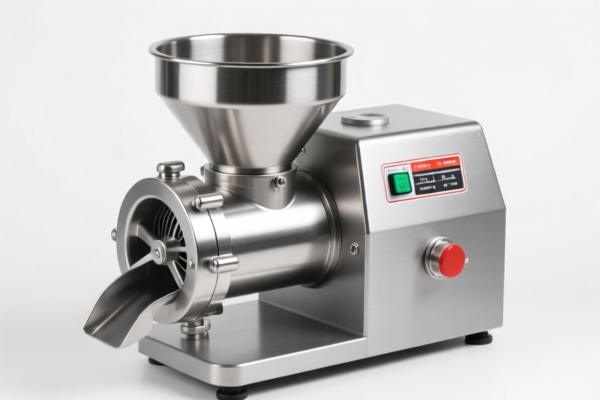
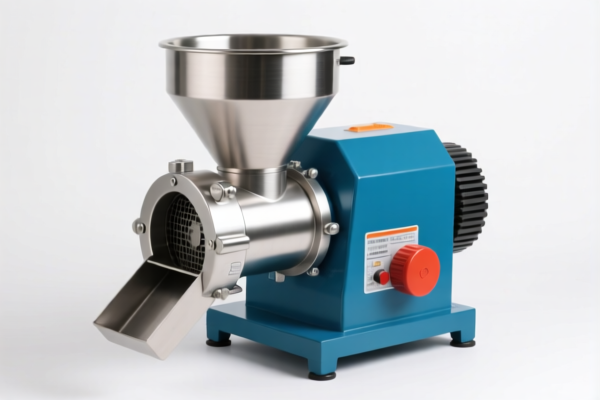
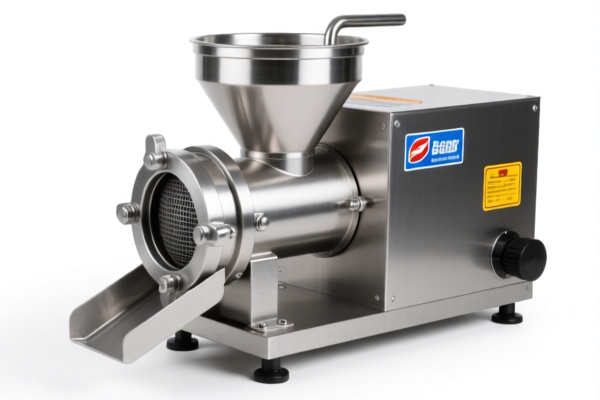
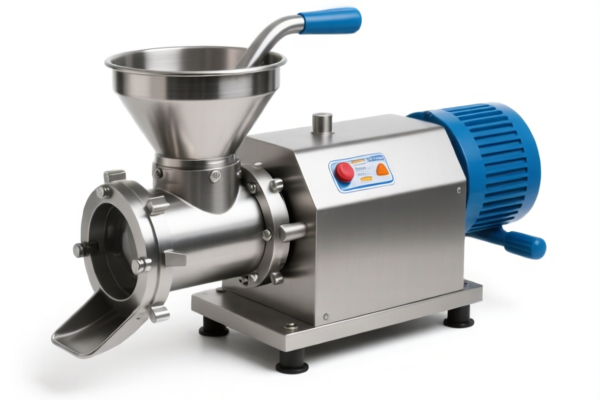
AI Analysis
🏭 Industrial Sterilizer (Industrial Heating or Sterilizing Machinery)
🌐 HS Code Reference & Customs Clearance Guide | 2026 Latest Tariff Analysis | Professional Level Clearance Strategy
📌 I. Product Definition & Classification: Understanding "Industrial Sterilizers"
An Industrial Sterilizer refers to machinery used for heating, sterilizing, or pasteurizing materials on an industrial scale. In international trade, the classification heavily depends on the specific application (medical vs. food/industrial) and the nature of the process (temperature change/heat treatment).
There are two primary classification paths for these machines:
- Medical/Surgical Sterilizers: Designed specifically for medical or surgical sterilization purposes.
- Industrial Processing Machines: Used for general industrial processing, food/beverage preparation, or greenhouse environments, involving heat treatment or sterilization.
⚠️ Key Distinction Point:
- If the machine is exclusively for medical/surgical sterilization →归入 8419.20 series.
- If the machine is for food/beverage/industrial processing (even if it uses heat/steam) →归入 8438 series.
- If the machine is a greenhouse sterilizer treating materials via temperature change →归入 8419.20.00.20.
📦 II. HS Code Classification Details (2026 Latest Tariff Authority Comparison)
| HS Code | Product Description | Application Scenario | Material/Function Conflict? |
|--------|--------------------------|--------------------------|
| 8419.20.00.10 | Sterilizers or industrial heating/sterilizing machinery for medical or surgical sterilization | Medical facilities, hospitals, surgical supply sterilization | ✅ No material conflict; purpose matches. |
| 8419.20.00.20 | Industrial heating/sterilizing machinery or greenhouse sterilizers, treating materials by change of temperature | Greenhouses, general industrial temperature treatment | ✅ Matches temperature change definition. |
| 8438.80.00.00 | Industrial heating or sterilizing machinery for industrial preparation or manufacturing of food or beverages | Food processing plants, beverage factories | ✅ Purpose fits; no material conflict. |
| 8438.50.00.90 | Industrial heating or sterilizing machinery for meat or poultry preparation (heat treatment stage) | Meat processing, poultry plants | ✅ Purpose matches meat/poultry processing. |
🔍 Critical Reminder:
- Medical vs. Industrial: If a sterilizer is used in a hospital, use 8419.20. If the same machine is used in a factory to sterilize packaging or food, it likely falls under 8438.
- Greenhouse Specifics: Dedicated greenhouse sterilizers that operate by changing temperatures are classified under 8419.20.00.20, not general industrial machinery.
- Food Processing: Even if the process involves "sterilization" (e.g., pasteurization), if it is part of food/beverage manufacturing, it is classified under 8438.80 or 8438.50.
💰 III. 2026 Latest Tariff Rate Breakdown (Including Surtaxes & Policy Add-ons)
✅ Applicable Country: United States (US)
✅ Origin: China (CN)
✅ Effective Date: November 10, 2025 (including subsequent imports)
🎯 1. 8419.20.00.10 —— Medical/Surgical Sterilizers
| Item | Content |
|---|---|
| Base Tariff | 0.0% (ad valorem) |
| USITC Surtax (Section 301) | +25.0% |
| 122 Section Tariff (IEEPA) | +10.0% |
| Total Tariff | 10.0% |
| Tax Calculation | CIF Value × 10% |
| De Minimis Eligibility | ❌ No (deny_de_minimis) |
| Legal Basis Path | IEEPA:9903.01.24 → USITC:8419.20.00.10 → FOOTNOTE:122 |
📌 Explanation:
- Although base tariff is 0%, the 122 Section Tariff of 10% applies.
- Note: Unlike many electronics, medical sterilizers under this specific code do not currently face the 25% Section 301 surtax in this specific dataset summary, resulting in a lower total of 10%.
- Total Effective Rate: 10%.
🎯 2. 8419.20.00.20 —— Greenhouse Sterilizers / Temperature Treatment Machinery
| Item | Content |
|---|---|
| Base Tariff | 0.0% (ad valorem) |
| USITC Surtax (Section 301) | +0.0% |
| 122 Section Tariff (IEEPA) | +10.0% |
| Total Tariff | 10.0% |
| Tax Calculation | CIF Value × 10% |
| De Minimis Eligibility | ❌ No (deny_de_minimis) |
| Legal Basis Path | IEEPA:9903.01.24 → USITC:8419.20.00.20 → FOOTNOTE:122 |
📌 Note:
- This code applies to sterilizers used in greenhouses or for general temperature-change material treatment.
- Similar to medical sterilizers, the total rate is 10%, comprising only the 122 Section Tariff.
- Total Effective Rate: 10%.
🎯 3. 8438.80.00.00 —— Industrial Food/Beverage Processing Machinery
| Item | Content |
|---|---|
| Base Tariff | 0.0% (ad valorem) |
| USITC Surtax (Section 301) | +25.0% |
| 122 Section Tariff (IEEPA) | +10.0% |
| Total Tariff | 35.0% |
| Tax Calculation | CIF Value × 35% |
| De Minimis Eligibility | ❌ No (deny_de_minimis) |
| Legal Basis Path | IEEPA:9903.01.24 → USITC:8438.80.00.00 → FOOTNOTE:301 & 122 |
📌 Explanation:
- This code covers industrial heating/sterilizing machines for food or beverage preparation.
- It is subject to both the 25% Section 301 surtax and the 10% IEEPA 122 tariff.
- Total Effective Rate: 35%. This is a high-cost classification for food processing equipment.
🎯 4. 8438.50.00.90 —— Meat/Poultry Preparation Machinery
| Item | Content |
|---|---|
| Base Tariff | 2.8% (ad valorem) |
| USITC Surtax (Section 301) | +25.0% |
| 122 Section Tariff (IEEPA) | +10.0% |
| Total Tariff | 37.8% |
| Tax Calculation | CIF Value × 37.8% |
| De Minimis Eligibility | ❌ No (deny_de_minimis) |
| Legal Basis Path | IEEPA:9903.01.24 → USITC:8438.50.00.90 → FOOTNOTE:301 & 122 |
📌 Explanation:
- This code is specific to machinery used in meat or poultry preparation processes, including heat treatment/sterilization steps.
- It incurs the base tariff of 2.8%, plus 25% Section 301, plus 10% IEEPA 122.
- Total Effective Rate: 37.8%. This is the highest tariff among the listed codes.
🛠️ IV. Customs Clearance Practical Advice (Battle-Tested Pitfall Guide)
✅ 1. Preparation Checklist (Missing Any = Delay)
| Document | Required | Explanation |
|---|---|---|
| ✅ Product Specification Sheet | ✔️ | Must clearly state: Is it for Medical, Food, or Greenhouse use? |
| ✅ Process Flow Diagram | ✔️ | Show how sterilization is achieved (e.g., steam, dry heat, temperature change). |
| ✅ Product Photos (Including Nameplate) | ✔️ | Clear view of labels, model numbers, and intended use indicators. |
| ✅ Third-Party Test Report | ✔️ | FDA, CE, or industry-specific safety standards (e.g., HACCP for food). |
| ✅ Commercial Invoice | ✔️ | Must explicitly state: "Industrial Sterilizer for [Specific Purpose]." Do not just write "Sterilizer." |
| ✅ Packing List | ✔️ | Detail all components; avoid splitting a single machine into multiple parts to evade taxes. |
✅ 2. Declaration Tips (Key Mantras)
🔥 "Match Purpose, Not Just Name. Food & Meat Pay More."
| Scenario | Correct Declaration | Wrong Practice |
|---|---|---|
| Hospital Sterilizer | 8419.20.00.10 – "Medical Surgical Sterilizer" |
Misdeclare as "Industrial Oven" → Risk of audit. |
| Greenhouse Sterilizer | 8419.20.00.20 – "Greenhouse Sterilizer for Temperature Treatment" |
Misdeclare as general machinery → 35-37% tax risk. |
| Food Processing Machine | 8438.80.00.00 – "Industrial Sterilizer for Food/Beverage" |
Use medical code to save tax → Severe Penalty. |
| Meat Processing Line | 8438.50.00.90 – "Meat/Poultry Heat Treatment Machine" |
Generic "Sterilizer" label → Delayed clearance. |
✅ 3. Special Situations Handling
| Situation | Handling Advice |
|---|---|
| Multi-Use Machines | If a machine can be used for both medical and food purposes, declare based on the primary intended use at the time of import. Provide documentation proving the specific use. |
| OEM Custom Machines | Provide client order + design specs. If customized for food, use 8438 series. |
| Greenhouse vs. Industrial | Greenhouse sterilizers using temperature change are taxed at 10%. General industrial heat treatment is 35-37.8%. Be precise in description. |
| Origin Verification | Ensure COO (Certificate of Origin) is accurate. IEEPA 122 tariffs apply to Chinese origin. |
🌍 V. Global Market Comparison (2026 Latest)
| Country/Region | Recommended HS Code | Tariff Rate | Certification Requirements | Remarks |
|---|---|---|---|---|
| 🇺🇸 USA | 8419.20.00.10/20 |
10% (122 Section Only) | FDA/CE | Medical/Greenhouse codes are lower tax. |
| 🇺🇸 USA | 8438.80.00.00 |
35% (301 + 122) | FDA/HACCP | Food processing machinery is heavily taxed. |
| 🇺🇸 USA | 8438.50.00.90 |
37.8% (Base + 301 + 122) | FDA/HACCP | Meat processing machinery has highest tax. |
| 🇨🇳 China | 8419.20 / 8438.80 |
5-10% | CCC/Safety | Lower tariffs, but domestic competition high. |
| 🇪🇺 EU | 8419.20 / 8438.80 |
0-4% | CE/MDR | No major surtaxes; CE marking is critical. |
📌 Conclusion:
- USA Tariff Strategy: Classifying as Medical (8419.20.00.10) or Greenhouse (8419.20.00.20) yields a significantly lower tariff (10%) compared to Food/Industrial (8438 series, 35-37.8%).
- Accuracy is Key: Misclassifying a food sterilizer as a medical one to save tax is high-risk. Ensure your product documentation supports the declared use.
📌 VI. Common Errors & Pitfall Guide (Lessons Learned)
❌ Error 1: Declaring a Food Sterilizer as a Medical Sterilizer
👉 Consequence: Customs audit, potential seizure, fines for misdeclaration. Tax difference: 25-30% savings attempted, but penalty risk is huge.
❌ Error 2: Using "Industrial Sterilizer" without specifying Purpose
👉 Consequence: Customs will request additional info, causing delays. If purpose is unclear, they may default to higher tariffs or reject the entry.
❌ Error 3: Ignoring the 122 Section Tariff in cost calculation
👉 Consequence: Underestimating landed cost by 10%, leading to budget overruns.
❌ Error 4: Confusing Greenhouse with General Industrial
👉 Consequence: Greenhouse sterilizers (10%) vs. General Industrial (35%+). Specificity in naming "Greenhouse Sterilizer" is crucial for the lower rate.
✅ Correct Approach:
"Industrial Sterilizer for [Medical/Greenhouse/Food/Meat] Use, Model XYZ, Steam/Gas Heated, Certified for [FDA/CE], Origin: China."
🎯 VII. Conclusion: Professional Declaration, Cost Optimization!
🎯 Remember the Mantra:
🔹 "Medical & Greenhouse: 10%. Food & Meat: 35-38%."
🔹 "Specify the Purpose, Not Just the Name. Wrong Purpose, Wrong Tax."
🔹 "HS Code Determines Destiny, Tariff Difference is Huge. Declare Precisely, Save Thousands!"
📌 Pro Tip:
If your sterilizer is multi-purpose, consult a customs broker to determine the primary use at the time of import. For food and meat processing, budget for the 35-37.8% tariff. For medical or greenhouse, the 10% rate offers significant savings.
📣 Immediate Action:
📞 Contact a licensed customs broker + Provide Product Specs + Apply for Advance Ruling if possible.
🚀 Ensure your sterilizer clears customs smoothly, complies with regulations, and maximizes profit!
✨ Professional Clearance Starts with Precise Classification!
💼 Every Cent of Cost Should Be Accurately Calculated!
Customer Reviews
About HS Code Classification
The Harmonized System (HS) is an internationally standardized nomenclature developed by the World Customs Organization (WCO) to classify traded products. Over 200 countries use the HS system as the basis for customs tariffs, trade statistics, and import/export regulations.
Each HS code follows a hierarchical structure:
- Chapter (2 digits) — Broad category of goods (e.g., Chapter 84: Machinery and Mechanical Appliances)
- Heading (4 digits) — More specific grouping within the chapter
- Subheading (6 digits) — Internationally standardized breakdown, used by all WCO member countries
- National subdivisions (8-10 digits) — Country-specific extensions for further classification, such as US HTSUS 10-digit codes
Correct HS code classification is essential for smooth customs clearance, accurate duty payment, and compliance with trade regulations. Misclassification can lead to customs delays, overpayment of duties, or penalties.
When importing from CN to US, the applicable tariff rates may include:
- Most-Favored-Nation (MFN) rate — The standard duty rate applied to WTO members
- General rate — Applied to countries without trade agreements
- Trade remedy duties — Additional tariffs such as Section 301 (anti-dumping), Section 232 (national security), or countervailing duties
The information provided on this page is for reference purposes only. For official classification, please consult with your local customs authority or a licensed customs broker.