Industrial Stretch Film
CN → US| HS Code | Tariff Rate | Origin | Destination | Doc |
|---|---|---|---|---|
| 3920100000 | 39.2% | CN | US | Official Doc |
| 3920992000 | 39.2% | CN | US | Official Doc |
| 3919905040 | 40.8% | CN | US | Official Doc |
| 3919905060 | 40.8% | CN | US | Official Doc |
| 3921905050 | 39.8% | CN | US | Official Doc |
Product Images
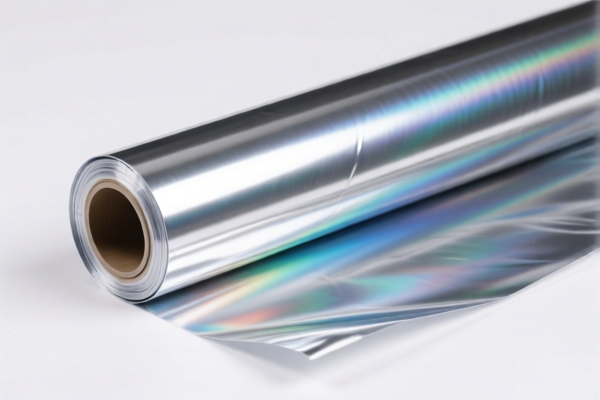
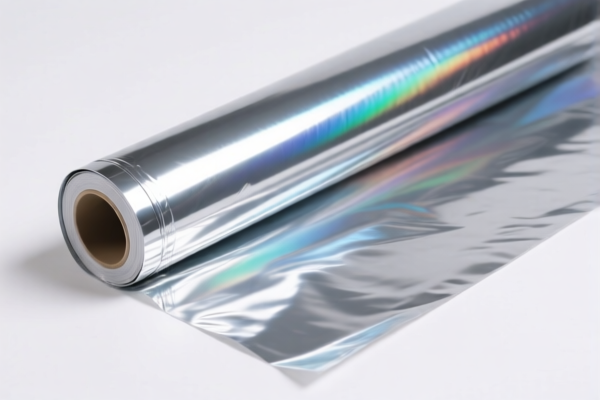
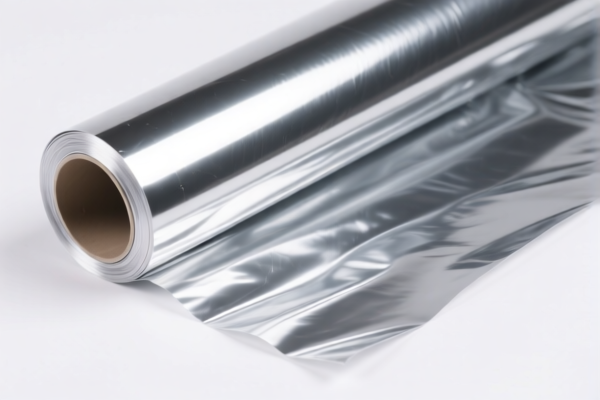
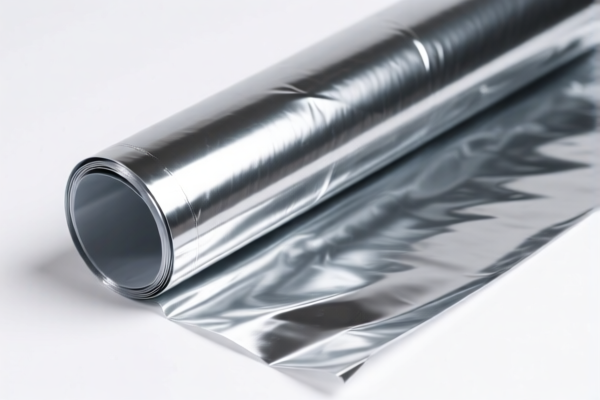
AI Analysis
🎥 Industrial Stretch Film (Pallet Wrap)
🌐 HS Code Reference & Customs Clearance Guide | 2026 Latest Tariff Analysis | Professional Clearance Strategy
📌 I. Product Definition & Classification: Do You Really Understand "Stretch Film"?
Industrial stretch film, also known as pallet wrap, is a plastic-based packaging material used to secure loads on pallets. In international trade, its classification depends heavily on its physical form (membrane vs. adhesive tape) and material composition (typically Polyethylene/PE).
Key Classification Distinction: * Plastic Membrane/Sheet (Non-adhesive or loosely adhesive): Classified under Heading 3920 or 3921. These are flexible sheets used for wrapping but not primarily self-adhesive like tape. * Self-Adhesive Plastic Tape/Film: Classified under Heading 3919. These are rolls of plastic film with a backing of glue/adhesive, often used for sealing or bundling.
⚠️ Critical Note:
- If the film is a simple PE membrane without a strong pressure-sensitive adhesive layer, it is usually classified under 3920 or 3921.
- If it is explicitly marketed as a self-adhesive tape or has a distinct adhesive backing, it may fall under 3919.
- Misclassification can lead to significant tariff differences due to US additional duties.
📦 II. HS Code Classification Details (2026 Latest Tariff Authority Mapping)
Based on the provided data, here are the potential HS Codes for Industrial Stretch Film:
| HS Code | Product Description | Application Scenario | Classification Logic |
|---|---|---|---|
3920.10.00.00 |
Other plates, sheets, film, foil and strip, of polymers of ethylene | General stretch wrap, pallet wrap, non-adhesive PE film | ✅ Polymer of Ethylene (PE). Form: Film/Membrane. |
3920.99.20.00 |
Other plates, sheets, film, foil and strip, of plastics | General plastic flexible films not specifically mentioned elsewhere | ✅ Plastic Product. Form: Film/Tape/Sheet. |
3919.90.50.40 |
Other self-adhesive plates, sheets, film, foil, tape, tape and other flat shapes of plastics | Plastic membrane, potentially with adhesive backing or derived from adhesive tape categories | ✅ Plastic Film. Described as "Other/Transparent Tape derivative". |
3919.90.50.60 |
Other self-adhesive plates, sheets, film, foil, tape, tape and other flat shapes of plastics | Plastic film, PE material, self-adhesive/flat shape characteristics | ✅ Self-Adhesive/Flat Shape. Material: PE. |
3921.90.50.50 |
Other plates, sheets, film, foil and strip, of plastics | Other plastic boards, sheets, films, foils, and strips not elsewhere specified | ✅ Other Plastic Film. Form: Membrane. |
🔍 Key Insight:
- Codes3920and3921generally apply to non-adhesive or loosely adhered plastic films.
- Codes3919apply to self-adhesive plastic tapes/films.
- The exact classification depends on the specific adhesive strength and product datasheet provided to customs.
💰 III. 2026 Latest Tariff Rate Breakdown (Including Surtaxes & Policy Add-ons)
✅ Applicable Country: USA (US)
✅ Origin: China (CN)
✅ Effective Date: From November 10, 2025 (for subsequent imports)
All listed HS Codes are subject to a complex tariff structure involving Base Tariff, Section 301 Surtax, and Section 122 Tariff.
🎯 1. Codes under 3920 and 3921 (e.g., 3920.10.00.00, 3920.99.20.00, 3921.90.50.50)
These codes typically have a lower base tariff.
| Item | Content |
|---|---|
| Base Tariff | 4.2% - 4.8% (varies by specific subheading) |
| Section 301 Surtax | +25.0% (Additional Tariff) |
| Section 122 Tariff | +10.0% (Specific to certain Chinese goods) |
| Total Effective Rate | ~39.2% - 39.8% |
| Tax Calculation | CIF Value × Total Rate |
| De Minimis Exemption | ❌ Not Applicable (Denied) |
📌 Interpretation for
3920.10.00.00:
- Base: 4.2%
- 301 Surtax: 25.0%
- 122 Tariff: 10.0%
- Total: 39.2%
- Legal Basis: Base tariff applies, plus Section 301 and Section 122 additional duties.📌 Interpretation for
3921.90.50.50:
- Base: 4.8%
- 301 Surtax: 25.0%
- 122 Tariff: 10.0%
- Total: 39.8%
🎯 2. Codes under 3919 (e.g., 3919.90.50.40, 3919.90.50.60)
These codes have a slightly higher base tariff.
| Item | Content |
|---|---|
| Base Tariff | 5.8% |
| Section 301 Surtax | +25.0% |
| Section 122 Tariff | +10.0% |
| Total Effective Rate | 40.8% |
| Tax Calculation | CIF Value × 40.8% |
| De Minimis Exemption | ❌ Not Applicable (Denied) |
📌 Interpretation for
3919.90.50.40&3919.90.50.60:
- Base: 5.8%
- 301 Surtax: 25.0%
- 122 Tariff: 10.0%
- Total: 40.8%
- Note: The base rate is higher because these codes cover "Self-adhesive" items, which may be subject to slightly different duty structures.
🛠️ IV. Customs Clearance Practical Advice (Pitfall Avoidance Guide)
✅ 1. Required Documentation Checklist (Mandatory)
| Document | Must Provide | Explanation |
|---|---|---|
| ✅ Product Specification Sheet | ✔️ | Must clearly state material (e.g., "100% Linear Low-Density Polyethylene"), thickness, width, length, and elasticity. |
| ✅ Product Photos (Labeled) | ✔️ | Show the roll, packaging, and any labels indicating it is "Stretch Film" or "Pallet Wrap". |
| ✅ Commercial Invoice | ✔️ | Description must match HS code logic (e.g., "Plastic Stretch Film, PE, Non-Adhesive" for 3920/3921). |
| ✅ Packing List | ✔️ | Detail gross/net weight and number of rolls/pallets. |
| ✅ Origin Certificate | ✔️ | To prove origin (China) and apply correct surtaxes. |
✅ 2. Declaration Tips (Key Strategy)
🔥 "Define Material, Define Adhesion, Choose Code Wisely!"
| Scenario | Correct Declaration | Wrong Declaration |
|---|---|---|
| Standard PE Stretch Wrap (Non-adhesive) | 3920.10.00.00 or 3921.90.50.50 |
3919... (Self-adhesive) → Higher base rate |
| Self-Adhesive Plastic Tape/Wrap | 3919.90.50.40 or 3919.90.50.60 |
3920... → Risk of classification error |
| Blended or Non-PE Plastic | 3920.99.20.00 |
Specific PE codes |
📌 Explanation:
- Most industrial stretch films are PE (Polyethylene) and non-adhesive (they stick to themselves via tension, not glue). Therefore,3920.10.00.00is the most common and often preferred code due to the lower base rate (4.2% vs 5.8%).
- If the product has a glue layer, it must be declared under3919, but be aware of the higher base tariff.
✅ 3. Special Case Handling
| Scenario | Handling Advice |
|---|---|
| Clearance Delay | If customs questions the adhesive nature, provide a lab report showing no glue content. |
| Section 122 Applicability | Confirm if the specific product is subject to Section 122 (often applies to certain plastic products from China). All listed codes include the 10% surtax. |
| De Minimis | Do NOT rely on de minimis (Section 321) for shipments over $800 if the total value is high, as plastic films are often scrutinized. |
🌍 V. Global Main Market Comparison (2026 Latest)
| Country/Region | Recommended HS Code | Tariff Rate (China Origin) | Certification Requirements | Notes |
|---|---|---|---|---|
| 🇺🇸 USA | 3920.10.00.00 |
39.2% (Base 4.2% + 301 25% + 122 10%) | None specific | High tariff due to 301 & 122. |
| 🇺🇸 USA | 3919.90.50.60 |
40.8% (Base 5.8% + 301 25% + 122 10%) | None specific | Higher base rate. |
| 🇨🇳 China | 3920.10.00.00 |
4.2% | None | Export from China to US faces high tariffs. |
| 🇪🇺 EU | 3920.20.90 |
6.5% | REACH, RoHS | No 301/122 surtaxes. |
| 🇬🇧 UK | 3920.20.90 |
6.5% | UKCA, RoHS | Post-Brexit rules. |
📌 Conclusion:
- USA is the most expensive market for Chinese-made stretch film due to Section 301 and Section 122 tariffs.
- Total duty is nearly 40%, significantly impacting cost competitiveness.
- Consider supply chain diversification (e.g., sourcing from Vietnam or Mexico) to avoid high US tariffs, if possible.
📌 VI. Common Errors & Pitfall Guide (Lessons Learned)
❌ Error 1: Declaring "Plastic Film" without specifying material (PE vs. PVC).
👉 Consequence: Customs may assign a default higher tariff code.
❌ Error 2: Misdeclaring non-adhesive stretch film as "Self-Adhesive Tape" (3919).
👉 Consequence: Higher base tariff (5.8% vs 4.2%) for no reason.
❌ Error 3: Ignoring Section 122 Tariff.
👉 Consequence: Underpayment of 10%, leading to penalties and back taxes.
❌ Error 4: Not providing a clear product description.
👉 Consequence: Customs detention for classification review.
✅ Correct Practice:
"Industrial Stretch Film, 100% LLDPE, 800 gauge, 18 inch width, Non-Adhesive, Clear Color"
🎯 VII. Conclusion: Precise Classification Saves Money!
🎯 Remember:
🔹 "PE Stretch Film? Think
3920. Adhesive Tape? Think3919.
🔹 "Base Rate + 301 (25%) + 122 (10%) = Total Duty."
🔹 "USA Tariffs are High (~40%). Plan Your Supply Chain!"
📌 Tip:
If your stretch film is not made in China (e.g., Made in Vietnam, Thailand, or Europe), you may avoid the 25% Section 301 and 10% Section 122 surtaxes, reducing the total duty to just the base rate (4.2%-5.8%).
Recommendation: Apply for a Pre-Ruling from US CBP if your product has unique characteristics (e.g., biodegradable, colored, or blended materials) to ensure accurate classification.
📣 Immediate Action:
📞 Contact a licensed customs broker + Provide Product Samples/Data + Verify Origin
🚀 Ensure smooth clearance, minimize costs, and maximize profit!
✨ Professional Clearance Starts with Accurate Classification!
💼 Every cent in duty counts!
Customer Reviews
About HS Code Classification
The Harmonized System (HS) is an internationally standardized nomenclature developed by the World Customs Organization (WCO) to classify traded products. Over 200 countries use the HS system as the basis for customs tariffs, trade statistics, and import/export regulations.
Each HS code follows a hierarchical structure:
- Chapter (2 digits) — Broad category of goods (e.g., Chapter 84: Machinery and Mechanical Appliances)
- Heading (4 digits) — More specific grouping within the chapter
- Subheading (6 digits) — Internationally standardized breakdown, used by all WCO member countries
- National subdivisions (8-10 digits) — Country-specific extensions for further classification, such as US HTSUS 10-digit codes
Correct HS code classification is essential for smooth customs clearance, accurate duty payment, and compliance with trade regulations. Misclassification can lead to customs delays, overpayment of duties, or penalties.
When importing from CN to US, the applicable tariff rates may include:
- Most-Favored-Nation (MFN) rate — The standard duty rate applied to WTO members
- General rate — Applied to countries without trade agreements
- Trade remedy duties — Additional tariffs such as Section 301 (anti-dumping), Section 232 (national security), or countervailing duties
The information provided on this page is for reference purposes only. For official classification, please consult with your local customs authority or a licensed customs broker.