Industrial Synchronous Belts
CN → US| HS Code | Tariff Rate | Origin | Destination | Doc |
|---|---|---|---|---|
| 8483901050 | 37.8% | CN | US | Official Doc |
| 8483908080 | 37.8% | CN | US | Official Doc |
| 4010359000 | 38.3% | CN | US | Official Doc |
| 4010369000 | 38.3% | CN | US | Official Doc |
| 5910001020 | 39.0% | CN | US | Official Doc |
Product Images
AI Analysis
🔗 Industrial Synchronous Belts (Timing Belts)
🌐 HS Code Reference & Customs Clearance Guide | 2026 Latest Tariff Analysis | Professional Transit Strategy
📌 I. Product Definition & Classification: What Exactly Is a "Synchronous Belt"?
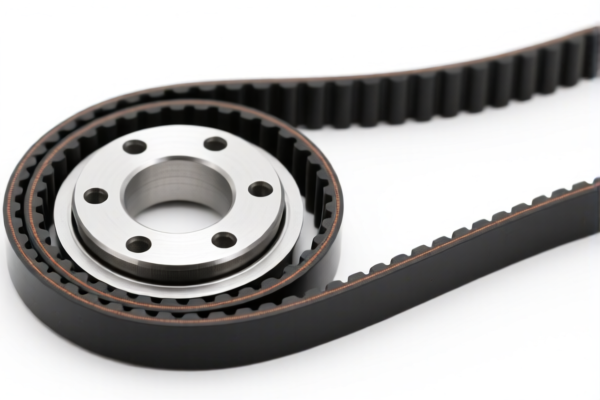
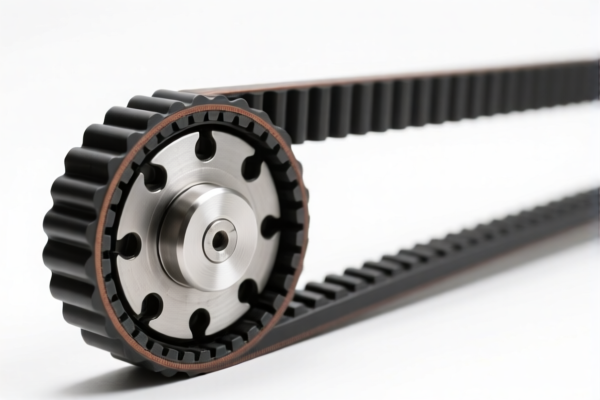
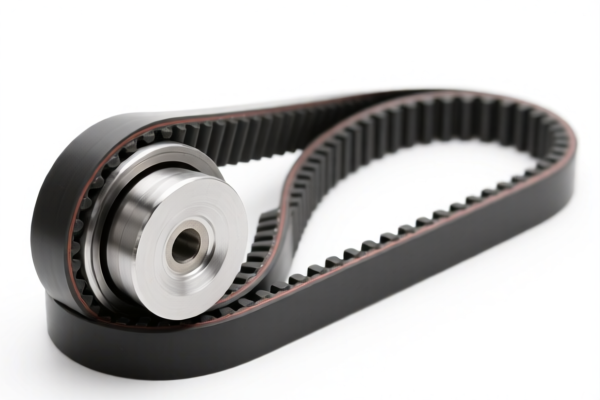
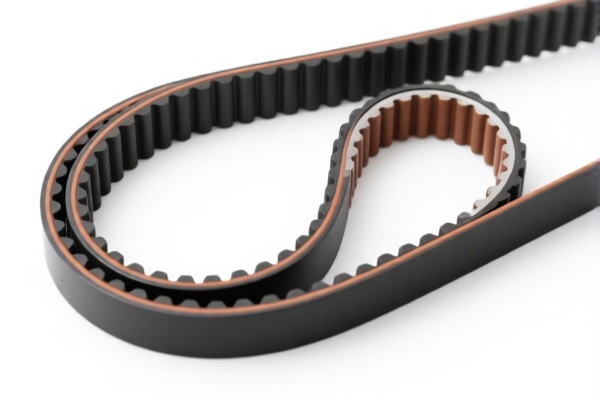
Industrial Synchronous Belts, also known as Timing Belts, are precision transmission components used to transfer motion and power between shafts without slippage. Unlike V-belts that rely on friction, synchronous belts feature teeth on the inner surface that mesh with grooved pulleys.
In international trade, their classification depends heavily on Material Composition and Function:
- Mechanical Transmission Components (Chapter 84): If classified primarily by their function as part of a machine's transmission system, regardless of material.
- Rubber Products (Chapter 40): If the belt is made of vulcanized rubber (the most common industrial standard).
- Textile/Fabric Products (Chapter 59): If constructed primarily from textile materials or artificial fibers with rubber coating.
⚠️ Critical Distinction:
- If the belt is purely a mechanical transmission element and not defined by its material properties in Chapter 40/59 headings → Chapter 84.
- If it is clearly a vulcanized rubber belt → Chapter 40.
- If it is a textile-based reinforced belt → Chapter 59.
📦 II. HS Code Classification Details (2026 Latest Tariff Authority Cross-Reference)
Based on the provided data, here are the five most relevant HS Codes for Industrial Synchronous Belts, categorized by their logical grouping logic:
| HS Code | Product Description | Logical Basis for Classification | Total Tax Rate |
|---|---|---|---|
8483.90.10.50 |
Transmission Elements – Other transmission elements | Classified as a generic transmission component under Chapter 84. No material conflict. | 37.8% |
8483.90.80.80 |
Transmission Elements – Other (Fallback Category) | Classified as a "catch-all" category for transmission parts not specified elsewhere in Chapter 84. | 37.8% |
4010.35.90.00 |
Vulcanized Rubber Belts – Toothed belts (Sync Belts) | Form and function match rubber products. Inferred material: Rubber. No vulcanized rubber conflict. | 38.3% |
4010.36.90.00 |
Vulcanized Rubber Belts – Other toothed belts | Form matches rubber belts. No other conflicting features. Inferred material: Rubber. | 38.3% |
5910.00.10.20 |
Textile-Reinforced Belts – Made of textile materials | Purpose is identical, but inferred material is textile/artificial fiber. No material conflict. | 39.0% |
🔍 Key Insight:
- Chapter 84 Codes focus on the mechanical function (transmission element).
- Chapter 40 Codes focus on the material (vulcanized rubber).
- Chapter 59 Code focuses on the composite material (textile/rubber combination).
- The tax difference between these categories is small (37.8% to 39.0%), but the legal basis differs significantly. Misclassification can lead to penalties.
💰 III. 2026 Latest Tariff Rate Breakdown (Including Surcharges & Policy Add-ons)
✅ Applicable Country: United States (US)
✅ Origin: China (CN)
✅ Effective Date: November 10, 2025 (and subsequent imports)
The tariff structure for all listed HS Codes involves a complex layering of Base Duties, Section 301 Add-on Duties, and Section 122 Duties.
🎯 1. Chapter 84 Codes (8483.90.10.50 & 8483.90.80.80)
Classification: Mechanical Transmission Elements
| Item | Details |
|---|---|
| Base Duty Rate | 2.8% (Ad Valorem) |
| Section 301 Add-on | +25.0% (USITC Footnote for Chinese goods) |
| Section 122 Duty | +10.0% (Specific statutory duty) |
| Total Effective Tax Rate | 37.8% |
| Tax Calculation Basis | CIF Value × 37.8% |
| De Minimis Exemption | ❌ Not Applicable (These goods do not qualify for low-value shipment exemptions under current enforcement) |
| Legal Authority Path | HTSUS:8483.90 → USITC:301 → Section 122 Statute |
📌 Explanation:
- The 2.8% base duty reflects the standard Most Favored Nation (MFN) rate for transmission parts.
- The 25% Section 301 tariff is applied due to the product's origin from China.
- The 10% Section 122 tariff is a specific levy often applied to certain industrial components.
- Total: 37.8%. This is a high-cost category requiring precise documentation.
🎯 2. Chapter 40 Codes (4010.35.90.00 & 4010.36.90.00)
Classification: Vulcanized Rubber Toothed Belts
| Item | Details |
|---|---|
| Base Duty Rate | 3.3% (Ad Valorem) |
| Section 301 Add-on | +25.0% |
| Section 122 Duty | +10.0% |
| Total Effective Tax Rate | 38.3% |
| Tax Calculation Basis | CIF Value × 38.3% |
| De Minimis Exemption | ❌ Not Applicable |
| Legal Authority Path | HTSUS:4010 → USITC:301 → Section 122 Statute |
📌 Explanation:
- Rubber belts have a slightly higher base duty (3.3% vs. 2.8%) due to the specific subheading for rubber products.
- The surcharges remain identical (25% + 10%).
- Total: 38.3%. This is $0.5% higher than Chapter 84, but offers a stronger material-based legal defense if the belt is predominantly rubber.
🎯 3. Chapter 59 Code (5910.00.10.20)
Classification: Textile-Reinforced Belts
| Item | Details |
|---|---|
| Base Duty Rate | 4.0% (Ad Valorem) |
| Section 301 Add-on | +25.0% |
| Section 122 Duty | +10.0% |
| Total Effective Tax Rate | 39.0% |
| Tax Calculation Basis | CIF Value × 39.0% |
| De Minimis Exemption | ❌ Not Applicable |
| Legal Authority Path | HTSUS:5910 → USITC:301 → Section 122 Statute |
📌 Explanation:
- Textile-based belts have the highest base duty (4.0%).
- This classification is appropriate only if the textile component is the primary structural element (e.g., heavy fabric-reinforced timing belts).
- Total: 39.0%. This is the highest tax bracket among the options.
🛠️ IV. Customs Clearance Practical Advice (Real-World Pitfall Avoidance)
✅ 1. Document Preparation Checklist (Non-Negotiable)
| Document | Required? | Explanation |
|---|---|---|
| ✅ Product Spec Sheet | ✔️ | Must specify: Material (Rubber/Textile), Tooth Profile (T5, T10, HTD, etc.), Length, Width. |
| ✅ Material Composition Statement | ✔️ | Critical for distinguishing between Ch. 40 (Rubber), Ch. 59 (Textile), or Ch. 84 (Mechanical Element). |
| ✅ Product Photos (Internal/External) | ✔️ | Show teeth structure, reinforcing cords (if visible), and packaging. |
| ✅ Commercial Invoice | ✔️ | Clearly state: "Industrial Synchronous Belt, [Material], for Mechanical Transmission." |
| ✅ Bill of Lading / Packing List | ✔️ | Ensure weight and volume match the declared value. |
✅ 2. Classification Strategy (Key Mnemonic)
🔥 "Material First, Function Second. Rubber to 40, Textile to 59, Mechanical to 84."
| Scenario | Recommended HS Code | Why? |
|---|---|---|
| Standard Rubber Timing Belt (Polyurethane/Vulcanized Rubber) | 4010.35.90.00 or 4010.36.90.00 |
Matches physical material definition in Chapter 40. |
| Heavy-Duty Textile-Reinforced Belt | 5910.00.10.20 |
If textile reinforcement is the defining feature. |
| Generic Transmission Component (Unclear Material) | 8483.90.10.50 |
If classified purely as a machine part. |
| Unclassified Transmission Part | 8483.90.80.80 |
Fallback option for Chapter 84. |
⚠️ Warning:
- Do NOT mix declarations. A single shipment must have a consistent classification logic.
- If you claim Chapter 84, you must prove it’s primarily a "mechanical element" and not just a "rubber belt."
- If you claim Chapter 40, you must provide material safety data sheets (MSDS) or material certificates proving it is vulcanized rubber.
✅ 3. Special Handling Cases
| Situation | Handling Advice |
|---|---|
| Polyurethane (PU) Belts | Usually classified under Chapter 40 as rubber products, not Chapter 59 or 84. Check specific PU formulations. |
| Kevlar-Reinforced Belts | May fall under Chapter 59 if textile/aromatic polyamide is dominant. Requires detailed material analysis. |
| OEM Custom Belts | Provide customer drawings and material specs. Avoid generic names like "belt"; use "Synchronous Transmission Belt." |
| Small Sample Shipments | Even for low-value samples, the 37.8%-39.0% duty applies. No de minimis exemption for these HS codes. |
🌍 V. Global Market Comparison (2026)
| Country/Region | Recommended HS Code | Duty (China Origin) | Certification Requirements | Notes |
|---|---|---|---|---|
| 🇺🇸 USA | 4010.35.90.00 or 8483.90.10.50 |
37.8% - 39.0% | None specific | High duties due to Section 301 & 122. |
| 🇨🇳 China | 4010.35.90.00 |
5% - 8% | ISO 9001 (for export) | Standard export duty. |
| 🇪🇺 EU | 4010.35.90.00 |
0% - 4% | CE (if part of machinery) | Low duty, focus on REACH compliance. |
| 🇨🇦 Canada | 4010.35.90.00 |
0% - 5% | None | Generally low duty for rubber parts. |
| 🇯🇵 Japan | 4010.35.90.00 |
5% - 8% | JIS Standards | Moderate duty. |
📌 Conclusion:
- The United States is the most expensive market for synchronous belts due to layered tariffs.
- EU and Japan offer lower tariff barriers, but compliance with safety standards (CE, JIS) is stricter.
- China Domestic Market has low duties, making it competitive for local manufacturing.
📌 VI. Common Errors & Pitfalls (Lessons Learned)
❌ Error 1: Declaring a Rubber Belt as a Textile Belt (5910) to avoid "Rubber" scrutiny.
👉 Consequence: Customs inspection reveals rubber composition → Reclassification + Penalty.
❌ Error 2: Declaring a Textile Belt as a Mechanical Part (8483) to save on base duty.
👉 Consequence: Customs demands material proof → Delay + Storage Fees.
❌ Error 3: Ignoring Section 122 Duty.
👉 Consequence: Underpayment → Seizure of Goods.
❌ Error 4: Using vague descriptions like "Drive Belt."
👉 Consequence: Customs may apply the highest possible duty (39%) due to uncertainty.
✅ Correct Practice:
"Synchronous Timing Belt, Vulcanized Rubber, Polyurethane Reinforced, Toothed Profile T5, For Industrial Machinery, HS 4010.35.90.00"
🎯 VII. Conclusion: Precision Classification, Cost Control, Smooth Clearance
🎯 Remember the Mantra:
🔹 "Material Defines Chapter 40/59, Function Defines Chapter 84. Tax is ~38% for all. Don't guess!"
🔹 "37.8% to 39% is the range. Documentation is your shield."
📌 Pro Tip:
If your synchronous belts are originating from Vietnam, Mexico, or Thailand, you may qualify for USMCA (Mexico/Canada) or GSP/Other FTAs, potentially reducing tariffs to 0% - 5%.
Recommendation: Apply for Advance Rulings before shipping to the US to confirm the correct HS Code and avoid surprises at customs.
📣 Immediate Action:
📞 Contact a licensed customs broker + Provide Product Material Specs + Apply for HS Code Pre-ruling.
🚀 Ensure your Industrial Synchronous Belts Clear Customs Smoothly, Minimize Costs, and Maximize Profit!
✨ Professional Customs Clearance Starts with Accurate Classification!
💼 Every Percentage Point Matters in Global Trade!
Customer Reviews
About HS Code Classification
The Harmonized System (HS) is an internationally standardized nomenclature developed by the World Customs Organization (WCO) to classify traded products. Over 200 countries use the HS system as the basis for customs tariffs, trade statistics, and import/export regulations.
Each HS code follows a hierarchical structure:
- Chapter (2 digits) — Broad category of goods (e.g., Chapter 84: Machinery and Mechanical Appliances)
- Heading (4 digits) — More specific grouping within the chapter
- Subheading (6 digits) — Internationally standardized breakdown, used by all WCO member countries
- National subdivisions (8-10 digits) — Country-specific extensions for further classification, such as US HTSUS 10-digit codes
Correct HS code classification is essential for smooth customs clearance, accurate duty payment, and compliance with trade regulations. Misclassification can lead to customs delays, overpayment of duties, or penalties.
When importing from CN to US, the applicable tariff rates may include:
- Most-Favored-Nation (MFN) rate — The standard duty rate applied to WTO members
- General rate — Applied to countries without trade agreements
- Trade remedy duties — Additional tariffs such as Section 301 (anti-dumping), Section 232 (national security), or countervailing duties
The information provided on this page is for reference purposes only. For official classification, please consult with your local customs authority or a licensed customs broker.