Industrial Textile Composite Plastic Sheet
CN → US| HS Code | Tariff Rate | Origin | Destination | Doc |
|---|---|---|---|---|
| 5603110070 | 35.0% | CN | US | Official Doc |
| 5603120070 | 35.0% | CN | US | Official Doc |
| 5903102090 | 35.0% | CN | US | Official Doc |
| 3921901100 | 39.2% | CN | US | Official Doc |
Product Images
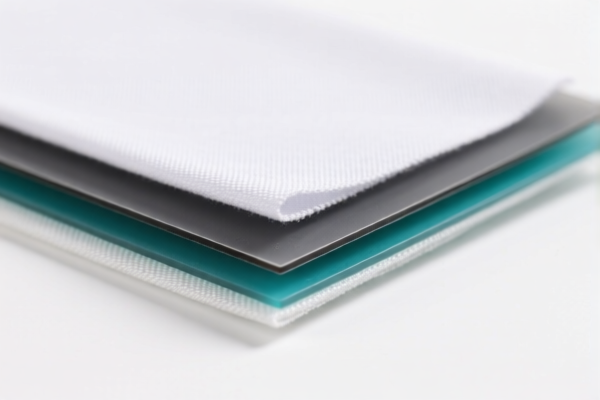
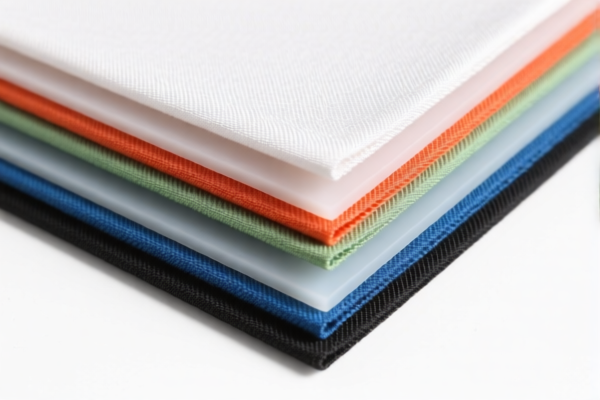
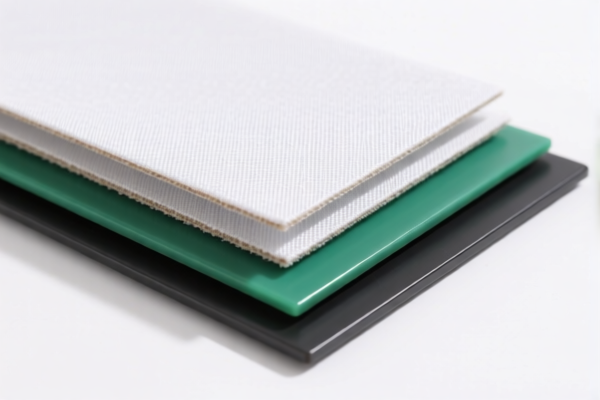
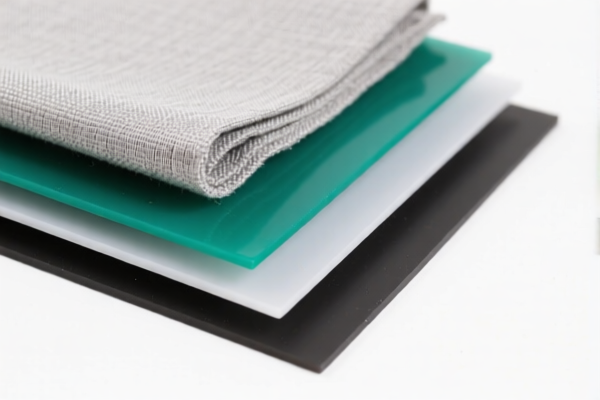
AI Analysis
🏭 Industrial Textile Composite Plastic Sheet
🌐 HS Code Reference & Customs Clearance Guide | 2026 Latest Tariff Analysis | Professional Entry Strategy
📌 I. Product Definition & Classification: Do You Really Understand "Industrial Composite Sheets"?
Industrial textile composite plastic sheets are versatile materials formed by bonding plastic with textile fabrics. In international trade, these are not a single monolithic product but are classified based on their manufacturing process, material composition, and physical form.
Key Distinctions: * Non-Woven/Composites: Fibers bonded together, often without weaving. * Impregnated/Coated Fabrics: Woven or non-woven fabrics浸渍 (impregnated), coated, covered, or laminated with plastic. * Plastic-Primary Forms: Sheets, plates, film, or foil where plastic is the essential character, containing textile material as reinforcement.
⚠️ Critical Classification Point:
- If the product is a non-woven fabric with plastic composite →归入 5603.xx
- If the product is a fabric impregnated/coated/laminated with plastic →归入 5903.xx
- If the product is primarily a plastic sheet/film (e.g., PVC sheet) with textile reinforcement →归入 3921.xx
📦 II. HS Code Classification Details (2026 Latest Tariff Authority Reference)
| HS Code | Product Description | Application Scenario | Material/Form Key Feature |
|---|---|---|---|
5603.11.00.70 |
Industrial plastic-composite textile material; belongs to non-woven/composite textile field; made of chemical fiber/artificial filament composite. | Industrial filtration, geotextiles, reinforcement layers. | Non-woven, Chem-fiber/Artificial filament composite. |
5603.12.00.70 |
Industrial plastic-composite textile material; conforms to non-woven fabric attributes; material is synthetic/artificial filament; for industrial use. | Heavy-duty industrial covers, protective layers. | Non-woven, Synthetic/Artificial filament. |
5903.10.20.90 |
Industrial plastic-composite textile material; corresponds to textile fabrics impregnated, coated, covered, or laminated with plastic; other types. | Tarpaulins, conveyor belts, industrial linings. | Impregnated/Coated/Laminated Fabric. |
3921.90.11.00 |
Industrial plastic-composite textile material; contains plastic and textile material; form is sheet, plate, or film; high plastic proportion. | PVC rigid sheets, composite insulation boards. | Sheet/Plate/Film, Plastic-dominant. |
🔍 Key Reminder:
- 5603 codes apply to non-wovens (fibers bonded without weaving).
- 5903 codes apply to fabrics (woven or non-woven) that have been treated with plastic (impregnated/coated/laminated).
- 3921 codes apply when the plastic matrix is the dominant feature, forming a rigid or semi-rigid sheet/plate.
- Misclassification Risk: Declaring a coated fabric as a "plastic sheet" (3921) when it should be "impregnated fabric" (5903) can lead to duty discrepancies, though in this specific data set, both carry high rates. However, correct classification is vital for regulatory compliance and statistical accuracy.
💰 III. 2026 Latest Tariff Rate Details (Including Surcharges & Policy Add-ons)
✅ Applicable Country: USA (US)
✅ Origin: China (CN)
✅ Effective Date: November 10, 2025 (and subsequent imports)
🎯 1. 5603.11.00.70 & 5603.12.00.70 —— Industrial Non-Woven Composites
| Item | Content |
|---|---|
| Base Duty Rate | 0.0% |
| USITC Surtax (Section 301) | +25.0% |
| IEEPA Surtax (Section 122/China-specific) | +10.0% |
| Total Effective Rate | 35.0% |
| Tax Calculation | CIF Value × 35% |
| De Minimis Exemption | ❌ Not Allowed (deny_de_minimis) |
| Legal Basis Path | USITC:5603.11.00.70 → Footnote 301 → IEEPA:China_Specific |
📌 Explanation:
- These fall under Section 301 goods (industrial textiles). The base duty is 0%, but the 25% surcharge is significant.
- The additional 10% is likely a specific China-related surcharge (referenced as "122 clause tariff" in data, often linked to specific trade actions).
- Total 35% makes these goods high-cost for US importers.
🎯 2. 5903.10.20.90 —— Impregnated/Coated/Laminated Textile Fabrics
| Item | Content |
|---|---|
| Base Duty Rate | 0.0% |
| USITC Surtax (Section 301) | +25.0% |
| IEEPA Surtax (Section 122/China-specific) | +10.0% |
| Total Effective Rate | 35.0% |
| Tax Calculation | CIF Value × 35% |
| De Minimis Exemption | ❌ Not Allowed (deny_de_minimis) |
| Legal Basis Path | USITC:5903.10.20.90 → Footnote 301 → IEEPA:China_Specific |
📌 Note:
- Despite being a "fabric" under Chapter 59, it is subject to the same 301 tariffs as other industrial textiles.
- Common in tarpaulins, truck covers, and industrial flooring.
🎯 3. 3921.90.11.00 —— Plastic Sheets/Plates with Textile Reinforcement
| Item | Content |
|---|---|
| Base Duty Rate | 4.2% |
| USITC Surtax (Section 301) | +25.0% |
| IEEPA Surtax (Section 122/China-specific) | +10.0% |
| Total Effective Rate | 39.2% |
| Tax Calculation | CIF Value × 39.2% |
| De Minimis Exemption | ❌ Not Allowed (deny_de_minimis) |
| Legal Basis Path | USITC:3921.90.11.00 → Footnote 301 → IEEPA:China_Specific |
📌 Critical Warning:
- This is the most expensive category due to the 4.2% base duty on top of the surcharges.
- Misclassifying a non-woven or coated fabric here can increase costs by 4.2% unnecessarily.
- This code is typical for PVC sheets, composite insulation materials, or rigid plastic boards with fabric backing.
🛠️ IV. Customs Clearance Practical Advice (Real-World Pitfall Guide)
✅ 1. Preparation Checklist (Non-negotiable)
| Document | Required? | Explanation |
|---|---|---|
| ✅ Product Specification Sheet | ✔️ | Must specify: Weight, Thickness, Composition (Plastic % vs. Fiber %), Manufacturing Process (Woven/Non-woven/Coated). |
| ✅ Technical Drawing/Structure | ✔️ | Shows if it's a multi-layer laminate or a single-coated fabric. |
| ✅ High-Resolution Photos | ✔️ | Clear shots of the cross-section, surface texture, and label. |
| ✅ Commercial Invoice | ✔️ | Must clearly state: "Industrial Plastic-Textile Composite," include HS Code, and unit price. |
| ✅ Packing List | ✔️ | Detail net/gross weight, dimensions, and number of rolls/sheets. |
| ✅ Certification (if applicable) | ✔️ | Fire retardancy, UV resistance, or industrial safety certs. |
✅ 2. Declaration Strategy (Key Mantras)
🔥 "Process Defines Code: Non-woven=5603, Coated=5903, Sheet=3921!"
| Scenario | Correct HS Code | Wrong Declaration | Consequence |
|---|---|---|---|
| Non-woven fabric with plastic bonding | 5603.11.00.70 / 5603.12.00.70 |
"Plastic Sheet" (3921) | Overpay by 4.2% base duty + confusion. |
| Woven fabric coated with PVC | 5903.10.20.90 |
"Plastic Fabric" (vague) | Delays, possible re-classification, penalties. |
| Rigid PVC Sheet with embedded mesh | 3921.90.11.00 |
"Textile Material" (5603/5903) | Underpayment of base duty (4.2%), audits. |
✅ 3. Special Cases Handling
| Situation | Handling Advice |
|---|---|
| OEM Custom Orders | Provide customer specs + design blueprints to prove intended industrial use. |
| Mixed Shipments | Declare each HS Code separately on the same invoice. Do not lump under one code. |
| Samples for Testing | Even if duty-paid, ensure proper documentation to avoid future disputes. |
| Re-export | If re-exported, ensure original HS Code is maintained to avoid double taxation issues. |
🌍 V. Global Market Comparison (2026 Latest)
| Country/Region | Recommended HS Code | Tariff (China Origin) | Certification Requirements | Notes |
|---|---|---|---|---|
| 🇺🇸 USA | 5603.xx / 5903.xx / 3921.xx |
35.0% / 39.2% | No specific federal cert for generic use, but industry standards apply. | Highest cost due to 301 + IEEPA surcharges. |
| 🇨🇳 China | 5603.xx / 5903.xx / 3921.xx |
0% - 4.2% | CCC (if applicable) | No surcharges. |
| 🇪🇺 EU | 5603.xx / 5903.xx / 3921.xx |
0% - 6.5% | REACH, CE (if machinery component) | No major anti-dumping on these generic codes. |
| 🇦🇺 Australia | 5603.xx / 5903.xx / 3921.xx |
5% - 10% | RCM (if electrical accessory) | Moderate tariffs. |
📌 Conclusion:
- The USA is the most challenging market for these goods due to the 35-39.2% total duty burden.
- Strategic Sourcing: Consider sourcing from non-China origins (e.g., Vietnam, Thailand) if possible to avoid Section 301/IEEPA surcharges.
- Accurate Classification: Misclassifying3921as5603might seem like a savings tactic, but if customs audits find it's a rigid sheet, you'll owe the base duty + penalties.
📌 VI. Common Errors & Pitfall Guide (Lessons Learned)
❌ Error 1: Declaring a rigid PVC composite board as "Non-woven Fabric" (5603)
👉 Consequence: Customs may assess the 4.2% base duty + penalties for misdeclaration.
❌ Error 2: Failing to specify "Industrial Use" in the declaration
👉 Consequence: Customs may question the application, leading to delays or re-classification.
❌ Error 3: Ignoring the 10% IEEPA Surcharge
👉 Consequence: Budgeting only for 25% (301 tariff) leads to unexpected cash flow issues. Total is 35% or 39.2%.
❌ Error 4: Using vague terms like "Plastic Material"
👉 Consequence: Customs will assign the most expensive or ambiguous code, causing hold-ups.
✅ Correct Practice:
"Industrial Non-Woven Fabric, Chemical Fiber, Plastic Composite, for Filtration Use, HS: 5603.11.00.70, Made in China"
🎯 VII. Conclusion: Professional Declaration, Cost Control, Efficiency!
🎯 Remember the Mantra:
🔹 "Non-woven: 35%, Coated: 35%, Sheet: 39.2%. Base Duty + 301 + IEEPA = Total Cost!"
🔹 "HS Code determines destiny. A 4.2% base duty difference can cost thousands!"
📌 Pro Tip:
If your product is sourced from Vietnam, Mexico, Thailand, or Malaysia, you may avoid the IEEPA and Section 301 surcharges, reducing tariffs to 0%-6.5%.
Recommend Applying for an Advance Ruling to ensure your HS Code classification is pre-approved by US Customs.
📣 Immediate Action:
📞 Contact a professional customs broker + Provide product photos + Apply for HS Code Advance Ruling
🚀 Let your Industrial Composite Sheets clear customs smoothly, efficiently, and profitably!
✨ Professional Clearance Starts with Accurate Classification!
💼 Every cent of your cost deserves precise calculation!
Customer Reviews
About HS Code Classification
The Harmonized System (HS) is an internationally standardized nomenclature developed by the World Customs Organization (WCO) to classify traded products. Over 200 countries use the HS system as the basis for customs tariffs, trade statistics, and import/export regulations.
Each HS code follows a hierarchical structure:
- Chapter (2 digits) — Broad category of goods (e.g., Chapter 84: Machinery and Mechanical Appliances)
- Heading (4 digits) — More specific grouping within the chapter
- Subheading (6 digits) — Internationally standardized breakdown, used by all WCO member countries
- National subdivisions (8-10 digits) — Country-specific extensions for further classification, such as US HTSUS 10-digit codes
Correct HS code classification is essential for smooth customs clearance, accurate duty payment, and compliance with trade regulations. Misclassification can lead to customs delays, overpayment of duties, or penalties.
When importing from CN to US, the applicable tariff rates may include:
- Most-Favored-Nation (MFN) rate — The standard duty rate applied to WTO members
- General rate — Applied to countries without trade agreements
- Trade remedy duties — Additional tariffs such as Section 301 (anti-dumping), Section 232 (national security), or countervailing duties
The information provided on this page is for reference purposes only. For official classification, please consult with your local customs authority or a licensed customs broker.