Industrial Textile Reinforced Conveyor Belt
CN → US| HS Code | Tariff Rate | Origin | Destination | Doc |
|---|---|---|---|---|
| 5910009000 | 37.6% | CN | US | Official Doc |
| 5910001070 | 39.0% | CN | US | Official Doc |
| 8431390010 | 35.0% | CN | US | Official Doc |
| 4010354500 | 41.4% | CN | US | Official Doc |
| 5910001020 | 39.0% | CN | US | Official Doc |
Product Images
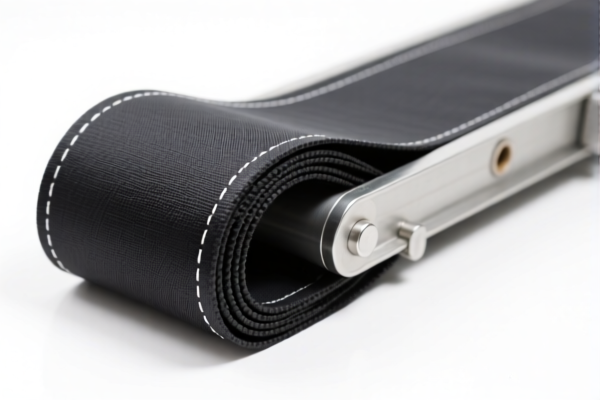
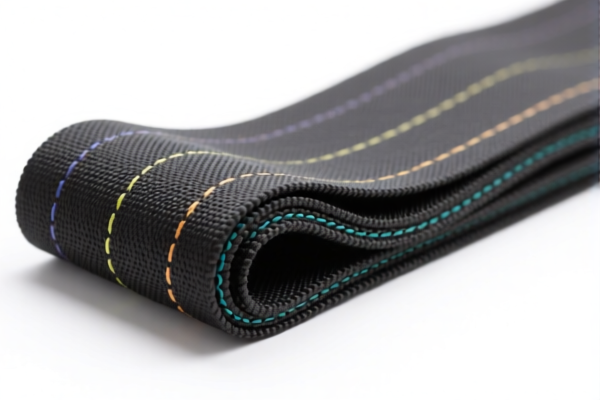


AI Analysis
🚛 Industrial Textile Reinforced Conveyor Belt (Industrial Conveyor Belts)
🌐 HS Code Reference & Customs Clearance Guide | 2026 Latest Tariff Analysis | Professional Clearance Strategy
📌 I. Product Definition & Classification: Do You Truly Understand "Conveyor Belts"?
In international trade, Industrial Textile Reinforced Conveyor Belts are critical components for material handling, logistics, and manufacturing automation. They are not a single monolithic category; their classification depends heavily on their primary function (transport vs. power transmission) and their structural composition (textile cords vs. mechanical components).
Misclassification is the most common cause of customs delays and overpayment of duties. Here is the breakdown:
1. Conveyor Belts for Material Transport:
Belt structures with textile cords (nylon, polyester, cotton, etc.) specifically designed to move goods from one point to another.
2. Synchronous Belts (Timing Belts):
Belts with textile reinforcement but designed for power transmission (synchronizing rotation between shafts). These fall under different headings due to their mechanical function.
⚠️ Key Distinction Point:
- If the belt is primarily for moving materials (conveying) → Look at Chapter 59 or Chapter 84.
- If the belt is primarily for transmitting torque/power (synchronous drive) → Look at HS Code 4010.
- If the belt is a replacement part for machinery (not sold as a standalone functional unit in some contexts) → Look at HS Code 8431.
📦 II. HS Code Classification Details (2026 Latest Tariff Alignment)
Based on the provided data, here are the five specific HS Codes applicable to Industrial Textile Reinforced Belts and their precise logical justifications.
| HS Code | Product Description Summary | Classification Logic & Application Scenario |
|---|---|---|
5910.00.90.00 |
Textile Reinforced Conveyor Belt Matching textile material & conveyor use |
Logic: Classified under "Vulcanized fiber or rubber textile belts... for mechanical transmission." Specifically designated for conveying applications where the textile reinforcement is the primary structural feature. Scenario: Standard bulk material handling belts (e.g., mining, agriculture, food processing). |
5910.00.10.70 |
Textile Reinforced Conveyor Belt Matching transmission/conveying use & textile material |
Logic: A sub-category within 5910 focusing on belts that have characteristics of both transmission and conveying, heavily weighted by textile material composition. Scenario: Multi-purpose belts or specific textile-based industrial belts used in automated assembly lines. |
8431.39.00.10 |
Textile Reinforced Conveyor Belt Matching conveyor parts & industrial components attribute |
Logic: Classified as a part/accessory of machinery (Chapter 84). This is used when the belt is identified strictly as a component of a larger conveyor system rather than a standalone good. Scenario: Replacement belts sold as spare parts for specific industrial conveyor machines. |
4010.35.45.00 |
Textile Reinforced Synchronous Belt Matching endless synchronous belt form & textile reinforcement |
Logic: Falls under "Rubber belts and pulleys... Synchronous belts." Even though it has textile cords, its functional definition is "synchronous" (timing), so it goes to Chapter 40 (Rubber/Plastics) rather than Chapter 59 (Textiles/Rubber belts for conveyance). Scenario: Precision drives in CNC machines, printing presses, or automotive engines where timing is critical. |
5910.00.10.20 |
Textile Reinforced Synchronous Belt Matching synchronous belt use & man-made fiber material |
Logic: A hybrid classification under 5910 for belts that are technically "synchronous" but specifically defined by their man-made fiber (synthetic textile) construction. Scenario: Synthetic fabric-reinforced timing belts used in light industrial machinery. |
🔍 Critical Reminder:
- Chapter 59 (HS 5910) generally covers belts of vulcanized fiber or rubber-reinforced with textile materials.
- Chapter 40 (HS 4010) covers rubber belts, including synchronous belts, regardless of internal reinforcement if the primary material is rubber.
- Chapter 84 (HS 8431) is reserved for parts of machinery. If the belt is sold as a standalone functional item,5910or4010is usually more appropriate than8431.
💰 III. 2026 Latest Tariff Rate Breakdown (Including Surtaxes & Policy Add-ons)
✅ Applicable Country: United States (US)
✅ Origin: China (CN)
✅ Effective Date: Current rates include Section 301 and Section 122 additions.
The total tax burden is significant due to multiple layers of tariffs. The structure is consistent across these codes:
🎯 Base Tax Structure Overview
| Component | Rate | Source |
|---|---|---|
| MFN Base Rate | 0.0% – 6.4% | Depends on HS Code (see below) |
| Section 301 Surtax | +25.0% | Applied to all Chinese-origin goods in these categories |
| Section 122 Surcharge | +10.0% | Specific legislative surcharge applied to imports |
| Total Effective Rate | 35.0% – 41.4% | High Impact on Cost |
🎯 Detailed Breakdown by HS Code
1. 5910.00.10.20 & 5910.00.10.70 – Textile/Synchronous Belts (Chapter 59)
| Item | Content |
|---|---|
| Base Rate | 4.0% |
| Section 301 Surcharge | +25.0% |
| Section 122 Surcharge | +10.0% |
| Total Tax | 39.0% |
| Legal Basis | Base duty + 301 Footnote 9903.88.01 + Section 122 Authority |
📌 Explanation:
- The base duty of 4% is relatively low, but the 35% in combined surcharges dominates the cost.
- These codes are tightly regulated due to the textile/rubber composite nature.
2. 5910.00.90.00 – General Textile Conveyor Belts
| Item | Content |
|---|---|
| Base Rate | 2.6% |
| Section 301 Surcharge | +25.0% |
| Section 122 Surcharge | +10.0% |
| Total Tax | 37.6% |
| Legal Basis | Base duty + 301 Footnote 9903.88.01 + Section 122 Authority |
📌 Explanation:
- Slightly lower base rate than the other 5910 sub-codes, but the surcharges remain identical.
- Ideal for standard, non-synchronous, bulk-conveying textile belts.
3. 8431.39.00.10 – Conveyor Parts (Components)
| Item | Content |
|---|---|
| Base Rate | 0.0% |
| Section 301 Surcharge | +25.0% |
| Section 122 Surcharge | +10.0% |
| Total Tax | 35.0% |
| Legal Basis | Base duty (0%) + 301 Footnote 9903.88.01 + Section 122 Authority |
📌 Explanation:
- Lowest Total Tariff (35%) among the options.
- Risk Alert: Customs may challenge this if the belt is sold as a functional unit rather than a "part." If misclassified, you risk back-taxes at the higher 39-41% rate.
4. 4010.35.45.00 – Synchronous Rubber/Textile Belts
| Item | Content |
|---|---|
| Base Rate | 6.4% |
| Section 301 Surcharge | +25.0% |
| Section 122 Surcharge | +10.0% |
| Total Tax | 41.4% |
| Legal Basis | Base duty + 301 Footnote 9903.88.01 + Section 122 Authority |
📌 Explanation:
- Highest Total Tariff (41.4%).
- Synchronous belts are often viewed as precision mechanical components, attracting the highest base duty.
- Ensure you do not misclassify these as "conveyor belts" (5910) to save cost, as this is a common audit target.
🛠️ IV. Customs Clearance Practical Advice (Battle-Tested Pitfall Guide)
✅ 1. Preparation Checklist (Non-Negotiable)
| Document | Required | Explanation |
|---|---|---|
| ✅ Product Specification Sheet | ✔️ | Must detail: Width, Thickness, Cord Material (Polyester/Nylon), Cover Material, and Application (Conveying vs. Driving). |
| ✅ Cross-Sectional Diagram | ✔️ | Critical for proving textile reinforcement. Helps distinguish between 4010 (Rubber-dominant) and 5910 (Textile-dominant). |
| ✅ Commercial Invoice | ✔️ | Must clearly state: "Industrial Conveyor Belt" OR "Synchronous Drive Belt." Avoid vague terms like "Rubber Belt." |
| ✅ Certificate of Origin (CO) | ✔️ | Essential for Section 301 eligibility. If not CN, rates may differ. |
| ✅ Photos of Product | ✔️ | Show branding, model numbers, and any markings indicating function (e.g., "Timing Belt" vs. "Conveyor Belt"). |
✅ 2. Declaration Strategy (Key Mantras)
🔥 "Function Defines Code, Reinforcement Defines Chapter."
| Scenario | Correct Declaration | Wrong Practice |
|---|---|---|
| Bulk Material Handling | Use 5910.00.90.00 (37.6%) |
Avoid 8431 unless it's a spare part kit |
| Precision Timing/Drive | Use 4010.35.45.00 (41.4%) |
Do NOT declare as conveyor belt to save 3.8% |
| Spares for Machinery | Use 8431.39.00.10 (35.0%) |
Only if sold separately as a "Part" |
| Synthetic Synchronous | Use 5910.00.10.20 (39.0%) |
Check material composition (Man-made fibers) |
⚠️ Warning:
- If you declare a Synchronous Belt as a Conveyor Belt (5910), you might save 3.8% ($0.38 per $10), but customs auditors will quickly identify it by the toothed profile. Penalties + Back Taxes will far exceed the savings. - If you declare a Conveyor Belt as a Part (8431), you save 2.6% ($0.26 per $10), but if it's sold as a standalone product, it violates HTS definition.
✅ 3. Special Case Handling
| Situation | Recommendation |
|---|---|
| Multi-layer Belts | Clearly specify the top layer (cover) vs. internal reinforcement. If cover is rubber and reinforcement is textile, 5910 is likely. |
| OEM Custom Belts | Provide the OEM design specs. If the design is unique to a specific machine, 8431 might be defendable, but 5910 is safer for standalone sales. |
| Mixed Shipments | If shipping both synchronous and conveyor belts, must separate line items. Do not lump them under one code. |
🌍 V. Global Market Clearance Comparison (2026 Update)
| Market | Recommended HS Code | Base Duty | Surtaxes (China) | Total Est. Rate | Notes |
|---|---|---|---|---|---|
| 🇺🇸 USA | 5910.00.90.00 / 4010.35.45.00 |
0-6.4% | +35% (301+122) | 35-41.4% | Highest duty burden globally. Plan cash flow accordingly. |
| 🇨🇳 China | 5910.00.90.00 |
5-10% | 0% | 5-10% | Low duty, high volume. CCC certification may apply. |
| 🇪🇺 EU | 4010.35.45 / 5910.00.10 |
0-4% | 0% | 0-4% | No Section 301 equivalent. Much more favorable. |
| 🇮🇳 India | 5910.00.00 |
7.5% | 0% | ~15-20% | Includes Basic Customs Duty + SWS. |
📌 Conclusion:
- The US market is the most expensive for Chinese-made textile conveyor/synchronous belts due to the 35% additional surcharges.
- For US-bound goods, consider Supply Chain Diversification (Vietnam, Mexico, Thailand) to avoid Section 301 duties, if feasible.
📌 VI. Common Errors & Pitfall Guide (Lessons Learned)
❌ Error 1: Declaring a Synchronous Belt as a Conveyor Belt
👉 Consequence: Underpayment of duty (saving ~3-4%). Customs audit will flag the "toothed" profile. Result: Back taxes + Interest + Potential Fraud Penalty.
❌ Error 2: Declaring a Standalone Belt as a Part (8431)
👉 Consequence: Customs may reject the "Part" classification if the belt has commercial value as a standalone item. Result: Re-classification to 5910/4010 + Delay.
❌ Error 3: Ignoring Section 122
👉 Consequence: Forgetting to add the 10% surcharge. Result: Underpayment notice. This is a recent legislative addition and often missed by older customs brokers.
❌ Error 4: Vague Description: "Rubber Belt"
👉 Consequence: Customs cannot determine if it's 4010 or 5910. Result: HOLD for Inspection + Manual Classification Fee.
✅ Correct Practice:
"Industrial Conveyor Belt, Textile Reinforced (Polyester Cord), Rubber Cover, 500mm Width, For Bulk Material Handling"
OR
"Synchronous Drive Belt, Rubber with Textile Cords, Toothed Profile, Precision Timing Application"
🎯 VII. Conclusion: Precision Classification for Cost Efficiency
🎯 Remember the Mantra:
🔹 "Function First, Material Second: Conveyor goes to 5910, Synchronous to 4010."
🔹 "China Origin = +35% Surcharge: 10% Section 122 + 25% Section 301."
🔹 "Parts (8431) are only for spares: Standalone products face higher scrutiny."
📌 Pro Tip:
If your Textile Reinforced Belts are originating from Vietnam, Mexico, or Thailand, you can avoid the 35% surcharges entirely, reducing your total tax to just the Base Rate (0-6.4%).
For high-volume shipments to the US, consider pre-clearance rulings or supply chain audits to optimize duty liability.
📣 Immediate Action:
📞 Verify your belt's primary function (Convey vs. Drive).
📞 Check your Belt's cross-section (Textile dominant? Rubber dominant?).
📞 Calculate the 35% surcharge impact on your landed cost.
🚀 Optimize your HS Code to match the product's true nature and save compliance headaches!
✨ Professional Customs Clearance Starts with Accurate Classification!
💼 Every 1% of Duty Saved is Pure Profit!
Customer Reviews
About HS Code Classification
The Harmonized System (HS) is an internationally standardized nomenclature developed by the World Customs Organization (WCO) to classify traded products. Over 200 countries use the HS system as the basis for customs tariffs, trade statistics, and import/export regulations.
Each HS code follows a hierarchical structure:
- Chapter (2 digits) — Broad category of goods (e.g., Chapter 84: Machinery and Mechanical Appliances)
- Heading (4 digits) — More specific grouping within the chapter
- Subheading (6 digits) — Internationally standardized breakdown, used by all WCO member countries
- National subdivisions (8-10 digits) — Country-specific extensions for further classification, such as US HTSUS 10-digit codes
Correct HS code classification is essential for smooth customs clearance, accurate duty payment, and compliance with trade regulations. Misclassification can lead to customs delays, overpayment of duties, or penalties.
When importing from CN to US, the applicable tariff rates may include:
- Most-Favored-Nation (MFN) rate — The standard duty rate applied to WTO members
- General rate — Applied to countries without trade agreements
- Trade remedy duties — Additional tariffs such as Section 301 (anti-dumping), Section 232 (national security), or countervailing duties
The information provided on this page is for reference purposes only. For official classification, please consult with your local customs authority or a licensed customs broker.