Industrial Transport Vehicle Parts
CN → US| HS Code | Tariff Rate | Origin | Destination | Doc |
|---|---|---|---|---|
| 8487900080 | 88.9% | CN | US | Official Doc |
| 8431100010 | 35.0% | CN | US | Official Doc |
| 8487100080 | 35.0% | CN | US | Official Doc |
| 8431499038 | 85.0% | CN | US | Official Doc |
| 8483105000 | 35.0% | CN | US | Official Doc |
Product Images
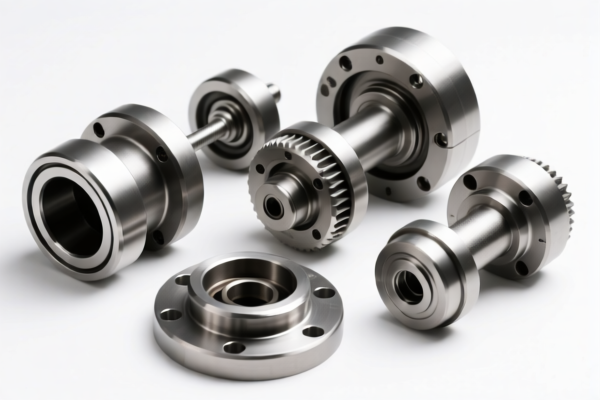
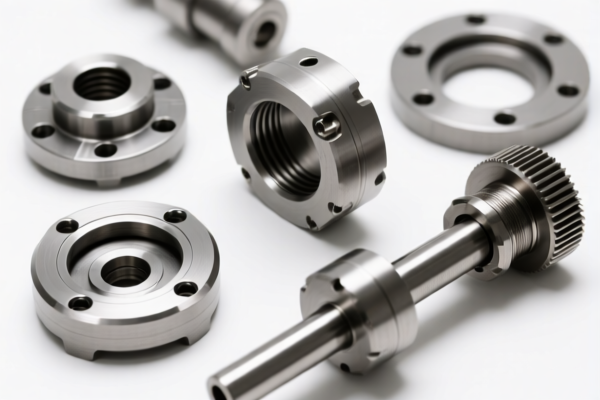
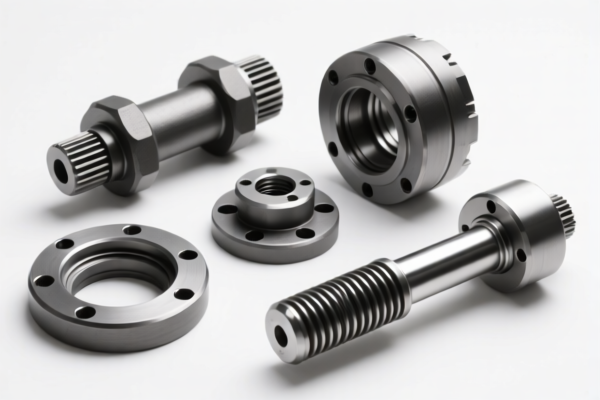
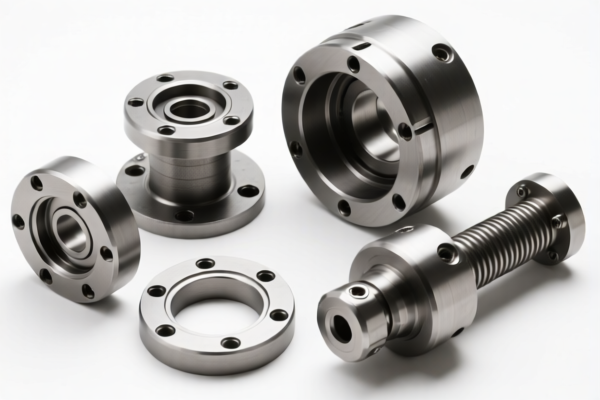
AI Analysis
🚜 Industrial Transport Vehicle Parts: HS Code Classification & 2026 Customs Clearance Guide
🌐 HS Code Reference & Clearance Strategy | 2026 Latest Tariff Analysis | Professional Transit Solutions
📌 I. Product Definition: What Are "Industrial Transport Vehicle Parts"?
In international trade, "Industrial Transport Vehicle Parts" is a broad category that generally refers to components used in forklifts, internal logistics vehicles, industrial trucks, and material handling equipment. Unlike automotive parts for passenger cars, these parts are designed for heavy-duty, low-speed, or specialized industrial environments.
Key Distinctions: * Industrial Vehicles: Forklifts, pallet jacks, AGVs (Automated Guided Vehicles), reach trucks. * Automotive Vehicles: Cars, trucks, buses (for public/highway transport). * Critical Factor: The classification depends heavily on whether the part is a generic mechanical component (e.g., shafts, gears) or a specific vehicle part (e.g., wheels, braking systems, steering axes).
⚠️ Key Classification Point:
- If the part is a general mechanical component (not uniquely identifiable as a vehicle part), it often falls under Chapter 84 (Machinery) or Chapter 87 (Vehicles) - General Parts.
- If the part is a specific chassis or body part, it may fall under Chapter 87.99 or 87.08.
- Wheels & Tires for industrial vehicles have their own specific subheadings.
📦 II. HS Code Classification Details (2026 Latest Tariff Concordance)
Based on the provided data, here are the most relevant HS Codes for Industrial Transport Vehicle Parts, along with their tax implications for US imports from China.
| HS Code | Product Description | Applicable Scenario | Tax Rate (US/CN) |
|---|---|---|---|
8487.90.00.80 |
Parts of machinery not specified elsewhere (General Mechanical Parts) | Generic gears, shafts, bearings, bolts for industrial machinery | 88.9% |
8431.10.00.10 |
Parts suitable for use solely or principally with lifts, forks, etc. | Forklift-specific components, mast rollers, carriage parts | 35.0% |
8487.10.00.80 |
Parts of machinery not specified elsewhere (General Assembly/Parts) | General mechanical assemblies, non-vehicle-specific parts | 35.0% |
8431.49.90.38 |
Other parts of machinery for lifting/handling (N.E.S.) | General handling equipment parts, not specifically forklifts | 85.0% |
8483.10.50.00 |
Cranks, shafts, crankcases, bearings, etc. (Transmission Parts) | Transmission shafts, cranks, gear components for industrial engines | 35.0% |
🔍 Key Insight:
-8431.10.00.10is often the most accurate for forklift-specific parts (e.g., forks, carriage, mast rollers).
-8487codes are "catch-all" categories for mechanical parts. They carry higher tariffs (up to 88.9%) due to broader classification and potential Section 301/IEEPA叠加.
-8483.10.50.00is for transmission components (cranks, shafts), which are common in industrial engines but are subject to high tariffs if classified incorrectly.
💰 III. 2026 Latest Tariff Rate Breakdown (Including Surcharges)
✅ Applicable Country: United States (US)
✅ Origin: China (CN)
✅ Effective Date: November 10, 2025 (and subsequent imports)
🎯 1. 8487.90.00.80 – General Machinery Parts (High Risk)
| Item | Detail |
|---|---|
| Base Rate | 3.9% (ad valorem) |
| USITC Additional Tariff (Section 301) | +25% |
| Section 122 Tariff (Steel/Aluminum/Copper) | +50% (if applicable) |
| Total Tariff | 88.9% |
| Tax Calculation | CIF Value × 88.9% |
| De Minimis Exemption | ❌ Not Eligible |
| Legal Basis | USITC:8487.90.00.80 → Footnote: Section 301 + Section 122 |
📌 Explanation:
- This is the highest tariff bracket for machinery parts.
- The 50% Section 122 tariff applies if the part is made of steel, aluminum, or copper.
- Total 88.9% makes this category extremely costly. Avoid if possible.
🎯 2. 8431.10.00.10 – Parts of Forklifts/Transport Vehicles (Optimal)
| Item | Detail |
|---|---|
| Base Rate | 0.0% |
| USITC Additional Tariff (Section 301) | +25% |
| IEEPA Additional Tariff | +10% |
| Total Tariff | 35.0% |
| Tax Calculation | CIF Value × 35.0% |
| De Minimis Exemption | ❌ Not Eligible |
| Legal Basis | USITC:8431.10.00.10 → Section 301 → IEEPA |
📌 Explanation:
- This is the most favorable rate for forklift-specific parts.
- Base rate is 0%, but Section 301 (25%) + IEEPA (10%) bring it to 35%.
- Recommendation: Clearly describe parts as "Forklift Parts" or "Parts for Lifts/Forks" to qualify for this code.
🎯 3. 8487.10.00.80 – General Machinery Assemblies (Fallback)
| Item | Detail |
|---|---|
| Base Rate | 0.0% |
| USITC Additional Tariff (Section 301) | +25% |
| IEEPA Additional Tariff | +10% |
| Total Tariff | 35.0% |
| Tax Calculation | CIF Value × 35.0% |
| De Minimis Exemption | ❌ Not Eligible |
| Legal Basis | USITC:8487.10.00.80 → Section 301 → IEEPA |
📌 Explanation:
- Similar to8431.10.00.10, but for general machinery assemblies.
- Use only if the part is not specifically identifiable as a forklift part.
🎯 4. 8431.49.90.38 – Other Handling Equipment Parts (High Risk)
| Item | Detail |
|---|---|
| Base Rate | 0.0% |
| USITC Additional Tariff (Section 301) | +25% |
| Section 122 Tariff (Steel/Aluminum/Copper) | +50% (if applicable) |
| Total Tariff | 85.0% |
| Tax Calculation | CIF Value × 85.0% |
| De Minimis Exemption | ❌ Not Eligible |
| Legal Basis | USITC:8431.49.90.38 → Section 301 + Section 122 |
📌 Explanation:
- This code applies to general handling equipment parts (e.g., conveyor belts, pallet jack rollers).
- The 50% Section 122 tariff applies if made of steel/aluminum/copper.
- Total 85.0% is still very high.
🎯 5. 8483.10.50.00 – Transmission Parts (Shafts, Cranks)
| Item | Detail |
|---|---|
| Base Rate | 0.0% |
| USITC Additional Tariff (Section 301) | +25% |
| IEEPA Additional Tariff | +10% |
| Total Tariff | 35.0% |
| Tax Calculation | CIF Value × 35.0% |
| De Minimis Exemption | ❌ Not Eligible |
| Legal Basis | USITC:8483.10.50.00 → Section 301 → IEEPA |
📌 Explanation:
- Applies to transmission components (cranks, shafts, bearings).
- 35% total tariff is moderate, but ensure the part is not a vehicle-specific chassis part.
🛠️ IV. Customs Clearance Practical Advice (Avoid Pitfalls)
✅ 1. Preparation Checklist (Must-Have Documents)
| Document | Required | Notes |
|---|---|---|
| Product Specifications | ✔️ | Include dimensions, material, weight, function |
| Technical Drawings | ✔️ | To prove if it’s a "generic part" or "vehicle-specific" |
| Photos (Clear Labels) | ✔️ | Show model number, brand, input/output |
| Third-Party Test Reports | ✔️ | If applicable (e.g., CE, RoHS, UL) |
| Commercial Invoice | ✔️ | Must specify "Parts for Forklifts/Industrial Vehicles" |
| Packing List | ✔️ | Show packaging details, avoid split shipments |
| Certificate of Origin | ✔️ | Required for US customs clearance |
✅ 2. Declaration Tips (Critical Keywords)
🔥 "Specificity Wins: Forklift > General Machinery > Transmission"
| Scenario | Correct Declaration | Incorrect Declaration |
|---|---|---|
| Forklift mast rollers | Parts for Forklifts (HS 8431.10.00.10) |
Machinery Parts (HS 8487.90.00.80) |
| Forklift tires/wheels | Tires for Industrial Vehicles |
Vehicle Parts (HS 8708.99.50.00) |
| General gear for conveyor | Gears for Machinery (HS 8487.10.00.80) |
Forklift Parts |
| Crankshaft for engine | Crankshafts (HS 8483.10.50.00) |
Vehicle Engine Parts |
✅ 3. Special Cases
| Case | Handling Advice |
|---|---|
| OEM Custom Parts | Provide client PO + design specs to prove specificity |
| Composite Materials | If part contains steel/aluminum, Section 122 (50%) may apply → Check material composition! |
| Used Parts | Must declare as "Used" → May require additional inspections |
| Multi-Functional Parts | If part serves both vehicles and general machinery, choose the more specific code (e.g., 8431 over 8487) |
🌍 V. Global Market Comparison (2026)
| Country/Region | Recommended HS Code | Tariff | Certification | Notes |
|---|---|---|---|---|
| 🇺🇸 USA | 8431.10.00.10 |
35% (CN) | FCC, OSHA | Avoid 8487 (88.9%) |
| 🇨🇳 China | 8431.10.00.10 |
5% | CCC | No additional tariffs |
| 🇪🇺 EU | 8431.10.00.10 |
0% | CE, RoHS | Free trade for many |
| 🇦🇺 Australia | 8431.10.00.10 |
5% | RCM | No additional tariffs |
| 🇯🇵 Japan | 8431.10.00.10 |
0% | PSE | Free trade agreement |
📌 Conclusion:
- USA has the highest tariffs for industrial parts due to Section 301 + IEEPA + Section 122.
- China, EU, Australia, Japan offer low or zero tariffs for similar parts.
- Strategy: If targeting the US market, optimize HS Code to8431.10.00.10and avoid steel/aluminum-heavy parts if possible.
📌 VI. Common Errors & Pitfalls (Lessons Learned)
❌ Error 1: Declaring Forklift Parts as General Machinery Parts (8487)
👉 Consequence: Tariff jumps from 35% to 88.9% → Profit Loss!
❌ Error 2: Ignoring Section 122 (Steel/Aluminum/Copper)
👉 Consequence: Additional 50% tariff on top of existing rates → Total >85%
❌ Error 3: Using vague terms like "Machine Part" or "Vehicle Component"
👉 Consequence: Customs reclassifies → Delays + Penalties
❌ Error 4: Splitting shipments to avoid de minimis thresholds
👉 Consequence: Customs may link shipments → Full assessment + Back taxes
✅ Correct Practice:
"Forklift Mast Rollers, Steel, Model XYZ, For Linde/Hyster Forklifts, Not for Passenger Vehicles"
🎯 VII. Conclusion: Precision Classification Saves Money!
🎯 Remember the Golden Rule:
🔹 "Specificity is Key: Forklift Parts (35%) vs. General Parts (88.9%)"
🔹 "Check Materials: Steel/Aluminum = 50% Extra Tariff!"
🔹 "Declare Clearly: Avoid Vague Terms!"
📌 Pro Tip:
If your parts are made of non-steel/non-aluminum materials (e.g., plastic, rubber), you avoid Section 122 (50%) → Save Significant Cost!
📣 Immediate Action:
📞 Consult a Licensed Customs Broker
📄 Provide Detailed Specifications & Drawings
🚀 Apply for Pre-Ruling if unsure about HS Code
✨ Professional Clearance Starts with Accurate Classification!
💼 Every Percent Saved is Pure Profit!
Customer Reviews
About HS Code Classification
The Harmonized System (HS) is an internationally standardized nomenclature developed by the World Customs Organization (WCO) to classify traded products. Over 200 countries use the HS system as the basis for customs tariffs, trade statistics, and import/export regulations.
Each HS code follows a hierarchical structure:
- Chapter (2 digits) — Broad category of goods (e.g., Chapter 84: Machinery and Mechanical Appliances)
- Heading (4 digits) — More specific grouping within the chapter
- Subheading (6 digits) — Internationally standardized breakdown, used by all WCO member countries
- National subdivisions (8-10 digits) — Country-specific extensions for further classification, such as US HTSUS 10-digit codes
Correct HS code classification is essential for smooth customs clearance, accurate duty payment, and compliance with trade regulations. Misclassification can lead to customs delays, overpayment of duties, or penalties.
When importing from CN to US, the applicable tariff rates may include:
- Most-Favored-Nation (MFN) rate — The standard duty rate applied to WTO members
- General rate — Applied to countries without trade agreements
- Trade remedy duties — Additional tariffs such as Section 301 (anti-dumping), Section 232 (national security), or countervailing duties
The information provided on this page is for reference purposes only. For official classification, please consult with your local customs authority or a licensed customs broker.