Industrial Wastewater Activated Carbon
CN → US| HS Code | Tariff Rate | Origin | Destination | Doc |
|---|---|---|---|---|
| 2803000010 | 35.0% | CN | US | Official Doc |
| 2803000050 | 35.0% | CN | US | Official Doc |
| 3802100050 | 39.8% | CN | US | Official Doc |
| 3802100010 | 39.8% | CN | US | Official Doc |
Product Images
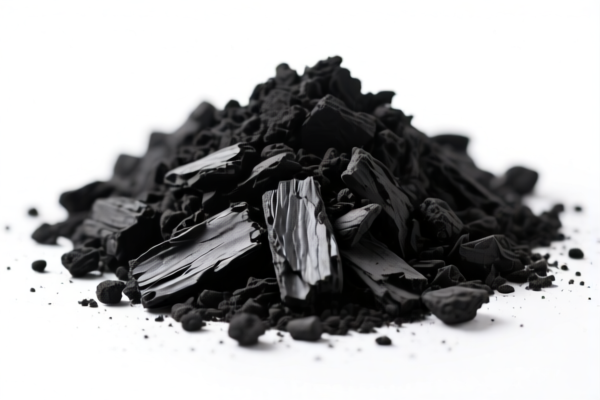
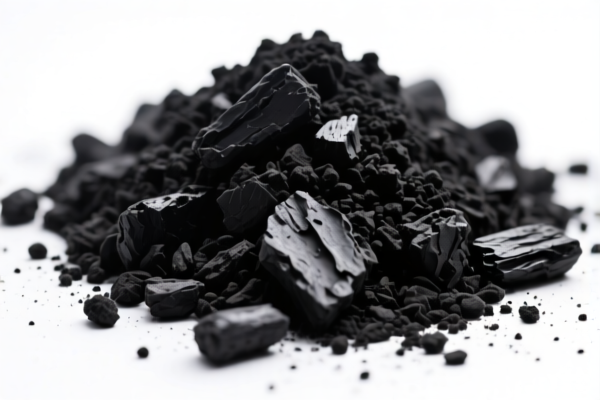

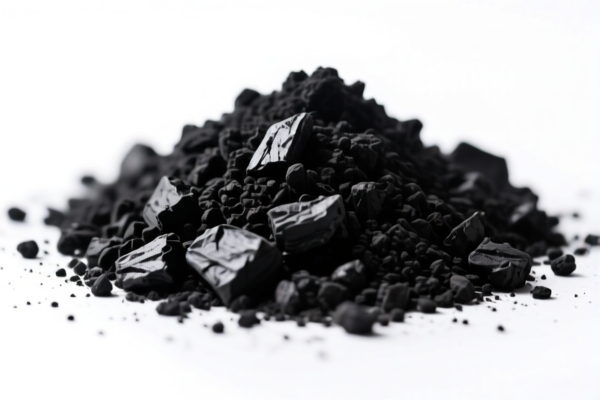
AI Analysis
🧪 Industrial Wastewater Activated Carbon (IWA)
🌐 HS Code Reference & Customs Clearance Guide | 2026 Latest Tariff Analysis | Professional Strategy for Industrial Chemicals
📌 I. Product Definition & Classification: What is "Industrial Wastewater Activated Carbon"?
Industrial Wastewater Activated Carbon is a highly porous form of carbon processed to have small, low-volume pores that increase the surface area available for adsorption or chemical reactions. It is specifically engineered for water treatment applications, such as removing organic contaminants, chlorine, and volatile organic compounds (VOCs) from industrial wastewater.
In international trade, this product sits at a critical intersection between raw carbon materials and prepared chemical products. The classification depends heavily on whether it is viewed primarily as a "carbon form" or a "prepared industrial adsorbent."
⚠️ Key Classification Distinction:
- If classified under Chapter 28 (Inorganic Chemicals), it is treated as a basic form of carbon (Anthracite/Charcoal type).
- If classified under Chapter 38 (Miscellaneous Chemical Products), it is treated as a prepared adsorbent with specific industrial functions.Why does this matter? The tax burden differs significantly, and the regulatory scrutiny (especially regarding "301 Tariffs" and "Section 301" additions) applies differently to raw carbon vs. prepared chemicals.
📦 II. HS Code Classification Details (2026 Latest Tariff Authority对照)
Based on the provided data, there are four potential HS Codes. We must analyze why the product could fall into each category.
| HS Code | Product Description & Logic | Tax Detail Breakdown | Total Tax |
|---|---|---|---|
| 2803.00.00.10 | Anthracite Carbon / Coke-like Carbon: The summary states this carbon form matches the material characteristics of "carbon black" or similar elemental carbon forms. It emphasizes the material nature (pure carbon). | Base: 0.0% Add'l (301): 25.0% Section 301 (122): 10% |
35.0% |
| 2803.00.00.50 | Other Forms of Carbon: Similar to above, but categorized under "other" forms of carbon that fit the structural requirements for carbon classification without specific brand/prep markers. | Base: 0.0% Add'l (301): 25.0% Section 301 (122): 10% |
35.0% |
| 3802.10.00.50 | Prepared Activated Carbon (Other): The summary highlights that the name contains "Activated Carbon" and falls under "other categories" for general industrial use. This view prioritizes the functional preparation (activation process) over the raw material. | Base: 4.8% Add'l (301): 25.0% Section 301 (122): 10% |
39.8% |
| 3802.10.00.10 | Industrial Adsorbents: The summary notes alignment with the target code category for industrial use, with no conflict in material or form. This is often the "cleanest" fit for commercially prepared activated carbon used in filtration. | Base: 4.8% Add'l (301): 25.0% Section 301 (122): 10% |
39.8% |
🔍 Critical Analysis:
- Codes 2803.00.00.10/50 view the product as a raw material derivative (Carbon). They have a 0% Base Tariff but are still subject to heavy retaliatory tariffs.
- Codes 3802.10.00.10/50 view the product as a finished chemical product (Activated Carbon). They have a 4.8% Base Tariff, which is higher, but the total tariff ends up being the same (39.8%) due to the flat 25% + 10% additions.⚠️ Note: While the total percentage is similar (35% vs 39.8%), the Base Duty difference affects how duties are calculated on certain values, and more importantly, legal classification risks. Misclassifying a prepared chemical as raw carbon (2803) when it clearly has a specific industrial preparation can lead to customs penalties.
💰 III. 2026 Latest Tariff Rate Detail (Including Surcharges & Policy Additions)
✅ Applicable Country: USA (US)
✅ Origin: China (CN)
✅ Effective Date: 2025/2026 Period (Current Trade Environment)
🎯 1. Group A: Raw Carbon Classification (HS 2803.00.00.10 / 50)
| Item | Content |
|---|---|
| Base Rate (MFN) | 0.0% |
| USITC Additional Duty (Section 301) | +25.0% (Trade Enabling Act / USTR List 3/4) |
| IEEPA / Section 301 Additional Duty | +10.0% (Specific "122 Clause" or reciprocal tariffs) |
| Total Effective Rate | 35.0% |
| Calculation Basis | CIF Value × 35% |
| De Minimis Eligibility | ❌ NO (deny_de_minimis) - High-value industrial chemicals are typically excluded. |
| Legal Basis Path | USITC:2803.00.00.10 → FOOTNOTE:301 → IEEPA:9903.x.x |
📌 Explanation:
- The 0% base is favorable if the carbon is considered a raw mineral/carbon product.
- However, the 25% + 10% = 35% surcharge is punitive.
- Risk: Customs may argue that activated carbon is not "raw carbon" but a chemically altered product, forcing reclassification to Chapter 38.
🎯 2. Group B: Prepared Chemical Classification (HS 3802.10.00.10 / 50)
| Item | Content |
|---|---|
| Base Rate (MFN) | 4.8% |
| USITC Additional Duty (Section 301) | +25.0% |
| IEEPA / Section 301 Additional Duty | +10.0% |
| Total Effective Rate | 39.8% |
| Calculation Basis | CIF Value × 39.8% |
| De Minimis Eligibility | ❌ NO (deny_de_minimis) |
| Legal Basis Path | USITC:3802.10.00.10 → FOOTNOTE:301 → IEEPA:9903.x.x |
📌 Explanation:
- The 4.8% base is the standard duty for "Activated Carbon" under Chapter 38.
- This classification is more legally accurate for industrial wastewater carbon, as it has undergone thermal/chemical activation.
- The total cost is 4.8% higher than the raw carbon classification, but it carries lower compliance risk of being flagged for misdeclaration.
🛠️ IV. Customs Clearance Operational Advice (Practical Pitfall Avoidance)
✅ 1. Documentation Checklist (Mandatory)
| Document | Required? | Purpose |
|---|---|---|
| ✅ Technical Data Sheet (TDS) | YES | Must specify: Adsorption capacity, iodine number, moisture content, ash content. Proves it is activated carbon, not just charcoal. |
| ✅ Process Description | YES | Explain the activation method (steam, chemical). This supports Chapter 38 classification over Chapter 28. |
| ✅ Intended Use Statement | YES | Explicitly state: "For filtration of industrial wastewater." Prevents classification as food-grade or medical-grade carbon. |
| ✅ Safety Data Sheet (SDS) | YES | For Hazmat clearance (DOT/ERG classification). |
| ✅ Commercial Invoice | YES | Clearly describe as "Industrial Wastewater Activated Carbon," NOT just "Carbon Black" or "Charcoal." |
✅ 2. Declaration Strategy (Key Mantra)
🔥 "Don't hide the activation! Be specific, or pay the penalty!"
| Scenario | Correct Declaration | Wrong Declaration | Consequence |
|---|---|---|---|
| Prepared Activated Carbon | 3802.10.00.10 or .50 |
2803.00.00.10 (Carbon) |
Risk of misclassification penalty + Back taxes. Customs sees "Activated" and expects Ch 38. |
| Raw Charcoal/Briquettes | 4402 or 2803 |
3802 |
Overpayment of base duty (minor), but less risk of fraud allegations. |
| Granular vs Powder | Specify in description | Vague "Carbon" | May trigger random inspection if description is too generic. |
✅ 3. Special Handling Tips
| Situation | Recommendation |
|---|---|
| "Is it Food Grade?" | If yes, it must be declared as food-grade. Using industrial waste water specs for food carbon is a FDA violation. Conversely, if it's industrial, do not claim food grade. |
| Packaging | Ensure bags are sealed and labeled "Flammable Dust" or "Oxidizer" if applicable. Activated carbon dust is a fire hazard. |
| HS Code Choice | Recommendation: Use 3802.10.00.10. Although the base duty is 4.8% (vs 0%), the total tariff (39.8%) is stable. More importantly, it aligns with the product name "Activated Carbon." Using 2803 for activated carbon invites Customs scrutiny ("Why is this activated carbon classified as raw carbon?"). |
🌍 V. Global Market Comparison (2026 Snapshot)
| Country/Region | Recommended HS Code | Base Duty | Additional Tariffs (China) | Total Est. | Notes |
|---|---|---|---|---|---|
| 🇺🇸 USA | 3802.10.00.10 |
4.8% | +35% (25% + 10%) | 39.8% | High scrutiny on Ch 28 vs Ch 38. |
| 🇨🇳 China | 3802.10.00.10 |
1% - 5%* | 0% | ~1-5% | Lower duties, but subject to environmental import controls. |
| 🇪🇺 EU | 3802.10.00 |
6.5% | 0% (Generally) | 6.5% | VAT applies separately. No retaliatory tariffs like US. |
| 🇮🇳 India | 3802.10.00 |
10% | 2.5% SWS | ~12.5% | Anti-dumping duties may apply depending on source. |
📌 Conclusion:
- USA is the most complex due to the 35% additional tariffs.
- EU and China have much lower barriers, making them more cost-effective markets if you have options.
- Key Takeaway: For the US, the total cost is high regardless of HS Code choice (35% vs 39.8%). Focus on compliance accuracy to avoid delays/fines, rather than trying to force a lower base rate.
📌 VI. Common Errors & Pitfalls (Lessons Learned)
❌ Error 1: Declaring "Activated Carbon" under HS 2803.00 (Raw Carbon).
👉 Consequence: Customs questions why a prepared chemical is listed as a raw material. May demand additional proof of origin/process. If rejected, reassigned to 3802, causing delays.
❌ Error 2: Ignoring the "122 Clause" / 10% Surcharge.
👉 Consequence: Underpaying duties. This 10% is often overlooked in automated systems. You will be liable for back taxes + interest.
❌ Error 3: Vague Description "Carbon Filter Media".
👉 Consequence: Ambiguity leads to random inspection. Provide "Industrial Wastewater Activated Carbon, Granular, Iodine No. XXX".
❌ Error 4: Confusing with "Carbon Black" (HS 2803.00.00.10 summary mentions "Carbon Black characteristics").
👉 Clarification: Carbon Black is for inks/pigments. Activated Carbon is for adsorption. Do not mix these up. One is for coloring, one is for cleaning.
✅ Correct Approach:
"Industrial Activated Carbon, Granular, for Wastewater Treatment, Non-Food Grade, Iodine Number: 900-1000 mg/g, HS Code: 3802.10.00.10"
🎯 VII. Conclusion: Professional Declaration, Cost Control, Risk Reduction
🎯 Remember the Mantra:
🔹 "Activated = Chapter 38, Not Chapter 28."
🔹 "Base Rate 4.8%, Total 39.8% in USA."
🔹 "Be Specific, Avoid Audits, Save Time."
📌 Pro Tip:
If your volume is large, consider applying for a Binding Ruling from US Customs and Border Protection (CBP). Get an official determination that your specific activated carbon belongs in 3802.10.00.10. This protects you from future reclassification risks and ensures you pay the correct 39.8% rather than facing penalties for using 2803.
📣 Immediate Action:
📞 Verify your Iodine Number and Ash Content with your supplier.
📄 Prepare a detailed Technical Specification Sheet.
🚀 Declare using HS 3802.10.00.10 for the safest, most defensible clearance path.
✨ Professional Customs Clearance Starts with Accurate Classification!
💼 Your Carbon, Your Compliance, Your Cost Control!
Customer Reviews
About HS Code Classification
The Harmonized System (HS) is an internationally standardized nomenclature developed by the World Customs Organization (WCO) to classify traded products. Over 200 countries use the HS system as the basis for customs tariffs, trade statistics, and import/export regulations.
Each HS code follows a hierarchical structure:
- Chapter (2 digits) — Broad category of goods (e.g., Chapter 84: Machinery and Mechanical Appliances)
- Heading (4 digits) — More specific grouping within the chapter
- Subheading (6 digits) — Internationally standardized breakdown, used by all WCO member countries
- National subdivisions (8-10 digits) — Country-specific extensions for further classification, such as US HTSUS 10-digit codes
Correct HS code classification is essential for smooth customs clearance, accurate duty payment, and compliance with trade regulations. Misclassification can lead to customs delays, overpayment of duties, or penalties.
When importing from CN to US, the applicable tariff rates may include:
- Most-Favored-Nation (MFN) rate — The standard duty rate applied to WTO members
- General rate — Applied to countries without trade agreements
- Trade remedy duties — Additional tariffs such as Section 301 (anti-dumping), Section 232 (national security), or countervailing duties
The information provided on this page is for reference purposes only. For official classification, please consult with your local customs authority or a licensed customs broker.