Industrial Wood Pellet Fuel
CN → US| HS Code | Tariff Rate | Origin | Destination | Doc |
|---|---|---|---|---|
| 4401310000 | 35.0% | CN | US | Official Doc |
| 4401394210 | 35.0% | CN | US | Official Doc |
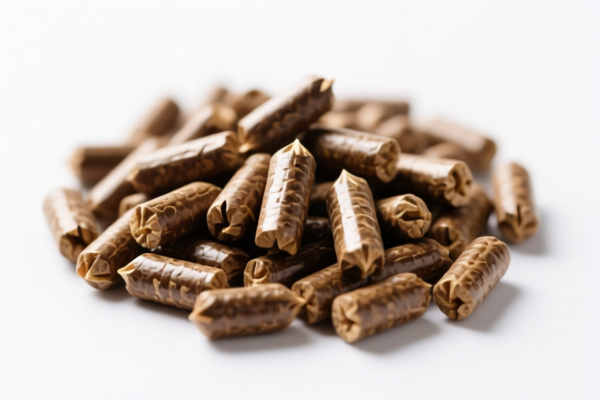
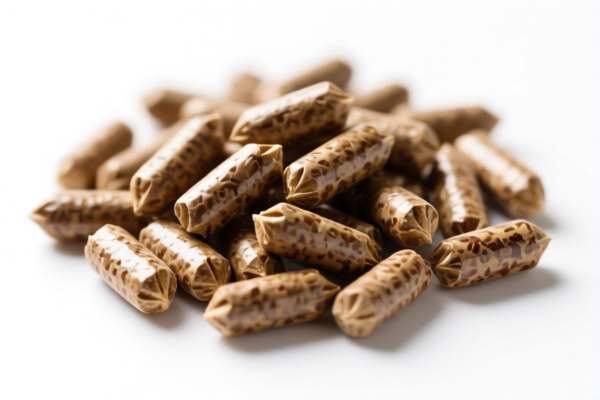
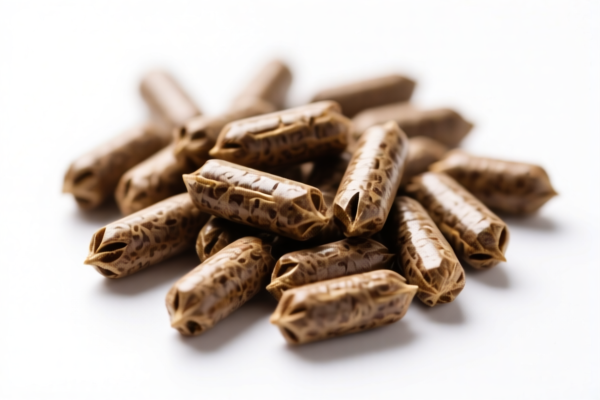
Product Images

AI Analysis
🔥 Industrial Wood Pellet Fuel (Fuel Wood)
🌐 HS Code Reference & Customs Clearance Guide | 2026 Latest Tariff Analysis | Professional Clearance Strategy
📌 Part I: Product Definition & Classification: Do You Really Understand "Wood Pellets"?
Industrial Wood Pellet Fuel refers to biomass energy materials processed from wood waste, sawdust, or chips. In international trade, its classification depends strictly on the form and composition of the agglomeration. The key distinction lies between standardized "Pellets" and other agglomerated forms like briquettes or loose sawdust.
⚠️ Critical Distinction:
- Wood Pellets (4401.31.00.00): Small, cylindrical, or disc-shaped pellets, typically standardized for automated burning systems (boilers, stoves). They are the most common form for industrial fuel.
- Other Agglomerated Sawdust/Waste (4401.39.42.10): Includes briquettes, logs, faggots, or non-standardized forms of agglomerated sawdust and wood waste. These are less uniform than pellets.📌 Key Checkpoint:
- If the product is in the form of small, uniform cylinders/discs (standard pellets) → HS Code 4401.31.00.00
- If the product is in the form of larger blocks, briquettes, or irregular agglomerates → HS Code 4401.39.42.10
📦 Part II: HS Code Classification Details (2026 Latest Tariff Authority Comparison)
| HS Code | Product Description | Application Scenario | Form Factor |
|---|---|---|---|
4401.31.00.00 |
Wood pellets | Industrial biomass boilers, residential heating | ✅ Small, uniform cylinders/discs |
4401.39.42.10 |
Other: Other Sawdust (Agglomerated) | Briquettes, logs, faggots, irregular blocks | ✅ Larger blocks or non-pellet forms |
🔍 Important Note:
- Both codes fall under Chapter 44: Wood and articles of wood; wood charcoal.
- Subheading 4401.31 specifically targets "Wood pellets".
- Subheading 4401.39 covers "Other" forms of sawdust and wood waste, including briquettes and logs.
- Do not mix: Pellets are distinct from briquettes in customs classification due to size and uniformity.
💰 Part III: 2026 Latest Tariff Rate Details (Including Additional Taxes)
✅ Applicable Country: United States (US)
✅ Origin: China (CN)
✅ Effective Date: Ongoing (as per current trade policies)
🎯 1. 4401.31.00.00 — Wood Pellets
| Item | Content |
|---|---|
| Base Tariff Rate | 0.0% (ad valorem) |
| Additional Tariff (Section 301) | +25.0% |
| Total Tax Rate | 25.0% |
| Tax Calculation | CIF Value × 25% |
| De Minimis Exemption | ❌ Not Available (deny_de_minimis) |
| Legal Basis | USITC Footnote for Chapter 44, Section 301 Tariff List |
📌 Explanation:
- The base tariff for wood pellets is 0%, reflecting their status as a renewable energy source.
- However, due to Section 301 tariffs on Chinese goods, an additional 25% is applied.
- Total duty burden is 25%, which is significant for high-volume, low-margin bulk commodities.
- No de minimis exemption: Small shipments (under $800) are not exempt from these tariffs.
🎯 2. 4401.39.42.10 — Other Agglomerated Sawdust/Waste
| Item | Content |
|---|---|
| Base Tariff Rate | 0.0% (ad valorem) |
| Additional Tariff (Section 301) | +25.0% |
| Total Tax Rate | 25.0% |
| Tax Calculation | CIF Value × 25% |
| De Minimis Exemption | ❌ Not Available (deny_de_minimis) |
| Legal Basis | USITC Footnote for Chapter 44, Section 301 Tariff List |
📌 Explanation:
- Similar to wood pellets, the base tariff is 0%.
- The 25% additional tariff applies equally to other agglomerated forms (briquettes, logs) of wood waste.
- Total duty burden is 25%.
- No de minimis exemption: Same rule applies.
🛠️ Part IV: Customs Clearance Practical Advice (Battle-Tested Pitfall Guide)
✅ 1. Document Checklist (Essential Items)
| Document | Required | Notes |
|---|---|---|
| ✅ Commercial Invoice | ✔️ | Must clearly state "Wood Pellets" or "Wood Briquettes" as per HS Code |
| ✅ Packing List | ✔️ | Detail weight, quantity, and packaging type (bulk, bagged) |
| ✅ Certificate of Origin (CO) | ✔️ | Critical for verifying origin (China vs. non-China) to apply correct tariffs |
| ✅ Phytosanitary Certificate | ✔️ | Required for wood products to ensure no pests/diseases |
| ✅ Product Specification Sheet | ✔️ | Include moisture content, ash content, density, and form (pellet vs. briquette) |
| ✅ Bill of Lading/Air Waybill | ✔️ | Standard shipping documents |
✅ 2. Declaration Tips (Key Mantras)
🔥 “Form Determines Code, Origin Determines Tax!”
| Scenario | Correct Declaration | Wrong Practice |
|---|---|---|
| Small, uniform cylinders | 4401.31.00.00 (Wood Pellets) |
Calling them "wood briquettes" → May trigger inspection |
| Large blocks or irregular shapes | 4401.39.42.10 (Other Agglomerated) |
Calling them "pellets" → Misclassification risk |
| Mixed forms (pellets + briquettes) | Split Declaration | Declaring mixed forms under one code → Potential penalties |
| Origin: China | Full declaration with CO | Hiding origin → Fraud risk, severe penalties |
✅ 3. Special Handling Notes
| Situation | Handling Advice |
|---|---|
| High Moisture Content | Ensure moisture content is below 20% (standard for pellets) to avoid rejection for "wet wood" |
| Biomass Certification | Provide sustainability certification (e.g., PEFC, FSC) to appeal to eco-conscious buyers |
| Bulk vs. Bagged | Specify packaging type clearly; bulk shipments may require different inspection protocols |
| Pre-Binding Ruling | Apply for an Advance Ruling from CBP to confirm HS Code and tariff liability before shipment |
🌍 Part V: Global Market Comparison (2026 Latest)
| Country/Region | Recommended HS Code | Tariff (China Origin) | Certification | Notes |
|---|---|---|---|---|
| 🇺🇸 United States | 4401.31.00.00 or 4401.39.42.10 |
25% | Phytosanitary Cert | High tariff burden; de minimis not available |
| 🇨🇳 China | 4401.31.00.00 |
0% | N/A | Export-friendly |
| 🇪🇺 European Union | 4401.31.00.00 |
0% | ENplus Certification | Strict quality standards for industrial use |
| 🇬🇧 United Kingdom | 4401.31.00.00 |
0% | N/A | Post-Brexit rules apply |
| 🇯🇵 Japan | 4401.31.00.00 |
0% | JIS Certification | High demand for quality pellets |
📌 Conclusion:
- The US imposes a 25% tariff on all wood pellet fuels from China, significantly impacting cost competitiveness.
- Non-Chinese origins (e.g., Canada, Ukraine, Brazil) may enjoy 0% tariffs in the US, offering a strategic advantage.
- Quality certification (ENplus, PELLETFAKTM) is critical for European and Asian markets, even if tariffs are low.
📌 Part VI: Common Mistakes & Pitfalls (Lessons Learned)
❌ Mistake 1: Declaring "Briquettes" as "Wood Pellets"
👉 Consequence: Misclassification leads to customs delays, fines, or retroactive tariff adjustments.
❌ Mistake 2: Ignoring the Phytosanitary Certificate
👉 Consequence: Shipment held at port for inspection, potential rejection or destruction if pests are found.
❌ Mistake 3: Assuming De Minimis Applies
👉 Consequence: Small shipments (under $800) are not exempt from the 25% tariff → Unexpected high costs.
❌ Mistake 4: Not Specifying Form Clearly
👉 Consequence: Ambiguity between pellets and briquettes leads to customs uncertainty and potential penalties.
✅ Correct Practice:
"Wood Pellets, 6mm diameter, 7mm length, 8-10% moisture, ENplus certified, Origin: China, HS Code: 4401.31.00.00"
🎯 Part VII: Conclusion: Precise Classification, Cost Control, Efficient Clearance
🎯 Remember the Mantras:
🔹 “Pellets are 4401.31, Briquettes are 4401.39. Both carry 25% in the US!”
🔹 “Form matters, Origin counts, Phytosanitary is mandatory!”
📌 Pro Tip:
If your wood pellets are sourced from Canada, Ukraine, or Brazil, you can enjoy 0% tariffs in the US. Consider supply chain diversification to mitigate the 25% tariff burden.
📣 Immediate Action:
📞 Contact a licensed customs broker + Provide product specs + Apply for an Advance Ruling
🚀 Ensure your wood pellet fuel clears customs smoothly, controls costs, and maximizes profit!
✨ Professional clearance starts with precise classification!
💼 Every dollar in tariffs counts!
Customer Reviews
About HS Code Classification
The Harmonized System (HS) is an internationally standardized nomenclature developed by the World Customs Organization (WCO) to classify traded products. Over 200 countries use the HS system as the basis for customs tariffs, trade statistics, and import/export regulations.
Each HS code follows a hierarchical structure:
- Chapter (2 digits) — Broad category of goods (e.g., Chapter 84: Machinery and Mechanical Appliances)
- Heading (4 digits) — More specific grouping within the chapter
- Subheading (6 digits) — Internationally standardized breakdown, used by all WCO member countries
- National subdivisions (8-10 digits) — Country-specific extensions for further classification, such as US HTSUS 10-digit codes
Correct HS code classification is essential for smooth customs clearance, accurate duty payment, and compliance with trade regulations. Misclassification can lead to customs delays, overpayment of duties, or penalties.
When importing from CN to US, the applicable tariff rates may include:
- Most-Favored-Nation (MFN) rate — The standard duty rate applied to WTO members
- General rate — Applied to countries without trade agreements
- Trade remedy duties — Additional tariffs such as Section 301 (anti-dumping), Section 232 (national security), or countervailing duties
The information provided on this page is for reference purposes only. For official classification, please consult with your local customs authority or a licensed customs broker.