Industrial Wood Shavings
CN → US| HS Code | Tariff Rate | Origin | Destination | Doc |
|---|---|---|---|---|
| 2308009890 | 36.4% | CN | US | Official Doc |
| 2308009820 | 36.4% | CN | US | Official Doc |
| 4401394220 | 35.0% | CN | US | Official Doc |
| 4401490020 | 35.0% | CN | US | Official Doc |
| 4405000000 | 38.2% | CN | US | Official Doc |
| 4405000000 | 38.2% | CN | US | Official Doc |
Product Images



AI Analysis
🪵 Industrial Wood Shavings (Excelsior, Flour & Waste)
🌐 HS Code Reference & Clearance Guide | 2024/2026 Customs Duty Breakdown | Strategic Import Strategy for Wood Waste
📌 I. Product Definition & Classification: Are You Shipping "Shavings" or "Feed"?
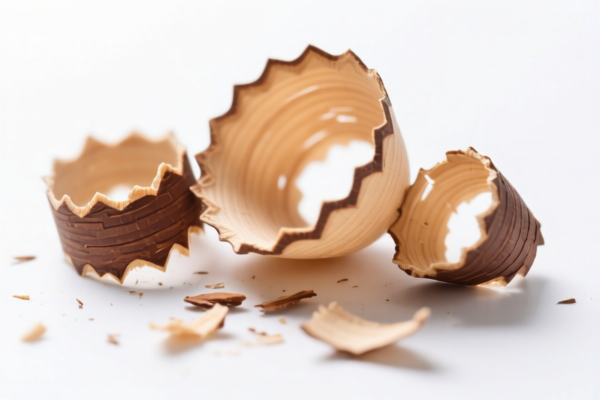
Industrial Wood Shavings encompass a diverse range of wood by-products generated during timber processing, woodworking, and sawmill operations. In international trade, they are strictly categorized by physical form (agglomerated vs. non-agglomerated), chemical treatment, and intended end-use (fuel, industrial filler, or animal feed).
Critical Distinction for Customs:
- Wood Wool (Excelsior) & Wood Flour: Fine, fibrous, or powdery wood used for packaging, insulation, or filtration.
- Agglomerated Shavings: Compressed into pellets, briquettes, or logs → Treated as Fuel.
- Non-Agglomerated Shavings: Loose sawdust/shavings → Treated as Waste/Fuel.
- Animal Feed Grade: Processed vegetable residues (e.g., citrus pulp) mixed with wood → Special Feed Classification.
⚠️ Key Classification Trap:
- 4405.00.00.00 (Wood Wool/Flour) vs. 4401.39/49 (Fuel/Waste) → Tax rates differ by 3.2% to 28.2%!
- 2308 (Animal Feed) is 0% to 26.4% but strictly requires proof of "feed suitability."
- Agglomeration is the single most critical factor for tax classification!
📦 II. HS Code Classification Breakdown (2024/2026 Official Tariff)
| HS Code | Product Description | Intended Use | Key Physical Form |
|---|---|---|---|
4405.00.00.00 |
Wood wool (excelsior); wood flour | Packaging, insulation, filtration, artistic crafts | Fine, fluffy, powdery (NOT agglomerated) |
4401.39.42.20 |
Sawdust & wood waste (agglomerated) | Fuel (pellets/briquettes/loose logs) | Compressed into logs, briquettes, or pellets |
4401.49.00.20 |
Sawdust & wood waste (non-agglomerated) | Fuel, industrial filler, landfill cover | Loose shavings, sawdust (NOT compressed) |
2308.00.98.90 |
Vegetable feed waste (other) | Animal feed (non-specific) | Pelletized or loose vegetable waste + wood |
2308.00.98.20 |
Citrus pulp pellets | Animal feed (specific) | Compressed citrus residues |
🔍 Critical Note:
- Agglomeration = Fuel → Higher tax (25% + 0% base).
- Non-agglomerated = Waste → Lower base tax (0%) but still 25% surcharge.
- Feed Grade → Must prove "animal feeding" purpose; otherwise reclassified as 4401 (Fuel) with 25% surcharge.
💰 III. 2024/2026 Duty Rate Analysis (US China Tariffs)
✅ Applicable Country: United States (US)
✅ Origin: China (CN)
✅ Effective Date: 2025–2026 (Current 25% US-China Section 301 Tariffs)
🎯 1. 4405.00.00.00 — Wood Wool / Wood Flour
| Item | Detail |
|---|---|
| Base Duty | 3.2% (Standard MFN) |
| US Section 301 Surcharge | +25% (China-specific) |
| Total Duty Rate | 28.2% |
| De Minimis Exemption | ❌ No (Denied under current rules) |
| Legal Basis | USITC:4405.00.00.00 → Section 301:9903.01.24 |
📌 Explanation:
- "Wood wool" (excelsior) and "wood flour" are not considered fuel or waste.
- 28.2% total tax applies immediately.
- No exemptions for small shipments!
🎯 2. 4401.39.42.20 — Agglomerated Wood Waste (Fuel)
| Item | Detail |
|---|---|
| Base Duty | 0% (Duty-free for fuel) |
| US Section 301 Surcharge | +25% (China-specific) |
| Total Duty Rate | 25.0% |
| De Minimis Exemption | ❌ No |
| Legal Basis | USITC:4401.39.42.20 → Section 301:9903.01.24 |
📌 Explanation:
- Agglomerated wood is classified as biofuel.
- 0% base duty but 25% surcharge = 25% total.
- Must prove pellet/briquette form to avoid reclassification.
🎯 3. 4401.49.00.20 — Non-Agglomerated Wood Waste
| Item | Detail |
|---|---|
| Base Duty | 0% (Waste material) |
| US Section 301 Surcharge | +25% (China-specific) |
| Total Duty Rate | 25.0% |
| De Minimis Exemption | ❌ No |
| Legal Basis | USITC:4401.49.00.20 → Section 301:9903.01.24 |
📌 Explanation:
- Loose sawdust/shavings = waste.
- 0% base duty but 25% surcharge = 25% total.
- Critical: If mixed with animal feed, risk of reclassification to 2308.
🎯 4. 2308.00.98.90 — Vegetable Feed Waste (Other)
| Item | Detail |
|---|---|
| Base Duty | 0% |
| US Section 301 Surcharge | +0% (No surcharge for feed) |
| Total Duty Rate | 0.0% |
| De Minimis Exemption | ✅ Yes (for de minimis shipments) |
| Legal Basis | USITC:2308.00.98.90 → Section 301:Exempt |
📌 Explanation:
- 0% duty IF proven to be animal feed.
- Must provide:
- ✅ Feed suitability certificate
- ✅ No chemical treatment records
- ✅ End-user (farm/animal) documentation
- Risk: If "feed" claim is false, reclassified to 4401 (25% surcharge).
🎯 5. 2308.00.98.20 — Citrus Pulp Pellets
| Item | Detail |
|---|---|
| Base Duty | 1.4% |
| US Section 301 Surcharge | +25% |
| Total Duty Rate | 26.4% |
| De Minimis Exemption | ❌ No |
| Legal Basis | USITC:2308.00.98.20 → Section 301:9903.01.24 |
📌 Explanation:
- Citrus pulp pellets = specific animal feed.
- 1.4% base duty + 25% surcharge = 26.4% total.
- Must prove citrus origin and feed use.
🛠️ IV. Clearance Practical Tips (Avoid Common Pitfalls)
✅ 1. Required Documentation (Non-Negotiable)
| Document | Mandatory? | Purpose |
|---|---|---|
| Product Specification Sheet | ✅ | Defines form (flour, wool, pellets, waste) |
| End-Use Certificate | ✅ | Proves animal feed (for 2308) or fuel (for 4401) |
| Chemical Treatment Report | ✅ | Ensures no prohibited preservatives (e.g., CCA-treated wood) |
| Agglomeration Proof | ✅ | Photos/videos of compressed form (for 4401.39) |
| Commercial Invoice | ✅ | Clear description: "Wood Flour," "Agglomerated Pellets," or "Citrus Pulp" |
| Packing List | ✅ | Weight, volume, form (loose vs. compressed) |
📌 Tip: If shipping to feed mills, include FDA/USDA approval for animal feed!
✅ 2. Classification Strategy (Do This, Not That)
| Scenario | ✅ Correct Declaration | ❌ Wrong Declaration |
|---|---|---|
| Loose sawdust | 4401.49.00.20 (25% tax) |
2308 (0% tax) → Reclassified + 25% penalty |
| Compressed pellets | 4401.39.42.20 (25% tax) |
4405 (28.2% tax) → Overpaid tax |
| Wood wool for packaging | 4405.00.00.00 (28.2% tax) |
4401 (25% tax) → Underpaid tax |
| Citrus pulp + wood mix | 2308.00.98.20 (26.4% tax) |
4401 (25% tax) → 26.4% vs 25% = extra cost |
🔥 Rule of Thumb:
"Form dictates tax!"
- Compressed = Fuel (4401) → 25% tax.
- Loose = Waste (4401) → 25% tax.
- Feed = 2308 → 0% (if proven) or 26.4% (citrus).
- Flour/Wool = 4405 → 28.2% tax.
✅ 3. Special Cases
| Case | Solution |
|---|---|
| OEM Custom Wood Pellets | Provide contract + design to prove "custom fuel" → 25% tax. |
| Wood Shavings + Citrus Mix | Classify as 2308.00.98.20 (26.4%) if citrus >50%. |
| Chemically Treated Wood | Reclassify to 4405 (28.2%) even if "loose" → No feed use! |
| Small Shipments (<800g) | De minimis only applies to 2308 (feed). Others 25–28%. |
🌍 V. Global Market Comparison (2024/2026)
| Country | Recommended HS Code | Duty | Key Requirements |
|---|---|---|---|
| 🇺🇸 US | 4401.39.42.20 (25%) |
25% | Fuel certificate + Agglomeration proof |
| 🇨🇳 China | 4401.39.42.20 (0%) |
0% | No surcharges |
| 🇪🇺 EU | 4401.39.42.20 (0%) |
0% | CE + REACH compliance |
| 🇯🇵 Japan | 4401.39.42.20 (0%) |
0% | No surcharges |
| 🇦🇺 Australia | 4401.39.42.20 (5%) |
5% | Biosecurity inspection |
📌 Conclusion:
- US is the ONLY market with 25% surcharge on wood waste/fuel.
- Feed products (2308) can be 0% if proven, but 26.4% if citrus.
- Wood wool (4405) always 28.2% in US.
📌 VI. Common Mistakes & How to Avoid Them
❌ Mistake 1: Declaring loose sawdust as animal feed (2308)
👉 Result: 25% tax + penalty (reclassified to 4401).
✅ Fix: Prove feed use with USDA/FDA docs.
❌ Mistake 2: Shipping compressed pellets as 4405 (wood flour)
👉 Result: 28.2% tax instead of 25%.
✅ Fix: Declare as 4401.39.42.20 with agglomeration proof.
❌ Mistake 3: Ignoring chemical treatment on wood
👉 Result: Reclassified to 4405 (28.2%) even if "waste".
✅ Fix: Include treatment report + no preservatives.
❌ Mistake 4: Mixing citrus pulp with wood without docs
👉 Result: 26.4% tax instead of 25%.
✅ Fix: Declare 2308.00.98.20 with citrus %.
🎯 VII. Final Strategy: Save 25–28% on Duties!
🔹 For Fuel: Use
4401.39/49→ 25% tax (0% base).
🔹 For Feed: Use2308.00.98.90→ 0% tax (if proven).
🔹 For Wood Wool: Use4405.00.00.00→ 28.2% tax (no exemptions).
🔹 For Citrus: Use2308.00.98.20→ 26.4% tax (1.4% base).
📌 Pro Tip:
“Form = Tax!”
- Loose = Waste (25%)
- Compressed = Fuel (25%)
- Feed = 0% (if proven)
- Wool/Flour = 28.2%
📣 Action Now:
📞 Contact Customs Broker → Provide product specs + end-use proof
🚀 Get Pre-Ruling → Avoid 25% surcharge surprises!
💡 Your Cost Savings: 0% to 25% difference = Thousands saved per container!
✨ Professional Clearance Starts with Precise Classification!
💼 Every cent counts in global trade.
Customer Reviews
About HS Code Classification
The Harmonized System (HS) is an internationally standardized nomenclature developed by the World Customs Organization (WCO) to classify traded products. Over 200 countries use the HS system as the basis for customs tariffs, trade statistics, and import/export regulations.
Each HS code follows a hierarchical structure:
- Chapter (2 digits) — Broad category of goods (e.g., Chapter 84: Machinery and Mechanical Appliances)
- Heading (4 digits) — More specific grouping within the chapter
- Subheading (6 digits) — Internationally standardized breakdown, used by all WCO member countries
- National subdivisions (8-10 digits) — Country-specific extensions for further classification, such as US HTSUS 10-digit codes
Correct HS code classification is essential for smooth customs clearance, accurate duty payment, and compliance with trade regulations. Misclassification can lead to customs delays, overpayment of duties, or penalties.
When importing from CN to US, the applicable tariff rates may include:
- Most-Favored-Nation (MFN) rate — The standard duty rate applied to WTO members
- General rate — Applied to countries without trade agreements
- Trade remedy duties — Additional tariffs such as Section 301 (anti-dumping), Section 232 (national security), or countervailing duties
The information provided on this page is for reference purposes only. For official classification, please consult with your local customs authority or a licensed customs broker.