Industrial Woven Fabric
CN → US| HS Code | Tariff Rate | Origin | Destination | Doc |
|---|---|---|---|---|
| 5903102010 | 35.0% | CN | US | Official Doc |
| 5903202000 | 35.0% | CN | US | Official Doc |
Product Images
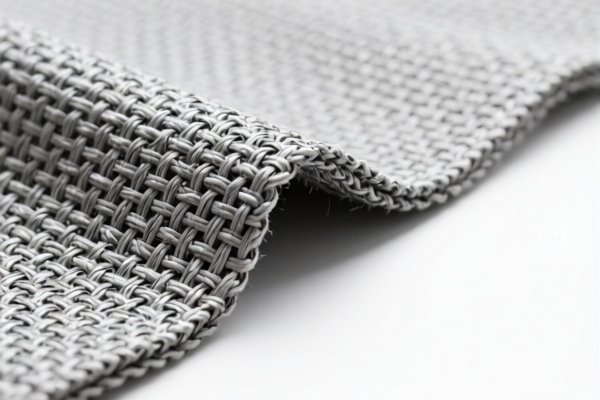
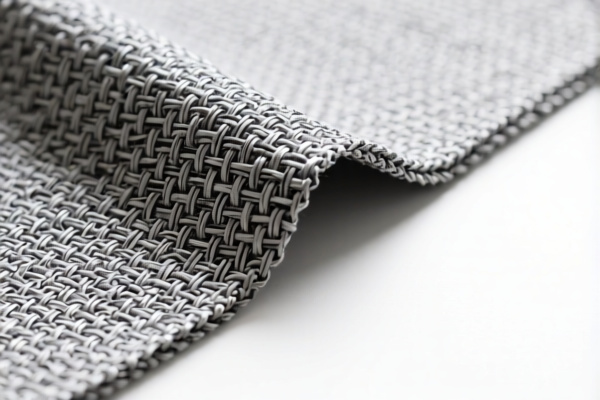
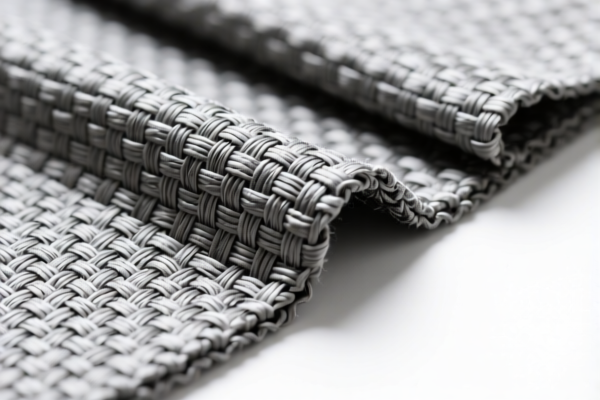
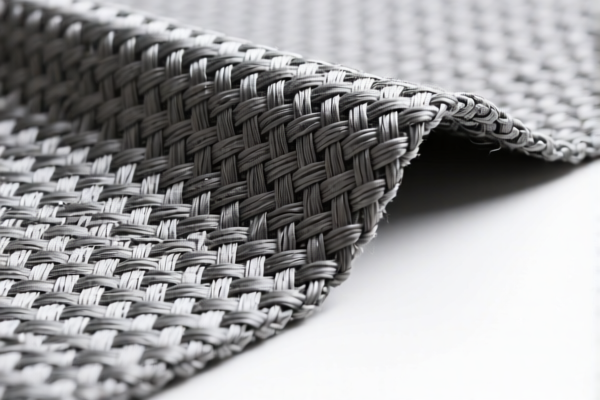
AI Analysis
🏭 Industrial Woven Fabric (Plastic-Coated/Laminated Textiles)
🌐 HS Code Reference & Clearance Guide | 2026 Latest Tariff Analysis | Professional Entry Strategies
📌 Part I: Product Definition & Classification: What Exactly Are These "Industrial Fabrics"?
"Industrial Woven Fabric" in this context refers specifically to textile fabrics impregnated, coated, covered, or laminated with plastics. These are not simple textiles but high-performance materials used for: - Tarps & Covers: Heavy-duty truck covers, warehouse tents, agricultural sheeting. - Industrial Belts & Belting: Conveyor belts, drive belts, reinforced hoses. - Geotextiles: Road stabilization, erosion control. - Technical Apparel: PVC-coated workwear, protective suits.
⚠️ Key Distinction:
- These are not bare woven fabrics (Heading 50-55 or 60).
- They are not rubberized fabrics of Heading 5902 (though they may contain rubber).
- They are classified under Heading 5903 because they are impregnated/coated with plastics.
📦 Part II: HS Code Classification Details (2026 Latest Tariff Authority)
The input data provides two specific HS Codes under Heading 5903. Both apply to Man-Made Fiber fabrics with over 70% by weight of rubber or plastics.
| HS Code | Product Description | Composition | Key Feature |
|---|---|---|---|
5903.10.20.10 |
Textile fabrics impregnated, coated, covered or laminated with plastics: With poly(vinyl chloride) (PVC): Of man-made fibers: Other: Over 70% by weight of rubber or plastics | PVC-based | Includes yarns sheathed with PVC, not otherwise impregnated/coated/laminated. |
5903.20.20.00 |
Textile fabrics impregnated, coated, covered or laminated with plastics: With polyurethane (PU): Of man-made fibers: Other: Over 70% by weight of rubber or plastics | PU-based | High-performance coated fabrics, often used in technical textiles. |
🔍 Critical Note:
- The description for5903.10.20.10explicitly includes "Fabrics, of yarns sheathed with poly(vinyl chloride), not otherwise impregnated, coated, covered or laminated". This means even if the fabric isn't heavily coated after weaving, if the yarns themselves are PVC-sheathed, it may fall here.
- Both codes require Man-Made Fibers as the base textile and >70% weight of plastic/rubber.
- If the fabric is natural fiber (e.g., cotton), it would fall under a different subheading (not listed in the provided data).
- If the coating is not PVC or PU (e.g., PE, PP), it would fall under 5903.90 (not listed in the provided data).
💰 Part III: 2026 Latest Tariff Rate Breakdown (Including Surcharge Policies)
✅ Applicable Country: United States (US)
✅ Country of Origin: China (CN) (Inferred from the 25% surcharge, typical of US-China trade relations)
✅ Effective Time: Current trade policy (post-2025 adjustments)
🎯 1. 5903.10.20.10 — PVC-Coated/Laminated Man-Made Fiber Fabrics
| Item | Content |
|---|---|
| Base Tariff Rate | 0.0% (ad valorem) |
| Section 301 Surcharge | 25.0% |
| Total Effective Rate | 25.0% |
| Tax Calculation | CIF Value × 25% |
| De Minimis Exemption | ❌ Not Applicable (Valued above $800) |
| Legal Basis | USITC Tariff Schedule → Section 301 Traded List |
📌 Explanation:
- The base tariff is 0%, which might seem favorable.
- However, the 25% Section 301 surcharge is applied due to the product being of Chinese origin.
- This is a flat 25% additional duty on top of the 0% base, resulting in a 25% total tax burden.
- No other IEEPA or additional tariffs are listed in the provided data for these codes.
🎯 2. 5903.20.20.00 — PU-Coated/Laminated Man-Made Fiber Fabrics
| Item | Content |
|---|---|
| Base Tariff Rate | 0.0% (ad valorem) |
| Section 301 Surcharge | 25.0% |
| Total Effective Rate | 25.0% |
| Tax Calculation | CIF Value × 25% |
| De Minimis Exemption | ❌ Not Applicable |
| Legal Basis | USITC Tariff Schedule → Section 301 Traded List |
📌 Explanation:
- Identical tariff structure to the PVC variant.
- PU (Polyurethane) fabrics often have higher value-added applications (e.g., automotive interiors, medical textiles), but the tariff rate remains 25%.
- No preferential treatment is indicated in the provided data for this code.
🛠️ Part IV: Clearance Operational Advice (Practical Pitfall Avoidance)
✅ 1. Documentation Checklist (Mandatory)
| Document | Required? | Notes |
|---|---|---|
| ✅ Product Specification Sheet | ✔️ | Must specify: Base fiber type (Man-Made), Coating material (PVC or PU), % Weight of coating (>70%). |
| ✅ Material Safety Data Sheet (MSDS) | ✔️ | Especially if the plastic contains hazardous substances. |
| ✅ Commercial Invoice | ✔️ | Must clearly state: "Textile Fabrics Impregnated/Coated with Plastics, HS 5903.xx.xx.xx". |
| ✅ Packing List | ✔️ | Detail roll weights, lengths, and dimensions. |
| ✅ Certificate of Origin | ✔️ | Proves Chinese origin for Section 301 assessment. |
| ✅ Test Report | ✔️ | Confirming >70% plastic/rubber weight (critical for correct HS classification). |
⚠️ Critical Tip:
- If the fabric does not meet the >70% weight criterion, it may be misclassified, leading to penalties or corrective duties.
- If the base fiber is natural (e.g., cotton), it does not belong to these codes. It would fall under 5903.20.40.00 or 5903.10.30.10 (not listed in the provided data).
✅ 2. Classification Strategy (Key Mnemonics)
🔥 "Check Fiber, Check Coating, Check Weight!"
| Scenario | Correct HS Code | Reason |
|---|---|---|
| Man-Made Fiber + PVC Coating + >70% Plastic | 5903.10.20.10 |
Specific PVC clause |
| Man-Made Fiber + PU Coating + >70% Plastic | 5903.20.20.00 |
Specific PU clause |
| Natural Fiber (Cotton) + PVC Coating | ❌ Not in List | Falls under different subheading (not covered in provided data) |
| Synthetic Fiber + PE Coating | ❌ Not in List | Falls under 5903.90 (not covered in provided data) |
| Bare Woven Fabric (No Plastic) | ❌ Not in List | Falls under Chapter 50-55 or 60 |
✅ 3. Special Cases Handling
| Situation | Handling Advice |
|---|---|
| Yarn Sheathing | If the fabric is made from PVC-sheathed yarns and not heavily coated post-weaving, it still falls under 5903.10.20.10 per the description. |
| Mixed Coatings | If a fabric has both PVC and PU, classify based on the predominant plastic by weight. If unclear, consult with a customs broker. |
| Sample Imports | For samples under $800, de minimis may apply, but for commercial shipments, 25% duty is mandatory. |
| Anti-Dumping | Check if specific anti-dumping duties apply to PVC or PU coatings from China. The provided data does not include these, but they may exist. |
🌍 Part V: Global Market Comparison (2026 Latest)
| Country/Region | Recommended HS Code | Tariff Rate | Notes |
|---|---|---|---|
| 🇺🇸 United States | 5903.10.20.10 / 5903.20.20.00 |
25% | 0% Base + 25% Section 301 |
| 🇨🇳 China | 5903.10 / 5903.20 | ~5-10% | Import tariff varies; see China Customs |
| 🇪🇺 European Union | 5903.10 / 5903.20 | 0-2.5% | Most FTAs allow 0% duty |
| 🇬🇧 United Kingdom | 5903.10 / 5903.20 | 0-2.5% | Post-Brexit tariffs may vary |
| 🇯🇵 Japan | 5903.10 / 5903.20 | 0% | Many FTAs apply |
📌 Conclusion:
- The US market is the most costly for these products due to the 25% Section 301 surcharge.
- Consider supply chain diversification (e.g., sourcing from Vietnam or Thailand) if possible, to mitigate tariff risks.
📌 Part VI: Common Mistakes & Pitfalls (Lessons Learned)
❌ Mistake 1: Classifying PVC-coated fabric under 5903.90 (Other plastics)
👉 Consequence: Incorrect classification → Audit risk + Penalties. Use 5903.10.20.10 for PVC.
❌ Mistake 2: Ignoring the >70% weight requirement
👉 Consequence: If the coating is <70%, the fabric may not qualify as "impregnated with plastics" in the same way, potentially leading to reclassification.
❌ Mistake 3: Assuming Natural Fiber fabrics fall under these codes
👉 Consequence: Immediate rejection or corrective duty. These codes are strictly for Man-Made Fibers.
❌ Mistake 4: Not declaring Section 301 properly
👉 Consequence: Customs may impose additional penalties for non-compliance with US trade laws.
✅ Correct Approach:
"PVC-Coated Polyester Woven Fabric, 75% PVC by Weight, for Truck Tarpaulin, HS 5903.10.20.10"
🎯 Part VII: Conclusion: Precise Classification Saves Money!
🎯 Remember These Keys:
🔹 "Man-Made Fiber is a Must!"
🔹 ">70% Plastic Weight is Critical!"
🔹 "PVC goes to .10, PU goes to .00"
🔹 "25% Duty is Inevitable for China Origin"
📌 Pro Tip:
If your fabric is not made of man-made fibers or does not have >70% plastic, you must find the correct HS Code outside the provided data. Misclassification can lead to severe delays and fines.
📣 Immediate Action:
📞 Consult a licensed customs broker for Pre-Ruling if your product has mixed components.
📄 Ensure your Commercial Invoice explicitly states the plastic type and weight percentage.
✨ Precision in Classification, Profit in Clearance!
💼 Every Percent of Tariff Counts!
Customer Reviews
About HS Code Classification
The Harmonized System (HS) is an internationally standardized nomenclature developed by the World Customs Organization (WCO) to classify traded products. Over 200 countries use the HS system as the basis for customs tariffs, trade statistics, and import/export regulations.
Each HS code follows a hierarchical structure:
- Chapter (2 digits) — Broad category of goods (e.g., Chapter 84: Machinery and Mechanical Appliances)
- Heading (4 digits) — More specific grouping within the chapter
- Subheading (6 digits) — Internationally standardized breakdown, used by all WCO member countries
- National subdivisions (8-10 digits) — Country-specific extensions for further classification, such as US HTSUS 10-digit codes
Correct HS code classification is essential for smooth customs clearance, accurate duty payment, and compliance with trade regulations. Misclassification can lead to customs delays, overpayment of duties, or penalties.
When importing from CN to US, the applicable tariff rates may include:
- Most-Favored-Nation (MFN) rate — The standard duty rate applied to WTO members
- General rate — Applied to countries without trade agreements
- Trade remedy duties — Additional tariffs such as Section 301 (anti-dumping), Section 232 (national security), or countervailing duties
The information provided on this page is for reference purposes only. For official classification, please consult with your local customs authority or a licensed customs broker.