Industrial X ray Film
CN → US| HS Code | Tariff Rate | Origin | Destination | Doc |
|---|---|---|---|---|
| 3701100060 | 38.7% | CN | US | Official Doc |
| 3701100030 | 38.7% | CN | US | Official Doc |
Product Images

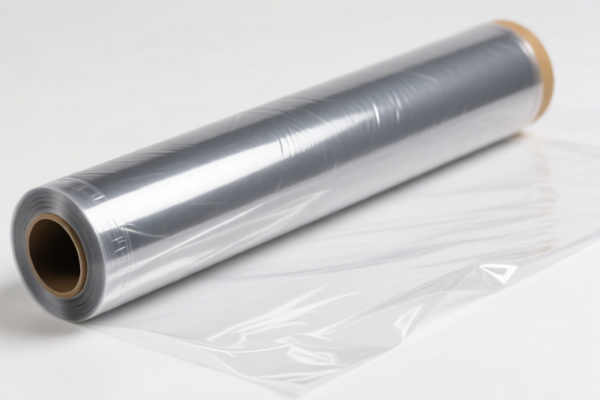
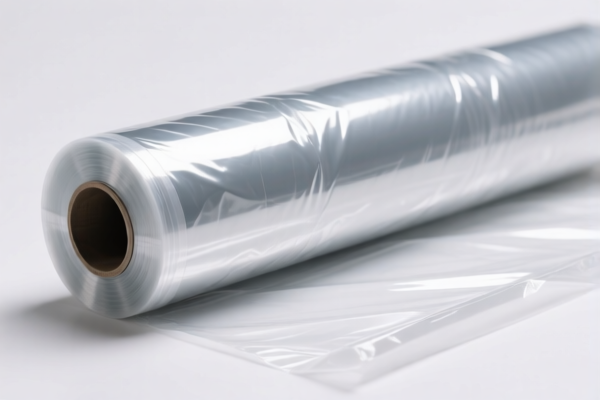
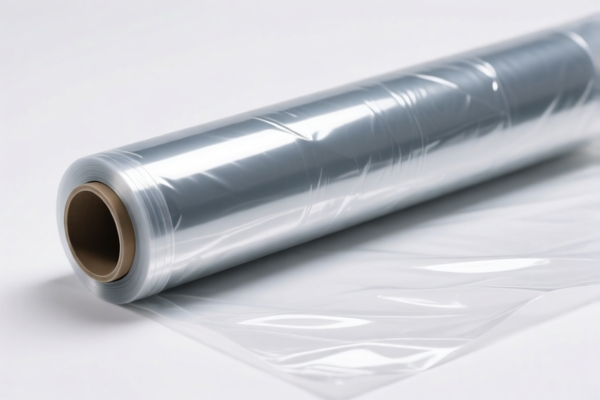
AI Analysis
☢️ Industrial X-Ray Film (Non-Medical)
🌐 HS Code Reference & Customs Clearance Guide | 2026 Latest Tariff Analysis | Professional Clearance Strategy
📌 I. Product Definition & Classification: Do You Know What "Industrial X-Ray Film" Really Is?
Industrial X-ray film refers to sensitized, unexposed photographic plates and films designed specifically for non-medical, industrial non-destructive testing (NDT). Unlike medical X-ray films used for diagnosing human patients, industrial films are used to inspect welds, castings, aerospace components, and pipeline integrity.
Key Distinction:
- Industrial X-Ray Film: Used for material inspection, structural integrity checks, and quality control in manufacturing. It does not fit into medical categories.
- Medical X-Ray Film: Specifically designed for human dental or medical diagnostics.
⚠️ Critical Classification Point:
- If the film is for Industrial/Non-Medical purposes → It falls under 3701.10.00.60.
- If the film is for Medical/Dental purposes → It falls under 3701.10.00.30.
- Do not confuse the two! Misclassification can lead to clearance delays or incorrect tariff applications, although in this specific dataset, both carry 0% tax. However, accurate description is vital for regulatory compliance (e.g., FDA vs. Industry Standards).
📦 II. HS Code Classification Details (2026 Latest Tariff Authority Comparison)
The data provided covers two specific sub-categories under Heading 3701 (Photographic plates and film in the flat, sensitized, unexposed...).
| HS Code | Product Description | Applicable Scenario | Tax Rate (Total) |
|---|---|---|---|
3701.10.00.60 |
Industrial X-Ray Film (Other, for X-ray) |
Non-medical NDT, weld inspection, aerospace component testing, industrial quality control. | 0.0% |
3701.10.00.30 |
Medical X-Ray Film (For X-ray Medical, other than dental) |
Human medical diagnostics, radiography in hospitals, excluding dental use. | 0.0% |
🔍 Key Clarification:
- Both codes belong to Chapter 37: Photographic or cinematographic goods.
- The critical differentiator is End-Use: Industrial vs. Medical.
- Dental X-ray Film is NOT included in the provided data. If your product is for dental use, it may fall under a different sub-code not listed here (e.g., potentially3701.10.00.90or similar, depending on the full tariff schedule). Ensure your product is strictly "Non-Dental Medical" or "Industrial".
💰 III. 2026 Latest Tariff Rate Details (Including Surcharges & Policy Add-ons)
✅ Applicable Country: United States (US)
✅ Origin: China (CN) (Assumed based on typical tariff contexts, but verify if origin differs)
✅ Effective Date: Current as of 2026 tariff structure provided in DATA
🎯 1. 3701.10.00.60 — Industrial X-Ray Film (Non-Medical)
| Item | Content |
|---|---|
| Base Tariff Rate | 0.0% |
| Section 301 Surtax | 0.0% |
| Total Tax Rate | 0.0% |
| Tax Calculation | CIF Value × 0.0% = $0.00 |
| De Minimis Eligibility | ✅ Yes (If value < $800, may enter duty-free with simplified entry) |
| Legal Basis Path | HTSUS:3701.10.00.60 → Section 301 Footnote: Not Applicable |
📌 Explanation:
- Industrial X-ray film is classified under "Other" X-ray films in the flat.
- No additional surtaxes are applied in this specific dataset.
- This makes industrial NDT materials highly cost-effective for import into the US.
🎯 2. 3701.10.00.30 — Medical X-Ray Film (Non-Dental)
| Item | Content |
|---|---|
| Base Tariff Rate | 0.0% |
| Section 301 Surtax | 0.0% |
| Total Tax Rate | 0.0% |
| Tax Calculation | CIF Value × 0.0% = $0.00 |
| De Minimis Eligibility | ✅ Yes (If value < $800) |
| Legal Basis Path | HTSUS:3701.10.00.30 → Section 301 Footnote: Not Applicable |
📌 Note:
- Medical X-ray films (non-dental) also enjoy 0% total tax.
- Regulatory Warning: While the tariff is 0%, the importation of medical devices/films into the US requires FDA (Food and Drug Administration) compliance. Ensure you have 510(k) Clearance or Exemption Status if marketing as a medical device.
🛠️ IV. Customs Clearance Practical Advice (Real-World Pitfall Guide)
✅ 1. Required Documentation Checklist (Non-Negotiable)
| Document | Must Provide | Description |
|---|---|---|
| ✅ Commercial Invoice | ✔️ | Clearly state: "Industrial X-Ray Film, Unexposed, Non-Medical" OR "Medical X-Ray Film, Non-Dental". |
| ✅ Product Specification Sheet | ✔️ | Include sensitivity (ISO/ASTM), emulsion type, film size, and intended use (Industrial/Medical). |
| ✅ Certificate of Origin | ✔️ | To prove origin for potential free trade agreements (though 0% here, it helps with regulatory proof). |
| ✅ FDA Registration/Listing | ✔️ | ONLY for Medical Film (3701.10.00.30). Industrial film does not require FDA, but must prove it's not for human use. |
| ✅ Packing List | ✔️ | Detail package contents, weight, and dimensions. |
| ✅ Statement of Use | ✔️ | A signed letter from the importer stating: "This film is intended for industrial non-destructive testing only" or "For medical diagnostic use only." |
✅ 2. Declaration Tips (Key Mantra)
🔥 “Clarify Use, Specify ‘Non-Dental’, Avoid ‘Medical’ for Industrial!”
| Scenario | Correct Declaration | Incorrect Practice |
|---|---|---|
| Industrial Use | Use HS 3701.10.00.60Description: "Industrial X-ray Film for NDT" |
Mislabel as "Medical" → Triggers FDA review → Delay! |
| Medical Use (Non-Dental) | Use HS 3701.10.00.30Description: "Medical X-ray Film, Non-Dental" |
Mislabel as "Dental" → Wrong HS Code → Clearance Error! |
| Dental Use | ❌ Not Covered in Provided Data | Use 3701.10.00.30 → Wrong! Dental films may have different codes/taxes. |
| Mixed Shipment | Split Declaration! | Combine Industrial & Medical in one line → High risk of rejection. |
✅ 3. Special Situation Handling
| Situation | Handling Advice |
|---|---|
| OEM Industrial Film | Provide customer PO + End-User Statement confirming "Industrial Application Only". |
| Medical Film Imports | Ensure FDA Establishment Registration is active. Product must be listed in FDA databases. |
| Dental Film Mix-up | If you accidentally declare dental film under 3701.10.00.30, expect questions from CBP. Correct to the proper dental code if applicable. |
| Chemical Sensitivity | X-ray films are light-sensitive and may have chemical coatings. Ensure proper packaging to prevent damage during transit. |
🌍 V. Global Market Comparison (2026 Latest)
| Country/Region | Recommended HS Code | Tariff | Certification | Notes |
|---|---|---|---|---|
| 🇺🇸 USA | 3701.10.00.60 (Industrial)3701.10.00.30 (Medical) |
0.0% | FDA (Medical Only) | Zero Duty. Regulatory compliance is key. |
| 🇨🇳 China | 3701.10.00 |
~5-10% | CCC (If medical) | Import tax varies; check latest Chinese tariff book. |
| 🇪🇺 EU | 3701.10 |
0% | CE/IVDR (Medical) | EU has strict IVDR regulations for medical films. |
| 🇬🇧 UK | 3701.10 |
0% | UKCA | Post-Brexit, UKCA marking may be required for medical. |
| 🇯🇵 Japan | 3701.10 |
0-5% | PMDA (Medical) | Japan requires PMDA approval for medical films. |
📌 Conclusion:
- USA offers 0% tariff for both industrial and medical (non-dental) X-ray films from China (based on provided data).
- Regulatory burden is the main challenge, not cost.
- Industrial film has fewer regulatory hurdles than medical film.
📌 VI. Common Mistakes & Pitfall Guide (Lessons Learned)
❌ Mistake 1: Declaring Dental X-Ray Film under 3701.10.00.30
👉 Consequence: HS Code Error. Dental films are explicitly excluded from "Medical, other than dental". This leads to rejection or reclassification.
👉 Fix: Verify if your dental film has a different HS code in your local tariff book.
❌ Mistake 2: Declaring Industrial Film as "Medical" to avoid scrutiny
👉 Consequence: FDA Non-Compliance. If caught, fines, seizure, and blacklisting.
👉 Fix: Be honest. Industrial film does not need FDA approval, simplifying clearance.
❌ Mistake 3: Vague Description ("X-Ray Film")
👉 Consequence: CBP officer may assume medical → Request FDA docs → Delay.
👉 Fix: Use precise terms: "Industrial Non-Destructive Testing X-Ray Film" or "Medical Radiographic Film, Non-Dental".
❌ Mistake 4: Ignoring Light-Sensitivity During Shipping
👉 Consequence: Damaged goods, rejected upon arrival.
👉 Fix: Use light-proof packaging and indicate "Keep in Dark" on labels.
✅ Correct Practice:
"Industrial X-Ray Film, Unexposed, Sensitized, 14x17 inch, For Non-Destructive Testing (NDT) of Steel Welds, Not for Medical Use, HS 3701.10.00.60"
🎯 VII. Conclusion: Precise Classification, Smooth Clearance, Zero Duty!
🎯 Remember the Mantra:
🔹 "Industrial = 3701.10.00.60 | Medical (Non-Dental) = 3701.10.00.30"
🔹 "Both 0% Tax, But FDA Matters for Medical!"
🔹 "Dental is NOT Included! Check Your Code!"
📌 Pro Tip:
- For Industrial Film: Focus on proving non-medical use to avoid FDA.
- For Medical Film: Ensure FDA listing is complete.
- Always specify "Non-Dental" for HS 3701.10.00.30 to match the tariff description exactly.
📣 Immediate Action:
📞 Contact your freight forwarder with Product Specifications
📄 Prepare Statement of Use (Industrial vs. Medical)
🔍 Verify Dental vs. Non-Dental status
🚀 Clearance will be smooth, duty-free, and compliant!
✨ Professional Clearance Starts with Accurate Classification!
💼 Your Cost Efficiency Depends on Precision!
Customer Reviews
About HS Code Classification
The Harmonized System (HS) is an internationally standardized nomenclature developed by the World Customs Organization (WCO) to classify traded products. Over 200 countries use the HS system as the basis for customs tariffs, trade statistics, and import/export regulations.
Each HS code follows a hierarchical structure:
- Chapter (2 digits) — Broad category of goods (e.g., Chapter 84: Machinery and Mechanical Appliances)
- Heading (4 digits) — More specific grouping within the chapter
- Subheading (6 digits) — Internationally standardized breakdown, used by all WCO member countries
- National subdivisions (8-10 digits) — Country-specific extensions for further classification, such as US HTSUS 10-digit codes
Correct HS code classification is essential for smooth customs clearance, accurate duty payment, and compliance with trade regulations. Misclassification can lead to customs delays, overpayment of duties, or penalties.
When importing from CN to US, the applicable tariff rates may include:
- Most-Favored-Nation (MFN) rate — The standard duty rate applied to WTO members
- General rate — Applied to countries without trade agreements
- Trade remedy duties — Additional tariffs such as Section 301 (anti-dumping), Section 232 (national security), or countervailing duties
The information provided on this page is for reference purposes only. For official classification, please consult with your local customs authority or a licensed customs broker.