Industrial cork stoppers
CN → US| HS Code | Tariff Rate | Origin | Destination | Doc |
|---|---|---|---|---|
| 3926909989 | 22.8% | CN | US | Official Doc |
| 4503106000 | 35.0% | CN | US | Official Doc |
| 4504104700 | 35.0% | CN | US | Official Doc |
| 4503102000 | 35.0% | CN | US | Official Doc |
| 4503106000 | 35.0% | CN | US | Official Doc |
Product Images
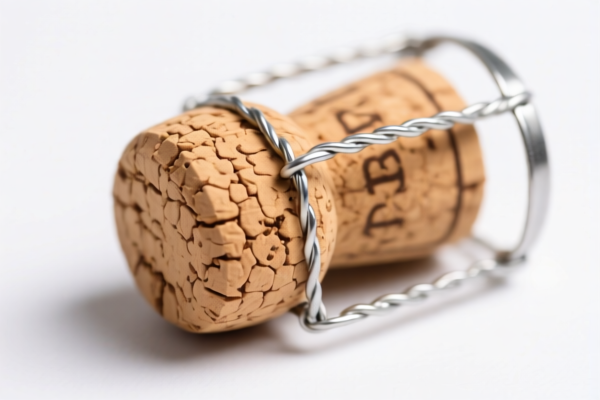
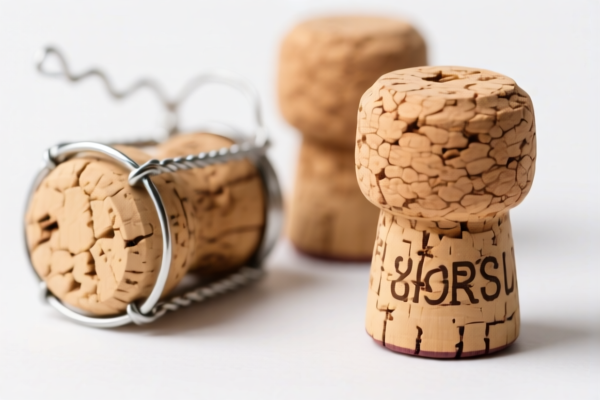


AI Analysis
🍾 Industrial Cork Stoppers (Natural Cork Plugs)
🌐 HS Code Reference & Customs Clearance Guide | 2026 Tariff Full Analysis | Professional Clearance Strategy
📌 I. Product Definition & Classification: Do You Really Know "Cork Stoppers"?
Cork stoppers, specifically industrial-grade natural cork plugs, are essential sealing components in the beverage (wine, champagne, spirits) and industrial packaging industries. In international trade, their classification hinges strictly on material origin and processing level. They are primarily classified under Chapter 45 (Cork and Articles of Cork) because they are made from the bark of the Quercus suber (cork oak) tree.
Two Main Categories: 1. Natural Cork Stoppers: Made directly from compressed natural cork granules or solid cork. These carry 0% Base Tariff but are subject to significant trade war surcharges. 2. Composite/Synthetic Stoppers: If the product contains significant plastic, rubber, or other non-cork materials, it may fall under Chapter 39 (Plastics). Note: The data below focuses on natural cork and composite classifications provided in the source.
⚠️ Key Distinction Point:
- If the product is 100% Natural Cork or primarily composed of compressed natural cork granules →归入 4503.10.xxxxxx / 4504.10.xxxxxx
- If the product is a Composite Material (e.g., cork mixed with plastic binders in a way that changes essential character to plastic) → 归入 3926.90.99.89 (Less common for pure cork, but possible for coated/composite plugs)
📦 II. HS Code Classification Details (2026 Latest Tariff Authority Comparison)
| HS Code | Product Description | Application Scenario | Material Composition |
|---|---|---|---|
4503.10.20.00 |
Natural Cork Stoppers & Plugs (Solid/Natural) | High-end wine, spirits, luxury packaging | ✅ Natural Cork |
4503.10.60.00 |
Cork Stoppers & Plugs (Other/Composite) | Industrial sealing, standard wine bottles | ✅ Cork (Natural or Agglomerated) |
4504.10.47.00 |
Agglomerated Cork & Other Articles of Agglomerated Cork | Reconstituted cork plugs (cork dust + binder) | ✅ Agglomerated Cork |
3926.90.99.89 |
Other Articles of Plastics or of Other Materials | Cork-plastic composite, synthetic coatings, non-cork primary material | ❌ Primarily Plastic/Composite |
🔍 Critical Reminder:
- All Natural Cork Stoppers fall under Heading 4503 or 4504.
- 4503.10 generally covers "Corks, stoppers, and plugs" of natural cork.
- 4504.10 covers "Agglomerated cork" (cork granules bonded together).
- 3926.90.99.89 is a "catch-all" for plastics/other materials. Only use if the product is NOT primarily cork, or if customs authorities determine the plastic component defines the essential character. For most "Industrial Cork Stoppers," 4503/4504 is the correct path.
💰 III. 2026 Latest Tariff Rate Detailed Breakdown (Including Surcharges & Policy Add-ons)
✅ Applicable Country: United States (US)
✅ Origin: China (CN)
✅ Effective Date: November 10, 2025 onwards (for subsequent imports)
🎯 1. 4503.10.20.00 & 4503.10.60.00 & 4504.10.47.00 —— Natural & Agglomerated Cork Stoppers
These three codes share the same tax structure because they all fall under the "Cork" chapter, which has a 0% Base Tariff. However, they are heavily impacted by Section 301 and IEEPA tariffs.
| Item | Content |
|---|---|
| Base Tariff (MFN) | 0.0% (Ad Valorem) |
| Section 301 Surcharge | +25.0% (From USITC Footnote / Section 301 List 4B) |
| IEEPA Surcharge (Section 122/301) | +10.0% (Targeting China/HK products, effective Nov 10, 2025) |
| Total Tariff Rate | 35.0% |
| Tax Calculation | CIF Value × 35% |
| De Minimis Eligibility | ❌ Not Eligible (deny_de_minimis) |
| Legal Basis Path | IEEPA:9903.01.25 → Section 301:4503/4504 → USITC:Cork_Stoppers |
📌 Explanation:
- Base Rate 0%: Natural cork is not considered a manufactured good subject to standard industrial tariffs in the US.
- 301 Surcharge 25%: Applied to goods classified under HS 4503 and 4504 from China.
- IEEPA Surcharge 10%: A new/additional layer of tariff targeting Chinese imports under emergency economic powers.
- Total 35%: This is a high-cost entry barrier. Must be factored into FOB/CIF pricing strategies.
🎯 2. 3926.90.99.89 —— Composite/Plastic-Primary Cork Products
If the product is misclassified or genuinely composed mainly of plastic with cork inlays/coatings:
| Item | Content |
|---|---|
| Base Tariff | 5.3% (Ad Valorem) |
| Section 301 Surcharge | +7.5% (Standard 301 rate for many plastics) |
| IEEPA Surcharge | +10.0% |
| Total Tariff Rate | 22.8% |
| Tax Calculation | CIF Value × 22.8% |
| De Minimis Eligibility | ❌ Not Eligible |
| Legal Basis Path | IEEPA:9903.01.25 → Section 301:3926 → USITC:Other_Plastic_Articles |
📌 Note:
- While the total rate (22.8%) is lower than natural cork (35%), this classification is risky.
- Customs may challenge this if the product is predominantly cork. Misclassification can lead to penalties.
- Only use if the product is clearly a plastic article with minor cork features.
🛠️ IV. Customs Clearance Practical Advice (Real-World Pitfall Avoidance Guide)
✅ 1. Required Documentation Checklist (Non-Negotiable)
| Document | Mandatory? | Description |
|---|---|---|
| ✅ Product Specification Sheet | ✔️ | Must specify "Natural Cork," "Agglomerated Cork," or "Composite." |
| ✅ Material Composition Statement | ✔️ | Explicitly state % of Cork vs. Plastic/Binder. |
| ✅ Product Photos (Clear & Detailed) | ✔️ | Show cross-section, texture, and any branding/coatings. |
| ✅ Commercial Invoice | ✔️ | Must clearly state: "Cork Stoppers for Wine/Industrial Use" |
| ✅ Packing List | ✔️ | Detail quantity, weight, and dimensions. |
| ✅ Certificate of Origin (CO) | ✔️ | Essential for verifying Chinese origin (triggers tariffs). |
| ✅ Third-Party Test Report | ✔️ | IFRS, FDA, or EFSA compliance for food contact (if applicable). |
✅ 2. Declaration Tips (Key Mnemonic)
🔥 "Cork is 0%, Tariffs 35%, Don't Misclassify, Don't Risk It!"
| Scenario | Correct Declaration | Wrong Action |
|---|---|---|
| 100% Natural Cork | 4503.10.20.00 |
Declaring as 3926 → Penalty for misclassification |
| Agglomerated Cork (Granules) | 4504.10.47.00 |
Declaring as 3926 → Risk of audit |
| Cork-Plastic Composite (Plastic Dominant) | 3926.90.99.89 |
Declaring as 4503 → High tariff if challenged |
| Synthetic Cork (Rubber/Plastic) | 4016 or 3926 |
Declaring as 4503 → SEVERE PENALTY |
✅ 3. Special Case Handling
| Situation | Handling Advice |
|---|---|
| Food Contact Safety | Provide FDA Compliance or EU Regulation (EC) No 1935/2004 certificates. US Customs may hold goods without this. |
| Hybrid Products (Cork + Plastic Ring) | If the plastic ring is structural, customs may argue for 3926. Be prepared to justify the "Essential Character" test favoring cork. |
| OEM Custom Stoppers | Provide OEM design files and customer agreements to prove commercial nature and prevent "general merchandise" misclassification. |
| Small Samples vs. Bulk | Both are subject to 35% tariff. No De Minimis exemption for commercial shipments. |
🌍 V. Global Market Customs Comparison (2026 Latest)
| Country/Region | Recommended HS Code | Tariff (China Origin) | Certification Requirements | Remarks |
|---|---|---|---|---|
| 🇺🇸 USA | 4503.10.xxxx / 4504.10.xxxx |
35% (25% 301 + 10% IEEPA) | FDA (if food contact) | High tariff barrier. |
| 🇨🇳 China | 4503.10.00.00 |
0% (Export) | N/A | Export from China is duty-free. |
| 🇪🇺 EU | 4503.10.00 |
0% (If compliant with Ecolabel) | REACH, FSC/PEFC Chain of Custody | Strict sustainability proof required. |
| 🇬🇧 UK | 4503.10.00 |
0% | FSC/PEFC | Post-Brexit rules apply. |
| 🇯🇵 Japan | 4503.10.00 |
0% | FSC/PEFC | Free trade agreement benefits possible. |
📌 Conclusion:
- USA imposes the highest effective tariff (35%) on Chinese cork stoppers.
- EU/UK/JP generally offer 0% duty, but require sustainability certifications (FSC/PEFC).
- Strategy: If selling to the US, consider pricing absorption or supply chain diversification (e.g., Portuguese cork processed in a non-China third country, though rules of origin apply).
📌 VI. Common Errors & Pitfall Guide (Blood & Tears Lessons)
❌ Error 1: Declaring "Cork Stoppers" under 3926 to save the 25% 301 tariff.
👉 Consequence: Customs audit reveals natural cork content. Penalty + Back Taxes + 35% Total Rate Applied Retroactively.
❌ Error 2: Not providing Food Contact Compliance documents.
👉 Consequence: Goods detained at US port until FDA documentation is provided. Demurrage charges accumulate daily.
❌ Error 3: Confusing Natural Cork with Agglomerated Cork.
👉 Consequence: Both are under Chapter 45, but different subheadings. Misdeclaration may lead to minor delays or questions.
❌ Error 4: Assuming De Minimis applies for small shipments.
👉 Consequence: NO EXEMPTION. All imports from China under these HS codes are fully taxed.
✅ Correct Approach:
"Natural Cork Stoppers, Size 44x24mm, for Wine Bottles, FDA Compliant, HS 4503.10.20.00, Origin China"
🎯 VII. Conclusion: Precise Classification, Cost Control, Smooth Clearance!
🎯 Remember the Mantra:
🔹 "Cork is 0% Base, 35% Total, No De Minimis, Plan Ahead!"
🔹 "HS Code Defines Life, 12.2% Tariff Difference, One Mistake Costs Thousands!"
📌 Pro Tip:
If your cork stoppers are sourced from Portugal, Spain, or Morocco (and not China), you may avoid the 25% 301 + 10% IEEPA surcharges.
Suggest Advance Ruling (CBP) for composite products to lock in the 4503 classification and avoid disputes.
📣 Immediate Action:
📞 Contact Professional Customs Broker + Provide Product Photos + Request CBP Advance Ruling
🚀 Let your Cork Stoppers, Clear Customs Smoothly, Reduce Costs, Maximize Profits!
✨ Professional Clearance Starts with Accurate Classification!
💼 Every Cent of Cost Deserves Precise Calculation!
Customer Reviews
About HS Code Classification
The Harmonized System (HS) is an internationally standardized nomenclature developed by the World Customs Organization (WCO) to classify traded products. Over 200 countries use the HS system as the basis for customs tariffs, trade statistics, and import/export regulations.
Each HS code follows a hierarchical structure:
- Chapter (2 digits) — Broad category of goods (e.g., Chapter 84: Machinery and Mechanical Appliances)
- Heading (4 digits) — More specific grouping within the chapter
- Subheading (6 digits) — Internationally standardized breakdown, used by all WCO member countries
- National subdivisions (8-10 digits) — Country-specific extensions for further classification, such as US HTSUS 10-digit codes
Correct HS code classification is essential for smooth customs clearance, accurate duty payment, and compliance with trade regulations. Misclassification can lead to customs delays, overpayment of duties, or penalties.
When importing from CN to US, the applicable tariff rates may include:
- Most-Favored-Nation (MFN) rate — The standard duty rate applied to WTO members
- General rate — Applied to countries without trade agreements
- Trade remedy duties — Additional tariffs such as Section 301 (anti-dumping), Section 232 (national security), or countervailing duties
The information provided on this page is for reference purposes only. For official classification, please consult with your local customs authority or a licensed customs broker.