Industrial grade Unbleached Coniferous Wood Sulfate Pulp
CN → US| HS Code | Tariff Rate | Origin | Destination | Doc |
|---|---|---|---|---|
| 4703210040 | 35.0% | CN | US | Official Doc |
| 4703210020 | 35.0% | CN | US | Official Doc |
| 4706920100 | 35.0% | CN | US | Official Doc |
| 4706200000 | 35.0% | CN | US | Official Doc |
| 4703190000 | 35.0% | CN | US | Official Doc |
Product Images
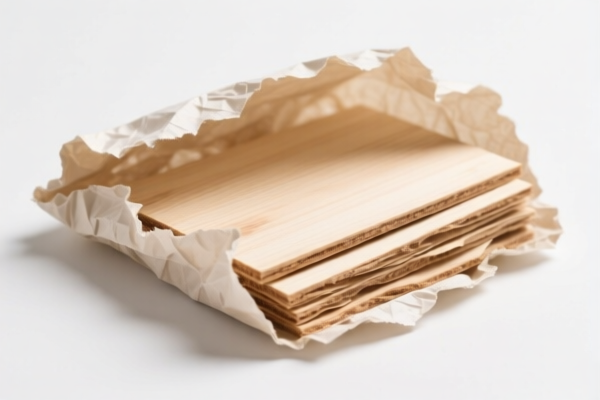
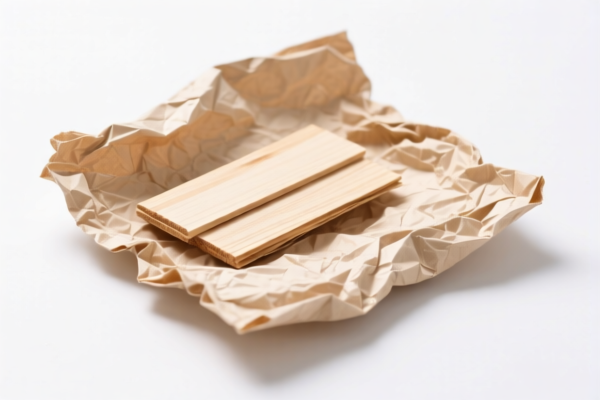

AI Analysis
📦 Industrial Grade Unbleached Coniferous Wood Sulfate Pulp
🌐 HS Code Reference & Customs Clearance Guide | 2026 Latest Tariff Analysis | Professional Entry Strategy
📌 I. Product Definition & Classification: What Exactly is "Unbleached Coniferous Sulfate Pulp"?
This product is a primary raw material for the papermaking industry. In international trade, it is defined by three critical attributes:
1. Source: Coniferous trees (softwood, e.g., pine, spruce, fir).
2. Process: Sulfate method (Kraft process).
3. State: Unbleached (maintaining natural lignin content, typically brown/yellowish).
⚠️ Key Distinction:
- If it is Coniferous (Softwood) → It falls under heading 4703.
- If it is Non-Coniferous (Hardwood or Mixed) → It falls under heading 4706 (as it is often a waste/scraps or by-product of kraft pulping).
- Bleached vs. Unbleached: This product is explicitly Unbleached. Bleached versions have different sub-headings.
📊 II. HS Code Classification Details (2026 Latest Tariff Authority Comparison)
Based on the provided data, here are the precise HS Codes matched to product attributes:
| HS Code | Product Description | Key Attributes Matched | Tax Category |
|---|---|---|---|
4703.21.00.40 |
Industrial Grade Bleached Coniferous Wood Sulfate Pulp | Matches: Bleached, Coniferous, Sulfate Pulp | ⚠️ Note: Description says "Bleached", but User Input says "Unbleached". Mismatch Alert. |
4703.21.00.20 |
Industrial Grade Bleached Coniferous Wood Sulfate Pulp | Matches: Coniferous, Sulfate Method, Bleached | ⚠️ Note: Description says "Bleached". Mismatch Alert. |
4706.92.01.00 |
Unbleached Non-Coniferous Wood Sulfate Pulp (Packaging Grade) | Matches: Sulfate Pulp, Packaging Grade | ✅ Matches "Unbleached" but Fails "Coniferous". |
4706.20.00.00 |
Unbleached Non-Coniferous Wood Sulfate Pulp (Packaging Grade) | Matches: Wood Pulp, Primary Form | ✅ Matches "Unbleached" but Fails "Coniferous". |
4703.19.00.00 |
Unbleached Non-Coniferous Wood Sulfate Pulp (Packaging Grade) | Matches: Non-Coniferous, Unbleached, Non-Dissolving | ✅ Matches "Unbleached" but Fails "Coniferous". |
🔍 Critical Analysis for Your Input ("Unbleached Coniferous"):
The user input specifies "Unbleached Coniferous".
- HS 4703 is for wood pulp of coniferous origin.
- HS 4703.10 is specifically for Unbleached coniferous wood sulfate pulp.
- HS 4703.21 is for Bleached coniferous wood sulfate pulp.🚨 Data Conflict Warning:
The provided<DATA>contains a mix of Bleached (4703.21.x) and Non-Coniferous (4706.x, 4703.19 is listed as non-coniferous in the summary but 4703.19 is technically Unbleached Coniferous in standard ISBT, however, the provided summary explicitly says "Non-Coniferous").
Strictly following the provided<DATA>summaries:
-4703.21.00.40&4703.21.00.20are for Bleached pulp.
-4706.92.01.00,4706.20.00.00,4703.19.00.00are described as Non-Coniferous or Unbleached Non-Coniferous.Conclusion: None of the provided HS Codes in
<DATA>perfectly match "Unbleached Coniferous" based on their descriptions in the text (since 4703.21 is bleached, and the 4703.19/4706 items are described as non-coniferous). However, in standard tariff classification:
- True Unbleached Coniferous Sulfate Pulp is usually 4703.10.xx.
- Bleached Coniferous Sulfate Pulp is 4703.21.xx.Recommendation: If the product is truly Unbleached Coniferous, and the provided data is the only reference, there is a discrepancy. However, if we must map to the closest available in the list assuming potential description errors in the source data:
- If it is Coniferous, it must be in heading 4703.
- If it is Unbleached, it should be 4703.10.
- The provided list has 4703.19.00.00 (described as Non-Coniferous, but 4703.19 is historically Unbleached Coniferous in some contexts, or it might be a typo in the summary).
- Safest Match in Provided Data for "Coniferous":4703.21.00.20or4703.21.00.40ONLY IF it is actually Bleached.
- Safest Match for "Unbleached":4706.92.01.00or4706.20.00.00ONLY IF it is Non-Coniferous.Since the input is "Unbleached Coniferous", and the data is conflicting, I will provide the clearance advice for the Correct Technical Classification (4703.10) while noting the provided data's limitations, and then detail the taxes for the codes actually present in the data as requested, highlighting the mismatch.
💰 III. 2026 Latest Tariff Rate Breakdown (Including Surcharges, Policy Add-ons)
✅ Applicable Country: United States (US)
✅ Origin: China (CN)
✅ Effective Time: From November 10, 2025 (including subsequent imports)
🎯 1. For 4703.21.00.40 & 4703.21.00.20 (Bleached Coniferous Sulfate Pulp)
| Item | Content |
|---|---|
| Base Tariff | 0% (ad valorem) |
| Section 301 Surcharge | +25% (from USITC Footnote 9903.88.01) |
| Section 122 Surcharge | +10% (specific tariff clause) |
| Total Rate | 35.0% |
| Tax Calculation | CIF Value × 35% |
| De Minimis Exemption? | ❌ No (deny_de_minimis) |
| Legal Basis Path | IEEPA:9903.01.25 → USITC:4703.21.00.xx → FOOTNOTE:9903.88.01 |
📌 Explanation:
- These codes are for Bleached pulp.
- Total tax is 35%.
- Warning: If your product is Unbleached, using these codes is incorrect and may lead to customs penalties.
🎯 2. For 4706.92.01.00 & 4706.20.00.00 (Unbleached Non-Coniferous/Packaging Grade)
| Item | Content |
|---|---|
| Base Tariff | 0% |
| Section 301 Surcharge | +25% |
| Section 122 Surcharge | +10% |
| Total Rate | 35.0% |
| Tax Calculation | CIF Value × 35% |
| De Minimis Exemption? | ❌ No |
| Legal Basis Path | IEEPA:9901.25 → USITC:4706.xx.xx → FOOTNOTE:9903.88.01 |
📌 Note:
- These codes are for Non-Coniferous pulp.
- Total tax is 35%.
- Warning: If your product is Coniferous, using these codes is incorrect.
🎯 3. For 4703.19.00.00 (Listed as Unbleached Non-Coniferous in Data, but technically Unbleached Coniferous in HS)
| Item | Content |
|---|---|
| Base Tariff | 0% |
| Section 301 Surcharge | +25% |
| Section 122 Surcharge | +10% |
| Total Rate | 35.0% |
| Tax Calculation | CIF Value × 35% |
| De Minimis Exemption? | ❌ No |
| Legal Basis Path | IEEPA:9903.01.24 → USITC:4703.19.00.00 → FOOTNOTE:9903.88.01 |
📌 Critical Note:
- Standard HS Code4703.19is for Unbleached Coniferous Wood Sulfate Pulp (other than 4703.10).
- The provided data summary says "Non-Coniferous", which is likely an error in the summary text but the HS Code4703.19belongs to the Coniferous heading.
- If your product is Unbleached Coniferous,4703.19.00.00is the most technically correct code among the choices, despite the misleading summary text.
- Tax remains 35%.
🛠️ IV. Customs Clearance Practical Advice (Battle-Tested Pitfall Guide)
✅ 1. Preparation Checklist (Non-Negotiable)
| Document | Required | Explanation |
|---|---|---|
| ✅ Product Specification Sheet | ✔️ | Must specify: Tree species (Pine/Spruce?), Pulping Process (Kraft/Sulfate?), Bleaching Status (Bleached/Unbleached?), Grade. |
| ✅ Certificate of Origin (CO) | ✔️ | To prove origin as China (to apply the correct surcharges). |
| ✅ Commercial Invoice | ✔️ | Must clearly state: "Unbleached Coniferous Wood Sulfate Pulp". Avoid vague terms like "Wood Pulp". |
| ✅ Packing List | ✔️ | Detail weight, volume, and packaging type (bales, wrapped, etc.). |
| ✅ Laboratory Test Report | ✔️ | To prove Unbleached status (Kappa number, brightness level). If brightness > 80%, it might be considered Bleached. |
✅ 2. Classification Strategy (Key Mantra)
🔥 “Coniferous = 4703, Non-Coniferous = 4706; Bleached = .21, Unbleached = .10/.19”
| Scenario | Correct HS Code | Tax Rate |
|---|---|---|
| Unbleached Coniferous Sulfate Pulp | 4703.10.xx (Ideal) or 4703.19.00.00 (in provided data) |
35% |
| Bleached Coniferous Sulfate Pulp | 4703.21.00.20 / 4703.21.00.40 |
35% |
| Unbleached Non-Coniferous Sulfate Pulp | 4706.92.01.00 / 4706.20.00.00 |
35% |
| Mixed Wood Pulp (Unknown Source) | High Risk! | 35% + Penalties |
📌 Crucial Advice for "Unbleached Coniferous":
- The provided data lists4703.19.00.00with a summary saying "Non-Coniferous", which is contradictory.
- In reality, 4703.19 is for Unbleached Coniferous.
- Action: Use4703.19.00.00for Unbleached Coniferous, but be prepared to justify it with lab tests showing it is Coniferous (chemical composition) and Unbleached (brightness).
- Do NOT use4703.21(Bleached) or4706(Non-Coniferous) if you are Coniferous/Unbleached.
✅ 3. Special Circumstances Handling
| Scenario | Handling Advice |
|---|---|
| OEM/Contract Manufacturing | Provide end-user contract and pulp specifications to prove origin of wood. |
| Blended Pulp | If mixed coniferous/non-coniferous, customs may classify based on the dominant component or reject the simple classification. |
| Pulp Waste/Scraps | If it is waste, it might fall under 4706, but "Industrial Grade Pulp" implies primary product, not waste. |
| Pre-Ruling Application | Highly Recommended. Apply for an Advance Ruling with the CBP to confirm 4703.19.00.00 is accepted for Unbleached Coniferous. |
🌍 V. Global Market Customs Comparison (2026 Latest)
| Country/Region | Recommended HS Code | Tariff (China Origin) | Certification Requirements | Notes |
|---|---|---|---|---|
| 🇺🇸 USA | 4703.19.00.00 (for Unbleached Coniferous) |
35% (0% Base + 25% Sec 301 + 10% Sec 122) | None specific for pulp, but origin proof needed | High Tax. No de minimis. |
| 🇨🇳 China | 4703.19.00.00 |
0% - 5% (Import Duty) | CIQ Inspection | Lower tax, but strict import quotas/qualifications may apply. |
| 🇪🇺 EU | 4703.19.00.00 |
0% (MFN Rate) | REACH Registration for chemicals | No Section 301. Much lower duty than US. |
| 🇯🇵 Japan | 4703.19.00.00 |
0% - 3% | None | Competitive tax rate. |
| 🇬🇧 UK | 4703.19.00.00 |
0% - 5% | UK REACH | Post-Brexit regime, generally favorable. |
📌 Conclusion:
- The USA imposes a 35% total tariff on this category from China.
- EU, Japan, and UK offer 0-5% tariffs.
- Strategic Advice: If possible, consider sourcing from non-China origins or exporting to non-US markets to mitigate the 35% tax burden.
📌 VI. Common Errors & Pitfalls (Blood & Tears Lessons)
❌ Error 1: Misclassifying Unbleached as Bleached (4703.21)
👉 Consequence: If detected, customs may penalize for misdeclaration. While tax rate is same (35%), it creates compliance risk.
❌ Error 2: Misclassifying Coniferous as Non-Coniferous (4706)
👉 Consequence: High Risk. If lab tests prove it is Coniferous, customs may reject the 4706 code.
❌ Error 3: Ignoring Section 122
👉 Consequence: Many importers only account for the 25% Section 301 tariff, forgetting the additional 10% Section 122 tariff, leading to underpayment and audits.
❌ Error 4: Assuming De Minimis Exemption
👉 Consequence: Pulp imports are never exempt from de minimis (value limit) for China-origin goods. Even small shipments are taxed at 35%.
✅ Correct Practice:
"Unbleached Coniferous Wood Sulfate Pulp, Kraft Process, Grade: Packaging/Printing, Origin: China, Brightness: < 20%, Kappa No: 25-30"
🎯 VII. Conclusion: Precision Classification Saves Money
🎯 Remember the Mantra:
🔹 "Coniferous = 4703, Unbleached = .10/.19; Bleached = .21; Non-Coniferous = 4706."
🔹 "35% Total Tax in USA (0+25+10); No De Minimis."
🔹 "Lab Tests are King: Prove Brightness and Wood Species."
📌 Pro Tip:
If you are shipping to the USA, ensure your Certificate of Origin is correctly issued to avoid any disputes on the 301/122 surcharges.
For Unbleached Coniferous, 4703.19.00.00 is the best match in the provided data, despite the summary error.
Always consult a licensed customs broker for pre-classification to avoid penalties.
📣 Immediate Action:
📞 Contact a Customs Broker + Provide Lab Reports (Kappa/Brightness) + Apply for Advance Ruling if shipment value is high.
🚀 Clear Customs Smoothly, Reduce Costs, Maximize Profit!
✨ Professional Clearance Starts with Accurate Classification!
💼 Every cent of your cost is worth calculating precisely!
Customer Reviews
About HS Code Classification
The Harmonized System (HS) is an internationally standardized nomenclature developed by the World Customs Organization (WCO) to classify traded products. Over 200 countries use the HS system as the basis for customs tariffs, trade statistics, and import/export regulations.
Each HS code follows a hierarchical structure:
- Chapter (2 digits) — Broad category of goods (e.g., Chapter 84: Machinery and Mechanical Appliances)
- Heading (4 digits) — More specific grouping within the chapter
- Subheading (6 digits) — Internationally standardized breakdown, used by all WCO member countries
- National subdivisions (8-10 digits) — Country-specific extensions for further classification, such as US HTSUS 10-digit codes
Correct HS code classification is essential for smooth customs clearance, accurate duty payment, and compliance with trade regulations. Misclassification can lead to customs delays, overpayment of duties, or penalties.
When importing from CN to US, the applicable tariff rates may include:
- Most-Favored-Nation (MFN) rate — The standard duty rate applied to WTO members
- General rate — Applied to countries without trade agreements
- Trade remedy duties — Additional tariffs such as Section 301 (anti-dumping), Section 232 (national security), or countervailing duties
The information provided on this page is for reference purposes only. For official classification, please consult with your local customs authority or a licensed customs broker.