Industrial grade sulfite wood pulp
CN → USProduct Images
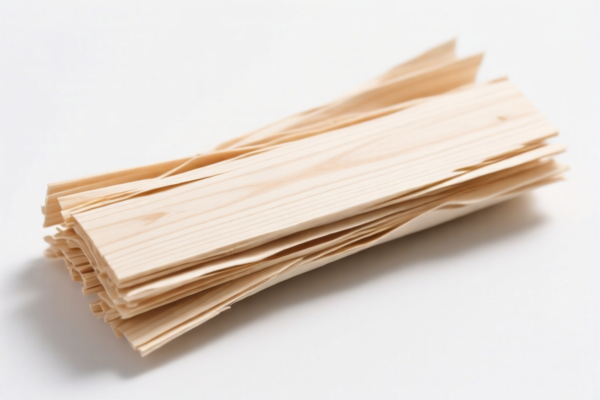
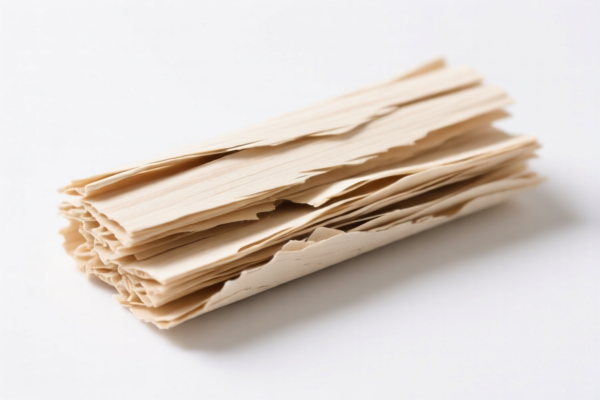
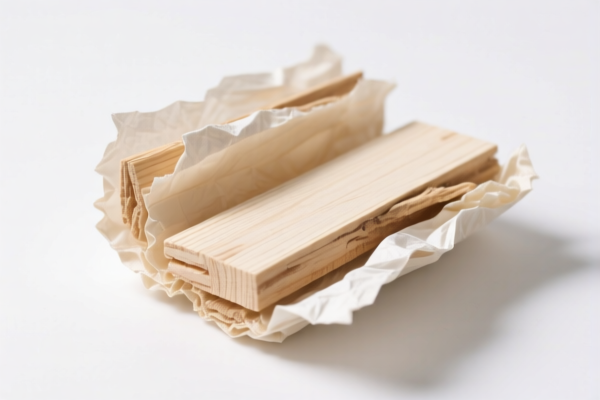
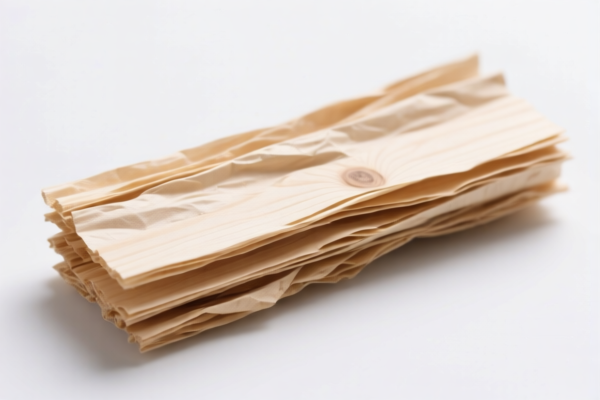
AI Analysis
🌲 Industrial Grade Sulfite Wood Pulp (Chemical Pulp for Manufacturing & Industry)
🌐 HS Code Reference & Customs Clearance Guide | 2026 Latest Tariff Analysis | Professional Logistics Strategy 📌 Part 1: Product Definition & Classification: What Exactly Is "Sulfite Pulp"?
Industrial Grade Sulfite Wood Pulp is a chemical wood pulp produced by digesting wood chips with a solution of sulfites or bisulfites of magnesium, calcium, sodium, or ammonium. Unlike mechanical pulp, it has high brightness and strength, making it essential for high-quality paper manufacturing, cellulose derivatives, and industrial chemicals.
In international trade, it is strictly categorized under Chapter 47: Wood Pulp and Other Fibrous Cellulosic Pulp; Chemical Wood Pulp Dissolving Grade.
Key Distinctions: * Sulfite vs. Kraft (Sulfate): While both are chemical pulps, they are processed differently. However, for HS Code purposes, both generally fall under the same broad categories unless specified as "Dissolving Grade." * Standard Industrial Grade vs. Dissolving Grade: This is the most critical distinction. * Standard Industrial Grade: Used for paper production (tissue, printing/writing, packaging). * Dissolving Grade: Used for making viscose rayon, acetate, cellophane, and explosives (nitrocellulose). It requires higher alpha-cellulose content and lower lignin.
⚠️ Critical Classification Point: - If the pulp is intended for paper making (standard industrial use) → Generally 4704. - If the pulp is Dissolving Grade (high purity for chemicals) → Generally 4706 or specifically noted under 4704/4705 depending on origin and specific chemical tests, but often 4704.90 is the broad bucket for non-coniferous or mixed, while 4703/4704 are for coniferous/non-coniferous respectively. - Note: Most standard "Industrial Grade Sulfite" (non-dissolving) falls under 4704 (Coniferous) or 4705 (Non-Coniferous).
📦 Part 2: HS Code Classification Details (2026 Latest Harmonized System)
The HS Code depends heavily on whether the wood is Coniferous (softwood like pine, spruce) or Non-Coniferous (hardwood like eucalyptus, birch). Sulfite process is usually applied to both, but Softwood Sulfite is more common for long-fiber paper.
| HS Code | Product Description | Applicable Scenario | Chemical Process |
|---|---|---|---|
| 4704.21.00 | Chemical Wood Pulp, Coniferous, Sulfite Process, Bleached | High-quality paper, tissue, filter paper (Softwood) | ✅ Sulfite (Magnesium/Sodium etc.) |
| 4704.29.00 | Chemical Wood Pulp, Coniferous, Sulfite Process, Unbleached/Other | Packaging, cardboard, lower-grade paper (Softwood) | ✅ Sulfite |
| 4705.00.00 | Chemical Wood Pulp, Non-Coniferous, Sulfite Process | Hardwood sulfite pulp for specific paper grades | ✅ Sulfite (Birch, Eucalyptus, etc.) |
| 4706.90.90 | Other Waste and Scrap Pulp (Recovering Fiber) | Recycled pulp, sludge | ❌ Not Virgin Pulp |
| 4707.30.00 | Chemical Wood Pulp, De-inked | Recycled pulp from printed paper | ❌ Not Virgin Pulp |
🔍 Key Reminder: - 4704 is for Coniferous (Softwood) pulp. - 4705 is for Non-Coniferous (Hardwood) pulp. - Do not confuse with 4703 (Kraft/Sulfate Process). If your product is Sulfite, it must be 4704 or 4705. Misclassification can lead to significant duty discrepancies. - If the product is Dissolving Grade, some countries may require specific certification to classify it differently or apply different duties, but typically it still falls under 4704/4705 unless specific national sub-headings exist for dissolving pulp.
💰 Part 3: 2026 Latest Tariff Rate Breakdown (Including Additional Duties)
✅ Applicable Country: United States (US)
✅ Origin: China (CN)
✅ Effective Time: 2025-2026 (Current Trade War Status)
🎯 1. 4704.21.00 / 4704.29.00 —— Chemical Wood Pulp, Coniferous, Sulfite
| Item | Content |
|---|---|
| Base MFN Rate | 0% (Generally free under normal trade) |
| Section 301 Rate (USITC) | +25% (Category 3: Paper Products & Pulp) |
| IEEPA Surcharge | 0% (Pulp is generally not on the latest IEEPA lists for consumer goods, but check specific updates. Note: Section 301 is the dominant factor here.) |
| Total Effective Rate | 25% |
| Tax Calculation | CIF Value × 25% |
| De Minimis Eligibility | ❌ Not Eligible (High value bulk shipments) |
| Legal Basis | USITC:4704.xx.xx → FOOTNOTE:301-Category3 |
📌 Explanation: - Wood pulp is considered an intermediate industrial good. While the base MFN rate is often 0%, the Section 301 Tariff imposes an additional 25% on many Chinese-origin chemical wood pulps. - This is a critical cost driver. Do not assume 0% duty because MFN is low.
🎯 2. 4705.00.00 —— Chemical Wood Pulp, Non-Coniferous, Sulfite
| Item | Content |
|---|---|
| Base MFN Rate | 0% |
| Section 301 Rate (USITC) | +25% |
| Total Effective Rate | 25% |
| Tax Calculation | CIF Value × 25% |
📌 Note: Same logic applies. Hardwood sulfite pulp from China is also subject to the 25% Section 301 tariff.
🛠️ Part 4: Customs Clearance Practical Advice (Actionable Guide)
✅ 1. Required Documentation Checklist
| Document | Required | Description |
|---|---|---|
| ✅ Commercial Invoice | ✔️ | Must state "Chemical Wood Pulp, Sulfite Process, Bleached/Unbleached" |
| ✅ Packing List | ✔️ | Weight, quantity, number of bales/bags |
| ✅ Certificate of Origin (CO) | ✔️ | Essential for proving origin (CN) to apply Section 301 if applicable |
| ✅ Phytosanitary Certificate | ✔️ | CRITICAL for wood products. Must confirm no pests/bark |
| ✅ Bill of Lading (B/L) | ✔️ | Standard shipping document |
| ✅ Technical Data Sheet | ✔️ | Confirms pulp type (Sulfite vs. Kraft), brightness, viscosity |
| ✅ Fumigation Certificate | ✔️ | If wood packaging is used (ISPM 15 compliant) |
✅ 2. Declaration Strategy (Key Tips)
🔥 “Be Precise: Coniferous vs. Non-Coniferous, Bleached vs. Unbleached”
| Scenario | Correct Declaration | Risk if Wrong |
|---|---|---|
| Softwood Sulfite, Bleached | 4704.21.00 |
If declared as Hardwood (4705), customs may ask for correction |
| Softwood Sulfite, Unbleached | 4704.29.00 |
|
| Hardwood Sulfite | 4705.00.00 |
|
| Dissolving Grade | Check if specific sub-heading exists | If misclassified, may face different duty rates or regulatory scrutiny |
✅ 3. Special Considerations for Pulp Import
- Phytosanitary Compliance: The USDA APHIS is very strict. Any sign of bark, insects, or mold can lead to rejection or re-export. Ensure wood packaging is heat-treated (HT mark) or fumigated.
- Moisture Content: Pulp must be dried to standard moisture levels (typically 5-10%). High moisture can lead to mold during transit, triggering phytosanitary issues.
- Bale Identification: Each bale should be clearly labeled with Manufacturer, Product Code, Weight, and Net Weight. Mislabeled bales can cause customs delays.
- Section 301 Exclusions: Check if your specific HS Code + HTS Number is currently on the Exclusion List for Section 301. (As of 2026, most pulp remains subject to duties, but verify latest USITC exclusions).
🌍 Part 5: Global Market Comparison (2026)
| Country/Region | Recommended HS Code | Duty Rate (China Origin) | Certification Required | Notes |
|---|---|---|---|---|
| 🇺🇸 USA | 4704.xx.xx / 4705.00.00 |
25% (Section 301) | Phytosanitary, CO | High duty cost; verify exclusions |
| 🇨🇳 China | 4704.xx.xx / 4705.00.00 |
0% | None | Major importer of pulp; free trade zone benefits |
| 🇪🇺 EU | 4704.xx.xx / 4705.00.00 |
0% | Phytosanitary, FSC/PEFC (optional) | No Section 301 equivalent; low duty |
| 🇮🇳 India | 4704.xx.xx / 4705.00.00 |
~5-10% | Phytosanitary | Varies by trade agreement |
📌 Conclusion: - USA is the most expensive market due to Section 301 tariffs (25%). - EU and China are more cost-effective for pulp imports from China. - Always verify Phytosanitary requirements as this is the #1 cause of shipment delays for wood-based products.
📌 Part 6: Common Errors & Pitfalls (Lessons Learned)
❌ Error 1: Declaring "Sulfite Pulp" as "Kraft Pulp" (4703)
👉 Consequence: Misclassification leads to 25% duty discrepancy + penalties. Sulfite and Kraft have different HS codes (4704/4705 vs 4703/4704 depending on wood type).
❌ Error 2: Missing Phytosanitary Certificate
👉 Consequence: Shipment held at port or returned. No phytosanitary cert = No entry for wood products.
❌ Error 3: Ignoring Section 301 Eligibility
👉 Consequence: Underpaying duties. If you don’t pay the 25% additional tariff, you will face audits, back-taxes, and fines upon CBP audit.
✅ Correct Practice:
"Chemical Wood Pulp, Coniferous, Sulfite Process, Bleached, HS 4704.21.00, Phytosanitary Certificate Attached, Fumigated Packaging"
🎯 Part 7: Conclusion: Professional Declaration for Smooth Clearance
🎯 Remember the Key Points:
🔹 "Sulfite = 4704/4705, Not 4703!"
🔹 "Phytosanitary Cert is Mandatory for Wood Products!"
🔹 "Section 301 25% Duty Applies to China Origin Pulp!"
📌 Pro Tip:
If you are importing large volumes, consider Advance Ruling from US Customs (CBP) to confirm the exact HS Code and duty liability. This provides legal certainty and avoids surprises.
📣 Immediate Action:
📞 Verify Phytosanitary Requirements with USDA APHIS
📞 Confirm Section 301 Exclusion Status for your specific HS Code
🚀 Ensure Smooth Clearance for Your Industrial Pulp!
✨ Professional Customs Clearance Starts with Accurate Classification!
💼 Every Dollar Saved in Duties is Profit Earned!
Customer Reviews
About HS Code Classification
The Harmonized System (HS) is an internationally standardized nomenclature developed by the World Customs Organization (WCO) to classify traded products. Over 200 countries use the HS system as the basis for customs tariffs, trade statistics, and import/export regulations.
Each HS code follows a hierarchical structure:
- Chapter (2 digits) — Broad category of goods (e.g., Chapter 84: Machinery and Mechanical Appliances)
- Heading (4 digits) — More specific grouping within the chapter
- Subheading (6 digits) — Internationally standardized breakdown, used by all WCO member countries
- National subdivisions (8-10 digits) — Country-specific extensions for further classification, such as US HTSUS 10-digit codes
Correct HS code classification is essential for smooth customs clearance, accurate duty payment, and compliance with trade regulations. Misclassification can lead to customs delays, overpayment of duties, or penalties.
When importing from CN to US, the applicable tariff rates may include:
- Most-Favored-Nation (MFN) rate — The standard duty rate applied to WTO members
- General rate — Applied to countries without trade agreements
- Trade remedy duties — Additional tariffs such as Section 301 (anti-dumping), Section 232 (national security), or countervailing duties
The information provided on this page is for reference purposes only. For official classification, please consult with your local customs authority or a licensed customs broker.