Industrial grade synthetic rubber and factice mixtures
CN → US| HS Code | Tariff Rate | Origin | Destination | Doc |
|---|---|---|---|---|
| 4002990000 | 35.0% | CN | US | Official Doc |
| 4002110000 | 35.0% | CN | US | Official Doc |
| 4002910000 | 35.0% | CN | US | Official Doc |
| 3913901000 | 35.0% | CN | US | Official Doc |
| 3913905000 | 41.5% | CN | US | Official Doc |
Product Images
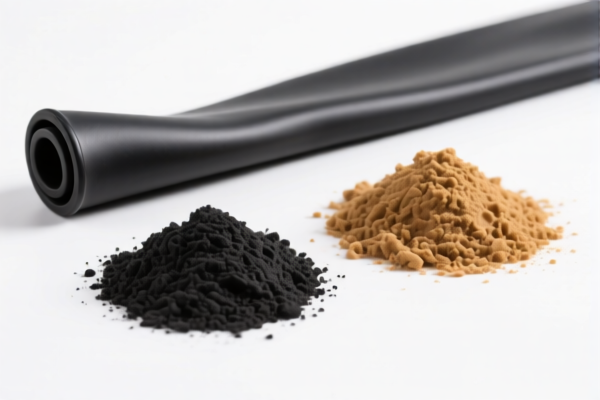
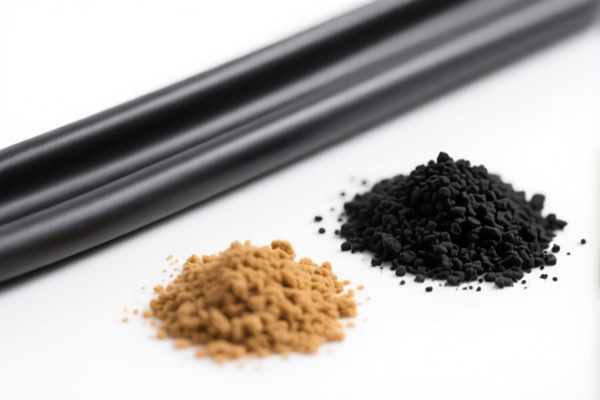
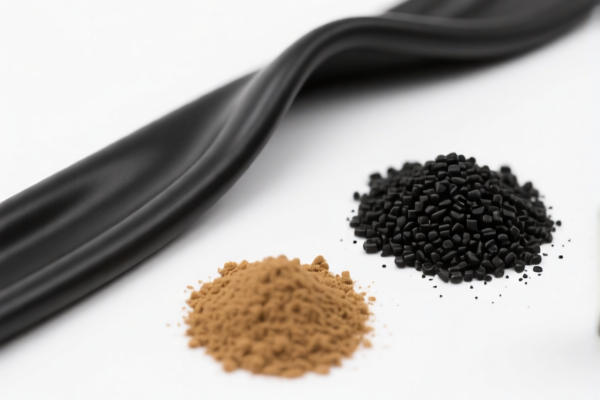
AI Analysis
🏭 Synthetic Rubber & Factice Mixtures (Industrial Grade)
🌐 HS Code Reference & Clearance Guide | 2026 Latest Tariff Analysis | Professional Strategy
📌 I. Product Definition & Classification: What Are "Synthetic Rubber and Factice Mixtures"?
Factice is a product obtained by treating rubber with vegetable oils (such as linseed or olive oil) to produce a plastic, rubber-like mass. When mixed with Synthetic Rubber (such as SBR, NBR, CR, etc.), the resulting product falls under specific chapters of the Harmonized System depending on its physical state and composition.
In international trade, these mixtures are primarily classified under Chapter 40 (Rubber and Articles Thereof) or potentially Chapter 39 (Plastics and Articles Thereof) if considered as chemical derivatives of natural polymers, though Chapter 40 is the standard for rubber mixtures.
⚠️ Key Distinction Points:
- If the product is latex (emulsion): It falls under 4002 (Synthetic Rubber in Primary Forms).
- If the product is solid blocks/rolls and is a mixture of synthetic and natural rubber: It falls under 4002.99.
- If classified as a chemical derivative of natural polymer: It might fall under 3913, but this is less common for standard industrial rubber mixtures unless specifically defined as such by regulatory authorities.
📦 II. HS Code Classification Details (2026 Latest Tariff Authority Comparison)
Based on the provided data, here are the possible HS Code classifications for industrial-grade synthetic rubber and factice mixtures:
| HS Code | Product Description | Applicable Scenario | Key Characteristics |
|---|---|---|---|
| 4002.99.00.00 | Other mixtures of synthetic rubber and natural rubber | Solid form (blocks, sheets, rolls); Mixed rubber composition | Defined as "Other mixtures"; Combines synthetic rubber with natural rubber/factice |
| 4002.11.00.00 | Styrene-butadiene rubber (SBR) or Carboxylated SBR (XSBR) in Latex | Liquid/Emulsion form (Latex); Specifically SBR/XSBR type | Must be in latex (emulsion) state; Specific synthetic rubber type |
| 4002.91.00.00 | Other synthetic rubber in Latex | Liquid/Emulsion form; Non-SBR synthetic rubber | Any synthetic rubber (other than SBR/XSBR) in latex/emulsion state |
| 3913.90.10.00 | Chemical derivatives of natural polymers (modified) | Treated rubber as a chemical derivative | Classified under plastics if viewed as a chemically modified natural polymer derivative |
| 3913.90.50.00 | Other polymers in primary forms | General polymer category fallback | Applies if not clearly defined under 4002; Latex form assumed |
🔍 Critical Reminder:
- Latex vs. Solid: The form of the product (liquid emulsion vs. solid mass) is the primary determinant between 4002 and 3913.
- Material Composition: If it contains natural rubber mixed with synthetic, 4002.99.00.00 is often the most accurate for solid forms.
- Factice Specificity: Factice is often treated as a modification of rubber. If it's a pure factice-rubber blend without natural rubber, 4002.99.00.00 (Other mixtures) is a strong candidate.
💰 III. 2026 Latest Tariff Rate Breakdown (Including Surcharges, Policy Add-ons)
✅ Applicable Country: USA (US)
✅ Origin: China (CN)
✅ Effective Date: November 10, 2025 (for subsequent imports)
🎯 1. 4002.99.00.00 — Other Mixtures of Synthetic Rubber and Natural Rubber (Solid/Mixed)
| Item | Content |
|---|---|
| Base Duty Rate | 0% (ad valorem) |
| USITC Surcharge | +25% (from USITC Footnote 9903.88.01) |
| IEEPA Surcharge | +10% (Targeting China/HK products, effective Nov 10, 2025) |
| Total Duty Rate | 35.0% |
| Duty Calculation | CIF Value × 35% |
| De Minimis Eligibility | ❌ Not Eligible (deny_de_minimis) |
| Legal Pathway | IEEPA:9903.01.25 → IEEPA:9903.01.24 → USITC:4002.99.00.00 → FOOTNOTE:9903.88.01 |
📌 Explanation:
- "USITC Surcharge 25%" comes from Section 301 tariffs under the US Trade Act;
- "IEEPA 10%" is the additional tariff under the International Emergency Economic Powers Act targeting Chinese products;
- Total 35% is a high tariff, requiring early cost assessment!
🎯 2. 4002.11.00.00 — SBR/XSBR Latex
| Item | Content |
|---|---|
| Base Duty Rate | 0% |
| USITC Surcharge | +25% |
| IEEPA Surcharge | +10% |
| Total Duty Rate | 35.0% |
| Duty Calculation | CIF × 35% |
| De Minimis Eligibility | ❌ Not Eligible |
| Legal Pathway | IEEPA:9903.01.25 → IEEPA:9903.01.24 → USITC:4002.11.00.00 → FOOTNOTE:9903.88.01 |
📌 Note:
- Same as above; applies specifically to SBR/XSBR in latex form.
- Even if labeled "Factice Emulsion," if the main component is SBR, this code applies.
🎯 3. 4002.91.00.00 — Other Synthetic Rubber in Latex
| Item | Content |
|---|---|
| Base Duty Rate | 0% |
| USITC Surcharge | +25% |
| IEEPA Surcharge | +10% |
| Total Duty Rate | 35.0% |
| Duty Calculation | CIF × 35% |
| De Minimis Eligibility | ❌ Not Eligible |
| Legal Pathway | IEEPA:9903.01.25 → IEEPA:9903.01.24 → USITC:4002.91.00.00 → FOOTNOTE:9903.88.01 |
📌 Note:
- For non-SBR synthetic rubber latices (e.g., NBR, EPDM latex).
- Rate is identical to SBR latex due to similar tariff structures.
🎯 4. 3913.90.10.00 — Chemical Derivatives of Natural Polymers
| Item | Content |
|---|---|
| Base Duty Rate | 0.0% |
| USITC Surcharge | +25% |
| IEEPA Surcharge | +10% |
| Total Duty Rate | 35.0% |
| Duty Calculation | CIF × 35% |
| De Minimis Eligibility | ❌ Not Eligible |
| Legal Pathway | IEEPA:9903.01.25 → IEEPA:9903.01.24 → USITC:3913.90.10.00 → FOOTNOTE:9903.88.01 |
📌 Note:
- This classification is used if the product is considered a chemically modified natural polymer rather than pure rubber.
- Less common for standard industrial mixtures unless specifically defined by customs rulings.
🎯 5. 3913.90.50.00 — Other Polymers in Primary Forms
| Item | Content |
|---|---|
| Base Duty Rate | 6.5% |
| USITC Surcharge | +25% |
| IEEPA Surcharge | +10% |
| Total Duty Rate | 41.5% |
| Duty Calculation | CIF × 41.5% |
| De Minimis Eligibility | ❌ Not Eligible |
| Legal Pathway | IEEPA:9903.01.25 → IEEPA:9903.01.24 → USITC:3913.90.50.00 → FOOTNOTE:9903.88.01 |
📌 Note:
- Highest Tax Rate (41.5%).
- Applies if the product is classified as a general polymer under Chapter 39 and not specifically covered under Chapter 40.
- Avoid this code if the product can be accurately described as rubber under Chapter 40 to save 6.5%.
🛠️ IV. Clearance Practical Advice (Real-World Pitfall Avoidance Guide)
✅ 1. Documentation Checklist (Mandatory)
| Document | Required | Description |
|---|---|---|
| ✅ Product Specification Sheet | ✔️ | Must detail composition: % Synthetic Rubber, % Factice, % Natural Rubber (if any), State (Latex/Solid). |
| ✅ Formula/MSDS | ✔️ | To prove it's not a hazardous chemical but a rubber mixture. |
| ✅ Product Photos | ✔️ | Clear images showing physical state (emulsion bucket or solid blocks). |
| ✅ Certificate of Origin (CO) | ✔️ | Essential for proving origin to apply/verify surcharges. |
| ✅ Commercial Invoice | ✔️ | Must clearly state "Synthetic Rubber and Factice Mixture" and HS Code. |
| ✅ Packing List | ✔️ | Weight and volume details. |
✅ 2. Declaration Tips (Key Mantra)
🔥 "Latex goes to 4002, Solid Mix to 4002.99, Avoid 3913.90.50!"
| Scenario | Correct Declaration | Error to Avoid |
|---|---|---|
| Liquid Emulsion (Latex) | 4002.91.00.00 or 4002.11.00.00 |
Reporting as "Plastic Resin" → Higher tax |
| Solid Blocks (Mixed Rubber) | 4002.99.00.00 |
Reporting as "General Rubber" without detail → Delay |
| Chemically Modified Rubber | 3913.90.10.00 |
Misclassified as 3913.90.50.00 → Extra 6.5% |
✅ 3. Special Cases Handling
| Situation | Handling Advice |
|---|---|
| High Factice Content | If factice > rubber, ensure it's still classified as rubber. If it becomes more like a plastic, consult a custom broker for 3913. |
| Mixed Natural & Synthetic | Always use 4002.99.00.00 if natural rubber is present. Do not classify as pure synthetic. |
| OEM Custom Mix | Provide client contract + formula sheet to justify specific HS code. |
| Samples | Even small samples are subject to the same high tariffs (35%-41.5%); do not use "De Minimis" exemption. |
🌍 V. Global Market Comparison (2026 Latest)
| Country/Region | Recommended HS Code | Duty Rate | Certification | Notes |
|---|---|---|---|---|
| 🇺🇸 USA | 4002.99.00.00 |
35% (China) | No special certs needed for raw material | High surcharge due to 301/IEEPA |
| 🇨🇳 China | 4002.99.00.00 |
~5-10% | CCC (if finished goods) | Lower base duty, no US surcharges |
| 🇪🇺 EU | 4002.99.00.00 |
0-6.5% | REACH Compliance | No US-style surcharges; check REACH for chemicals |
| 🇬🇧 UK | 4002.99.00.00 |
0-5% | UKCA | Post-Brexit rules apply |
| 🇯🇵 Japan | 4002.99.00.00 |
0-5.5% | PSE (if end-use) | Generally low duties |
📌 Conclusion:
- USA has the highest entry barrier due to 35-41.5% duties.
- EU and Asia offer much better duty-free or low-duty access.
- Consider supply chain diversification (e.g., producing in Vietnam/Malaysia) to avoid US surcharges.
📌 VI. Common Errors & Pitfalls (Lessons Learned)
❌ Error 1: Classifying latex rubber under 3913.90.50.00
👉 Consequence: 41.5% duty instead of 35%. Loss of 6.5%!
❌ Error 2: Declaring "Factice" as "Plastic"
👉 Consequence: Misclassification leads to customs seizure or penalties. Factice is a rubber modifier, not a standalone plastic.
❌ Error 3: Ignoring the "Mixture" aspect
👉 Consequence: If natural rubber is present, 4002.99 is correct. Using 4002.91 (pure synthetic) leads to under-declaration penalties.
❌ Error 4: Assuming "De Minimis" applies
👉 Consequence: Rubber products from China are excluded from de minimis (Section 321) due to IEEPA/301 rules. Even small shipments are taxed!
✅ Correct Practice:
"Synthetic Rubber and Factice Mixture, Latex, SBR-based, Industrial Grade, No Natural Rubber" →
4002.91.00.00(35%)
🎯 VII. Conclusion: Professional Declaration Saves Money!
🎯 Remember the Mantra:
🔹 "Latex = 4002, Solid Mix = 4002.99, Avoid 3913.50!"
🔹 "35% is standard, 41.5% is avoidable. Origin matters, Declaration must be precise."
📌 Pro Tip:
If your product contains natural rubber, explicitly state it. If it's pure synthetic, use
4002.91or4002.11.
Always apply for an Advance Ruling from US Customs (CBP) if the product composition is complex (e.g., high factice content).
📣 Take Action Now:
📞 Contact a licensed customs broker + Provide Formula + Apply for Pre-Ruling
🚀 Ensure your synthetic rubber imports clear US customs smoothly and efficiently!
✨ Professional Clearance Starts with Precise Classification!
💼 Every percentage point of duty counts in the bottom line!
Customer Reviews
About HS Code Classification
The Harmonized System (HS) is an internationally standardized nomenclature developed by the World Customs Organization (WCO) to classify traded products. Over 200 countries use the HS system as the basis for customs tariffs, trade statistics, and import/export regulations.
Each HS code follows a hierarchical structure:
- Chapter (2 digits) — Broad category of goods (e.g., Chapter 84: Machinery and Mechanical Appliances)
- Heading (4 digits) — More specific grouping within the chapter
- Subheading (6 digits) — Internationally standardized breakdown, used by all WCO member countries
- National subdivisions (8-10 digits) — Country-specific extensions for further classification, such as US HTSUS 10-digit codes
Correct HS code classification is essential for smooth customs clearance, accurate duty payment, and compliance with trade regulations. Misclassification can lead to customs delays, overpayment of duties, or penalties.
When importing from CN to US, the applicable tariff rates may include:
- Most-Favored-Nation (MFN) rate — The standard duty rate applied to WTO members
- General rate — Applied to countries without trade agreements
- Trade remedy duties — Additional tariffs such as Section 301 (anti-dumping), Section 232 (national security), or countervailing duties
The information provided on this page is for reference purposes only. For official classification, please consult with your local customs authority or a licensed customs broker.