Inflatable Boat
CN → US| HS Code | Tariff Rate | Origin | Destination | Doc |
|---|---|---|---|---|
| 4016950000 | 21.7% | CN | US | Official Doc |
| 4016940000 | 39.2% | CN | US | Official Doc |
| 8903110015 | 37.4% | CN | US | Official Doc |
| 8903110060 | 12.4% | CN | US | Official Doc |
Product Images



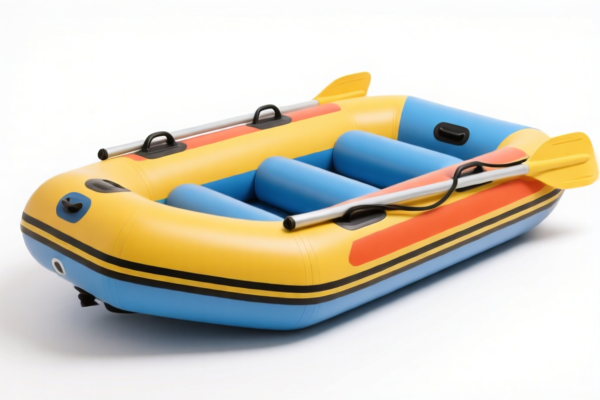
AI Analysis
🚤 Inflatable Boat (Rubber Inflatable Craft)
🌐 HS Code Reference & Customs Clearance Guide | 2026 Latest Tariff Analysis | Professional Clearance Strategy
📌 I. Product Definition & Classification: Do You Really Understand "Inflatable Boats"?
An Inflatable Boat is a watercraft constructed primarily from flexible materials (typically PVC, Hypalon, or rubber) that derives buoyancy from air-filled chambers. In international trade, the classification is critical because it splits into two distinct categories based on construction material and intended use:
- Rubber Inflatable Articles (HS 4016): Classified by material ("Sulfurized Rubber") regardless of form, often used for industrial, safety, or specialized marine equipment (e.g., fenders, bumpers).
- Boats (HS 8903): Classified by function and form. If designed for recreation/sport and potentially engine-equipped, it falls under Chapter 89.
⚠️ Key Distinction Point:
- If the item is primarily defined as a "Rubber Product" (e.g., a rubber fender/bumper, or a boat where rubber is the dominant industrial material) → HS 4016
- If the item is primarily defined as a "Boat" (for recreation, sport, or transport) → HS 8903
📦 II. HS Code Classification Details (2026 Latest Tariff Authority Comparison)
Based on the provided data, here are the four matched HS Codes with their specific matching criteria and tax implications.
| HS Code | Product Description | Matching Criteria & Logic | Total Tax Rate |
|---|---|---|---|
4016.95.00.00 |
Other Articles of Sulfurized Rubber: Other Inflatable Articles | Material Focus: Name explicitly contains "Rubber" + "Inflatable" form. Logic: Fits the definition of "Other Inflatable Articles" under Sulfurized Rubber Products. No conflict with specific boat definitions. |
21.7% |
4016.94.00.00 |
Other Articles of Sulfurized Rubber: Floor Coverings and Ground Coverings (Note: Data Summary indicates "Bumper/Chafing Gear" context) | Form/Function Focus: "Rubber" material + "Inflatable Boat" form interpreted as a Fender/Bumper (Hull protection). Logic: Extension of "Chafing Gear" function. No material conflict. High punitive tariff applies. |
39.2% |
8903.11.00.15 |
Boats: Inflatable Boats; Designed to be Put in the Water; Other | Form/Function Focus: Explicitly "Inflatable Boat"; Rubber inferred as standard construction; Designed for Engine Installation. Logic: Classified under "Inflatable Boats" capable of being equipped with engines. |
37.4% |
8903.11.00.60 |
Boats: Inflatable Boats; Designed to be Put in the Water; Other | Form/Function Focus: "Inflatable Boat"; Rubber structure inferred; Designed for Recreation/Sports. Logic: Classified under recreational inflatable boats. Lower base tariff. |
12.4% |
🔍 Critical Note:
- HS 4016 codes treat the item as a Rubber Good.
- HS 8903 codes treat the item as a Vessel.
- The choice between8903.11.00.15(Engine-ready) and8903.11.00.60(Recreation/Sport) significantly impacts the tax burden (37.4% vs 12.4%).
💰 III. 2026 Latest Tariff Rate Breakdown (Including Additional Taxes & Policy Surcharges)
✅ Applicable Country: United States (US)
✅ Origin: China (CN)
✅ Effective Date: From Nov 10, 2025 (Including subsequent imports)
🎯 1. 4016.95.00.00 —— Sulfurized Rubber: Other Inflatable Articles
| Item | Detail |
|---|---|
| Base Tariff | 4.2% (ad valorem) |
| Section 301 Surcharge | +7.5% |
| Section 122 Tariff | +10% |
| Total Tax Rate | 21.7% |
| Tax Calculation | CIF Value × 21.7% |
| De Minimis Eligibility | ❌ Not Eligible (Subject to high tariffs) |
| Legal Basis Path | Section 301 → Section 122 → USITC:4016.95.00.00 |
📌 Explanation:
- This is the "middle-ground" classification. It acknowledges the rubber material but avoids the highest punitive tariffs assigned to specific boat forms or base rubber goods under certain trade actions.
- 21.7% is a moderate-high rate compared to domestic goods, but lower than the boat-specific punitive rates.
🎯 2. 4016.94.00.00 —— Sulfurized Rubber: Other (Bumper/Fender Interpretation)
| Item | Detail |
|---|---|
| Base Tariff | 4.2% |
| Section 301 Surcharge | +25.0% (High Penalty) |
| Section 122 Tariff | +10% |
| Total Tax Rate | 39.2% |
| Tax Calculation | CIF Value × 39.2% |
| De Minimis Eligibility | ❌ Not Eligible |
| Legal Basis Path | Section 301 → Section 122 → USITC:4016.94.00.00 |
📌 Warning:
- This rate applies if Customs classifies the boat as a "Rubber Fender/Bumper" (Chafing Gear) rather than a transport vessel.
- The 25% Section 301 surcharge makes this a very expensive classification. Avoid if possible by proving it is a "Boat."
🎯 3. 8903.11.00.15 —— Boats: Inflatable Boats (Engine-Equipped)
| Item | Detail |
|---|---|
| Base Tariff | 2.4% |
| Section 301 Surcharge | +25.0% |
| Section 122 Tariff | +10% |
| Total Tax Rate | 37.4% |
| Tax Calculation | CIF Value × 37.4% |
| De Minimis Eligibility | ❌ Not Eligible |
| Legal Basis Path | Section 301 → Section 122 → USITC:8903.11.00.15 |
📌 Explanation:
- Applies to inflatables designed to be equipped with engines (outboard motors).
- The high 25% Section 301 tariff is triggered because these are often considered durable goods with significant manufacturing input.
- Despite a low base tariff (2.4%), the total cost is high due to punitive duties.
🎯 4. 8903.11.00.60 —— Boats: Inflatable Boats (Recreation/Sport)
| Item | Detail |
|---|---|
| Base Tariff | 2.4% |
| Section 301 Surcharge | 0.0% (Exemption/Low Penalty) |
| Section 122 Tariff | +10% |
| Total Tax Rate | 12.4% |
| Tax Calculation | CIF Value × 12.4% |
| De Minimis Eligibility | ❌ Not Eligible |
| Legal Basis Path | Section 122 → USITC:8903.11.00.60 |
📌 Key Advantage:
- THIS IS THE MOST COST-EFFECTIVE OPTION.
- If the boat is for recreation, sport, or leisure (no engine mounting or non-motorized primary design), it falls here.
- No Section 301 surcharge (0%), only the 10% Section 122 tariff.
- Total tax is 12.4%, less than half the cost of the engine-equipped or rubber-fender classifications.
🛠️ IV. Customs Clearance Practical Advice (Real-World Pitfall Guide)
✅ 1. Documentation Checklist (Mandatory)
| Document | Required | Explanation |
|---|---|---|
| ✅ Product Specifications | ✔️ | Must clearly state: Material (e.g., PVC/Rubber), Type (Inflatable), Intended Use (Sport/Recreation vs. Industrial). |
| ✅ Product Photos | ✔️ | Show the boat deflated and inflated. Highlight seams, valves, and lack of engine mounts (if aiming for 12.4% rate). |
| ✅ Commercial Invoice | ✔️ | Use precise language: "Inflatable Recreation Boat, for Sports/Leisure, No Engine Installed" for 8903.11.00.60. |
| ✅ Packing List | ✔️ | List accessories (pump, oars, patches). Ensure no motor is included in the same shipment if claiming non-engine status. |
| ✅ Origin Certificate | ✔️ | Essential for determining Section 301 applicability. |
✅ 2. Declaration Strategy (Key Tips)
🔥 "Recreation Avoids 25%, Engine Triggers 25%, Rubber Material Triggers 21-39%!"
| Scenario | Recommended HS Code | Declaration Text Example | Risk |
|---|---|---|---|
| Sport/Leisure Boat (No engine) | 8903.11.00.60 |
"Inflatable Rubber Boat for Water Sports, Recreational Use Only" | ✅ Lowest Tax (12.4%) |
| Boat Ready for Engine | 8903.11.00.15 |
"Inflatable Boat, Designed for Outboard Motor Mounting" | ⚠️ High Tax (37.4%) |
| Industrial Rubber Fender/Bumper | 4016.94.00.00 |
"Rubber Inflatable Fender for Marine Protection" | ❌ High Tax (39.2%), Audit Risk |
| Generic Rubber Inflatable | 4016.95.00.00 |
"Sulfurized Rubber Inflatable Article" | ⚠️ Medium Tax (21.7%) |
✅ 3. Special Handling
| Situation | Advice |
|---|---|
| Mixed Shipment | Do not mix "Boats" and "Rubber Parts" in one B/L if possible. Clear separation prevents Customs from applying the highest penalty to the whole lot. |
| OEM Customization | If you are building boats for a brand, provide the Design Blueprint to prove if engine mounts are included. This is crucial for distinguishing ...15 vs ...60. |
| Material Proof | If Customs doubts it's a "Boat" and classifies it as "Rubber Good," provide material test reports showing the rubber type and thickness to argue for 4016.95 (21.7%) over 4016.94 (39.2%). |
🌍 V. Global Market Clearance Comparison (2026 Update)
| Country/Region | Recommended HS Code | Tax Rate (China Origin) | Certification | Note |
|---|---|---|---|---|
| 🇺🇸 USA | 8903.11.00.60 |
12.4% (Recreation) 37.4% (Engine) |
None specific | Avoid 8903.11.00.15 if possible due to 25% S301. |
| 🇨🇳 China | 8903.11.00.60 |
~5-7% | CCC (if applicable) | Lower tariffs, stable classification. |
| 🇪🇺 EU | 8903.11.00.00 |
0-2% (Varies) | CE + EMC | No Section 301 equivalent. |
| 🇦🇺 Australia | 8903.11.00.00 |
5% | RCM | Standard MFN rates. |
📌 Conclusion:
- USA is the most complex market due to Section 301 and Section 122 tariffs.
- Classification as "Recreational" (...60) is the key to cost savings.
- Misclassifying as "Engine-Ready" (...15) or "Rubber Fender" (4016.94) can triple your tax burden.
📌 VI. Common Mistakes & Pitfall Guide (Lessons Learned)
❌ Mistake 1: Declaring a "Recreational Inflatable Boat" as "Rubber Inflatable Fender" (4016.94)
👉 Result: 39.2% Tax + Audit for Fraud.
👉 Fix: Emphasize "Boat," "Hull," "Valves," and "Recreation" in documents.
❌ Mistake 2: Failing to specify Engine Mounting Capability
👉 Result: Customs defaults to 8903.11.00.15 (37.4%) because "Boats" are often assumed to be motorized.
👉 Fix: Explicitly state "Non-Motorized / No Engine Mounts" on the invoice and photos.
❌ Mistake 3: Using Vague Terms like "Inflatable Raft" without Material/Use Detail
👉 Result: Customs may classify under 4016.95 (21.7%) or demand additional proof.
👉 Fix: Be specific: "PVC Inflatable Sport Boat."
✅ Correct Declaration Example:
"Inflatable Rubber Boat for Sports/Recreation, Model XYZ, Non-Motorized, Designed for Kayaking/Paddling, No Engine Mounts, Made of PVC/Rubber Composite."
🎯 VII. Conclusion: Professional Declaration Saves 25%+
🎯 Remember the Key Rule:
🔹 "Recreation = 12.4% | Engine = 37.4% | Rubber Fender = 39.2%"
🔹 "Prove it's for Sport, not Industry, to Save Big!"
📌 Pro Tip:
If your inflatable boat is manufactured in Vietnam, Thailand, or Malaysia, you may be eligible for IEEPA Exemptions or lower Section 301 rates.
Recommendation: Apply for an Advance Ruling with US CBP before the first shipment to lock in the 8903.11.00.60 classification.
📣 Immediate Action:
📞 Contact your customs broker + Provide Photo of Boat (Deflated/Inflated) + Bill of Materials
🚀 Clearance Smoothly, Export Efficiently, Maximize Profit!
✨ Professional Clearance Starts with Accurate Classification!
💼 Every Percent of Tax Saved is Pure Profit!
Customer Reviews
About HS Code Classification
The Harmonized System (HS) is an internationally standardized nomenclature developed by the World Customs Organization (WCO) to classify traded products. Over 200 countries use the HS system as the basis for customs tariffs, trade statistics, and import/export regulations.
Each HS code follows a hierarchical structure:
- Chapter (2 digits) — Broad category of goods (e.g., Chapter 84: Machinery and Mechanical Appliances)
- Heading (4 digits) — More specific grouping within the chapter
- Subheading (6 digits) — Internationally standardized breakdown, used by all WCO member countries
- National subdivisions (8-10 digits) — Country-specific extensions for further classification, such as US HTSUS 10-digit codes
Correct HS code classification is essential for smooth customs clearance, accurate duty payment, and compliance with trade regulations. Misclassification can lead to customs delays, overpayment of duties, or penalties.
When importing from CN to US, the applicable tariff rates may include:
- Most-Favored-Nation (MFN) rate — The standard duty rate applied to WTO members
- General rate — Applied to countries without trade agreements
- Trade remedy duties — Additional tariffs such as Section 301 (anti-dumping), Section 232 (national security), or countervailing duties
The information provided on this page is for reference purposes only. For official classification, please consult with your local customs authority or a licensed customs broker.