Inflatable Bounce Castles
CN → US| HS Code | Tariff Rate | Origin | Destination | Doc |
|---|---|---|---|---|
| 3926907500 | 14.2% | CN | US | Official Doc |
| 9508290000 | 17.5% | CN | US | Official Doc |
| 6307909891 | 24.5% | CN | US | Official Doc |
| 6307908995 | 17.0% | CN | US | Official Doc |
| 9508300000 | 17.5% | CN | US | Official Doc |
Product Images
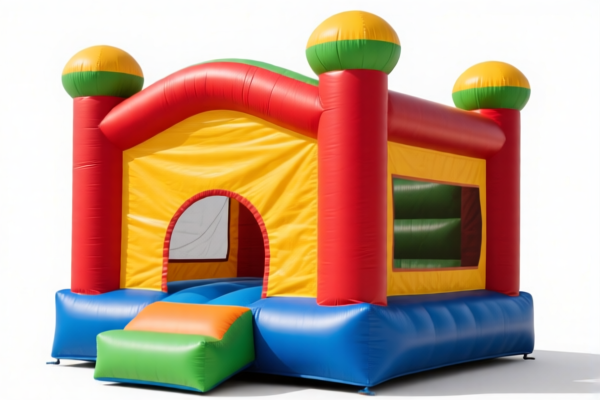
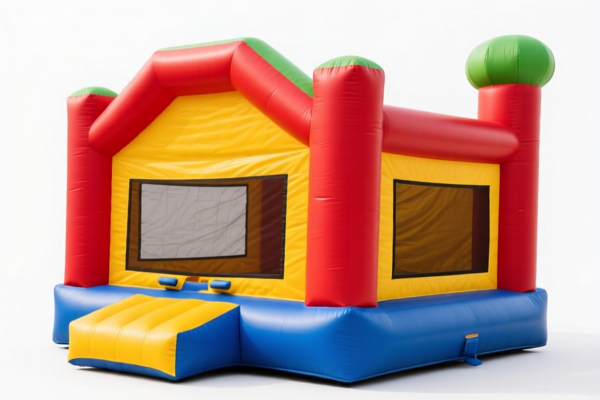
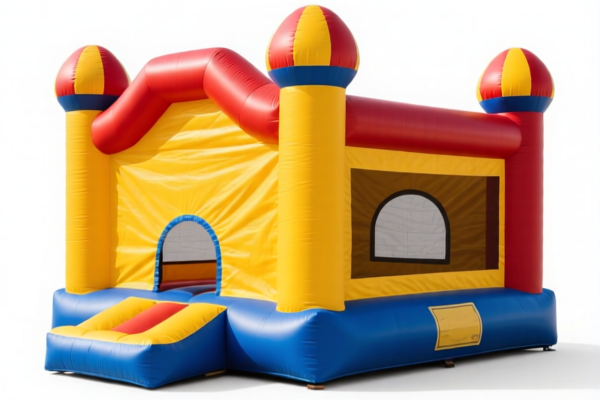
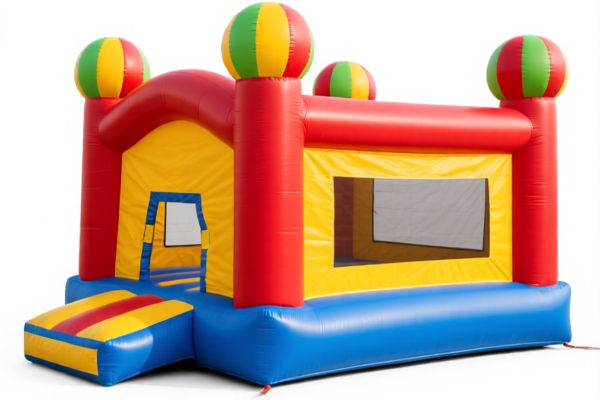
AI Analysis
🎈 Inflatable Bounce Castles (Children's Amusement Equipment)
🌐 HS Code Reference & Customs Clearance Guide | 2026 Latest Tariff Analysis | Professional Entry Strategy
📌 I. Product Definition & Classification: What Exactly Is an "Inflatable Bounce Castle"?
An Inflatable Bounce Castle is a large, air-filled structure made of durable synthetic materials (typically PVC or Nylon/Polyester), designed for recreational jumping and play. In international trade, classification hinges on two main factors: Material Composition and Primary Function.
Because these items straddle the line between "plastic goods" and "amusement rides," they are frequently misclassified, leading to significant tariff discrepancies.
⚠️ Key Distinction Points:
- If classified primarily as a plastic article (material-driven): Falls under Chapter 39.
- If classified primarily as amusement machinery/rides (function-driven): Falls under Chapter 95.
- If classified as a textile tent/canvas (material-driven): Falls under Chapter 63.
📦 II. HS Code Classification Details (2026 Latest Tariff Authority Comparison)
The following analysis is strictly based on the provided <DATA> inputs. Each code represents a different regulatory interpretation of the product.
| HS Code | Product Description & Logic | Tax Rate | Tax Breakdown |
|---|---|---|---|
3926.90.75.00 |
Plastic Articles: Classified as "Other articles of plastic." Logic: Shape matches "inflatable articles"; Material inferred as plastic/polymer (Ch. 39 range). No material conflict. |
14.2% | Base: 4.2% Section 301: 0.0% 122 Clause: 10.0% |
9508.29.00.00 |
Amusement Parks & Water Parks: Classified as "Other amusement rides and funfair goods." Logic: Use is clearly for amusement (jumping castle); Form fits游乐园/amusement park categories. Material (PVC/Chiffon) is reasonable. No conflict. |
17.5% | Base: 0.0% Section 301: 7.5% 122 Clause: 10.0% |
6307.90.98.91 |
Other Made-up Articles: Classified as "Other made-up articles." Logic: Inferred material is plastic/textile finished product. Fits the "catch-all" category for made-up goods. No material/form conflict. |
24.5% | Base: 7.0% Section 301: 7.5% 122 Clause: 10.0% |
6307.90.89.95 |
Other Made-up Articles: Classified as "Other made-up articles." Logic: Defined as a "finished product." Assuming PVC or synthetic fiber (Nylon) based on common sense. No obvious material/form conflict with "Other Made-up Articles." |
17.0% | Base: 7.0% Section 301: 0.0% 122 Clause: 10.0% |
9508.30.00.00 |
Amusement Rides & Equipment: Classified as "Amusement rides and entertainment facilities." Logic: Function matches "park rides" and "playground entertainment facilities." The inflation/jumping function aligns perfectly with "playground ride equipment." |
17.5% | Base: 0.0% Section 301: 7.5% 122 Clause: 10.0% |
🔍 Critical Insight:
- The lowest tariff (14.2%) comes from classifying it as a Plastic Article (3926.90.75.00).
- The highest tariff (24.5%) comes from the Textile/Fabric "Made-up" Category (6307.90.98.91).
- Classifications under Chapter 95 (Amusement) typically carry 0% Base Tariff but are hit harder by Section 301 tariffs (7.5%).
💰 III. 2026 Latest Tariff Rate Breakdown (Including Surcharges & Policy Add-ons)
✅ Applicable Country: United States (US)
✅ Origin: China (CN) (Inferred from "122 Clause" and "Section 301" context in data)
✅ Effective Time: Current 2026 Regulations
🎯 1. 3926.90.75.00 — Plastic Articles (Lowest Total Rate)
| Item | Detail |
|---|---|
| Base Tariff | 4.2% |
| Section 301 Tariff | 0.0% |
| 122 Clause Tariff | 10.0% |
| Total Effective Rate | 14.2% |
| Tax Calculation | CIF Value × 14.2% |
| De Minimis Eligibility | ❌ No (Value exceeds $800 threshold for typical bounce castles) |
| Legal Basis Path | HTSUS 3926.90.75.00 + Trade Policy Surcharges |
📌 Explanation:
- This classification treats the bounce castle essentially as a toy or plastic game.
- It benefits from 0% Section 301 tariff, making it the most cost-effective option if customs accepts the "Plastic Article" classification.
🎯 2. 9508.29.00.00 & 9508.30.00.00 — Amusement Facilities (Standard Rate)
| Item | Detail |
|---|---|
| Base Tariff | 0.0% |
| Section 301 Tariff | 7.5% |
| 122 Clause Tariff | 10.0% |
| Total Effective Rate | 17.5% |
| Tax Calculation | CIF Value × 17.5% |
| De Minimis Eligibility | ❌ No |
| Legal Basis Path | HTSUS 9508.xxxxxx + Trade Policy Surcharges |
📌 Explanation:
- Chapter 95 items have 0% base duty, reflecting their status as recreational goods.
- However, they face a 7.5% Section 301 surcharge, resulting in a slightly higher total than the plastic classification.
🎯 3. 6307.90.89.95 — Other Made-up Articles (Alternative Textile)
| Item | Detail |
|---|---|
| Base Tariff | 7.0% |
| Section 301 Tariff | 0.0% |
| 122 Clause Tariff | 10.0% |
| Total Effective Rate | 17.0% |
| Tax Calculation | CIF Value × 17.0% |
| De Minimis Eligibility | ❌ No |
📌 Explanation:
- This code assumes the product is a textile/canvas tent (e.g., heavy-duty nylon).
- It avoids Section 301 (0%), but the higher base tariff (7.0%) keeps the total comparable to the amusement code.
🎯 4. 6307.90.98.91 — Other Made-up Articles (Highest Risk Rate)
| Item | Detail |
|---|---|
| Base Tariff | 7.0% |
| Section 301 Tariff | 7.5% |
| 122 Clause Tariff | 10.0% |
| Total Effective Rate | 24.5% |
| Tax Calculation | CIF Value × 24.5% |
| De Minimis Eligibility | ❌ No |
| Legal Basis Path | HTSUS 6307.90.98.91 + Trade Policy Surcharges |
📌 Explanation:
- This is the most expensive classification.
- It combines a 7% base duty with 7.5% Section 301, suggesting customs may view this as a generic textile import subject to full trade war penalties.
🛠️ IV. Customs Clearance Practical Advice (Battle-Tested Pitfall Avoidance)
✅ 1. Documentation Checklist (Non-negotiable)
| Document | Required? | Notes |
|---|---|---|
| ✅ Product Specifications | ✔️ | Must specify material (e.g., "0.9mm PVC Tarpaulin" or "150D Nylon"). |
| ✅ Photos/Structure Diagram | ✔️ | Show inflation ports, blower attachment, and stitching details. |
| ✅ Commercial Invoice | ✔️ | Clear description: "Inflatable Bounce Castle, PVC Material, for Outdoor Play." |
| ✅ Packing List | ✔️ | List blower (if included separately) and repair kit. |
| ✅ Safety Certifications | ✔️ | ASTM F2374 (US Standard) or EN14960 (EU) strengthens the "Amusement" argument. |
✅ 2. Declaration Strategy (The Golden Rule)
🔥 “Material Defines Code, Function Defines Duty! Choose Wisely!”
| Scenario | Recommended HS Code | Why? | Risk |
|---|---|---|---|
| PVC Material, No Blower Included | 3926.90.75.00 |
PVC is plastic. Lowest total tax (14.2%). | Customs may argue it's an "amusement device" (Chapter 95). |
| Heavy Nylon/Cloth, Large Scale | 6307.90.89.95 |
Textile-based. Avoids Section 301 (7.0% base + 10% clause = 17.0%). | Must prove it's a "finished article" not just raw fabric. |
| Sold as "Playground Equipment" | 9508.30.00.00 |
Function-first approach. Recognized as amusement facility. | Standard 17.5% rate. |
| Generic Textile Import | 6307.90.98.91 |
AVOID unless necessary. | Highest tax (24.5%). High audit risk. |
📌 Pro Tip:
- If your bounce castle is PVC-based, argue for3926.90.75.00to save ~3.3% compared to the amusement codes.
- If your bounce castle is Nylon/Cloth-based, argue for6307.90.89.95(17.0%) to avoid the 7.5% Section 301 tariff.
✅ 3. Special Handling & Pre-rulings
| Situation | Strategy |
|---|---|
| Including an Electric Blower | Declare blower separately! Blower might fall under 8414.59 (Fan) or 8501 (Motor). Mixing blower + castle in one line item can cause classification confusion and higher duties on the whole package. |
| Customs Questioning "Amusement" Status | Provide ASTM F2374 Compliance Report. This proves it is a regulated safety item for children, supporting Chapter 95 or Chapter 91/95 classification. |
| Dispute on Material | If Customs claims PVC is "Plastic" (Ch 39) but you claim "Textile" (Ch 63), provide fabric test reports showing thread count and weave type. |
🌍 V. Global Market Comparison (2026 Snapshot)
| Region | Preferred HS Code | Est. Total Duty (China Origin) | Notes |
|---|---|---|---|
| 🇺🇸 USA | 3926.90.75.00 |
14.2% | Best rate for PVC castles. |
| 🇺🇸 USA | 9508.30.00.00 |
17.5% | Standard for amusement equipment. |
| 🇪🇺 EU | 9503.00 (approx) |
Variable | EU often classifies inflatables under 9503 (Toys) or 6306 (Tents). VAT applies separately. |
| 🇨🇳 China | 9503.00.90 |
~5-10% | Import duty lower; VAT 13%. |
📌 Conclusion for US Imports:
- PVC Bounce Castles: Fight for3926.90.75.00(14.2%).
- Nylon Bounce Castles: Fight for6307.90.89.95(17.0%).
- Avoid6307.90.98.91unless forced, due to the 24.5% penalty.
📌 VI. Common Errors & Pitfalls (Lessons Learned)
❌ Error 1: Declaring as "Toy" under 9503 without proof.
👉 Result: Customs may reclassify as "Plastic Article" or "Amusement Rides" based on size. Large castles are often excluded from "Toys" if they exceed certain weight/size limits.
❌ Error 2: Mixing Blower and Castle in one description.
👉 Result: The blower (electrical) may be taxed at a different rate, and if the whole unit is misclassified, the penalty applies to the full value.
❌ Error 3: Ignoring the "122 Clause" (10%).
👉 Result: All provided codes in <DATA> include a 10% "122 Clause" tariff. This is a mandatory additional duty on many Chinese imports. Do not calculate tax without including this 10%.
✅ Correct Declaration Example:
"Inflatable PVC Bounce Castle, 15x15ft, 0.9mm PVC Tarpaulin, ASTM F2374 Certified, No Electric Blower Included. HS: 3926.90.75.00"
🎯 VII. Conclusion: Maximize Margin, Minimize Risk
🎯 Remember the Tax Hierarchy:
🔹 Cheapest: Plastic (PVC) →
3926.90.75.00@ 14.2%
🔹 Mid-Range: Textile (Nylon) →6307.90.89.95@ 17.0%
🔹 Standard: Amusement (Function) →9508.30.00.00@ 17.5%
🔹 Most Expensive: Generic Textile →6307.90.98.91@ 24.5%📌 Action Plan:
1. Identify Material: Is it PVC (Plastic) or Nylon (Textile)?
2. Choose Code: Match material to the lowest viable HS Code.
3. Add 10%: Always factor in the "122 Clause" tariff.
4. Pre-ruling: For high-volume shipments, apply for a Binding Ruling to lock in the 14.2% rate.
✨ Professional Clearance Starts with Accurate Classification!
💼 Every Percent Saved is Pure Profit in the Inflatable Industry!
Customer Reviews
About HS Code Classification
The Harmonized System (HS) is an internationally standardized nomenclature developed by the World Customs Organization (WCO) to classify traded products. Over 200 countries use the HS system as the basis for customs tariffs, trade statistics, and import/export regulations.
Each HS code follows a hierarchical structure:
- Chapter (2 digits) — Broad category of goods (e.g., Chapter 84: Machinery and Mechanical Appliances)
- Heading (4 digits) — More specific grouping within the chapter
- Subheading (6 digits) — Internationally standardized breakdown, used by all WCO member countries
- National subdivisions (8-10 digits) — Country-specific extensions for further classification, such as US HTSUS 10-digit codes
Correct HS code classification is essential for smooth customs clearance, accurate duty payment, and compliance with trade regulations. Misclassification can lead to customs delays, overpayment of duties, or penalties.
When importing from CN to US, the applicable tariff rates may include:
- Most-Favored-Nation (MFN) rate — The standard duty rate applied to WTO members
- General rate — Applied to countries without trade agreements
- Trade remedy duties — Additional tariffs such as Section 301 (anti-dumping), Section 232 (national security), or countervailing duties
The information provided on this page is for reference purposes only. For official classification, please consult with your local customs authority or a licensed customs broker.