Inflatable Coconut Tree
CN → US| HS Code | Tariff Rate | Origin | Destination | Doc |
|---|---|---|---|---|
| 3926907500 | 14.2% | CN | US | Official Doc |
| 3926909989 | 22.8% | CN | US | Official Doc |
| 9503000013 | 10.0% | CN | US | Official Doc |
| 9503000011 | 10.0% | CN | US | Official Doc |
Product Images
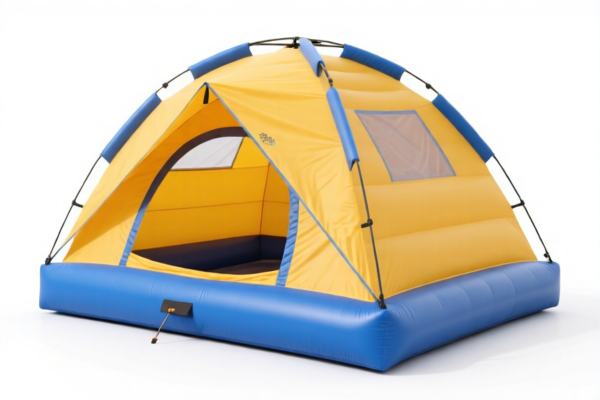
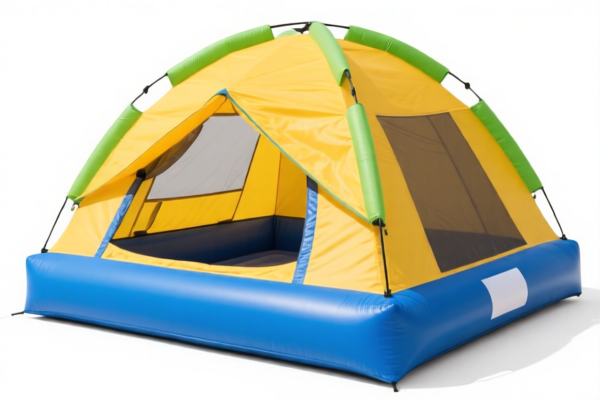
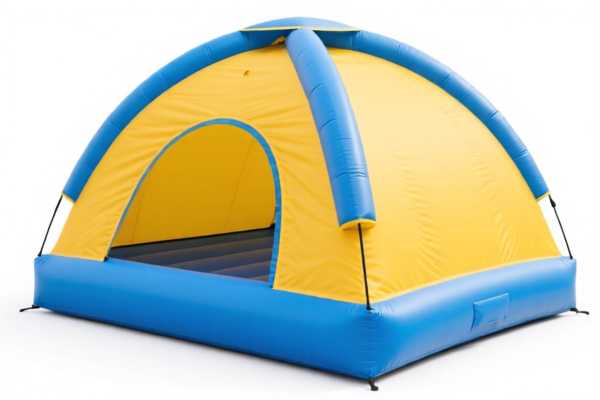
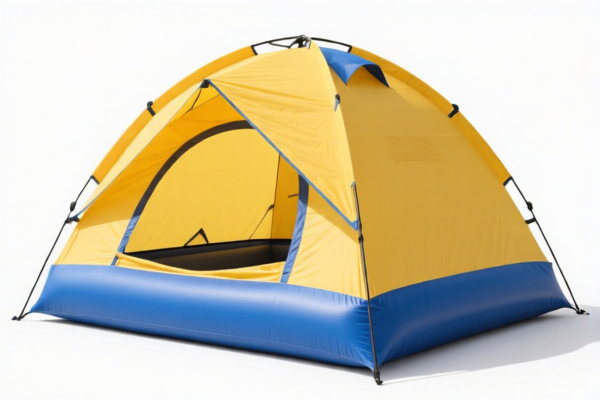
AI Analysis
🌴 Inflatable Coconut Tree (Decorative & Recreational Items)
🌐 HS Code Reference & Customs Clearance Guide | 2026 Latest Tariff Analysis | Professional Clearance Strategy
📌 Part 1: Product Definition & Classification: What is an "Inflatable Coconut Tree"?
An "Inflatable Coconut Tree" is typically a large-scale decorative item used for tropical-themed parties, resorts, hotels, or outdoor events. It mimics the appearance of a palm tree with coconuts, made from synthetic rubber or PVC materials.
In international trade, its classification depends entirely on its primary function and intended use: 1. As a Toy: If it is a small-sized item intended for children’s play (e.g., a punchball, a small inflatable toy that bounces or is pushed by feet), it falls under Chapter 95 (Toys). 2. As Decoration/Recreational Equipment: If it is a large-sized structure used for ambiance, advertising, or general adult recreation (not primarily for children’s play in the sense of a toy), it falls under Chapter 39 (Plastics/Articles of Plastics).
⚠️ Key Distinction Point:
- If labeled/determined as a Children’s Product (intended for ages 3–12 or under 3) → Go to 9503
- If labeled as Decoration, Party Supply, or General Recreation (Adult/General Use) → Go to 3926
📦 Part 2: HS Code Classification Details (2026 Latest Tariff Authority Comparison)
| HS Code | Product Description | Applicable Scenario | Key Criterion |
|---|---|---|---|
9503.00.00.13 |
Tricycles, scooters, pedal cars...; dolls, other toys; Inflatable toy balls, balloons and punchballs, of rubber: Labeled or determined by importer as intended for use by persons: 3 to 12 years of age | Small inflatable coconut toys, punchballs for kids, play items for children aged 3-12 | ✅ Age: 3-12 years ✅ Toy/Play |
9503.00.00.11 |
Tricycles, scooters, pedal cars...; dolls, other toys; Inflatable toy balls, balloons and punchballs, of rubber: Labeled or determined by importer as intended for use by persons: Under 3 years of age | Baby-safe inflatable toys, teething items, very small soft play inflatables | ✅ Age: Under 3 years ✅ Toy/Play |
3926.90.75.00 |
Other articles of plastics and articles of other materials of headings 3901 to 3914: Other: Pneumatic mattresses and other inflatable articles, not elsewhere specified or included | Large inflatable coconut trees for decoration, parties, resorts, advertising; Adult recreational inflatables | ❌ Not a Toy ✅ Decoration/General Use |
3926.90.99.89 |
Other articles of plastics and articles of other materials of headings 3901 to 3914: Other: Other Other | Generic inflatable plastic items not fitting other specific subheadings | ⚠️ Fallback Category |
🔍 Key Reminder:
- Most "Inflatable Coconut Trees" sold for decoration are classified under3926.90.75.00because they are not primarily "toys" for children but rather decorative structures.
- If you market it as a "Toy" or label it for children, Customs will force it into 9503, which has 0% tariff. However, misclassifying a large decorative item as a toy can lead to scrutiny if the size/usage clearly indicates non-toy intent.
- Do not confuse9503(Toys) with3926(Plastic Articles). The material is often similar (rubber/PVC), but the function dictates the HS Code.
💰 Part 3: 2026 Latest Tariff Rate Details (Including Additional Taxes, Policy Add-ons)
✅ Applicable Country: United States (US)
✅ Origin: China (CN)
✅ Effective Time: 2025/2026 (Current Rates)
🎯 1. 9503.00.00.13 & 9503.00.00.11 —— Inflatable Toys for Children
| Item | Content |
|---|---|
| Base Tariff | 0.0% (ad valorem) |
| Section 301 Additional Tariff | 0.0% |
| Total Tax Rate | 0.0% |
| Tax Calculation | CIF Value × 0% = $0 |
| De Minimis Eligibility | N/A (Standard clearance) |
| Legal Basis Path | HTSUS:9503.00.00 → No Section 301 Footnote |
📌 Explanation:
- Toys generally enjoy 0% duty under US trade policy.
- There are NO additional Section 301 tariffs for HS Code 9503.
- This makes Children’s Inflatable Toys the most cost-effective clearance path if the product is genuinely intended for children.
🎯 2. 3926.90.75.00 —— Inflatable Decorative/Recreational Articles (Non-Toy)
| Item | Content |
|---|---|
| Base Tariff | 4.2% (ad valorem) |
| Section 301 Additional Tariff | 0.0% |
| Total Tax Rate | 4.2% |
| Tax Calculation | CIF Value × 4.2% |
| De Minimis Eligibility | N/A (Standard clearance) |
| Legal Basis Path | HTSUS:3926.90.75.00 → No Section 301 Footnote |
📌 Explanation:
- This is the standard duty for "Other inflatable articles" (like air mattresses, large decorative inflatables).
- No Section 301 additional tariff applies to this specific subheading.
- Total cost impact: Low (4.2% base duty).
🎯 3. 3926.90.99.89 —— Other Plastic Articles (Fallback)
| Item | Content |
|---|---|
| Base Tariff | 5.3% (ad valorem) |
| Section 301 Additional Tariff | 7.5% |
| Total Tax Rate | 12.8% |
| Tax Calculation | CIF Value × 12.8% |
| De Minimis Eligibility | N/A (Standard clearance) |
| Legal Basis Path | HTSUS:3926.90.99.89 → Section 301 Applies |
📌 Warning:
- If Customs rejects3926.90.75.00and forces classification into "Other," the 12.8% total tariff applies.
- Always argue for3926.90.75.00("Inflatable articles") as it is more specific and has a lower tax burden.
🛠️ Part 4: Customs Clearance Practical Advice (Battle-Tested Pitfall Guide)
✅ 1. Document Checklist (Must-Haves)
| Document | Must Provide | Explanation |
|---|---|---|
| ✅ Product Photos | ✔️ | Clear images showing size, branding, and usage context |
| ✅ Commercial Invoice | ✔️ | Must describe item accurately (e.g., "Inflatable Decorative Tree" vs. "Toy") |
| ✅ Packing List | ✔️ | Show dimensions and weight (helps determine if it's a "toy" or "decoration") |
| ✅ User Manual/Instructions | ✔️ | If it includes safety warnings for children, it may be classified as a toy |
| ✅ Certificate of Origin (CO) | ✔️ | Required for any preferential claims (none here, but standard practice) |
✅ 2. Declaration Strategy (Key Rules)
🔥 "Define by Use, Not Just Material!"
| Scenario | Correct Declaration | Wrong Declaration |
|---|---|---|
| Large Coconut Tree for Resort Decor | HS 3926.90.75.00 Desc: "Inflatable Decorative Palm Tree, PVC, 10ft Height" |
HS 9503.00.00.13 Desc: "Toy" → Customs may reject if item is too large/serious |
| Small Inflatable Ball with Coconut Design | HS 9503.00.00.13 Desc: "Inflatable Toy Ball, Rubber, for Ages 3-12" |
HS 3926.90.75.00 Desc: "Plastic Article" → Higher scrutiny for toys |
| Inflatable Coconut Tree for Kids' Play Area | HS 9503.00.00.13 Desc: "Children's Play Inflatable, Age 3-12" |
HS 3926.90.75.00 Desc: "Decoration" → Misclassification risk if labeled for kids |
| Generic Inflatable Plastic Item | HS 3926.90.99.89 | Avoid if possible; higher tax (12.8%) |
📌 Critical Tip:
- If the product is marketed on Amazon/eBay with keywords like "Kids Toy," "Play," "Age 3+," Customs will likely classify it under 9503 (0% tax).
- If marketed as "Party Decoration," "Resort Decor," "Outdoor Inflatable," Customs will classify it under 3926 (4.2% tax).
- Do NOT misdeclare a large decorative item as a "toy" to save 4.2% if it’s not genuinely a toy. Customs checks marketing materials and product size.
✅ 3. Special Cases
| Situation | Handling Advice |
|---|---|
| Product Size > 3 Feet | Likely classified as Decoration (3926), not Toy (9503). Even if for kids, large inflatables are often considered "play structures" not "toys." |
| Includes Pump & Repair Kit | Still classified as the main item (Inflatable Tree). Do not split. |
| CE/FCC Certification | If it has electronic lights, FCC may apply. If no electronics, only general safety standards apply. |
| Rubber vs. PVC | HS Code 9503 specifies "Inflatable toy balls... of rubber." If it’s PVC, argue for 3926 or check if PVC is accepted under rubber definition for toys. |
🌍 Part 5: Global Market Comparison (2026 Latest)
| Country/Region | Recommended HS Code | Duty Rate | Certification | Notes |
|---|---|---|---|---|
| 🇺🇸 USA | 3926.90.75.00 (Decor) |
4.2% | None | 9503 is 0% if Toy |
| 🇪🇺 EU | 9503.00.91 (Toy) |
0% | CE + EN71 | Strict safety for toys |
| 🇬🇧 UK | 9503.00.91 (Toy) |
0% | UKCA + EN71 | Post-Brexit rules |
| 🇨🇦 Canada | 9503.00.00.10 (Toy) |
0% | CPSIA-like standards | Similar to US |
| 🇦🇺 Australia | 9503.00.00.00 (Toy) |
5% | AS/NZS Standards | Higher base rate |
📌 Conclusion:
- USA is the most favorable market for these items due to 0% duty on Toys and low 4.2% duty on Decorations.
- EU/UK have strict safety certifications for toys (EN71). If selling as a toy, ensure compliance.
📌 Part 6: Common Errors & Pitfall Guide (Lessons Learned)
❌ Error 1: Labeling a 10-foot tall inflatable coconut tree as a "Toy" to get 0% duty.
👉 Consequence: Customs may reject the toy classification, force 3926, and charge back-taxes + penalties.
✅ Fix: Declare as "Inflatable Decoration" (3926.90.75.00) and pay 4.2%.
❌ Error 2: Not specifying material (Rubber vs. PVC).
👉 Consequence: HS Code 9503.00.00.11/13 specifies "of rubber." If PVC, Customs may question the classification.
✅ Fix: Clarify material. If PVC, lean towards 3926 unless it’s clearly a toy.
❌ Error 3: Using vague descriptions like "Inflatable Thing."
👉 Consequence: Customs inspection delay, possible reclassification.
✅ Fix: Use precise terms: "Inflatable PVC Coconut Tree, Decorative, 8ft Height."
🎯 Part 7: Conclusion: Professional Declaration, Low Cost, Smooth Clearance!
🎯 Remember the Rules:
🔹 "Toy for Kids? → 9503 (0%)"
🔹 "Decor for Adults? → 3926 (4.2%)"
🔹 "Misclassify Large Decor as Toy? → Risk of Audit & Back-Tax"
🔹 "PVC or Rubber? → Check 9503 Subheading Details"
📌 Pro Tip:
If your inflatable coconut tree is small (under 3 feet) and marketed to children, use HS 9503.00.00.13 for 0% duty.
If it’s large and decorative, use HS 3926.90.75.00 for 4.2% duty. Do not attempt to downgrade a large decoration to a toy.
📣 Immediate Action:
📞 Verify Product Size & Marketing
📦 Prepare Accurate Description & Photos
🚀 Choose Correct HS Code for 0% or 4.2% Duty
✨ Professional Clearance Starts with Accurate Classification!
💼 Every Percent Counts in International Trade!
Customer Reviews
About HS Code Classification
The Harmonized System (HS) is an internationally standardized nomenclature developed by the World Customs Organization (WCO) to classify traded products. Over 200 countries use the HS system as the basis for customs tariffs, trade statistics, and import/export regulations.
Each HS code follows a hierarchical structure:
- Chapter (2 digits) — Broad category of goods (e.g., Chapter 84: Machinery and Mechanical Appliances)
- Heading (4 digits) — More specific grouping within the chapter
- Subheading (6 digits) — Internationally standardized breakdown, used by all WCO member countries
- National subdivisions (8-10 digits) — Country-specific extensions for further classification, such as US HTSUS 10-digit codes
Correct HS code classification is essential for smooth customs clearance, accurate duty payment, and compliance with trade regulations. Misclassification can lead to customs delays, overpayment of duties, or penalties.
When importing from CN to US, the applicable tariff rates may include:
- Most-Favored-Nation (MFN) rate — The standard duty rate applied to WTO members
- General rate — Applied to countries without trade agreements
- Trade remedy duties — Additional tariffs such as Section 301 (anti-dumping), Section 232 (national security), or countervailing duties
The information provided on this page is for reference purposes only. For official classification, please consult with your local customs authority or a licensed customs broker.