Inflatable Guitar
CN → US| HS Code | Tariff Rate | Origin | Destination | Doc |
|---|---|---|---|---|
| 9205906000 | 17.5% | CN | US | Official Doc |
| 9207900080 | 22.5% | CN | US | Official Doc |
| 9207900040 | 22.5% | CN | US | Official Doc |
| 9205901900 | 17.5% | CN | US | Official Doc |
| 9503000013 | 10.0% | CN | US | Official Doc |
Product Images
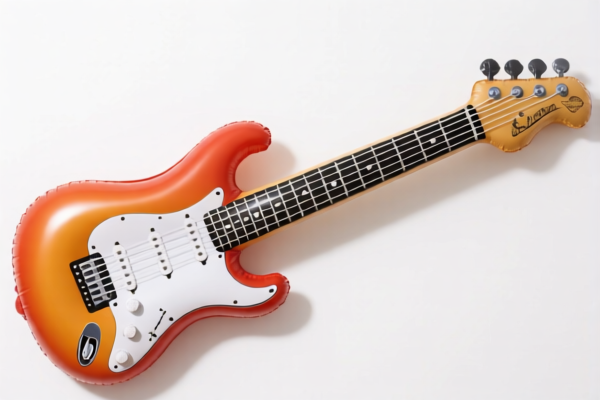
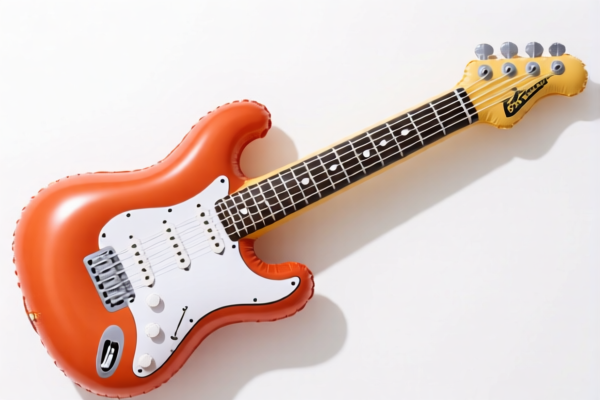
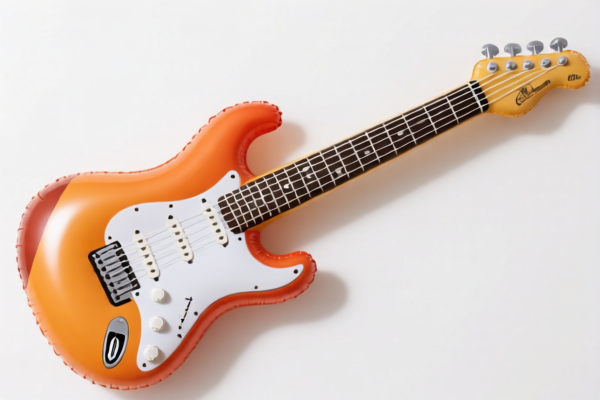
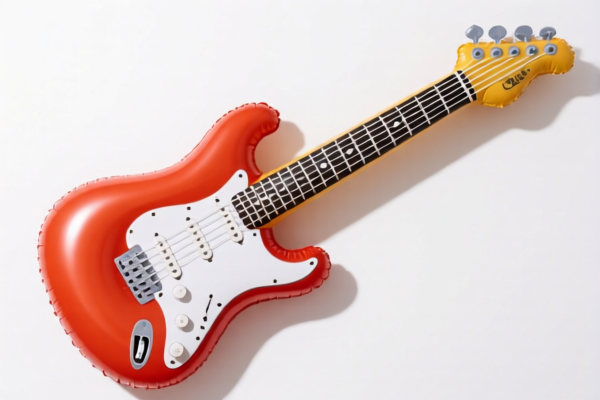
AI Analysis
🎸 Inflatable Guitar (Air-Driven Musical Instrument)
🌐 HS Code Reference & Customs Clearance Guide | 2026 Latest Tariff Analysis | Professional Clearance Strategy
📌 I. Product Definition & Classification: Do You Truly Understand the "Inflatable Guitar"?
An Inflatable Guitar is a novelty or educational toy that mimics the shape of an electric or acoustic guitar but functions primarily through air pressure (pneumatic) or electronic simulation depending on its internal structure. In international trade, its classification is critical because it straddles the line between musical instruments (Chapter 92) and toys (Chapter 95).
Key Distinction Points:
Wind/Air-Driven: If the sound is produced by blowing air into it (like a kazooo or accordion), it falls under Chapter 92.
* Electronic/Plug-in: If it has speakers, batteries, or USB connections to simulate sound, it falls under Electronic Musical Instruments (Chapter 92) or potentially Toys (Chapter 95) if deemed primarily for amusement.
* Material-Driven (Toy): If it is made of rubber/plastic and lacks sound-producing mechanisms other than being a prop, it may be classified as a Toy (Chapter 95)*.
⚠️ Critical Classification Logic:
- Airflow-driven (Wind): Must go to 9205 (Wind Instruments).
- Electric/Active Sound: Must go to 9207 (Electronic Musical Instruments).
- Passive/Play-only (No Sound Mechanism): May go to 9503 (Toys).
📦 II. HS Code Classification Details (2026 Latest Tariff Authority Comparison)
Based on the provided data, here are the valid HS Codes and their corresponding tax implications for Inflatable Guitars:
| HS Code | Product Description | Applicability Scenario | Tax Rate (Total) |
|---|---|---|---|
9205.90.60.00 |
Wind instruments; other aerophones | Air-driven: Sound produced by blowing air into the instrument (e.g., air horn style). | 17.5% |
9205.90.19.00 |
Wind instruments; other (excluding free reeds, mouth organs) | Air-driven: Similar to above, falls under general wind instrument category. | 17.5% |
9207.90.00.80 |
Electronic musical instruments; other | Electric/Active: Has electronic components (speakers, circuits) to produce sound. | 22.5% |
9207.90.00.40 |
Electronic musical instruments; other (with amplification) | Electric/Active: Specifically if it includes built-in amplification or sound modules. | 22.5% |
9503.00.00.13 |
Toys; models and replicas, for recreational use | Toy/Novelty: Made of rubber/plastic, primarily for play/visuals, no real sound mechanism. | 10.0% |
🔍 Key Reminder:
- Misclassification Risk: Declaring an electronic inflatable guitar as a "Toy" (9503) to save tax is high-risk if it has internal speakers or electronic sound chips. Customs may inspect and reclassify to 9207, resulting in back taxes + penalties.
- Wind vs. Electric: If the guitar requires blowing to make sound, it is NOT a toy. It is a wind instrument (9205). If it plugs in or uses batteries, it is electronic (9207).
💰 III. 2026 Latest Tariff Rate Breakdown (Including Surcharges & Policy Add-ons)
✅ Applicable Country: United States (US)
✅ Origin: China (CN)
✅ Effective Date: Post-2025 policies (Section 301 & 122 Clauses)
🎯 1. Wind Instruments (9205.90.60.00 & 9205.90.19.00)
For inflatable guitars that produce sound via air pressure.
| Item | Content |
|---|---|
| Base Tariff | 0.0% (ad valorem) |
| Section 301 / Add-on Tariff | +7.5% |
| Clause 122 Tariff | +10.0% |
| Total Tax Rate | 17.5% |
| Tax Calculation | CIF Value × 17.5% |
| De Minimis Exemption? | ❌ No (Subject to full inspection) |
| Legal Basis Path | Base: 0% → Section 301: +7.5% → Clause 122: +10% |
📌 Explanation:
- Although the base duty for musical instruments is often 0%, China-origin products face significant add-ons.
- Clause 122 refers to specific trade remedy measures often applied to Chinese goods.
- Total 17.5% is moderate but applies strictly if the item is proven to be a functional wind instrument.
🎯 2. Electronic Musical Instruments (9207.90.00.80 & 9207.90.00.40)
For inflatable guitars with electronic sound modules, speakers, or USB connectivity.
| Item | Content |
|---|---|
| Base Tariff | 5.0% (ad valorem) |
| Section 301 / Add-on Tariff | +7.5% |
| Clause 122 Tariff | +10.0% |
| Total Tax Rate | 22.5% |
| Tax Calculation | CIF Value × 22.5% |
| De Minimis Exemption? | ❌ No |
| Legal Basis Path | Base: 5% → Section 301: +7.5% → Clause 122: +10% |
📌 Explanation:
- Electronic instruments have a higher base duty (5%) compared to wind instruments (0%).
- Add-ons are identical to wind instruments.
- Total 22.5% is the standard for China-origin electronic gadgets classified as musical instruments.
🎯 3. Toys (9503.00.00.13)
For inflatable guitars that are purely for play (no sound) or novelty items.
| Item | Content |
|---|---|
| Base Tariff | 0.0% (ad valorem) |
| Section 301 / Add-on Tariff | 0.0% (Exempt/Reduced for certain toy categories) |
| Clause 122 Tariff | +10.0% |
| Total Tax Rate | 10.0% |
| Tax Calculation | CIF Value × 10.0% |
| De Minimis Exemption? | ❌ No (Subject to specific toy regulations) |
| Legal Basis Path | Base: 0% → Add-on: 0% → Clause 122: +10% |
📌 Explanation:
- This is the lowest tax rate (10%).
- Risk: This classification is ONLY valid if the product is strictly a toy (e.g., made of rubber/plastic, no electronic sound chip, no air-blown sound mechanism).
- Warning: If customs detects electronic components or air-valves for sound, they will reject this code and upgrade to 9207 (22.5%).
🛠️ IV. Customs Clearance Practical Advice (Battle-Tested Pitfall Guide)
✅ 1. Required Documentation Checklist (Non-Negotiable)
| Document | Mandatory? | Description |
|---|---|---|
| ✅ Product Specifications | ✔️ | Must detail: Material (Rubber/Plastic/Electronics), Power Source (Battery/Air), Sound Mechanism (None/Speaker/Air). |
| ✅ Technical Diagram | ✔️ | Show internal structure. Crucial: Prove if it has a speaker or air valve. |
| ✅ High-Res Photos | ✔️ | Front, back, interior (if possible), labels, and power inputs. |
| ✅ Commercial Invoice | ✔️ | Clear description: "Inflatable Plastic Guitar Toy, No Sound" OR "Electronic Inflatable Guitar with Speaker". |
| ✅ Declaration of Function | ✔️ | A signed statement confirming if the item produces sound and how. |
✅ 2. Declaration Tactics (Key Mantra)
🔥 "Sound Defines Code: Air=9205, Electric=9207, Silent=9503!"
| Scenario | Correct HS Code | Wrong Approach | Consequence |
|---|---|---|---|
| Blows Air to Make Sound | 9205.90.60.00 |
Declare as "Toy" (9503) | Customs flags: Missing electronic specs but has air valve. Reclassify to 9205 → Back Tax + Penalty. |
| Plugs in / Battery Sound | 9207.90.00.80 |
Declare as "Toy" (9503) | Customs finds circuit board. Reclassify to 9207 → 22.5% vs 10%. Cost Increase 12.5%. |
| Purely Visual / No Sound | 9503.00.00.13 |
Declare as "Instrument" (9205) | Unnecessary high tax (17.5% vs 10%). Overpaying. |
| Mixed Use (Sound + Play) | 9207 |
Split declaration (Toy + Part) | High Risk: Customs sees it as one item. Seizure or Heavy Fines. |
✅ 3. Special Case Handling
| Situation | Advice |
|---|---|
| "Silent" Practice Guitar | If it has electronic pickups but no speaker, it is still an electronic instrument (9207). Do not use 9503. |
| Air-Valve Novelty | If it has a valve but no reed/membrane, it may still be inspected closely. Ensure it doesn't mimic a specific wind instrument too closely. |
| Bundle with Accessories | If sold with a strap or gig bag, declare as one unit under the instrument code. Do not split. |
🌍 V. Global Market Comparison (2026 Latest)
| Country/Region | Recommended HS Code | Total Tariff (CN Origin) | Notes |
|---|---|---|---|
| 🇺🇸 USA | 9205 / 9207 / 9503 |
10% - 22.5% | High scrutiny on "Electronic Toys" vs "Instruments". |
| 🇨🇳 China (Import) | 9205 / 9207 |
Low (~0-10%) | No Section 301 taxes for imports into China. |
| 🇪🇺 EU | 9205 / 9207 |
0% - 3.5% | No major anti-dumping on musical toys. |
| 🇬🇧 UK | 9205 / 9207 |
0% - 3.5% | Post-Brexit, aligned with EU generally. |
📌 Conclusion:
- The USA is the most complex market due to Clause 122 and Section 301 tariffs.
- Accurate functional description is the only way to avoid 12.5%–15% tax jumps.
📌 VI. Common Errors & Pitfalls (Blood & Tears Lessons)
❌ Error 1: Declaring an electronic inflatable guitar as a "Toy" (9503) to save tax.
👉 Result: Customs inspection reveals a battery compartment or speaker. Penalty + Back Tax (12.5% difference).
❌ Error 2: Declaring an air-blown guitar as a "Wind Instrument" (9205) but failing to declare it as Chinese-origin.
👉 Result: Missing 17.5% tariffs. Seizure & Fines.
❌ Error 3: Using vague descriptions like "Musical Toy" without specifying sound mechanism.
👉 Result: Customs officer uses discretion, often defaulting to the higher tax rate (9207) or holding the cargo for inspection.
✅ Correct Declaration Example:
"Inflatable PVC Guitar Toy, Non-Electronic, No Sound Mechanism, For Recreational Use, Model XYZ" → 9503.00.00.13 (10%)
"Electronic Inflatable Guitar with Speaker, Battery Operated, Model ABC" → 9207.90.00.80 (22.5%)
🎯 VII. Conclusion: Professional Declaration Saves Money!
🎯 Remember the Mantra:
🔹 "Air = 17.5%, Electric = 22.5%, Silent = 10%."
🔹 "HS Code defines the Tax: One wrong digit, 15% lost!"
📌 Pro Tip:
If your product is hybrid (e.g., air-blown AND has a small speaker), you must declare it as an Electronic Instrument (9207). Trying to hide the electronic component is fraud.
✅ Action:
📞 Contact a licensed customs broker.
📸 Provide clear photos of the sound source (valve vs. speaker).
📄 Apply for Pre-Ruling (Advance Ruling) if the product is complex.
📣 Immediate Action Required:
🚀 Verify Sound Mechanism Today!
💼 Don't let a 12.5% tax mistake cost you your profit margin.
✨ Precise Classification is the Key to Smooth Clearance!
Customer Reviews
About HS Code Classification
The Harmonized System (HS) is an internationally standardized nomenclature developed by the World Customs Organization (WCO) to classify traded products. Over 200 countries use the HS system as the basis for customs tariffs, trade statistics, and import/export regulations.
Each HS code follows a hierarchical structure:
- Chapter (2 digits) — Broad category of goods (e.g., Chapter 84: Machinery and Mechanical Appliances)
- Heading (4 digits) — More specific grouping within the chapter
- Subheading (6 digits) — Internationally standardized breakdown, used by all WCO member countries
- National subdivisions (8-10 digits) — Country-specific extensions for further classification, such as US HTSUS 10-digit codes
Correct HS code classification is essential for smooth customs clearance, accurate duty payment, and compliance with trade regulations. Misclassification can lead to customs delays, overpayment of duties, or penalties.
When importing from CN to US, the applicable tariff rates may include:
- Most-Favored-Nation (MFN) rate — The standard duty rate applied to WTO members
- General rate — Applied to countries without trade agreements
- Trade remedy duties — Additional tariffs such as Section 301 (anti-dumping), Section 232 (national security), or countervailing duties
The information provided on this page is for reference purposes only. For official classification, please consult with your local customs authority or a licensed customs broker.