Inflatable PVC Pipe
CN → US| HS Code | Tariff Rate | Origin | Destination | Doc |
|---|---|---|---|---|
| 9506995500 | 22.8% | CN | US | Official Doc |
| 9506996080 | 21.5% | CN | US | Official Doc |
| 3917320020 | 38.1% | CN | US | Official Doc |
| 3917330000 | 38.1% | CN | US | Official Doc |
Product Images
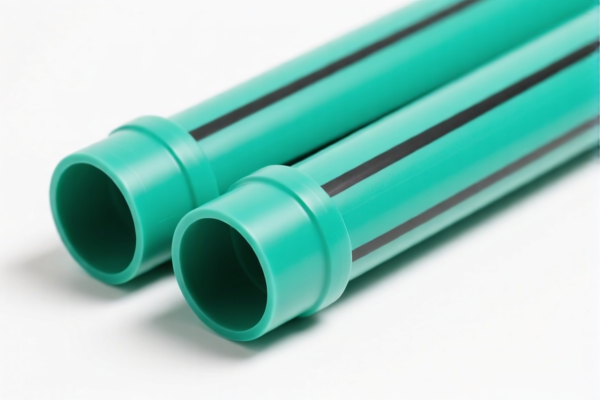
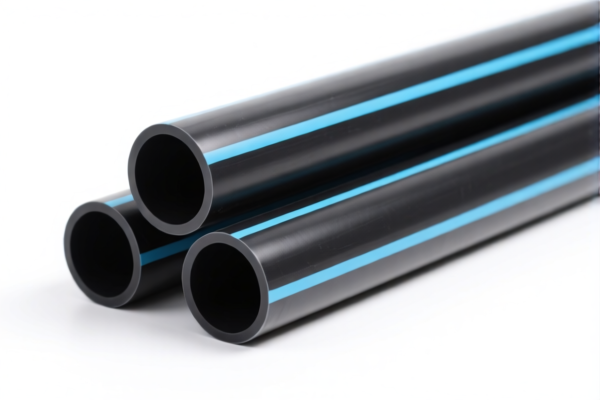
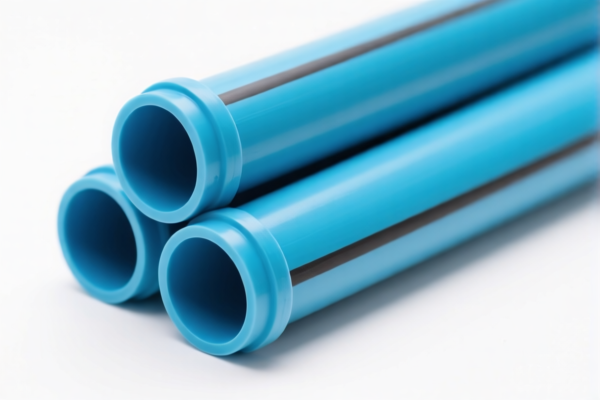
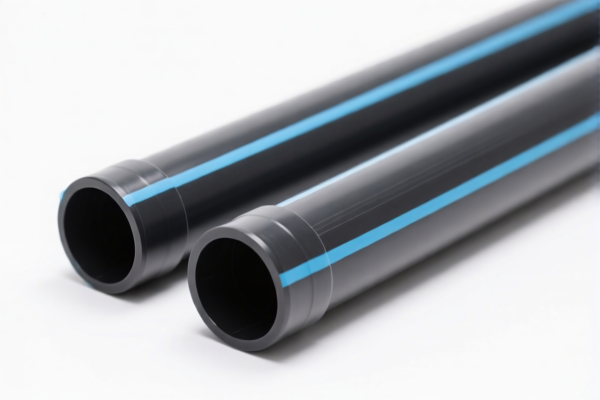
AI Analysis
🎈 Inflatable PVC Pipe (Flexible Hoses & Tubing)
🌐 HS Code Reference & Customs Clearance Guide | 2024-2026 Tariff Analysis | Professional Entry Strategy
📌 I. Product Definition & Classification: What exactly is an "Inflatable PVC Pipe"?
"Inflatable PVC Pipe" is a ambiguous term in international trade. It generally refers to plastic tubes, pipes, or hoses used for fluid or air transport. In customs classification, the key differentiators are: 1. Construction: Is it reinforced (e.g., with mesh or fabric) or plain? 2. Fittings: Does it come with attached joints, elbows, or flanges? 3. Material: Specifically Polyethylene (PE) or other plastics (PVC falls under "Other plastics" in many subheadings unless specified).
⚠️ Critical Distinction:
- If the item is a plain tube/hose without fittings → It falls under "Other tubes, pipes and hoses... Other".
- If the item includes fittings (joints, elbows) → It falls under a specific subheading for products "with fittings".
- Note: While the input mentions PVC, the provided DATA specifies Polyethylene (PE) tariffs. In practice, PVC often follows similar structures under "Other plastics," but for this analysis, we strictly adhere to the provided HS codes which distinguish between with and without fittings.
📦 II. HS Code Classification Details (Based on Provided DATA)
The classification hinges entirely on the presence of fittings.
| HS Code | Product Description | Key Feature | Tax Implication |
|---|---|---|---|
| 3917.32.00.20 | Other tubes, pipes and hoses: Other, not reinforced or otherwise combined with other materials, without fittings | Plain tube/hose. No joints/elbows attached. | High Tax (28.1%) due to Section 301 tariffs |
| 3917.33.00.00 | Other tubes, pipes and hoses: Other, with fittings | Includes joints, elbows, flanges, or connectors. | Low Tax (0.0%) |
🔍 Key Insight:
- The difference between 3917.32.00.20 and 3917.33.00.00 is not the material (both are plastics), but the accessories.
- "With fittings" refers to tubes that are sold as complete assemblies or packages that include connecting hardware.
- "Without fittings" refers to raw tubing, rolls, or straight pipes that require separate purchases of connectors.
💰 III. 2024-2026 Tariff Rate Breakdown (Detailed Tax Clauses)
✅ Applicable Country: United States (US)
✅ Origin: China (CN)
✅ Material Context: Plastics (Polyethylene/Other)
🎯 1. HS Code 3917.32.00.20 – Plain Tubes/Pipes/Hoses (No Fittings)
| Item | Detail |
|---|---|
| Base Tariff | 3.1% (Standard MFN rate) |
| Additional Tariff (Section 301) | +25.0% (Specific to this subheading for Chinese origin) |
| Total Effective Rate | 28.1% |
| Tax Calculation | CIF Value × 28.1% |
| De Minimis Exemption? | ❌ No (De minimis value does not apply to goods subject to Section 301 tariffs) |
| Legal Basis | HTSUS 3917.32.00.20 + USITC Footnote 9903.88.01 (Section 301) |
📌 Explanation:
- This code attracts the full burden of US-China trade war tariffs.
- 25% is a significant cost driver. Importers must verify if the product truly lacks any attached fittings. If it comes with a basic nozzle or connector, this code may be challenged.
- "Not reinforced": This code applies to simple plastic hoses. If the PVC pipe has internal wire mesh or external fabric reinforcement, it might fall under a different reinforced subheading (not listed in the provided DATA, but generally has different rates). Ensure the product is plain plastic.
🎯 2. HS Code 3917.33.00.00 – Tubes/Pipes/Hoses WITH Fittings
| Item | Detail |
|---|---|
| Base Tariff | 0.0% |
| Additional Tariff (Section 301) | 0.0% |
| Total Effective Rate | 0.0% |
| Tax Calculation | $0 |
| De Minimis Exemption? | N/A (0% tax anyway) |
| Legal Basis | HTSUS 3917.33.00.00 |
📌 Explanation:
- This is a zero-tariff classification for Chinese-origin plastic tubes with fittings.
- Strategy Alert: If your "Inflatable PVC Pipe" can be marketed or packaged as a "Tube + Fitting Kit", it may qualify for this 0% rate.
- Customs Definition of "Fittings": Must be permanently attached or sold as a set specifically for connection (joints, elbows, flanges). Simple packaging materials do not count.
🛠️ IV. Customs Clearance Practical Advice (Avoid Pitfalls)
✅ 1. Documentation Checklist
| Document | Required? | Description |
|---|---|---|
| ✅ Product Specification Sheet | ✔️ | Must clearly state: "Plastic Tube, Material: PVC/PE, Diameter: X mm, Length: Y m". Explicitly state IF FITTINGS ARE INCLUDED. |
| ✅ Commercial Invoice | ✔️ | Item description must match HS Code exactly. E.g., "Plastic Hose with Elbow Fittings" vs. "Plastic Hose". |
| ✅ Packing List | ✔️ | Show how items are packed. If fittings are in a separate box, it might be classified separately (leading to mixed tax rates). |
| ✅ Photos | ✔️ | Clear images showing the end of the tube. Does it have a threaded connector? A simple open end? |
| ✅ Material Declaration | ✔️ | Confirm it is not reinforced with metal/fabric if claiming 3917.32.00.20. |
✅ 2. Classification Strategy & Tips
🔥 "Fit or Flat? Check the Ending!"
| Scenario | Recommended HS Code | Tax Rate | Risk Level |
|---|---|---|---|
| Straight hose roll (No connectors) | 3917.32.00.20 |
28.1% | Medium (Must prove no fittings) |
| Hose with attached nozzle/joint | 3917.33.00.00 |
0.0% | Low (But must be genuine fittings) |
| Reinforced hose (with mesh) | Not in DATA | Varies | High (May require different HS) |
| Hose + Separate Fittings | Mixed or 3917.32.00.20 |
28.1% | Medium (Separate parts usually follow the main good) |
📌 Critical Tip:
- Do NOT artificially attach cheap plastic fittings to a plain tube just to get the 0% rate. Customs may examine the product and reclassify it as "plain tube" if the fittings are non-standard or incidental.
- However, if you are selling industrial hoses, they often come with flanges or threaded adapters as standard. In that case,3917.33.00.00is the correct and compliant code.
✅ 3. Special Handling for "Inflatable" Products
- Inflatable vs. Rigid: If the PVC pipe is designed to be inflated (like a temporary air barrier or inflatable dam), it is still classified under 3917 (Plastic tubes/hoses).
- Reinforcement Check: Many inflatable structures have internal reinforcement (nylon mesh, polyester fabric).
- If your product is reinforced, it may NOT fit
3917.32.00.20(which specifies "not reinforced"). - If reinforced, you may need a different HS code (e.g., 3917.31 or 3917.39), which is not covered in the provided DATA.
- Recommendation: If the pipe has any visible reinforcement layer, consult a customs broker to identify the correct HS code, as misclassification could lead to penalties or higher unexpected tariffs.
🌍 V. Global Market Comparison (Brief)
| Region | HS Code (Similar) | Est. Tariff (China Origin) | Notes |
|---|---|---|---|
| 🇺🇸 USA | 3917.32.00.20 / 3917.33.00.00 |
28.1% (Plain) / 0.0% (With Fittings) | Section 301 applies heavily to plain plastics. |
| 🇨🇳 China | 3917.32 / 3917.33 |
~3.1% - 5.3% | Low import duty for finished plastic goods. |
| 🇪🇺 EU | 3917.32 / 3917.33 |
~4.5% - 6.5% | No Section 301 equivalent, but VAT applies. |
| 🇬🇧 UK | 3917.32 / 3917.33 |
~4.5% - 6.5% | Post-Brexit tariffs similar to EU. |
📌 VI. Common Mistakes & Pitfalls
❌ Mistake 1: Classifying a reinforced inflatable hose as 3917.32.00.20.
👉 Consequence: 3917.32.00.20 explicitly excludes reinforced materials. Misclassification leads to fine + back taxes.
❌ Mistake 2: Assuming all PVC is 3917.32.00.20.
👉 Consequence: If the product includes standard industrial fittings, it should be 3917.33.00.00 (0% tax). Misclassification leads to overpayment of 28.1%.
❌ Mistake 3: Ignoring the "Inflatable" aspect.
👉 Consequence: If the product is a large inflatable structure (e.g., an inflatable wall), it might be classified under Chapters 94 (Furniture/Blankets) or 63 (Other made-up articles) rather than 3917. However, "pipes/tubes" for air/water transport typically stay in 3917. Be precise with function.
✅ Best Practice Declaration:
"Plastic PVC Hose, Diameter 2 inches, 50ft length, WITHOUT fittings. Material: Polyvinyl Chloride. Not reinforced."
OR
"Plastic PVC Hose Assembly, 50ft length, WITH brass-threaded elbow fittings on both ends. Material: Polyvinyl Chloride."
🎯 VII. Conclusion: Strategic Classification
🎯 Key Takeaway:
- Plain Tube = 28.1% Tax (3917.32.00.20)
- Tube with Fittings = 0% Tax (3917.33.00.00)
🚀 Action Plan:
1. Inspect your product. Does it have standard connecting hardware?
2. If Yes: Use3917.33.00.00to save 28.1% on duties. Ensure the invoice describes the fittings clearly.
3. If No: You must pay 28.1%. Consider if adding a simple, cost-effective fitting can change the classification (if commercially viable and compliant).
4. Verify Reinforcement: If your "inflatable" pipe has internal fabric/mesh, do not use the codes above. Seek a new classification.
📌 Disclaimer:
This analysis is based on the provided HS CODE data. Customs classifications can be complex. Always consult with a licensed customs broker or legal expert for high-value shipments to ensure compliance with the latest US CBP rulings.
✨ Smart Classification Saves Money!
💼 Don’t let 28.1% tariffs inflate your costs unnecessarily.
Customer Reviews
About HS Code Classification
The Harmonized System (HS) is an internationally standardized nomenclature developed by the World Customs Organization (WCO) to classify traded products. Over 200 countries use the HS system as the basis for customs tariffs, trade statistics, and import/export regulations.
Each HS code follows a hierarchical structure:
- Chapter (2 digits) — Broad category of goods (e.g., Chapter 84: Machinery and Mechanical Appliances)
- Heading (4 digits) — More specific grouping within the chapter
- Subheading (6 digits) — Internationally standardized breakdown, used by all WCO member countries
- National subdivisions (8-10 digits) — Country-specific extensions for further classification, such as US HTSUS 10-digit codes
Correct HS code classification is essential for smooth customs clearance, accurate duty payment, and compliance with trade regulations. Misclassification can lead to customs delays, overpayment of duties, or penalties.
When importing from CN to US, the applicable tariff rates may include:
- Most-Favored-Nation (MFN) rate — The standard duty rate applied to WTO members
- General rate — Applied to countries without trade agreements
- Trade remedy duties — Additional tariffs such as Section 301 (anti-dumping), Section 232 (national security), or countervailing duties
The information provided on this page is for reference purposes only. For official classification, please consult with your local customs authority or a licensed customs broker.