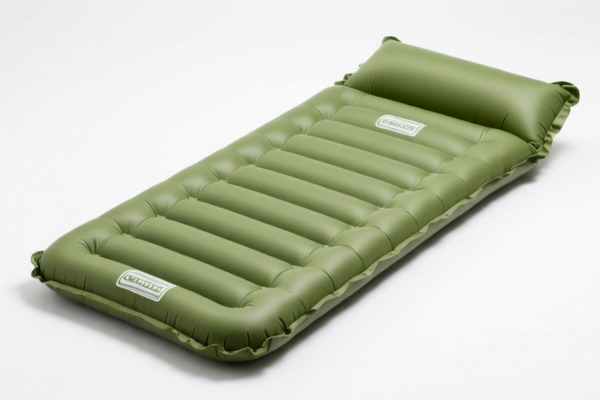
Inflatable Picnic Mattresses
CN → US| HS Code | Tariff Rate | Origin | Destination | Doc |
|---|---|---|---|---|
| 4016950000 | 21.7% | CN | US | Official Doc |
| 6306404900 | 13.7% | CN | US | Official Doc |
| 9404210095 | 38.0% | CN | US | Official Doc |
| 9404909670 | 17.3% | CN | US | Official Doc |
| 6304996040 | 20.7% | CN | US | Official Doc |
Product Images


AI Analysis
🏕️ Inflatable Picnic Mattresses: The Ultimate HS Code Guide & Tax Breakdown
🌐 HS Code Reference & Clearance Strategy | 2026 Tariff Analysis | Professional Customs Protocol
📌 One, Product Definition & Classification: Are You Sure What an "Inflatable Mat" Is?
Inflatable picnic mattresses are multi-functional outdoor gear, combining portability with comfort. However, in international trade, their classification often triggers three distinct tax paths depending on material composition and intended use.
Key Classification Dilemma: * Path A (Rubber): If made of vulcanized rubber or synthetic rubber (e.g., high-density PVC with rubber properties) → Chapter 40. * Path B (Textile): If the outer shell is textile fabric (nylon, polyester) with an inflatable inner layer, or if the primary material is deemed "textile" → Chapter 63. * Path C (Plastic/Foam Mattress): If classified as a plastic mattress (often the case for PVC airbeds) → Chapter 94.
⚠️ Critical Distinction:
- Rubber-based inflatables attract higher tariffs (40.16) due to "Other Rubber Articles".
- Textile-based inflatables (63.06) often offer the lowest tax burden if the textile aspect is dominant.
- Plastic Mattresses (94.04) are the most expensive to import due to Section 301 and Section 122 tariffs on "Plastic Mattresses".
📦 II. HS Code Classification Details (2026 Tariff Authority)
| HS Code | Product Description | Material Logic | Tax Rate (Total) | Tax Breakdown |
|---|---|---|---|---|
| 4016.95.00.00 | Other Rubber Articles: Inflatable items made of vulcanized/synthetic rubber. | Inference: Form = Inflatable; Material = Rubber. | 21.7% | Base: 4.2% + Add: 7.5% + Sec 122: 10% |
| 6306.40.49.00 | Tarpaulins, Tents, & Sails: Inflatable mattresses made of textile materials (Other). | Success Match: Name "Inflatable Mattress" + "Textile Material". No conflict. | 13.7% | Base: 3.7% + Add: 0.0% + Sec 122: 10% |
| 9404.21.00.95 | Plastic Foam Mattresses: Mattresses of plastics or cellular materials. | Inference: Form = Mattress; Material = Plastic/PVC (Inflatable). | 38.0% | Base: 3.0% + Add: 25.0% + Sec 122: 10% |
| 9404.90.96.70 | Other Mattresses: Mattresses not of cotton/wool/silk, but other materials. | Inference: Form = Mattress; Material = Plastic/PVC (Non-textile). | 17.3% | Base: 7.3% + Add: 0.0% + Sec 122: 10% |
| 6304.99.60.40 | Household Textiles (Other): Non-knitted/crocheted textile articles (Picnic Blankets/Mats). | Inference: Material = Non-silk/non-wool textile; Form = Home Textile. | 20.7% | Base: 3.2% + Add: 7.5% + Sec 122: 10% |
🔍 Key Insight:
- Best Case (Lowest Tax):6306.40.49.00at 13.7% (Textile-based, no Section 301 add-on).
- Worst Case (Highest Tax):9404.21.00.95at 38.0% (Plastic Mattress + 25% Section 301 tariff).
- The "122 Clause": All entries above include a 10% tariff under Section 122 (likely related to specific US import restrictions or recent trade actions).
💰 III. 2026 Tariff Rate Deep Dive (US Market - China Origin)
✅ Applicable Country: USA
✅ Origin: China
✅ Effective: 2025/2026 Regime
🎯 1. 6306.40.49.00 — The "Golden" Path (Lowest Tax)
- Total Tax: 13.7%
- Breakdown:
- Base Tariff: 3.7% (Standard duty for textile inflatables).
- Section 301 Add-on: 0.0% (No Section 301 penalty for this specific textile subheading).
- Section 122 Add-on: 10.0% (Mandatory surcharge).
- Why this works: The customs authority accepts "Inflatable Mattress" as a textile product (like a tent or tarp) because the outer layer is often nylon or polyester.
- Strategy: If your product has a fabric outer shell, fight for this code. It saves 11.6% compared to the rubber code and 24.3% compared to the plastic code!
🎯 2. 4016.95.00.00 — The "Rubber" Path (Moderate Tax)
- Total Tax: 21.7%
- Breakdown:
- Base Tariff: 4.2%
- Section 301 Add-on: 7.5%
- Section 122 Add-on: 10.0%
- Why this happens: If the material is 100% rubber or PVC is interpreted as a rubber article.
- Strategy: Only use if the product is explicitly rubber and not fabric-covered.
🎯 3. 9404.21.00.95 — The "Trap" (Highest Tax)
- Total Tax: 38.0%
- Breakdown:
- Base Tariff: 3.0%
- Section 301 Add-on: 25.0% (High penalty on "Plastic Mattresses").
- Section 122 Add-on: 10.0%
- Why this happens: Customs classifies any "Inflatable Mattress" made of PVC/Plastic as a Plastic Mattress under Chapter 94, triggering the highest Section 301 rate (25%).
- Risk: AVOID this classification if possible. It is a cost killer.
🛠️ IV. Customs Clearance Practical Advice (Real-World Strategy)
✅ 1. Material Documentation (The Dealbreaker)
To avoid the 38.0% tax trap, your product must prove it is Textile or Rubber, not "Plastic Mattress". * Do: Provide material composition reports stating "Outer Shell: 100% Polyester/Nylon" (Textile). * Do: If it's rubber, specify "Vulcanized Rubber" clearly. * Don't: Use generic terms like "PVC" without context, as it pushes you toward 9404.21.
✅ 2. Naming Conventions
- ✅ Correct: "Inflatable Picnic Mat (Textile)", "Fabric Air Mat", "Nylon Outdoor Sleeping Pad".
- ❌ Wrong: "Plastic Mattress", "PVC Air Bed", "Foam Mattress".
- Why: The term "Mattress" in a plastic context triggers Chapter 94. The term "Mat" or "Blanket" in a textile context triggers Chapter 63.
✅ 3. Packaging & Declaration
- Packaging: If possible, market and package the item as a "Picnic Blanket" or "Outdoor Mat" rather than a "Mattress" in the English description on the commercial invoice.
- Declaration: Explicitly state: "Made of Textile Material, Outer Shell: Polyester, Inner Liner: TPU/PVC".
🚨 V. Common Pitfalls & Solutions
| Mistake | Consequence | Solution |
|---|---|---|
| Calling it a "Plastic Mattress" | Tax jumps to 38.0% (9404.21.00.95) |
Reclassify as Textile Mat (6306.40.49.00) to lower tax to 13.7%. |
| Ignoring Section 122 | Unexpected 10% surcharge on all goods | Factor the 10% Sec 122 into your cost model immediately. |
| Confusing "Mat" vs "Mattress" | Customs re-assigns to Chapter 94 (Higher Tax) | Use "Mat", "Pad", or "Blanket" in invoices. |
| Misidentifying Material | Rubber vs. Textile confusion leads to audit | Provide Material Test Reports from a third party. |
🎯 VI. Final Verdict: Which HS Code to Choose?
| Scenario | Recommended HS Code | Total Tax | Strategy |
|---|---|---|---|
| Product has a Fabric Outer Shell | 6306.40.49.00 | 13.7% 🏆 | Best Option. Argue "Textile Material". |
| Product is 100% Rubber | 4016.95.00.00 | 21.7% | Good alternative if not textile. |
| Product is a Pure Plastic Airbed | 9404.90.96.70 | 17.3% | Avoid 9404.21. Try to argue "Other". |
| Avoid at All Costs | 9404.21.00.95 | 38.0% ❌ | DO NOT USE unless forced. |
💡 Pro Tip:
"The battle is won before the container leaves the factory. Define your product as 'Textile' or 'Rubber', never 'Plastic Mattress'. A 24% tax saving is worth a few words on the invoice!"
📌 Summary
- Inflatable Picnic Mattresses are highly sensitive to material classification.
- Chapter 63 (Textile) offers the lowest tax (13.7%).
- Chapter 94 (Plastic Mattress) is the most expensive (38.0% due to 25% Section 301).
- All codes include a 10% Section 122 surcharge.
- Action: Verify your material composition and use precise naming to avoid the "Plastic Mattress" trap.
✨ Smart Compliance, Higher Profit!
💼 Don't let a misclassified HS Code eat your margins.
Customer Reviews
About HS Code Classification
The Harmonized System (HS) is an internationally standardized nomenclature developed by the World Customs Organization (WCO) to classify traded products. Over 200 countries use the HS system as the basis for customs tariffs, trade statistics, and import/export regulations.
Each HS code follows a hierarchical structure:
- Chapter (2 digits) — Broad category of goods (e.g., Chapter 84: Machinery and Mechanical Appliances)
- Heading (4 digits) — More specific grouping within the chapter
- Subheading (6 digits) — Internationally standardized breakdown, used by all WCO member countries
- National subdivisions (8-10 digits) — Country-specific extensions for further classification, such as US HTSUS 10-digit codes
Correct HS code classification is essential for smooth customs clearance, accurate duty payment, and compliance with trade regulations. Misclassification can lead to customs delays, overpayment of duties, or penalties.
When importing from CN to US, the applicable tariff rates may include:
- Most-Favored-Nation (MFN) rate — The standard duty rate applied to WTO members
- General rate — Applied to countries without trade agreements
- Trade remedy duties — Additional tariffs such as Section 301 (anti-dumping), Section 232 (national security), or countervailing duties
The information provided on this page is for reference purposes only. For official classification, please consult with your local customs authority or a licensed customs broker.