Inflatable Rubber Tires
CN → US| HS Code | Tariff Rate | Origin | Destination | Doc |
|---|---|---|---|---|
| 4012118000 | 38.4% | CN | US | Official Doc |
| 4012124035 | 39.0% | CN | US | Official Doc |
| 4013100010 | 38.7% | CN | US | Official Doc |
| 4011500000 | 35.0% | CN | US | Official Doc |
| 4011908050 | 38.4% | CN | US | Official Doc |
Product Images
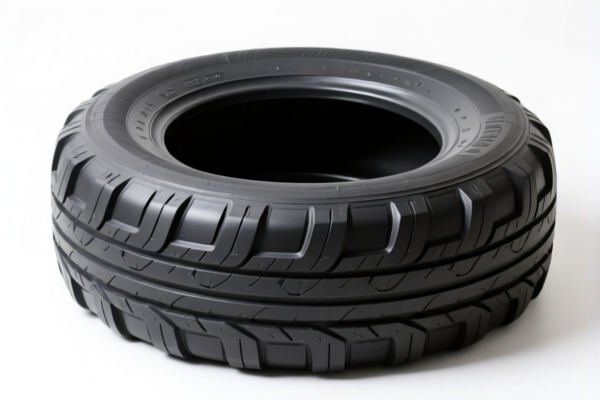
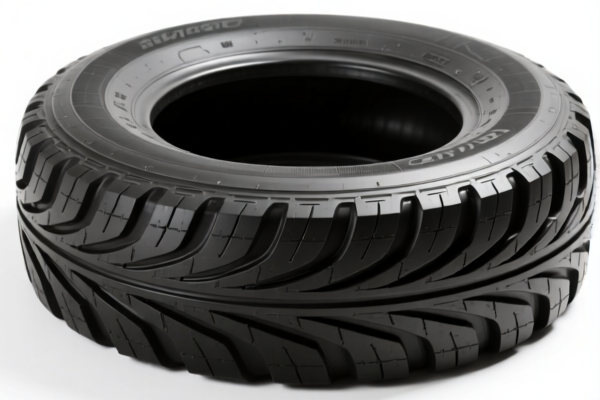
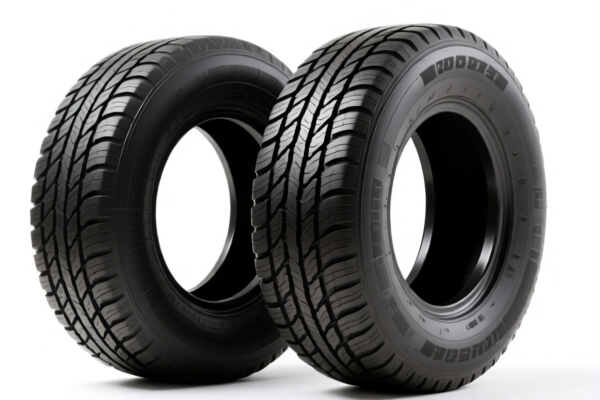
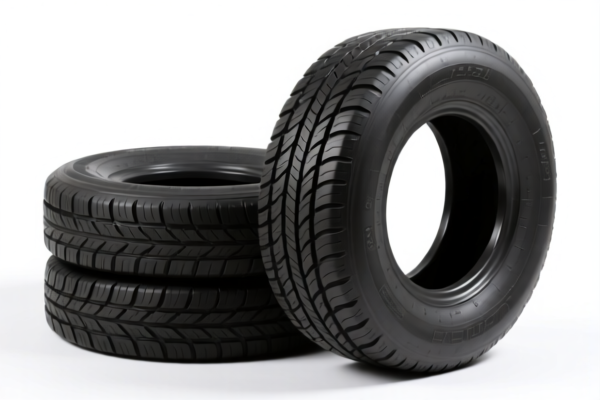
AI Analysis
🛞 Inflatable Rubber Tires (Rubber Tyres, Pneumatic)
🌐 HS Code Reference & Customs Clearance Guide | 2026 Latest Tariff Analysis | Professional Clearance Strategy
📌 I. Product Definition & Classification: Understanding "Inflatable Rubber Tires"
Inflatable Rubber Tires are critical components for vehicular mobility, constructed primarily from rubber materials in a toroidal (tire) shape. In international trade, they are strictly regulated based on their material composition (natural vs. synthetic/rubber), usage status (new vs. used), and specific structural features.
⚠️ Key Classification Distinction:
- New Tires: Subject to base tariffs + Section 301 + 122 Clause taxes.
- Used Tires: Subject to different base tariffs (often lower base rates) but still incur heavy punitive tariffs.
- Misclassification Risk: Declaring a "new" tire as "used" or misidentifying the rubber type can lead to severe penalties, cargo detention, or retroactive tax demands.
📦 II. HS Code Classification Details (2026 Latest Tariff Authority Comparison)
Based on the provided data, here are the valid HS Codes for Inflatable Rubber Tires and their corresponding tax implications.
| HS Code | Product Description | Applicable Scenario | Tax Rate Breakdown |
|---|---|---|---|
4012.11.80.00 |
Rubber tires, material: rubber, form: tire. Fits general classification criteria. | New generic rubber tires not specified elsewhere. | 38.4% (Base: 3.4% + Add: 25.0% + Clause 122: 10%) |
4012.12.40.35 |
Rubber tires, material: rubber, form: tire. Matched via other category rules. | Specific rubber tire variants falling under "other" subheadings. | 39.0% (Base: 4.0% + Add: 25.0% + Clause 122: 10%) |
4013.10.00.10 |
Rubber tires, material: rubber, use: for tires. Consistent with core elements of reference classification. | Standard pneumatic tires aligned with primary reference categories. | 38.7% (Base: 3.7% + Add: 25.0% + Clause 122: 10%) |
4011.50.00.00 |
Used natural rubber pneumatic tires. Material: natural rubber, form: pneumatic. Meets definition. | Used tires made of natural rubber. Note the lower base rate. | 35.0% (Base: 0.0% + Add: 25.0% + Clause 122: 10%) |
4011.90.80.50 |
Used natural rubber pneumatic tires. Material: natural rubber, form: pneumatic. Determined by catch-all principle. | Used tires (catch-all for used natural rubber tires not in 4011.50). | 38.4% (Base: 3.4% + Add: 25.0% + Clause 122: 10%) |
🔍 Critical Insight:
- New vs. Used: The biggest difference lies in the Base Tariff. Used tires (4011.50.00.00) have a 0% base tariff, while new tires range from 3.4% to 4.0%.
- Uniform Punitive Taxes: Regardless of new/used status, all categories incur a flat 25% Additional Tariff (likely Section 301 equivalent) and 10% Clause 122 Tariff.
- Total Burden: Expect a total effective tax rate between 35.0% and 39.0% on CIF value.
💰 III. 2026 Latest Tariff Rate Details (Including Surcharges & Policy Add-ons)
✅ Applicable Countries: United States (US)
✅ Origin: China (CN) (Implied by "Clause 122" and high additional tariffs)
✅ Effective Time: Current enforcement period
🎯 1. 4012.11.80.00 / 4013.10.00.10 / 4012.12.40.35 —— New Rubber Tires
| Item | Content |
|---|---|
| Base Tariff | 3.4% – 4.0% (ad valorem) |
| Additional Tariff (Section 301 Equivalent) | +25.0% |
| Clause 122 Tariff | +10.0% |
| Total Effective Tax Rate | 38.4% – 39.0% |
| Tax Calculation | CIF Value × Total Rate |
| De Minimis Eligibility | ❌ Not Eligible (High-value bulk goods) |
| Legal Basis Path | HTSUS:4012/4013 → Base Rate → Additional 25% → Clause 122 10% |
📌 Explanation:
- These codes represent new tires.
- The 25% additional tariff is a significant punitive measure on Chinese rubber products.
- The 10% Clause 122 tariff further increases the cost, reflecting specific trade restrictions or retaliatory measures.
- Total Tax is High: Imports are heavily penalized, impacting profit margins significantly.
🎯 2. 4011.50.00.00 —— Used Natural Rubber Pneumatic Tires
| Item | Content |
|---|---|
| Base Tariff | 0.0% |
| Additional Tariff (Section 301 Equivalent) | +25.0% |
| Clause 122 Tariff | +10.0% |
| Total Effective Tax Rate | 35.0% |
| Tax Calculation | CIF Value × 35% |
| De Minimis Eligibility | ❌ Not Eligible |
| Legal Basis Path | HTSUS:4011.50 → Base Rate 0% → Additional 25% → Clause 122 10% |
📌 Note:
- While the base tariff is 0%, the 25% + 10% punitive taxes remain unchanged.
- This is the lowest total tax rate (35%) among all listed codes, but still substantial.
- Strict Usage Definition: Must be genuinely "used." Re-treaded tires may fall under different categories or face additional scrutiny.
🎯 3. 4011.90.80.50 —— Used Natural Rubber Tires (Catch-all)
| Item | Content |
|---|---|
| Base Tariff | 3.4% |
| Additional Tariff (Section 301 Equivalent) | +25.0% |
| Clause 122 Tariff | +10.0% |
| Total Effective Tax Rate | 38.4% |
| Tax Calculation | CIF Value × 38.4% |
| De Minimis Eligibility | ❌ Not Eligible |
| Legal Basis Path | HTSUS:4011.90 → Base Rate 3.4% → Additional 25% → Clause 122 10% |
📌 Warning:
- This is a "catch-all" for used tires. If your tires fit4011.50.00.00, use that instead (35% vs 38.4%).
- Misclassification here leads to higher unnecessary tax payments.
🛠️ IV. Customs Clearance Practical Advice (Battle-Tested Pitfall Avoidance Guide)
✅ 1. Required Documentation Checklist (Non-negotiable)
| Document | Must Provide | Explanation |
|---|---|---|
| ✅ Product Specification Sheet | ✔️ | Details material composition (Natural vs. Synthetic), type (Pneumatic), and condition (New/Used). |
| ✅ Commercial Invoice | ✔️ | Must explicitly state "Rubber Tire" or "Used Tire" and correct HS Code. |
| ✅ Packing List | ✔️ | Include quantities, weights, and dimensions. |
| ✅ Certificate of Origin (CO) | ✔️ | Proves origin. If not China, check for FTZ benefits (though punitive taxes may still apply). |
| ✅ Proof of Use (If Used) | ✔️ | Crucial for 4011.50/4011.90: Photos showing wear, mileage records, or import history of the used goods. |
| ✅ Third-Party Inspection Report | ✔️ | Verifies condition (especially for used tires) and material composition. |
✅ 2. Declaration Tips (Key Mantras)
🔥 “Condition Defines Code, Material Determines Base, Punitive Taxes Are Fixed!”
| Scenario | Correct Declaration | Wrong Practice |
|---|---|---|
| New Tires | 4012.11.80.00 or 4013.10.00.10 |
Mislabeling as "Used" → 35% (if accepted) or Severe Penalty. |
| Used Natural Rubber Tires | 4011.50.00.00 |
Mislabeling as "New" → 38.4% (Overpay). Mislabeling as "Used" incorrectly → Fraud Risk. |
| Re-treaded Tires | Check specific re-tread HS codes (not in list above) | Using new tire code for re-treads → Incorrect Classification. |
| Mixed Loads | Separate lines for New/Used | Mixing new and used in one line item → Confusion & Delay. |
✅ 3. Special Handling Scenarios
| Scenario | Handling Advice |
|---|---|
| OEM/White Label Tires | Provide manufacturing contract. Ensure material composition matches declared HS code. |
| Used Tires Import | High Scrutiny. Ensure tires are not banned (some states/countries restrict used tire imports). Provide clear photos of tread depth. |
| Recycled Rubber Parts | If not "tires," check 4012 vs 4011. 4011 is specifically for tires. |
| Origin Tracing | If components are from multiple countries, ensure the "Substantial Transformation" rule is met to claim the correct origin. |
🌍 V. Global Market Clearance Comparison (2026 Latest)
| Country/Region | Recommended HS Code | Approx. Total Tax (China Origin) | Certification/Notes |
|---|---|---|---|
| 🇺🇸 USA | 4012.11.80.00 / 4011.50.00.00 |
35.0% – 39.0% | Heavy punitive tariffs (25% + 10%). Strict on used tire imports. |
| 🇨🇳 China | 4011.90.90.00 / 4012.11.00.00 |
~5-10% | Lower base tariffs. No 25%/10% punitive taxes. |
| 🇪🇺 EU | 4011.20 / 4011.10 |
~4-6% | No punitive tariffs. CE marking not required for tires, but E-mark (ECE Regulation) is mandatory. |
| 🇦🇺 Australia | 4011.20 / 4011.10 |
~5% | No punitive tariffs. RCM certification may apply if electronic components involved. |
| 🇯🇵 Japan | 4011.10 / 4011.20 |
~4-5% | No punitive tariffs. JIS standards apply. |
📌 Conclusion:
- The US is uniquely punitive against Chinese rubber tires.
- Total taxes in the US (35-39%) are among the highest globally due to the combination of base tariffs and punitive clauses.
- Used Tires: Even though the base rate is 0%, the 35% total tax remains a significant barrier.
- Strategy: Consider supply chain diversification (e.g., sourcing from non-targeted countries) if exporting to the US.
📌 VI. Common Errors & Pitfall Guide (Lessons Learned)
❌ Error 1: Declaring New Tires as Used to avoid 3.4% base tariff.
👉 Consequence: Customs inspection reveals wear/newness mismatch. Penalty: Fraud charges, seizure, back taxes + fines.
❌ Error 2: Ignoring Clause 122 (10%).
👉 Consequence: Underpayment. Customs will assess the 10% later with interest. Result: Cash flow disruption.
❌ Error 3: Using 4011.90.80.50 when 4011.50.00.00 is applicable.
👉 Consequence: Overpaying 3.4% unnecessarily. Result: Lost profit margin.
❌ Error 4: Vague Description ("Rubber Goods").
👉 Consequence: Customs cannot classify. Result: Delay, inspection, potential higher duty rate due to uncertainty.
✅ Correct Approach:
“New Pneumatic Rubber Tire, Size 205/55R16, Material: Synthetic/Natural Rubber Blend, For Passenger Vehicle”
“Used Natural Rubber Pneumatic Tire, Size 225/45R17, Tread Depth 3mm, Grade B”
🎯 VII. Conclusion: Precision in Classification, Efficiency in Clearance!
🎯 Remember the Mantra:
🔹 “New vs. Used is King, Base Rate Varies, Punitive Taxes Are Constant!”
🔹 “35% Minimum, 39% Maximum, Check Clause 122!”
🔹 “HS Code Determines Cost, Accuracy Saves Money!”
📌 Pro Tip:
If you are importing Used Tires, verify local state laws regarding used tire imports (some US states ban them).
For New Tires, consider Advance Rulings to confirm the exact subheading (4012.11vs4012.12vs4013.10) to optimize the 3.4-4.0% base rate variance.
📣 Immediate Action:
📞 Consult a licensed customs broker.
📸 Provide high-resolution photos of tires (tread, sidewall).
📝 Accurately describe material and condition.
🚀 Ensure smooth customs clearance and avoid costly penalties!
✨ Professional clearance starts with precise classification!
💼 Every percentage point in tax rate affects your bottom line!
Customer Reviews
About HS Code Classification
The Harmonized System (HS) is an internationally standardized nomenclature developed by the World Customs Organization (WCO) to classify traded products. Over 200 countries use the HS system as the basis for customs tariffs, trade statistics, and import/export regulations.
Each HS code follows a hierarchical structure:
- Chapter (2 digits) — Broad category of goods (e.g., Chapter 84: Machinery and Mechanical Appliances)
- Heading (4 digits) — More specific grouping within the chapter
- Subheading (6 digits) — Internationally standardized breakdown, used by all WCO member countries
- National subdivisions (8-10 digits) — Country-specific extensions for further classification, such as US HTSUS 10-digit codes
Correct HS code classification is essential for smooth customs clearance, accurate duty payment, and compliance with trade regulations. Misclassification can lead to customs delays, overpayment of duties, or penalties.
When importing from CN to US, the applicable tariff rates may include:
- Most-Favored-Nation (MFN) rate — The standard duty rate applied to WTO members
- General rate — Applied to countries without trade agreements
- Trade remedy duties — Additional tariffs such as Section 301 (anti-dumping), Section 232 (national security), or countervailing duties
The information provided on this page is for reference purposes only. For official classification, please consult with your local customs authority or a licensed customs broker.