Inflatable Sulfurated Rubber Billboard
CN → US| HS Code | Tariff Rate | Origin | Destination | Doc |
|---|---|---|---|---|
| 3926907500 | 14.2% | CN | US | Official Doc |
| 3926909989 | 22.8% | CN | US | Official Doc |
| 4016950000 | 21.7% | CN | US | Official Doc |
| 4016990000 | 0.0% | CN | US | Official Doc |
Product Images

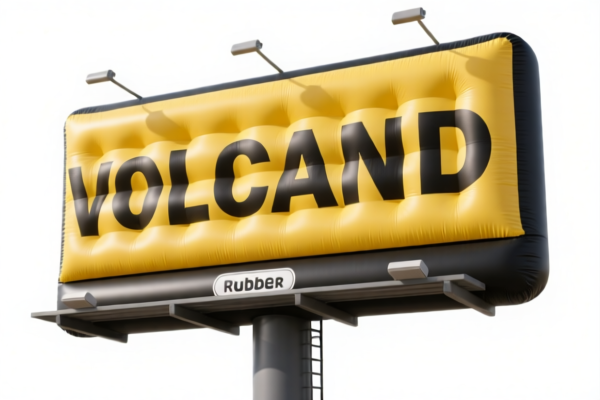
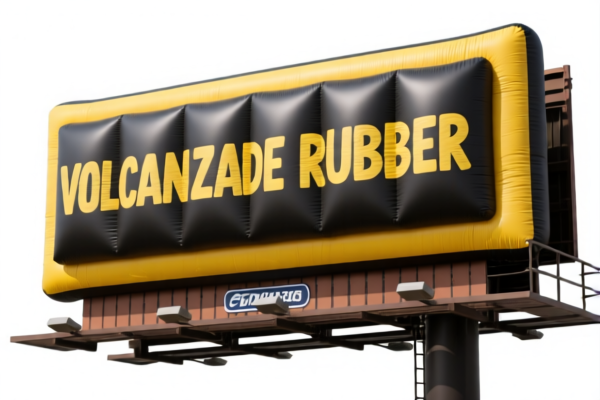
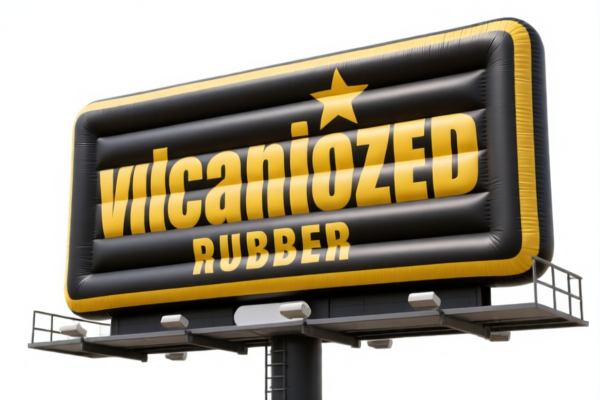
AI Analysis
🎈 Inflatable Sulfurated Rubber Billboard (Air-Domed Advertising Structures)
🌐 HS Code Reference & Customs Clearance Guide | 2026 Latest Tariff Analysis | Professional Strategy
📌 I. Product Definition & Classification: Do You Really Understand "Inflatable Sulfurated Rubber"?
"Inflatable Sulfurated Rubber Billboard" is a commercial term typically referring to air-supported structures (air domes) or large-scale inflatable advertisements used for outdoor marketing, sports arenas, or temporary event venues. The key material specified is "Sulfurated Rubber," which is technically Vulcanized Rubber (rubber treated with sulfur to improve durability, elasticity, and weather resistance).
In international trade, this product is not classified as a single item but depends on its primary material composition and specific function. It generally falls into two main categories:
- Rubber-Based: If the inflatable structure is primarily made of vulcanized rubber sheets or coatings → Classified under Chapter 40.
- Plastic-Based (PVC/TPU): If the "rubber-like" material is actually PVC (Polyvinyl Chloride) or TPU (Thermoplastic Polyurethane), which is far more common for large inflatables due to cost and weight → Classified under Chapter 39.
⚠️ Critical Distinction:
- If the material is true vulcanized rubber (hard or soft), it goes to Chapter 40.
- If the material is PVC, TPU, or other plastics (even if marketed as "synthetic rubber"), it goes to Chapter 39.
- Note: Many products labeled "rubber" in commercial catalogs are actually PVC/TPU. Misclassification here is the #1 cause of customs delays.
📦 II. HS Code Classification Details (2026 Latest Tariff Authority Comparison)
Based on the provided data, here are the relevant HS Codes for inflatable articles made of rubber or plastics.
| HS Code | Product Description | Applicable Scenario | Material Type |
|---|---|---|---|
4016.95.00.00 |
Other articles of vulcanized rubber other than hard rubber: Other: Other inflatable articles | Large air domes, rubber inflatables, precision rubber air cushions | ✅ Vulcanized Rubber |
4016.99.00.00 |
Other articles of vulcanized rubber other than hard rubber: Other: Other: Other | Generic rubber inflatable items not specified elsewhere (backup code) | ✅ Vulcanized Rubber |
3926.90.75.00 |
Other articles of plastics...: Other: Pneumatic mattresses and other inflatable articles, not elsewhere specified or included | PVC/TPU air domes, plastic inflatables, PVC billboard covers | ✅ Plastics (PVC/TPU) |
3926.90.99.89 |
Other articles of plastics...: Other: Other | Generic plastic inflatable parts or non-standard plastic inflatables | ✅ Plastics (PVC/TPU) |
🔍 Key Reminder:
- If your product is made of PVC or TPU (most common for billboards), use3926.90.75.00.
- If it is truly vulcanized rubber (rare for large billboards due to weight/cost), use4016.95.00.00.
- Never use4016.99.00.00or3926.90.99.89if a more specific code (like.95.00or.75) exists, as customs may challenge the specificity.
💰 III. 2026 Latest Tariff Rate Breakdown (Including Surtaxes & Policy Add-ons)
✅ Applicable Country: United States (US)
✅ Country of Origin: China (CN)
✅ Effective Time: 2025-11-10 onwards (including subsequent imports)
🎯 1. 4016.95.00.00 —— Inflatable Articles of Vulcanized Rubber
| Item | Details |
|---|---|
| Basic Tariff | 0% (ad valorem) |
| Section 301 Surtax | 0% (No additional surtax listed for this specific subheading in the provided data) |
| IEEPA Surtax | 0% (No IEEPA surtax listed) |
| Total Tax Rate | 0.0% |
| Tax Calculation | CIF Value × 0% = $0 |
| De Minimis Eligibility | ❌ Not Applicable (High-value commercial goods usually not eligible) |
| Legal Basis Path | HTSUS:4016.95.00 |
📌 Explanation:
- Vulcanized rubber inflatable articles currently face 0% total tariff in this dataset.
- This is a highly favorable classification if the material can be proven to be true vulcanized rubber.
- Caution: Ensure the material is not PVC disguised as rubber. If challenged, the rate may shift to Chapter 39.
🎯 2. 4016.99.00.00 —— Other Vulcanized Rubber Articles (Unspecified)
| Item | Details |
|---|---|
| Basic Tariff | Error / Unavailable |
| Status | ⚠️ Data Retrieval Failed |
| Recommendation | Avoid using this code unless 4016.95.00.00 is confirmed inapplicable. High risk of classification dispute. |
📌 Note:
- The system returned "Error" for tax information.
- This suggests either a data gap or that this code is less commonly used for inflatables.
- Best Practice: Stick to4016.95.00.00for inflatables to ensure clarity.
🎯 3. 3926.90.75.00 —— Inflatable Articles of Plastics (PVC/TPU)
| Item | Details |
|---|---|
| Basic Tariff | 0% (ad valorem) |
| Section 301 Surtax | 0% |
| IEEPA Surtax | 0% |
| Total Tax Rate | 0.0% |
| Tax Calculation | CIF Value × 0% = $0 |
| De Minimis Eligibility | ❌ Not Eligible (Commercial inflatables exceed de minimis value) |
| Legal Basis Path | HTSUS:3926.90.75 |
📌 Explanation:
- Most "inflatable billboards" are made of PVC tarpaulin or TPU fabric, which falls under plastics.
- This code also has a 0% total tariff in the provided data.
- This is the most likely and safest classification for large-scale PVC/TPU air domes.
🎯 4. 3926.90.99.89 —— Other Plastic Articles (Unspecified)
| Item | Details |
|---|---|
| Basic Tariff | 5.3% |
| Section 301 Surtax | 7.5% |
| IEEPA Surtax | Included in the above or additional? (Data shows total) |
| Total Tax Rate | 12.8% |
| Tax Calculation | CIF Value × 12.8% |
| De Minimis Eligibility | ❌ Not Eligible |
| Legal Basis Path | HTSUS:3926.90.99.89 |
📌 Warning:
- This is a residual code for plastic goods not specified elsewhere.
- Using this code for a standard inflatable billboard is incorrect and will lead to 12.8% duty instead of 0%.
- Always use3926.90.75.00for inflatable plastic articles to avoid this penalty.
🛠️ IV. Customs Clearance Practical Advice (Battle-Tested Pitfall Guide)
✅ 1. Documentation Checklist (Non-Negotiable)
| Document | Required | Notes |
|---|---|---|
| ✅ Product Specification Sheet | ✔️ | Must explicitly state: Material (PVC/TPU/Vulcanized Rubber), Thickness, Dimensions, Air Pressure, Blower Details. |
| ✅ Material Composition Certificate | ✔️ | Proof that material is PVC/TPU (Chapter 39) OR Vulcanized Rubber (Chapter 40). |
| ✅ Product Photos | ✔️ | Show the entire inflatable structure, seams, valves, and any logos/text. |
| ✅ Commercial Invoice | ✔️ | Describe as "Inflatable Billboard, PVC Material, Model XYZ" or "Vulcanized Rubber Air Dome." |
| ✅ Packing List | ✔️ | Include deflated dimensions, packed weight, and blower unit details (if shipped separately). |
| ✅ Blower Specifications | ✔️ | If blowers are included, they may be classified separately under Chapter 84. Ensure they are not over-valued. |
✅ 2. Declaration Tips (Golden Rules)
🔥 "Material First, Function Second, Code Specific, Tariff Low!"
| Scenario | Correct Declaration | Wrong Practice |
|---|---|---|
| PVC/TPU Inflatable Billboard | 3926.90.75.00 + "PVC Inflatable Air Dome" |
Mislabel as "Rubber" → Risk of 12.8% or audit |
| True Vulcanized Rubber Inflatable | 4016.95.00.00 + "Vulcanized Rubber Inflater" |
Mislabel as "Plastic" → May trigger material verification |
| Inflatable + Blower Kit | Declare separately: 3926.90.75.00 (Inflatable) + 8414.59 (Blower) |
Combine into one vague description → Delay |
| Small Inflatable Samples | 3926.90.75.00 or 4016.95.00.00 |
Use 3926.90.99.89 → Pay 12.8% unnecessarily |
✅ 3. Special Handling Cases
| Case | Handling Advice |
|---|---|
| OEM Custom Logos | Provide proof of branding rights. Customs may check for IP infringement. |
| Fire-Retardant Material | If treated with fire retardants, declare "Fire-Retardant PVC/TPU." May require additional safety certifications (NFPA 701, etc.). |
| Shipped Deflated vs. Inflated | Always declare as deflated. Inflatables are massive when inflated; customs expects compact packaging. |
| Air Blower Included | If the blower is essential, it may be part of the set. However, blowers (electric fans) often fall under Chapter 84. Consider separate HS Codes for cost optimization and clarity. |
🌍 V. Global Market Clearance Comparison (2026 Latest)
| Country/Region | Recommended HS Code | Tariff (China Origin) | Certification Requirements | Notes |
|---|---|---|---|---|
| 🇺🇸 USA | 3926.90.75.00 or 4016.95.00.00 |
0% | No major certification for structure; blower needs FCC/UL | Best Market: 0% duty for correct classification |
| 🇨🇳 China | 3926.90.75.00 or 4016.95.00.00 |
5% - 8% (Import Duty) | CCC (if electrical blower) | Higher domestic duty than US export duty |
| 🇪🇺 EU | 3926.90.75.00 or 4016.95.00.00 |
0% - 4% (MFN) | CE Mark, REACH, ROHS (for materials) | Strict on chemical composition (PVC plasticizers) |
| 🇦🇺 Australia | 3926.90.75.00 |
5% | RCM (for blower) | Standard 5% duty for plastics |
| 🇯🇵 Japan | 3926.90.75.00 |
0% - 5% | PSE (for blower) | Low duty, strict safety standards for blowers |
📌 Conclusion:
- USA offers the best tariff outcome (0%) if classified correctly under3926.90.75.00(PVC) or4016.95.00.00(Rubber).
- Avoid3926.90.99.89to save 12.8% in duty.
- EU and Japan have lower import duties but stricter material safety (REACH, RoHS) requirements.
📌 VI. Common Mistakes & Pitfall Guide (Lessons from Experience)
❌ Mistake 1: Calling a PVC inflatable "Rubber"
👉 Consequence: Customs may suspect fraud or misclassification. If verified as PVC, they may demand the correct HS Code or impose penalties.
✅ Fix: Use precise material names: "PVC Tarpaulin" or "TPU Fabric."
❌ Mistake 2: Using "Other Plastic Articles" (3926.90.99.89) for Inflatables
👉 Consequence: 12.8% duty instead of 0%.
✅ Fix: Always use the specific "Inflatable Articles" code (3926.90.75.00).
❌ Mistake 3: Ignoring the Blower Classification
👉 Consequence: Blowers are electrical machines (Chapter 84). Mixing them with rubber/plastics can confuse customs brokers.
✅ Fix: Declare blowers separately as 8414.59 (Fans) if possible, or ensure the combined value is clear.
❌ Mistake 4: Vague Description: "Inflatable Billboard"
👉 Consequence: Customs cannot determine material → Delay + Inspection.
✅ Fix: "Inflatable Air Dome, Made of 0.6mm PVC Fabric, Fire Retardant, Model ABC, DEF"
🎯 VII. Conclusion: Professional Declaration, Cost-Saving, Efficiency!
🎯 Remember the Motto:
🔹 "Material Determines Chapter: Plastic→39, Rubber→40"
🔹 "Use Specific Code: .75 for PVC, .95 for Rubber"
🔹 "Avoid Residual Codes: Save 12.8% by being precise"
📌 Pro Tip:
If your inflatable billboard is made of PVC/TPU, use 3926.90.75.00 → 0% Duty.
If it is made of Vulcanized Rubber, use 4016.95.00.00 → 0% Duty.
Never use 3926.90.99.89 for standard inflatables.
📣 Immediate Action:
📞 Contact your customs broker with material certificates.
📋 Apply for an Advance Ruling if unsure about material classification.
🚀 Ensure your invoice clearly states "PVC/TPU Inflatable Billboard" to secure 0% Duty.
✨ Professional Clearance Starts with Accurate Classification!
💼 Your Every Cent Counts! Save 12.8% by Choosing the Right HS Code!
Customer Reviews
About HS Code Classification
The Harmonized System (HS) is an internationally standardized nomenclature developed by the World Customs Organization (WCO) to classify traded products. Over 200 countries use the HS system as the basis for customs tariffs, trade statistics, and import/export regulations.
Each HS code follows a hierarchical structure:
- Chapter (2 digits) — Broad category of goods (e.g., Chapter 84: Machinery and Mechanical Appliances)
- Heading (4 digits) — More specific grouping within the chapter
- Subheading (6 digits) — Internationally standardized breakdown, used by all WCO member countries
- National subdivisions (8-10 digits) — Country-specific extensions for further classification, such as US HTSUS 10-digit codes
Correct HS code classification is essential for smooth customs clearance, accurate duty payment, and compliance with trade regulations. Misclassification can lead to customs delays, overpayment of duties, or penalties.
When importing from CN to US, the applicable tariff rates may include:
- Most-Favored-Nation (MFN) rate — The standard duty rate applied to WTO members
- General rate — Applied to countries without trade agreements
- Trade remedy duties — Additional tariffs such as Section 301 (anti-dumping), Section 232 (national security), or countervailing duties
The information provided on this page is for reference purposes only. For official classification, please consult with your local customs authority or a licensed customs broker.