Inflatable Sulfurated Rubber Floating Platform
CN → US| HS Code | Tariff Rate | Origin | Destination | Doc |
|---|---|---|---|---|
| 4016950000 | 21.7% | CN | US | Official Doc |
| 9404299095 | 41.0% | CN | US | Official Doc |
| 4016996050 | 37.5% | CN | US | Official Doc |
| 4016910000 | 37.7% | CN | US | Official Doc |
| 9404210095 | 38.0% | CN | US | Official Doc |
Product Images
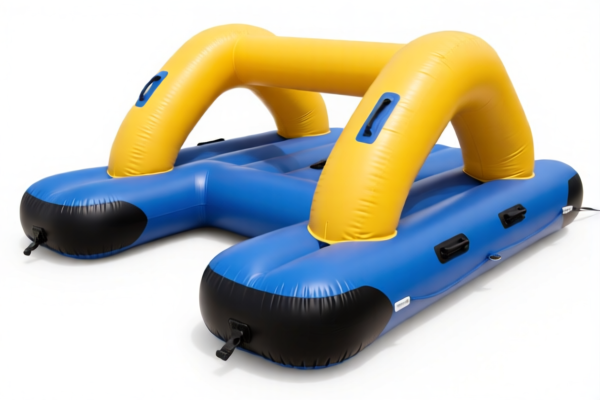
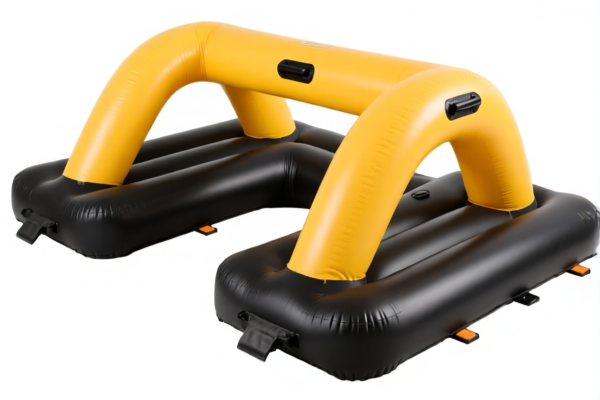
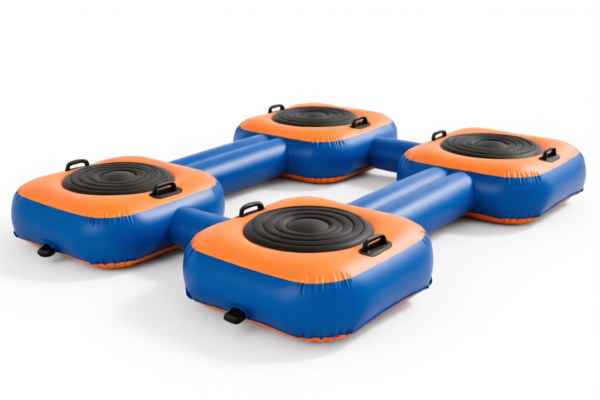
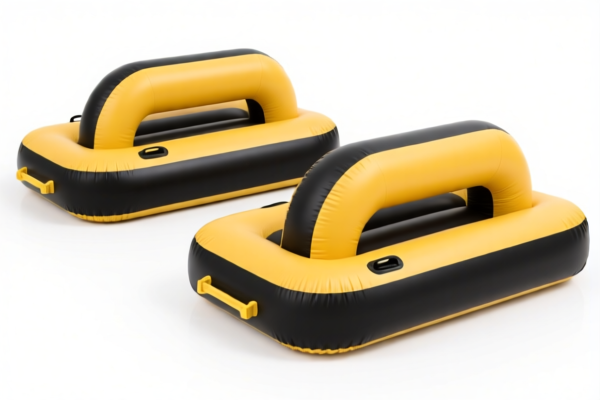
AI Analysis
🛟 Inflatable Sulfurated Rubber Floating Platform
🌐 HS Code Reference & Clearance Guide | 2026 Latest Tariff Analysis | Professional Clearance Strategy
📌 I. Product Definition & Classification: Do You Really Understand "Inflatable Rubber Platforms"?
The product "Inflatable Sulfurated Rubber Floating Platform" is a specialized industrial or recreational item characterized by two key attributes: 1. Material: Sulfurated Rubber (Vulcanized Rubber), indicating durability, weather resistance, and elasticity. 2. State/Shape: Inflatable, meaning it relies on air pressure to maintain its structure and buoyancy, rather than being rigid or foam-filled.
In international trade, confusion often arises between "Rubber Articles" (Chapter 40) and "Furniture/Mattresses" (Chapter 94). The core distinction lies in the intended use and physical form: * Chapter 40 (Rubber): Focuses on the material nature. If the item is primarily defined by its rubber composition and inflatable structure for general utility/buoyancy, it falls here. * Chapter 94 (Furniture/Mattresses): Focuses on function as bedding or seating. If the "platform" is explicitly a mattress, cushion, or sleep aid, it may fall here, even if made of rubber.
⚠️ Key Distinction Point:
- If the item is a floating device (buoyancy aid, docking platform, pool float) → Chapter 40 is the primary candidate.
- If the item is a sleeping/matting surface (yoga mat, sleeping pad, mattress) → Chapter 94 is the candidate.
- Warning: Misclassification can lead to massive tariff differences (e.g., 21.7% vs. 41.0%).
📦 II. HS Code Classification Details (2026 Latest Tariff Authority Comparison)
Based on the provided data, here are the five potential classifications for this product, ranging from "Best Fit" to "Alternative/Risky":
| HS Code | Product Description | Application Scenario | Risk Level |
|---|---|---|---|
4016.95.00.00 |
Other Inflatable Articles of Rubber | Best Fit: General inflatable rubber platforms, floats, or buoyancy aids. | 🟢 Low (Direct Match) |
9404.29.90.95 |
Other Mattresses & Pillows (Other Materials) | High Risk: If declared as a "floating mattress" or "sleeping pad." | 🔴 High (Misclassification Risk) |
4016.99.60.50 |
Other Vulcanized Rubber Articles (Other) | Medium Risk: General rubber pads/matting not specifically inflatable. | 🟡 Medium |
4016.91.00.00 |
Rubber Flooring & Mats (Other) | Low Risk: If the platform is used as a rubber mat/flooring rather than inflatable. | 🟡 Medium |
9404.21.00.95 |
Other Mattresses & Pillows (Plastics/Rubber) | High Risk: Similar to 9404.29, but specific to plastic/rubber mattresses. | 🔴 High |
🔍 Critical Reminder:
-4016.95.00.00is the most logical fit for an "Inflatable" platform because it explicitly covers "Other Inflatable Articles." -9404.29.90.95and9404.21.00.95are traps. If the product is not a mattress or bedding item, using these codes is a misclassification that leads to higher duties and potential customs penalties. -4016.91.00.00is suitable if the product is a solid rubber mat (non-inflatable), but the name specifies "Inflatable," making this a mismatch.
💰 III. 2026 Latest Tariff Rate Breakdown (Including Additional Taxes & Policies)
✅ Applicable Country: USA (US)
✅ Origin: China (CN)
✅ Effective Date: From Nov 10, 2025 onwards
🎯 1. 4016.95.00.00 —— Other Inflatable Articles of Rubber (Recommended)
| Item | Content |
|---|---|
| Base Tariff | 4.2% |
| Section 301 Additional Tariff | 7.5% |
| Section 122 Tariff (IEEPA) | 10.0% |
| Total Tariff | 21.7% |
| Calculation | CIF Value × 21.7% |
| De Minimis Exemption | ❌ Not Eligible |
| Legal Basis Path | USITC:4016.95.00.00 → FOOTNOTE:301.1 → IEEPA:9903.01.24 |
📌 Explanation:
- This is the lowest duty rate among the options for this product type. - It accurately reflects the "Inflatable" nature of the good. - Savings: Compared to the "Mattress" classification (41.0%), this saves 19.3% in taxes!
🎯 2. 9404.29.90.95 —— Other Mattresses & Pillows (Other Materials)
| Item | Content |
|---|---|
| Base Tariff | 6.0% |
| Section 301 Additional Tariff | 25.0% |
| Section 122 Tariff (IEEPA) | 10.0% |
| Total Tariff | 41.0% |
| Calculation | CIF Value × 41.0% |
| De Minimis Exemption | ❌ Not Eligible |
| Legal Basis Path | USITC:9404.29.90.95 → FOOTNOTE:301.1 → IEEPA:9903.01.24 |
📌 Warning:
- This rate is nearly double the recommended code. - Only use this if the product is explicitly a mattress or sleeping pad. Calling a "floating platform" a "mattress" is high-risk.
🎯 3. 4016.99.60.50 —— Other Vulcanized Rubber Articles (Other)
| Item | Content |
|---|---|
| Base Tariff | 2.5% |
| Section 301 Additional Tariff | 25.0% |
| Section 122 Tariff (IEEPA) | 10.0% |
| Total Tariff | 37.5% |
| Calculation | CIF Value × 37.5% |
| De Minimis Exemption | ❌ Not Eligible |
📌 Note:
- Although the base rate is lower (2.5%), the high 301 tariff (25%) makes the total cost high. - This code is for "Other Rubber Articles" that are not specifically inflatable. Using this for an inflatable item may be challenged by customs if the product clearly inflates.
🎯 4. 4016.91.00.00 —— Rubber Flooring & Mats (Other)
| Item | Content |
|---|---|
| Base Tariff | 2.7% |
| Section 301 Additional Tariff | 25.0% |
| Section 122 Tariff (IEEPA) | 10.0% |
| Total Tariff | 37.7% |
| Calculation | CIF Value × 37.7% |
| De Minimis Exemption | ❌ Not Eligible |
📌 Note:
- Similar to #3, this is for non-inflatable mats. The "Inflatable" keyword in the product name makes this classification inconsistent.
🎯 5. 9404.21.00.95 —— Other Mattresses & Pillows (Plastics/Rubber)
| Item | Content |
|---|---|
| Base Tariff | 3.0% |
| Section 301 Additional Tariff | 25.0% |
| Section 122 Tariff (IEEPA) | 10.0% |
| Total Tariff | 38.0% |
| Calculation | CIF Value × 38.0% |
| De Minimis Exemption | ❌ Not Eligible |
📌 Note:
- Again, high due to the 25% Section 301 tariff. Only applicable if the product is definitively a mattress.
🛠️ IV. Clearance Practical Advice (Real-World Pitfall Guide)
✅ 1. Document Preparation Checklist (Essential)
| Document | Must Provide | Explanation |
|---|---|---|
| ✅ Product Specification Sheet | ✔️ | Must clearly state: "Inflatable", "Vulcanized Rubber", and "Platform/Floater" (not "Mattress"). |
| ✅ Product Photos | ✔️ | Show the product in both inflated and deflated states. Highlight valves, seams, and buoyancy features. |
| ✅ Bill of Materials (BOM) | ✔️ | List rubber compounds, fabric layers (if any), and air valve types. |
| ✅ Commercial Invoice | ✔️ | Use precise description: "Inflatable Platform, Vulcanized Rubber, Non-Bedding Use, Model XYZ". Avoid words like "Bed," "Sleep," "Cushion." |
| ✅ Packing List | ✔️ | Include deflated dimensions vs. inflated dimensions to prove inflatable nature. |
| ✅ CE/UL Certificates | ✔️ | If applicable for safety standards. |
✅ 2. Declaration Strategy (Key Mantra)
🔥 "Inflatable = Chapter 40, Not Chapter 94! Say 'Platform', Not 'Mattress'!"
| Scenario | Correct Declaration | Incorrect Declaration | Consequence |
|---|---|---|---|
| Buoyancy Platform/Float | 4016.95.00.00 (21.7%) |
9404.29.90.95 (41.0%) |
Overpay 19.3% Tax! |
| Yoga Mat (Non-Inflatable) | 4016.91.00.00 (37.7%) |
4016.95.00.00 (21.7%) |
Under-declaration risk (if actually inflatable) |
| Sleeping Pad (Inflatable) | 9404.29.90.95 (41.0%) |
4016.95.00.00 (21.7%) |
Misclassification risk (if marketed as bedding) |
| General Rubber Floor Mat | 4016.99.60.50 (37.5%) |
4016.95.00.00 (21.7%) |
Risk if not inflatable |
📌 Strategy Tip:
If your product is a pool float, raft, or docking platform, emphasize "Buoyancy" and "Outdoor Use" in the description. Do NOT use words like "Comfort," "Sleep," "Bed," or "Cushion" in the commercial invoice, as these trigger Chapter 94 (Mattresses), which has much higher tariffs.
✅ 3. Special Situations
| Situation | Handling Advice |
|---|---|
| Product has Fabric Lining | Still classified under 4016.95 if rubber is the primary material and structure. Provide proof of rubber content >50%. |
| Used for Marine Industry | Ensure documentation states "Marine/Industrial Use" to distinguish from "Home/Furniture Use." |
| Customs Audits "Inflatable" | Be prepared to show the inflation valve, pump, or air chamber structure. |
| Origin Shift | If sourced from Vietnam/Thailand, IEEPA 10% may be waived, reducing total tax significantly. Check country of origin carefully. |
🌍 V. Global Market Clearance Comparison (2026 Latest)
| Country/Region | Recommended HS Code | Tariff (China Origin) | Certification Requirements | Notes |
|---|---|---|---|---|
| 🇺🇸 USA | 4016.95.00.00 |
21.7% | No specific cert required for general use | Lowest Risk/Rate if correctly classified |
| 🇨🇳 China | 4016.95.00.00 |
5.0% | N/A | No Section 301 or IEEPA tariffs |
| 🇪🇺 EU | 4016.99 (Approx.) |
0-6.5% | REACH, RoHS | No additional punitive tariffs |
| 🇬🇧 UK | 4016.95 |
0-5% | UKCA | Post-Brexit rules apply |
📌 Conclusion:
- The US market is the most critical due to the 301 and 122 tariffs. - Correct classification under4016.95.00.00saves nearly 20% in taxes compared to misclassifying it as a mattress (9404.29.90.95). - Do not let the word "Platform" confuse you into thinking it's furniture. If it inflates and is made of rubber, it's likely Chapter 40.
📌 VI. Common Errors & Pitfall Guide (Lessons Learned)
❌ Error 1: Calling an "Inflatable Raft" a "Mattress"
👉 Result: Tax jumps from 21.7% to 41.0%. Loss of $19,300 per $100k shipment.
❌ Error 2: Not declaring "Inflatable" in the description
👉 Result: Customs may classify as "Solid Rubber Mat" (4016.91 or 4016.99), leading to 37-38% tax and potential delays for verification.
❌ Error 3: Using vague terms like "Rubber Pad"
👉 Result: Ambiguity leads to Customs discretion, potentially resulting in the highest applicable rate (41%).
❌ Error 4: Ignoring Section 122 (IEEPA)
👉 Result: Forgetting the 10% IEEPA tariff can lead to underpayment and penalties, as it applies to most rubber articles from China.
✅ Correct Approach:
"Inflatable Floating Platform, Made of Vulcanized Rubber, For Industrial/Recreational Use, Non-Bedding, Model XYZ, Inflated Size: 2x1m, Deflated Weight: 2kg"
🎯 VII. Conclusion: Precision Classification Saves Money!
🎯 Remember the Mantra:
🔹 "Inflatable Rubber = 4016.95 (21.7%)! NOT 9404 (41%)!"
🔹 "No Sleep, No Bed, No Cushion in the Name!"
🔹 "301+122=37.5% for Wrong Codes, Only 21.7% for Right Codes!"
📌 Pro Tip:
If your product can be used as a bedding item (e.g., a floating mattress for swimming), you must declare it as 9404.29.90.95 (41.0%). However, if it is a platform, raft, or dock, it is 4016.95.00.00 (21.7%). Know your product's primary function!
📣 Immediate Action:
📞 Consult a Customs Broker to confirm the "Primary Use" of your inflatable platform.
🚀 Update your Commercial Invoice to avoid "Mattress" keywords if it's not for sleeping.
💡 Apply for a Pre-Ruling (ISF/ACE) if unsure, to lock in the 21.7% rate legally.
✨ Professional Clearance Starts with Accurate Classification!
💼 Your Cost Efficiency Depends on the First Line of Your Invoice!
Customer Reviews
About HS Code Classification
The Harmonized System (HS) is an internationally standardized nomenclature developed by the World Customs Organization (WCO) to classify traded products. Over 200 countries use the HS system as the basis for customs tariffs, trade statistics, and import/export regulations.
Each HS code follows a hierarchical structure:
- Chapter (2 digits) — Broad category of goods (e.g., Chapter 84: Machinery and Mechanical Appliances)
- Heading (4 digits) — More specific grouping within the chapter
- Subheading (6 digits) — Internationally standardized breakdown, used by all WCO member countries
- National subdivisions (8-10 digits) — Country-specific extensions for further classification, such as US HTSUS 10-digit codes
Correct HS code classification is essential for smooth customs clearance, accurate duty payment, and compliance with trade regulations. Misclassification can lead to customs delays, overpayment of duties, or penalties.
When importing from CN to US, the applicable tariff rates may include:
- Most-Favored-Nation (MFN) rate — The standard duty rate applied to WTO members
- General rate — Applied to countries without trade agreements
- Trade remedy duties — Additional tariffs such as Section 301 (anti-dumping), Section 232 (national security), or countervailing duties
The information provided on this page is for reference purposes only. For official classification, please consult with your local customs authority or a licensed customs broker.