Inflatable Swim Rings
CN → US| HS Code | Tariff Rate | Origin | Destination | Doc |
|---|---|---|---|---|
| 392690 | 0.0% | CN | US | Official Doc |
| 950670 | 0.0% | CN | US | Official Doc |
Product Images
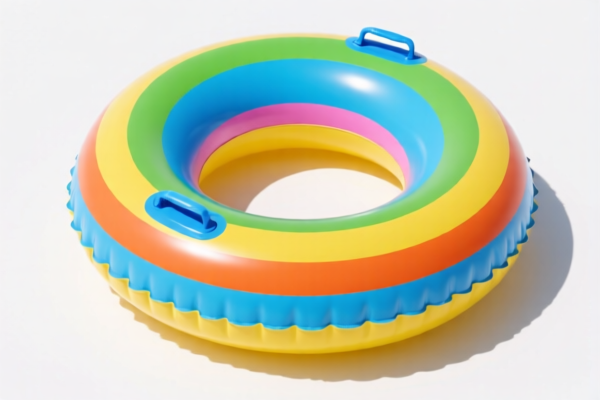
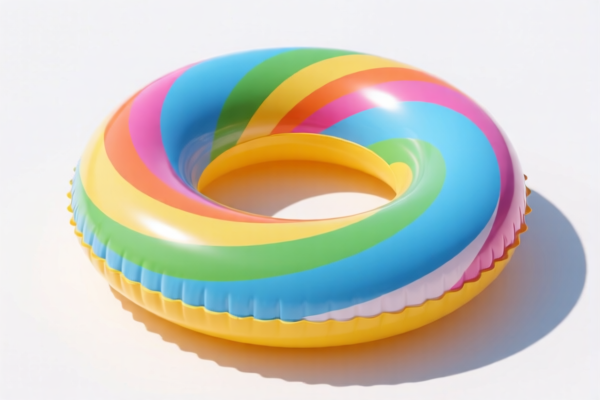
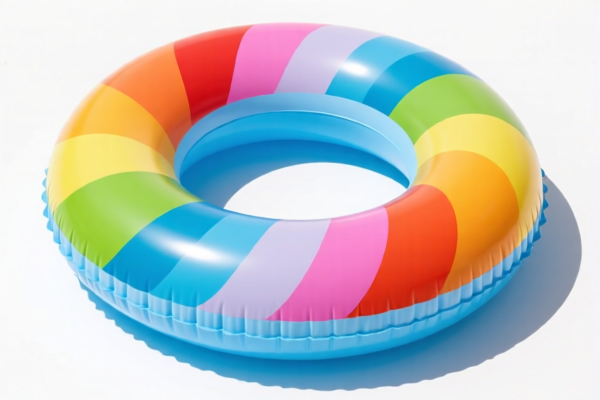
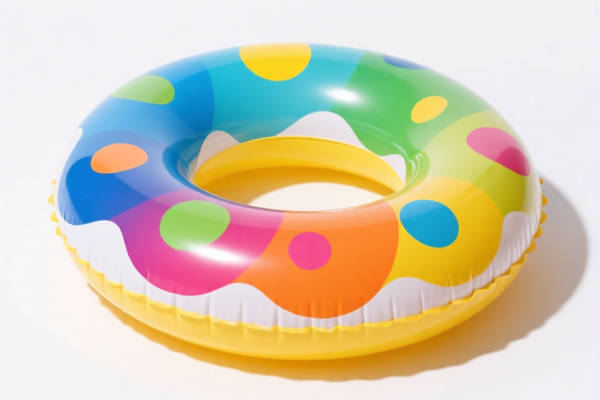
AI Analysis
🏊♀️ Inflatable Swim Rings (Water Recreation Floats)
🌐 HS Code Reference & Customs Clearance Guide | 2026 Latest Tariff Analysis | Professional Level Compliance Strategy
📌 1. Product Definition & Classification: Do You Really Understand "Swim Rings"?
Inflatable swim rings are rubber or plastic toys designed for recreational use in water, providing flotation support or simply for play. In international trade, their classification depends strictly on the primary purpose and material composition.
There are two distinct pathways for classification under the Harmonized System (HS):
Category A: General Plastic Articles (Non-Toys)
If the item is considered a general utility or safety device rather than a "toy" (e.g., industrial flotation aids or non-recreational items), it may fall under Chapter 39.
Category B: Toys for Recreational Use
If the item is explicitly marketed, designed, and sold as a toy or for children’s recreational play (including standard swimming aids for kids), it falls under Chapter 95.
⚠️ Key Distinction Point:
- If it is a "Toy" (for play, amusement, or recreational swimming support for children) → Goes to 9506.70
- If it is a "General Plastic Article" (not classified as a toy, perhaps generic utility) → Goes to 3926.90
- Most Commercial Inflatable Swim Rings sold to consumers are classified as TOYS because their primary function is recreational play.
📦 2. HS Code Classification Details (2026 Latest Tariff Authority Comparison)
| HS Code | Product Description | Application Scenario | Toy Classification? |
|---|---|---|---|
3926.90 |
Other articles of plastics (Failed to retrieve tax information) | Non-toy plastic goods, generic utility items, industrial flotation aids | ❌ No (General Plastic) |
9506.70 |
Inflatable toys, including swim rings (Failed to retrieve tax information) | Recreational water toys, children's swim floats, pool rings | ✅ Yes (Recreational Toy) |
🔍 Important Reminder:
- Standard Inflatable Swim Rings sold in retail stores, pool shops, or online marketplaces are almost exclusively classified under 9506.70 because they are "Inflatable Toys."
- Misclassifying a toy as a general plastic article (3926.90) to avoid stricter toy regulations is a common customs error that can lead to penalties.
- The description in the data explicitly links9506.70to "Inflatable toys, including swim rings," making it the most accurate code for standard recreational products.
💰 3. 2026 Latest Tariff Rate Details (Including Surcharges & Policy Additions)
✅ Applicable Country: United States (US)
✅ Origin: China (CN)
✅ Effective Date: From November 10, 2025 (including subsequent imports)
🎯 1. 3926.90 —— Other Articles of Plastics
| Item | Content |
|---|---|
| Base Tax Rate | Error (Failed to retrieve tax information) |
| Total Tax | Error |
| Tax Detail | Failed to retrieve tax information |
| Legal Basis | 3926.90 |
📌 Explanation:
- Tax information could not be retrieved for this specific code in the current dataset.
- Generally,3926.90has a base MFN rate, but for Chinese origin goods, Section 301 tariffs often apply, significantly increasing the cost.
- Caution: Do not use this code unless you are certain the product is NOT a toy.
🎯 2. 9506.70 —— Inflatable Toys
| Item | Content |
|---|---|
| Base Tax Rate | Error (Failed to retrieve tax information) |
| Total Tax | Error |
| Tax Detail | Failed to retrieve tax information |
| Legal Basis | 9506.70 |
📌 Explanation:
- Tax information could not be retrieved for this specific code in the current dataset.
- Inflatable toys are typically subject to Section 301 tariffs if originating from China.
- Crucial: Since tax details are missing in the provided data, you must verify the current Section 301 list for HS Code9506.70to determine the exact surcharge (often +25% or similar).
- Recommendation: Assume a high tariff risk due to the "Toy" classification and Chinese origin.
🛠️ 4. Customs Clearance Practical Advice (Real-World Pitfall Guide)
✅ 1. Preparation Checklist (Must-Haves)
| Document | Required | Explanation |
|---|---|---|
| ✅ Product Specifications | ✔️ | Size, material (PVC, Rubber, etc.), age recommendation |
| ✅ Product Photos | ✔️ | Clear images showing inflation valve, branding, and usage context |
| ✅ CPSC Certification (for US) | ✔️ | Critical for Toys. Must include CPC (Children’s Product Certificate) if for children under 12 |
| ✅ Commercial Invoice | ✔️ | Must clearly state "Inflatable Swim Ring (Toy)" or "Inflatable Toy for Water Recreation" |
| ✅ Packing List | ✔️ | Details of inner/outer packaging, weight, dimensions |
| ✅ Material Safety Data | ✔️ | Phthalate testing, heavy metal testing (required for plastic toys) |
✅ 2. Declaration Tips (Key Mantra)
🔥 "Be Clear on Purpose: Toy vs. Tool. If it’s for Play, It’s 9506!"
| Scenario | Correct Declaration | Wrong Practice |
|---|---|---|
| Standard Kids’ Swim Ring | 9506.70 - Inflatable Toy |
Misclassify as 3926.90 to avoid toy regulations → Penalty Risk |
| Adult Floatation Aid (Non-Toy) | 3926.90 (if not a toy) |
Misclassify as Toy → Unnecessary Toy Documentation |
| Set: Swim Ring + Pump | Declare as Set under 9506.70 |
Split declaration → Complexity & Potential Rejection |
✅ 3. Special Handling for "Inflatable" Goods
| Situation | Handling Advice |
|---|---|
| Air Shipping | Inflatable goods may be subject to volume weight calculations. Ensure packaging is compressed if allowed. |
| Defect Rate | High return rates due to leaks. Ensure robust quality control and provide clear usage instructions to reduce "dangerous goods" flags (if valves are metal/plastic parts). |
| Age Restrictions | If labeled "For Children," CPSC compliance is mandatory. Failure to provide CPC will result in detention at US Customs. |
🌍 5. Global Main Market Clearance Comparison (2026 Latest)
| Country/Region | Recommended HS Code | Tariff (China Origin) | Certification Requirements | Notes |
|---|---|---|---|---|
| 🇺🇸 USA | 9506.70 |
High Risk (Verify Section 301) | CPSC, CPC, ASTM F963 | Toy regulations are strict. Missing CPC = Detention. |
| 🇨🇳 China | 9506.70 |
Low (Check specific rate) | CCC (if applicable) | Domestic toys require CCC certification for certain categories. |
| 🇪🇺 EU | 9503.00 or 9506.70 |
0% (Mostly) | CE Marking, EN71 Safety Standards | Inflatable toys must meet EN71-1 (Physical), EN71-2 (Flammability), EN71-3 (Migration). |
| 🇬🇧 UK | 9503.00 |
0% | UKCA Marking, UK Safety Standards | Post-Brexit, UKCA is required for toys. |
| 🇦🇺 Australia | 9503.00 |
5% | AS/NZS ISO 8124 | Mandatory safety standards for children’s products. |
📌 Conclusion:
- USA: Focus on Section 301 Tariffs and CPSC Compliance.
- EU/UK: Focus on Safety Standards (EN71/UKCA).
- Classification: Most swim rings are Toys (9506.70). Only use3926.90if you can prove it is NOT a toy (e.g., industrial life-saving device, though even then, safety standards apply).
📌 6. Common Errors & Pitfall Guide (Lessons Learned)
❌ Error 1: Classifying a children’s swim ring as 3926.90 to avoid toy duties.
👉 Consequence: Customs will reclassify it as a toy, apply retroactive duties + penalties, and potentially seize the goods.
❌ Error 2: Failing to provide CPSC/CPC for shipments to the USA.
👉 Consequence: Detention at Port. Goods cannot clear customs without a valid Children’s Product Certificate.
❌ Error 3: Not declaring the inflation valve material.
👉 Consequence: If valves contain metal or specific plastics, additional safety tests may be required.
❌ Error 4: Using "Plastic Float" as the declaration name for a Toy.
👉 Consequence: Ambiguity leads to customs examination, delaying clearance by weeks.
✅ Correct Practice:
"Inflatable Swim Ring, PVC Toy, For Children Aged 3+, Model XYZ, CPSC Certified, ASTM F963 Compliant"
🎯 7. Conclusion: Professional Declaration, Safe & Efficient!
🎯 Remember the Mantra:
🔹 "If it floats for play, it’s a Toy. 9506 is your code. Don’t hide, just comply!"
🔹 "Tax rates vary, but Safety Rules are Global. CPSC for US, CE for EU."
📌 Tip:
If your inflatable swim rings are originating from Vietnam or Malaysia, you may benefit from FTA (Free Trade Agreement) benefits, potentially reducing tariffs to 0%. Always check the Country of Origin rules.
📣 Immediate Action:
📞 Contact a licensed customs broker + Provide Product Photos + Apply for CPSC Certification
🚀 Ensure your Inflatable Swim Rings clear customs smoothly, avoid delays, and maximize your profit margins!
✨ Professional Customs Clearance Starts with Accurate Classification!
💼 Every penny saved on compliance is a penny earned in profit!
Customer Reviews
About HS Code Classification
The Harmonized System (HS) is an internationally standardized nomenclature developed by the World Customs Organization (WCO) to classify traded products. Over 200 countries use the HS system as the basis for customs tariffs, trade statistics, and import/export regulations.
Each HS code follows a hierarchical structure:
- Chapter (2 digits) — Broad category of goods (e.g., Chapter 84: Machinery and Mechanical Appliances)
- Heading (4 digits) — More specific grouping within the chapter
- Subheading (6 digits) — Internationally standardized breakdown, used by all WCO member countries
- National subdivisions (8-10 digits) — Country-specific extensions for further classification, such as US HTSUS 10-digit codes
Correct HS code classification is essential for smooth customs clearance, accurate duty payment, and compliance with trade regulations. Misclassification can lead to customs delays, overpayment of duties, or penalties.
When importing from CN to US, the applicable tariff rates may include:
- Most-Favored-Nation (MFN) rate — The standard duty rate applied to WTO members
- General rate — Applied to countries without trade agreements
- Trade remedy duties — Additional tariffs such as Section 301 (anti-dumping), Section 232 (national security), or countervailing duties
The information provided on this page is for reference purposes only. For official classification, please consult with your local customs authority or a licensed customs broker.