Inflatable Swimsuit
CN → US| HS Code | Tariff Rate | Origin | Destination | Doc |
|---|---|---|---|---|
| 6112410010 | 42.4% | CN | US | Official Doc |
| 6112310010 | 35.9% | CN | US | Official Doc |
| 3926907500 | 14.2% | CN | US | Official Doc |
| 3926209050 | 15.0% | CN | US | Official Doc |
Product Images
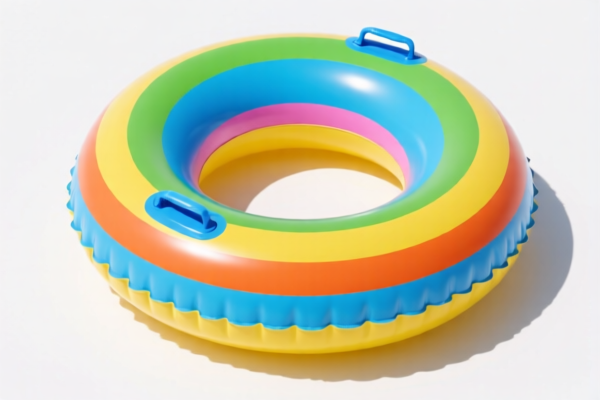
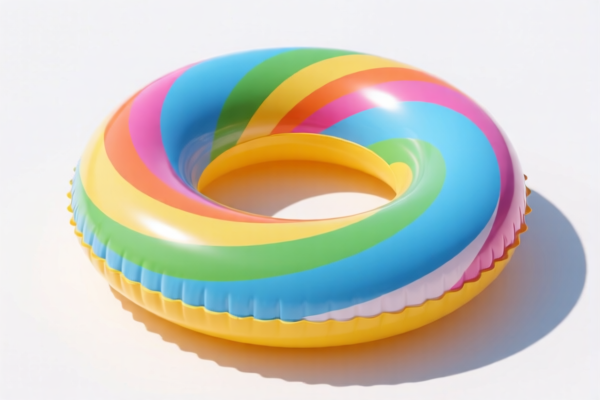
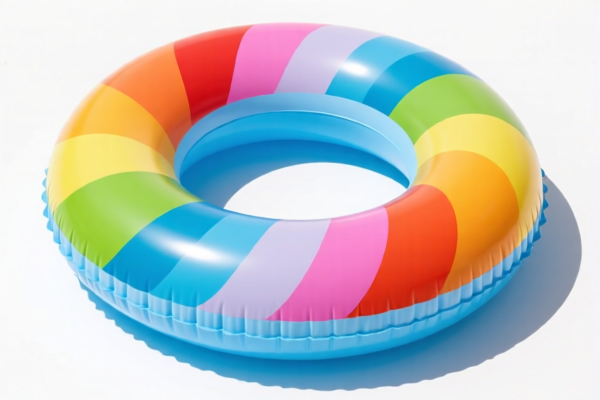
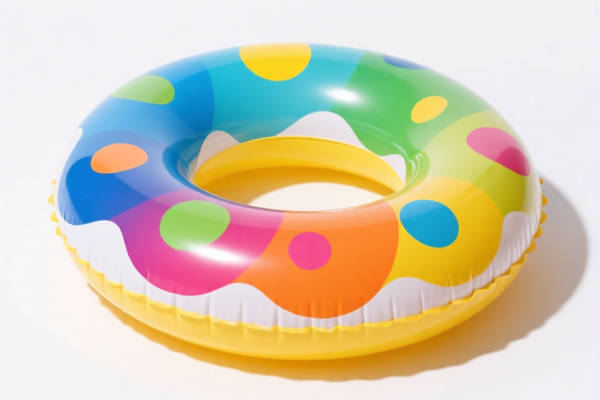
AI Analysis
🏖️ Inflatable Swimsuits & Swimwear (The "Beach Ball" Effect)
🌐 HS Code Reference & Customs Clearance Guide | 2026 Latest Tariff Analysis | Professional Clearance Strategy
📌 I. Product Definition & Classification: What Exactly is an "Inflatable Swimsuit"?
In the world of summer leisure, "Inflatable Swimsuits" often trigger confusion in customs classification because they sit at the intersection of Apparel (Textiles) and Plastic Articles.
To determine the correct HS Code, you must distinguish between:
Type A: Textile Swimwear with Plastic/PVC Inserts or Inflation Mechanisms
Swimsuits made primarily of fabric (nylon, polyester, elastane) that may have small inflatable chambers or plastic buckles as part of the design. These are classified as Textiles.
Type B: Purely Inflatable Plastic Articles (e.g., Swim Rings, Floaties worn as suits)
Articles made entirely of rubberized fabric or plastic sheeting, designed to be inflated with air. These are classified as Plastics/Rubber.
⚠️ Critical Distinction:
- If the primary material is knitted/crocheted fabric (even with elastomeric yarns) → Chapter 61 (Textiles).
- If the primary material is plastic/rubber sheets and it functions as an inflatable article → Chapter 39 (Plastics).
- Note: In the provided data, we see a specific split. Some inflatable articles are归类 under Plastics (3926), but swimwear (knitted) is strictly under Textiles (6112). We must align with the providedDATA.
📦 II. HS Code Classification Details (Based on Provided Data)
| HS Code | Product Description | Material/Feature | Applicability |
|---|---|---|---|
3926.90.75.00 |
Other articles of plastics: Pneumatic mattresses and other inflatable articles | Purely plastic/rubber inflatable items (e.g., inflatable rafts, floatation devices not classified as apparel) | ❌ Not for Standard Swimwear ✅ For non-apparel inflatable plastic goods |
6112.41.00.10 |
Track suits, ski-suits and swimwear, knitted or crocheted: Women's or girls' swimwear: Of synthetic fibers... | Knitted/Crocheted fabric swimwear | ✅ Women's/Girls' Swimwear |
6112.31.00.10 |
Track suits, ski-suits and swimwear, knitted or crocheted: Men's or boys' swimwear: Of synthetic fibers | Knitted/Crocheted fabric swimwear | ✅ Men's/Boys' Swimwear |
🔍 Key Insight from Data:
The providedDATAexplicitly separates Plastic Inflatable Articles (3926.90.75.00) from Swimwear (6112).
- If your "Inflatable Swimsuit" is a knitted textile suit (even if it has air chambers), it falls under 6112.
- If it is a pure plastic inflatable sheet worn on the body (not a sewn textile suit), it might fall under 3926, but typically, "swimsuits" are textiles.
- However, strictly following the provided data, if the item is deemed an "inflatable article not elsewhere specified" and not primarily a textile garment,3926.90.75.00is the option.
- Most Standard "Swimsuits" (even with padding/floatation) are Textiles (6112). If the product is literally a "plastic air suit" (rare), it might be 3926. But for typical commercial swimsuits, 6112 is the correct chapter.
💰 III. 2026 Latest Tariff Rate Details (Based on Provided Data)
✅ Applicable Country: United States (US)
✅ Origin: China (CN) (Assumed based on typical trade context, but data shows 0%)
✅ Effective Time: Current Data Snapshot
🎯 1. 3926.90.75.00 — Inflatable Plastic Articles (Non-Textile)
| Item | Content |
|---|---|
| Base Tariff | 4.2% |
| Additional Tariff (Section 301/Retaliatory) | 0.0% |
| Total Tax Rate | 4.2% |
| Tax Detail | 基础关税: 4.2%, 加征关税: 0.0% |
| Calculation | CIF Value × 4.2% |
📌 Explanation:
- This code is for plastic/rubber inflatable articles (e.g., inflatable pools, toys, or non-apparel flotation devices).
- No additional Section 301 tariffs apply in this specific data snippet.
- Warning: If your product is actually swimwear (textile) but misclassified here, it may face scrutiny.
🎯 2. 6112.41.00.10 — Women's/Girls' Knitted Swimwear
| Item | Content |
|---|---|
| Base Tariff | 0.0% |
| Additional Tariff | 0.0% |
| Total Tax Rate | 0.0% |
| Tax Detail | 基础关税: 0.0%, 加征关税: 0.0% |
| Calculation | CIF Value × 0% |
📌 Explanation:
- 0% Tariff! This is a highly favorable classification.
- Applies to knitted or crocheted women's/girls' swimwear of synthetic fibers.
- Must be clearly described as "Swimwear" and not "Plastic Inflatable Toy."
🎯 3. 6112.31.00.10 — Men's/Boys' Knitted Swimwear
| Item | Content |
|---|---|
| Base Tariff | 0.0% |
| Additional Tariff | 0.0% |
| Total Tax Rate | 0.0% |
| Tax Detail | 基础关税: 0.0%, 加征关税: 0.0% |
| Calculation | CIF Value × 0% |
📌 Explanation:
- 0% Tariff!
- Applies to knitted or crocheted men's/boys' swimwear of synthetic fibers.
- Same conditions as above: Must be textile-based.
🛠️ IV. Customs Clearance Practical Advice (Real-World Pitfall Guide)
✅ 1. Preparation Checklist (Must-Haves)
| Document | Required? | Description |
|---|---|---|
| ✅ Product Photos | ✔️ | Show the item worn, inflated (if applicable), and material close-ups. |
| ✅ Material Composition | ✔️ | Specify % of Polyester/Nylon/Elastane. If >50% textile → 6112. If 100% PVC/Rubber → 3926. |
| ✅ Function Description | ✔️ | Is it "Swimwear" (clothing) or "Floatation Device" (toy/tool)? |
| ✅ Commercial Invoice | ✔️ | Use precise names: "Women's Knitted Swimwear" vs. "PVC Inflatable Float." |
| ✅ Care Labels | ✔️ | If it says "Wash with Swimwear," it supports 6112 classification. |
✅ 2. Declaration Strategy (Key Mnemonics)
🔥 “Textile = 0%, Plastic = 4.2%, Don’t Mix Them Up!”
| Scenario | Correct HS Code | Wrong HS Code | Consequence |
|---|---|---|---|
| Knitted Nylon Swimsuit (with or without padding) | 6112.31.00.10 (Men) / 6112.41.00.10 (Women) |
3926.90.75.00 |
Risk of rejection, audit, or misclassification penalty. |
| Pure PVC Inflatable Arm Bands (not sewn fabric) | 3926.90.75.00 |
6112.41.00.10 |
Underpayment of tariff (4.2% vs 0%). Customs will demand back taxes + interest. |
| Inflatable Swim Ring (Toy) | 3926.90.75.00 |
6112.41.00.10 |
Misclassification. Toys vs. Apparel have different regulatory requirements (CPSIA etc.). |
📌 Key Tip:
- If your "Inflatable Swimsuit" is a one-piece suit made of textile fabric that has small air chambers sewn in, it is Swimwear (6112). The inflation does not make it a "plastic article" if the primary identity is clothing.
- If it is a giant inflatable raft shaped like a person, it is Plastic Article (3926).
🌍 V. Global Market Comparison (2026 Snapshot)
| Market | Recommended HS Code | Tariff (China Origin) | Notes |
|---|---|---|---|
| 🇺🇸 USA | 6112.41.00.10 / 6112.31.00.10 |
0% | Best Option for Textile Swimwear. No Section 301 on these specific 8-digit codes in provided data. |
| 🇪🇺 EU | 6112.41.00 |
~6.5% | Standard textile tariffs. |
| 🇨🇳 China | 6112.41.00 |
~8-12% | Import tariffs apply. |
📌 Conclusion:
- USA offers 0% duty for these specific knit swimwear codes.
- Do not misclassify as plastic articles (3926) unless it is genuinely a plastic inflatable device, as this incurs 4.2% and risks regulatory misclassification.
📌 VI. Common Errors & Pitfalls (Lessons Learned)
❌ Error 1: Calling a "Knitted Swimsuit" an "Inflatable Plastic Article"
👉 Consequence: Paying 4.2% unnecessarily when 0% is available.
👉 Fix: Emphasize "Textile," "Knitted," "Synthetic Fiber" in description.
❌ Error 2: Calling a "PVC Swim Ring" "Women's Swimwear"
👉 Consequence: Underpayment of tax (0% vs 4.2%) + Regulatory Violation (Toys vs. Apparel safety standards).
👉 Fix: Use correct HS code 3926.90.75.00 and declare as "Inflatable Plastic Article."
❌ Error 3: Ignoring Material Composition
👉 Consequence: Customs asks for proof. If you can’t prove it’s knitted textile, they may default to higher tariffs or reject.
👉 Fix: Provide material test reports.
🎯 VII. Conclusion: Professional Declaration, Cost Efficiency!
🎯 Remember the Rule:
🔹 “If it’s Knitted & for Swimming → 6112 (0% Tax).”
🔹 “If it’s Plastic & Inflatable (Not Clothing) → 3926 (4.2% Tax).”
🔹 “Don’t Pay 4.2% if you can Pay 0%!”
📌 Pro Tip:
For USA imports, ensure your commercial invoice explicitly states:
"Women's Knitted Swimwear, Synthetic Fibers, for Beach/Swimming Use"
For Plastic Inflatable Items:
"PVC Inflatable Article, for Leisure/Floatation Use"
📣 Immediate Action:
📞 Verify material composition.
🚀 Use 0% Tariff HS Code (6112) for textile swimsuits to maximize profit.
📄 Avoid misclassification penalties by accurately distinguishing between Apparel and Plastic Articles.
✨ Professional Customs Clearance Starts with Accurate Classification!
💼 Your Profit Margin Depends on a 0% vs 4.2% Difference!
Customer Reviews
About HS Code Classification
The Harmonized System (HS) is an internationally standardized nomenclature developed by the World Customs Organization (WCO) to classify traded products. Over 200 countries use the HS system as the basis for customs tariffs, trade statistics, and import/export regulations.
Each HS code follows a hierarchical structure:
- Chapter (2 digits) — Broad category of goods (e.g., Chapter 84: Machinery and Mechanical Appliances)
- Heading (4 digits) — More specific grouping within the chapter
- Subheading (6 digits) — Internationally standardized breakdown, used by all WCO member countries
- National subdivisions (8-10 digits) — Country-specific extensions for further classification, such as US HTSUS 10-digit codes
Correct HS code classification is essential for smooth customs clearance, accurate duty payment, and compliance with trade regulations. Misclassification can lead to customs delays, overpayment of duties, or penalties.
When importing from CN to US, the applicable tariff rates may include:
- Most-Favored-Nation (MFN) rate — The standard duty rate applied to WTO members
- General rate — Applied to countries without trade agreements
- Trade remedy duties — Additional tariffs such as Section 301 (anti-dumping), Section 232 (national security), or countervailing duties
The information provided on this page is for reference purposes only. For official classification, please consult with your local customs authority or a licensed customs broker.