Inflatable Temporary Mattress
CN → US| HS Code | Tariff Rate | Origin | Destination | Doc |
|---|---|---|---|---|
| 4016950000 | 21.7% | CN | US | Official Doc |
| 6306404900 | 21.2% | CN | US | Official Doc |
| 9404210095 | 38.0% | CN | US | Official Doc |
| 9404909670 | 17.3% | CN | US | Official Doc |
Product Images
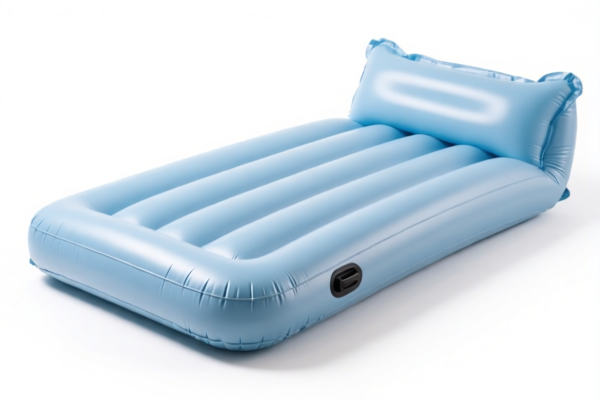
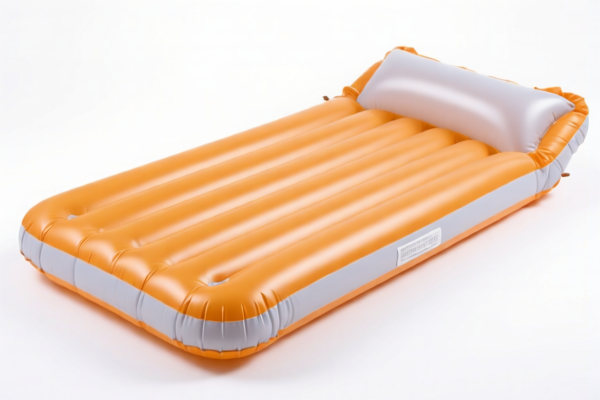
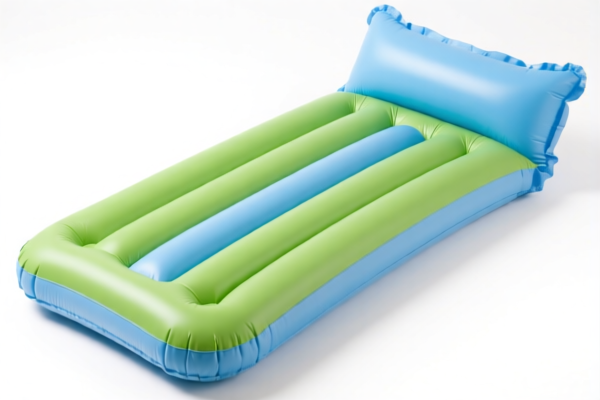
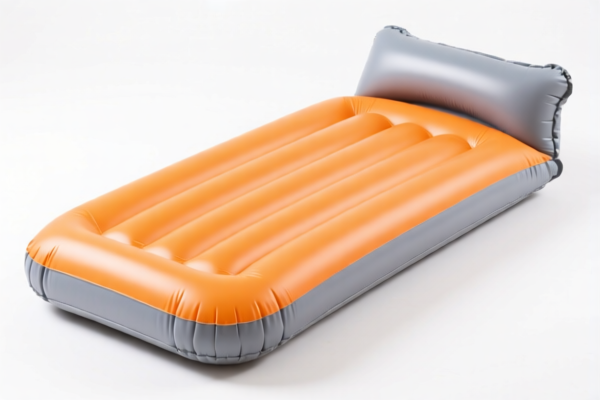
AI Analysis
🛌 Inflatable Temporary Mattress (Air Mattress)
🌐 HS Code Reference & Customs Clearance Guide | 2026 Latest Tariff Analysis | Professional Clearance Strategy
📌 I. Product Definition & Classification: Do You Truly Understand the "Inflatable Mattress"?
The Inflatable Temporary Mattress is a portable sleeping aid widely used in camping, guest rooms, and emergency shelters. In international trade, its classification hinges on two critical factors: 1. Material Composition: Is it made of rubber, textiles, or plastics? 2. Primary Function: Is it primarily for sleeping (heading 9404) or is it an industrial/consumable good (heading 40 or 63)?
⚠️ Key Distinction:
- If made of Rubber/Synthetic Rubber → Often classified under Chapter 40 (Articles of rubber).
- If made of Textile Fabric (with plastic coating) → Often classified under Chapter 63 (Other made-up textile articles).
- If made of Plastics/ PVC and primarily for sleeping → Classified under Chapter 94 (Furniture; bedding, mattresses...).
📦 II. HS Code Classification Details (Based on Provided Data)
| HS Code | Product Description | Matching Logic & Summary | Total Tax Rate |
|---|---|---|---|
4016.95.00.00 |
Other inflatable articles of vulcanized rubber | Matching Basis: Product form is "inflatable article"; material is inferred as vulcanized rubber or compatible synthetic rubber, fitting "other inflatable articles." | 21.7% |
6306.40.49.00 |
Other tents; other made-up textile articles | Matching Success: Name "Inflatable Mattress" aligns with use; inferred material is textile-based (no conflict), fitting "other textile materials." | 21.2% |
9404.21.00.95 |
Mattresses containing springs, of plastic foam or of cellular rubber | Matching Basis: Product form is a mattress; material inferred as plastic/synthetic (fits 'of plastics'), fitting the classification for plastic/cellular mattresses. | 38.0% |
9404.90.96.70 |
Other articles of bedding and similar furnishing | Matching Basis: Product form is a mattress type; material inferred as plastic/PVC synthetic (not cotton/silk/fabric shell), fitting the "Other" category. | 17.3% |
🔍 Critical Insight:
- The same product can have vastly different tax rates (17.3% to 38.0%) depending on how customs interprets the material. - Chapter 94 is generally preferred for "bedding/mattresses," but Chapter 40/63 may apply if the product is deemed more of a "consumable inflatable" or "textile accessory" rather than a "mattress." - Material Proof is Key: You must provide material composition data to justify the lower-rate HS codes.
💰 III. 2026 Latest Tariff Rate Breakdown (Including Additional Duties & Policy Surcharges)
✅ Applicable Country: United States (US)
✅ Origin: China (CN)
✅ Effective Time: 2025/2026 (Current Trade War Context)
🎯 1. 4016.95.00.00 — Inflatable Rubber Articles
| Item | Detail |
|---|---|
| Base Duty | 4.2% |
| Section 301 (Add'l Duty) | 7.5% |
| 122 Clause Duty | 10% |
| Total Effective Rate | 21.7% |
| De Minimis Exemption? | ❌ No (High risk of scrutiny) |
| Legal Basis Path | USITC:4016.95.00.00 + Section301:7.5% + 122Clause:10% |
📌 Explanation:
- Classified as "Other inflatable articles of rubber." - Subject to all standard China-specific surcharges. - Cost Impact: Moderate. Lower than plastic mattresses but higher than textile options.
🎯 2. 6306.40.49.00 — Other Made-up Textile Articles
| Item | Detail |
|---|---|
| Base Duty | 3.7% |
| Section 301 (Add'l Duty) | 7.5% |
| 122 Clause Duty | 10% |
| Total Effective Rate | 21.2% |
| De Minimis Exemption? | ❌ No |
| Legal Basis Path | USITC:6306.40.49.00 + Section301:7.5% + 122Clause:10% |
📌 Explanation:
- Best for textile-backed air mattresses (e.g., flocked top, PVC bottom). - Offers the lowest total tariff (21.2%) among the four options. - Crucial: Must prove textile construction. If customs deems it "plastic," this code will be rejected.
🎯 3. 9404.21.00.95 — Plastic Foam/Rubber Mattresses
| Item | Detail |
|---|---|
| Base Duty | 3.0% |
| Section 301 (Add'l Duty) | 25.0% |
| 122 Clause Duty | 10% |
| Total Effective Rate | 38.0% |
| De Minimis Exemption? | ❌ No |
| Legal Basis Path | USITC:9404.21.00.95 + Section301:25% + 122Clause:10% |
📌 Explanation:
- Highest Tax Risk. - Although base duty is low (3%), the 25% Section 301 tariff makes this the most expensive option. - Only use if you are certain it is classified as "plastic foam/cellular rubber" AND cannot use textile codes.
🎯 4. 9404.90.96.70 — Other Bedding Articles (The "Sweet Spot")
| Item | Detail |
|---|---|
| Base Duty | 7.3% |
| Section 301 (Add'l Duty) | 0.0% |
| 122 Clause Duty | 10% |
| Total Effective Rate | 17.3% |
| De Minimis Exemption? | ❌ No |
| Legal Basis Path | USITC:9404.90.96.70 + Section301:0% + 122Clause:10% |
📌 Explanation:
- Lowest Overall Tax Rate (17.3%). - Key Advantage: 0% Section 301 Additional Duty. - Condition: Must be classified as "Other bedding articles" (not specifically plastic foam/rubber). This often applies to PVC/Plastic inflatable mattresses that don't fit the "foam" definition of 9404.21. - Strategy: This is likely the optimal HS Code if the mattress is plastic/PVC based, as it avoids the hefty 25% tariff.
🛠️ IV. Customs Clearance Practical Advice (Avoiding Pitfalls)
✅ 1. Documentation Checklist (Essential for Clearance)
| Document | Required? | Description |
|---|---|---|
| ✅ Product Specification Sheet | ✔️ | Must detail materials (e.g., "PVC coated polyester fabric," "TPU," "Vulcanized rubber"). |
| ✅ Material Composition Breakdown | ✔️ | CRITICAL: Percentage of textile vs. plastic vs. rubber. This determines if you use 6306, 4016, or 9404. |
| ✅ Product Photos | ✔️ | Clear images showing texture (flocked top?), seams, and valve type. |
| ✅ Commercial Invoice | ✔️ | Description: "Inflatable Temporary Mattress, Model XYZ, Material: PVC/Polyester." |
| ✅ Packing List | ✔️ | Weight, dimensions, and number of units. |
| ✅ Test Reports (Optional but Helpful) | ✔️ | Phthalate tests (for PVC), flammability tests (if claimed for bedding). |
✅ 2. Declaration Strategy (Key Tactics)
🔥 "Material Defines Code, Code Defines Tax!"
| Scenario | Recommended HS Code | Tax Rate | Why? |
|---|---|---|---|
| Textile-backed (e.g., Flocked) | 6306.40.49.00 |
21.2% | Justify as "Textile Article." Lower total tax than rubber. |
| Pure PVC/Plastic (Non-Foam) | 9404.90.96.70 |
17.3% | Best Option. Avoids 25% Section 301 tax. Classify as "Other Bedding." |
| Vulcanized Rubber | 4016.95.00.00 |
21.7% | Standard rubber inflatables. Moderate tax. |
| Plastic Foam/Cellular Rubber | 9404.21.00.95 |
38.0% | AVOID if possible. High 25% tariff. |
✅ 3. Special Handling Tips
| Situation | Advice |
|---|---|
| Misclassification Risk | If you declare 9404.21 (Plastic Foam) for a simple PVC sheet, Customs may audit. If you declare 9404.90 for a foam product, they may reassess. Be precise about material. |
| "Temporary" Keyword | Including "Temporary" in the description helps justify "Other Bedding" (9404.90) rather than "Furniture" or rigid structures. |
| De Minimis (Section 321) | ❌ Do NOT rely on De Minimis ($800 exemption) for these HS Codes. Most of these codes are not eligible for Section 321 due to China-specific tariffs or high duty rates. Plan for full commercial entry. |
| 122 Clause | All options include a 10% "122 Clause" tariff (likely related to specific trade enforcement or recent policy additions). Budget for this 10% surcharge universally. |
🌍 V. Global Market Comparison (2026 Context)
| Market | Recommended HS Code | Est. Total Tax (China Origin) | Key Certification |
|---|---|---|---|
| 🇺🇸 USA | 9404.90.96.70 |
17.3% (Best) | CPC (Children's Product) if for kids; ASTM F2878 |
| 🇨🇳 China | 9404.90.96.70 |
Low (~3-5%) | CCC (if applicable) |
| 🇪🇺 EU | 9404.90 |
Low (3-5%) | CE; REACH (for PVC/Phthalates) |
| 🇬🇧 UK | 9404.90 |
Low (3-5%) | UKCA; REACH |
📌 Conclusion:
- The US market is the most complex due to Section 301 (25%) and 122 Clause (10%). - Target9404.90.96.70for plastic mattresses to save 20.7% compared to the foam category. - Target6306.40.49.00for textile mattresses to save 3.9% compared to rubber.
📌 VI. Common Mistakes & Pitfalls (Lessons Learned)
❌ Mistake 1: Declaring all PVC mattresses as 9404.21.00.95 (Plastic Foam).
👉 Result: 38.0% Tax. If correctly classified as 9404.90.96.70, tax drops to 17.3%. Savings: 20.7%!
❌ Mistake 2: Ignoring Material Composition.
👉 Result: Customs determines material arbitrarily, often defaulting to higher-duty or restricted categories. Always provide a material sheet.
❌ Mistake 3: Assuming De Minimis Applies.
👉 Result: Packages are held, assessed full duties, and penalized. These items generally require full commercial entry.
❌ Mistake 4: Confusing "Inflatable Mattress" with "Air Bed Pump."
👉 Result: Pumps may have different HS codes (e.g., 8414 or 8509). Declare separately if sold as accessories to avoid mixed classification errors.
✅ Correct Approach:
"Inflatable Temporary Mattress, PVC Material, Non-Foam, for Travel Use, Model XYZ" →
9404.90.96.70
🎯 VII. Conclusion: Professional Declaration Saves Money!
🎯 Key Takeaway:
🔹 "Material is King: PVC vs. Foam vs. Textile."
🔹 "Avoid 9404.21: It carries the 25% penalty."
🔹 "Target 9404.90: Lowest US Tax at 17.3%."
📌 Pro Tip:
If your product is exported to the US, engage a customs broker to review the material composition report before shipping. A small shift in HS code (e.g.,
9404.90vs9404.21) can save thousands of dollars on bulk shipments.
📣 Immediate Action:
📞 Contact Your Broker: "My mattress is PVC, not foam. Can we use
9404.90.96.70to avoid the 25% tariff?"
🚀 Optimize Supply Chain: Choose Textile (6306) or Non-Foam Plastic (9404.90) for the best tax efficiency.
✨ Smart Clearance, Lower Costs, Faster Delivery!
💼 Every percent of duty saved is pure profit.
Customer Reviews
About HS Code Classification
The Harmonized System (HS) is an internationally standardized nomenclature developed by the World Customs Organization (WCO) to classify traded products. Over 200 countries use the HS system as the basis for customs tariffs, trade statistics, and import/export regulations.
Each HS code follows a hierarchical structure:
- Chapter (2 digits) — Broad category of goods (e.g., Chapter 84: Machinery and Mechanical Appliances)
- Heading (4 digits) — More specific grouping within the chapter
- Subheading (6 digits) — Internationally standardized breakdown, used by all WCO member countries
- National subdivisions (8-10 digits) — Country-specific extensions for further classification, such as US HTSUS 10-digit codes
Correct HS code classification is essential for smooth customs clearance, accurate duty payment, and compliance with trade regulations. Misclassification can lead to customs delays, overpayment of duties, or penalties.
When importing from CN to US, the applicable tariff rates may include:
- Most-Favored-Nation (MFN) rate — The standard duty rate applied to WTO members
- General rate — Applied to countries without trade agreements
- Trade remedy duties — Additional tariffs such as Section 301 (anti-dumping), Section 232 (national security), or countervailing duties
The information provided on this page is for reference purposes only. For official classification, please consult with your local customs authority or a licensed customs broker.