Inflatable Tires for Large Engineering Vehicles
CN → US| HS Code | Tariff Rate | Origin | Destination | Doc |
|---|---|---|---|---|
| 4012198000 | 20.9% | CN | US | Official Doc |
| 4012208000 | 35.0% | CN | US | Official Doc |
| 4011808020 | 38.4% | CN | US | Official Doc |
| 4011808010 | 38.4% | CN | US | Official Doc |
| 4013100020 | 38.7% | CN | US | Official Doc |
Product Images
AI Analysis
🚜 Inflatable Tires for Large Engineering Vehicles: HS Code Classification & US Tariff Analysis (2026)
🌐 HS Code Reference & Customs Clearance Guide | 2026 Latest Tariff Analysis | Professional-Level Strategy
📌 One: Product Definition & Classification: Do You Really Understand "Engineering Vehicle Tires"?
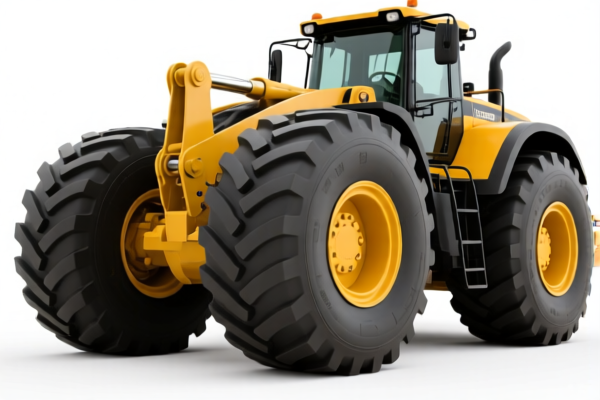
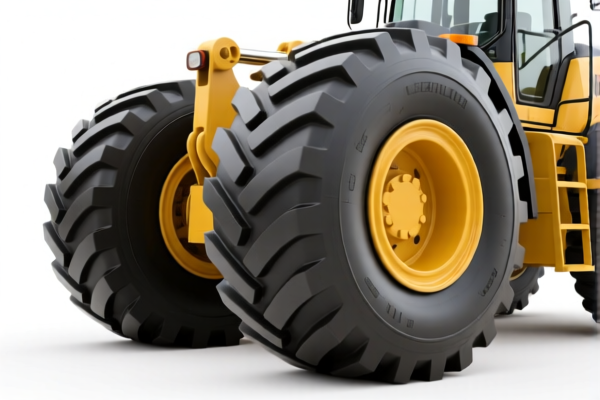
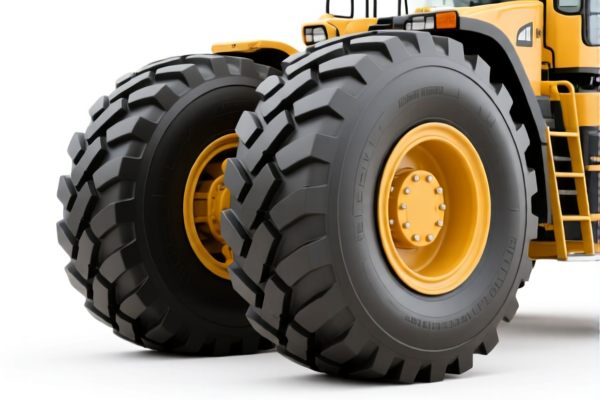
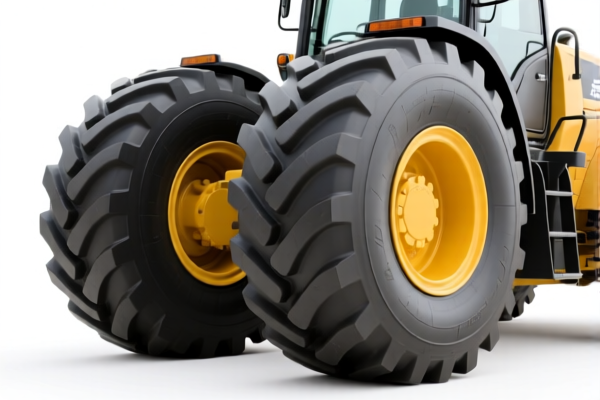
Inflatable tires for large engineering vehicles are the critical load-bearing components for heavy-duty machinery used in construction, mining, and industrial logistics. Unlike standard automotive tires, these are designed for extreme durability, high load capacity, and specific operational environments.
In international trade and customs classification, they are primarily divided based on structure, rim diameter, and vehicle type:
1. Pneumatic Tires (Rubber): * Radial or Bias-Ply: Designed for heavy loads. * Key Classification Factor: If the rim diameter is ≥ 61 cm (24 inches), they typically fall under Chapter 4011 (Tires of a kind used on bicycles, motor cars, buses, trucks, etc.). * Note: If the tire is not specifically designed for the vehicle types listed in 4011 but is a general-purpose pneumatic rubber tire, it may fall under Chapter 4012 (Retreaded or used tires, or other pneumatic tires not elsewhere specified).
2. Inner Tubes (if applicable): * If sold separately, inner tubes for such tires are classified under Chapter 4013.
⚠️ Critical Distinction Point:
- Tire ONLY: Classify under 4011 (if rim ≥ 61cm) or 4012 (if generic/other).
- Tire + Rim: If mounted on a rim, the classification may shift depending on whether the tire is the essential character. However, usually, tires are classified separately unless part of a complete wheel assembly.
- Inner Tube: Separate classification under 4013.
📦 Two: HS Code Classification Details (Latest 2026 Tariff Alignment)
| HS Code | Product Description | Application Scenario | Rim Diameter / Type |
|---|---|---|---|
4012.19.80.00 |
Other pneumatic tires, of rubber (Catch-all for non-specified types) | General heavy-duty pneumatic tires not fitting specific 4011 criteria | Any (Generic) |
4012.20.80.00 |
Other pneumatic tires, of rubber | Heavy engineering tires, potentially solid or special compound | Any (Generic) |
4011.80.80.20 |
Pneumatic tires, new, of rubber, for buses, trucks, or other vehicles | Specifically for construction/mining/industrial handling vehicles | > 61 cm |
4011.80.80.10 |
Pneumatic tires, new, of rubber, for buses, trucks, or other vehicles | Construction, mining, or industrial handling vehicles | > 61 cm |
4013.10.00.20 |
Inner tubes, of rubber, for bicycles, motor cycles, or motor vehicles | Inner tubes for large vehicles | N/A |
🔍 Key Reminder:
- 4011.80.xx is the most common classification for large engineering tires with rims over 61 cm.
- 4012.xx is used as a fallback ("Other") if the tire doesn't fit the specific vehicle descriptions in 4011 or if the rim is smaller/different.
- 4013.10 is strictly for inner tubes, not the tire itself.
💰 Three: 2026 Latest Tariff Rate Details (Including Surcharges & Policy Add-ons)
✅ Applicable Country: United States (US)
✅ Origin: China (CN)
✅ Effective Time: 2025/2026 (Current Trade War Rates)
🎯 1. 4012.19.80.00 — Other Pneumatic Tires (Generic/Other)
| Item | Detail |
|---|---|
| Basic Tariff | 3.4% |
| Section 301 Surcharge | +7.5% |
| 122 Clause Surcharge | +10% |
| Total Tariff | 20.9% |
| Calculation Base | CIF Value × 20.9% |
| De Minimis Exemption | ❌ Not Eligible (High duty rate exceeds threshold) |
| Legal Basis | HTSUS:4012.19.80 → Section 301 → 122 Clause |
📌 Explanation:
- This is the lowest duty option among the listed codes.
- However, it is a "catch-all" category. If customs determines the tire is specifically for engineering vehicles (rim > 61cm), they may reclassify it to 4011, leading to higher duties.
🎯 2. 4012.20.80.00 — Other Pneumatic Tires (Special Compound/Solid)
| Item | Detail |
|---|---|
| Basic Tariff | 0.0% |
| Section 301 Surcharge | +25.0% |
| 122 Clause Surcharge | +10% |
| Total Tariff | 35.0% |
| Calculation Base | CIF Value × 35.0% |
| De Minimis Exemption | ❌ Not Eligible |
| Legal Basis | HTSUS:4012.20.80 → Section 301 → 122 Clause |
📌 Explanation:
- Even with a 0% basic tariff, the Section 301 surcharge (25%) drives the total to 35%.
- Often used for tires with special rubber compounds not fitting standard 4011.
🎯 3. 4011.80.80.20 — Pneumatic Tires for Construction/Mining/Industrial Vehicles
| Item | Detail |
|---|---|
| Basic Tariff | 3.4% |
| Section 301 Surcharge | +25.0% |
| 122 Clause Surcharge | +10% |
| Total Tariff | 38.4% |
| Calculation Base | CIF Value × 38.4% |
| De Minimis Exemption | ❌ Not Eligible |
| Legal Basis | HTSUS:4011.80.80.20 → Section 301 → 122 Clause |
📌 Explanation:
- This is the standard correct classification for most large engineering tires (Rim > 61cm).
- High Duty: 38.4% is significant. Must be factored into landed cost.
🎯 4. 4011.80.80.10 — Pneumatic Tires for Construction/Mining/Industrial Vehicles
| Item | Detail |
|---|---|
| Basic Tariff | 3.4% |
| Section 301 Surcharge | +25.0% |
| 122 Clause Surcharge | +10% |
| Total Tariff | 38.4% |
| Calculation Base | CIF Value × 38.4% |
| De Minimis Exemption | ❌ Not Eligible |
| Legal Basis | HTSUS:4011.80.80.10 → Section 301 → 122 Clause |
📌 Explanation:
- Similar to.20, but may differ in specific rubber compound or tread pattern specifications.
- Same High Duty: 38.4%.
🎯 5. 4013.10.00.20 — Inner Tubes for Large Vehicles
| Item | Detail |
|---|---|
| Basic Tariff | 3.7% |
| Section 301 Surcharge | +25.0% |
| 122 Clause Surcharge | +10% |
| Total Tariff | 38.7% |
| Calculation Base | CIF Value × 38.7% |
| De Minimis Exemption | ❌ Not Eligible |
| Legal Basis | HTSUS:4013.10.00.20 → Section 301 → 122 Clause |
📌 Explanation:
- If inner tubes are shipped separately from the tires, they are taxed here.
- Highest Duty: 38.7%.
🛠️ Four: Customs Clearance Practical Advice (Pitfall Avoidance Guide)
✅ 1. Preparation Checklist (Non-negotiable)
| Document | Mandatory | Explanation |
|---|---|---|
| ✅ Product Specifications | ✔️ | Must include: Rim Size, Ply Rating, Load Index, Tread Pattern, Material (Rubber Compound). |
| ✅ Photo of Tire Sidewall | ✔️ | Must clearly show HS-relevant info: Size (e.g., 29.5R25), Load Range, "Radial/Bias". |
| ✅ Invoice & Packing List | ✔️ | Must distinguish between Tires and Inner Tubes if sold separately. Do not combine. |
| ✅ Letter of Guarantee | ✔️ | Confirm origin: Made in China. If not, provide Certificate of Origin to avoid 301 tariffs. |
| ✅ Technical Data Sheet | ✔️ | Proves the tire is for "Engineering Vehicles" to justify 4011.80 vs 4012. |
✅ 2. Declaration Strategy (Key Mantra)
🔥 "Rim Size Dictates Code, Tube Separate, Spec Precise, Duty Minimized!"
| Scenario | Correct Declaration | Wrong Practice |
|---|---|---|
| Tire for Excavator (Rim > 61cm) | 4011.80.80.10 or 4011.80.80.20 |
Declare as 4012.19.80.00 (Risk of reclassification + penalty) |
| Tire for Small Loader (Rim < 61cm) | 4012.19.80.00 |
Declare as 4011 (Incorrect, low rim size) |
| Inner Tubes Shipped Separately | 4013.10.00.20 |
Declare as part of tire 4011 (Incorrect, different tariff) |
| Solid Non-Pneumatic Tires | Not in scope | N/A |
✅ 3. Special Cases
| Situation | Handling Advice |
|---|---|
| OEM Custom Tires | Provide OEM contract and design specs. Ensure description matches "Construction/Mineral Vehicles." |
| Retreaded Tires | Not listed in this data. Usually 4012.30. Higher scrutiny. |
| Mixed Container | Ensure tires and tubes are separately packaged and listed in the invoice. Co-mingling causes clearance delays. |
| Original Country | If Vietnam, Thailand, Malaysia, Mexico: Apply for IEEPA Exemption (Section 301 relief). Duty may drop to 0-10%. |
🌍 Five: Global Market Comparison (2026)
| Country/Region | Recommended HS Code | Tariff (China Origin) | Certification Required | Note |
|---|---|---|---|---|
| 🇺🇸 USA | 4011.80.80.10/20 |
38.4% (3.4% + 25% + 10%) | None specific (DOT label required) | High Duty. Check for 301 Exclusions. |
| 🇨🇳 China | 4011.80.80.10 |
0-10% (Various) | CCC (if applicable) | No Section 301. |
| 🇪🇺 EU | 4011.80 |
0-4% (Standard MFN) | E-Mark / DOT | No 25% Surcharge. |
| 🇦🇺 Australia | 4011.80 |
5% | ADR Compliance | Moderate Duty. |
| 🇯🇵 Japan | 4011.80 |
0-7.5% | JIS | Moderate Duty. |
📌 Conclusion:
- USA is the most expensive market due to Section 301 and 122 Clause tariffs.
- 38.4% total duty is a major cost driver.
- Strategic Sourcing: Consider sourcing from ASEAN countries to avoid US surcharges.
📌 Six: Common Mistakes & Pitfall Guide (Lessons Learned)
❌ Mistake 1: Declaring large engineering tires as 4012.19.80.00 to save duty.
👉 Consequence: Customs audit reveals rim size > 61cm. Reclassified to 4011 → Back taxes (20.9% vs 38.4%) + Penalties!
❌ Mistake 2: Shipping inner tubes with tires in one box without separate declaration.
👉 Consequence: Customs may classify the entire shipment under the highest duty item or delay for inspection.
❌ Mistake 3: Ignoring the "122 Clause" tariff.
👉 Consequence: The 122 Clause (10%) applies to many rubber products. If omitted, you face underpayment and interest.
❌ Mistake 4: Not providing tire size specs.
👉 Consequence: Customs cannot determine if rim is > 61cm. Automatic classification to general/fallback code → Higher duty or delay.
✅ Correct Practice:
"Pneumatic Radial Tire, Size 29.5R25, Load Index 180/177, for Excavators, Rubber, Chinese Origin. Inner Tube Sold Separately: HTS 4013.10.00.20."
🎯 Seven: Conclusion: Precision in Classification Saves Money!
🎯 Remember the Mantra:
🔹 "Rim > 61cm? Go 4011.38.4%. Rim < 61cm? Go 4012.20.9%. Tube Separate? 4013.38.7%."
🔹 "Don't hide the tube, don't guess the rim. Precision prevents penalties!"
📌 Pro Tip:
If your tires are originally from Vietnam, Thailand, or Malaysia, you may qualify for Section 301 Exclusions (IEEPA Waivers). This can reduce the tariff from 38.4% to near 0%.
✅ Action: Apply for Advance Ruling or Exclusion Code before shipping to the US.
📣 Immediate Action:
📞 Consult a Customs Broker + Provide Tire Sidewall Photo + Verify Rim Diameter
🚀 Ensure Smooth Clearance, Avoid Audits, Maximize Profit Margins!
✨ Professional Classification Starts with Precision!
💼 Every Percent of Duty Saved is Pure Profit!
Customer Reviews
About HS Code Classification
The Harmonized System (HS) is an internationally standardized nomenclature developed by the World Customs Organization (WCO) to classify traded products. Over 200 countries use the HS system as the basis for customs tariffs, trade statistics, and import/export regulations.
Each HS code follows a hierarchical structure:
- Chapter (2 digits) — Broad category of goods (e.g., Chapter 84: Machinery and Mechanical Appliances)
- Heading (4 digits) — More specific grouping within the chapter
- Subheading (6 digits) — Internationally standardized breakdown, used by all WCO member countries
- National subdivisions (8-10 digits) — Country-specific extensions for further classification, such as US HTSUS 10-digit codes
Correct HS code classification is essential for smooth customs clearance, accurate duty payment, and compliance with trade regulations. Misclassification can lead to customs delays, overpayment of duties, or penalties.
When importing from CN to US, the applicable tariff rates may include:
- Most-Favored-Nation (MFN) rate — The standard duty rate applied to WTO members
- General rate — Applied to countries without trade agreements
- Trade remedy duties — Additional tariffs such as Section 301 (anti-dumping), Section 232 (national security), or countervailing duties
The information provided on this page is for reference purposes only. For official classification, please consult with your local customs authority or a licensed customs broker.