Inflatable Travel Foot Rest Pillow
CN → US| HS Code | Tariff Rate | Origin | Destination | Doc |
|---|---|---|---|---|
| 6306404900 | 13.7% | CN | US | Official Doc |
| 9404210095 | 38.0% | CN | US | Official Doc |
| 4016950000 | 21.7% | CN | US | Official Doc |
| 9404909670 | 17.3% | CN | US | Official Doc |
| 9404210095 | 38.0% | CN | US | Official Doc |
Product Images
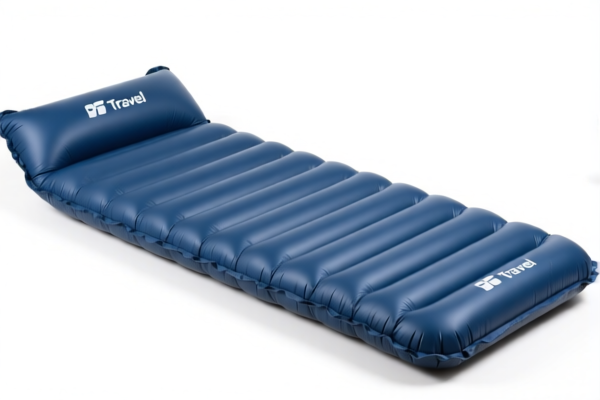
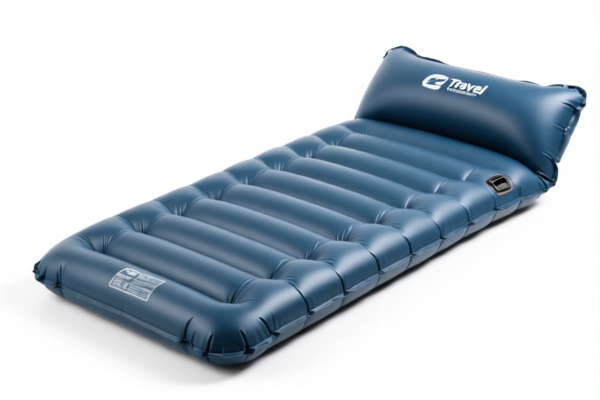
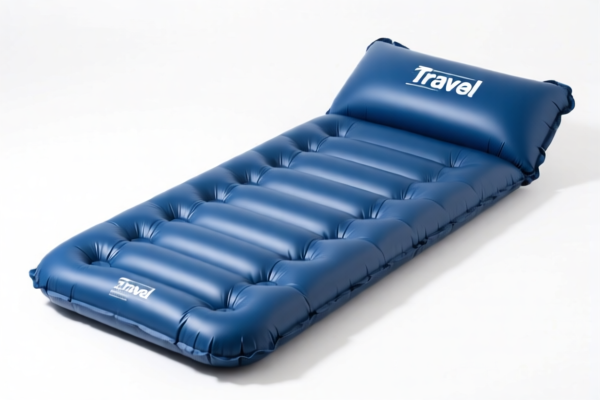
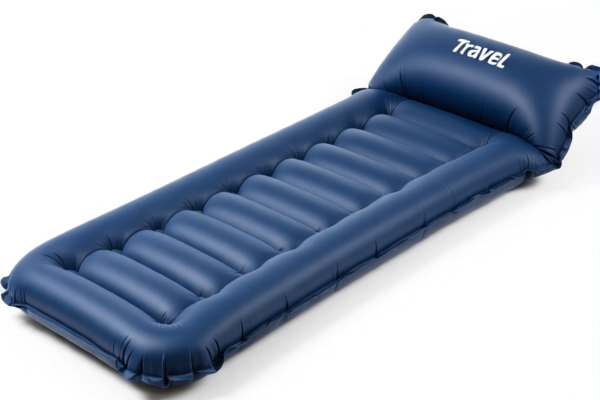
AI Analysis
🎒 Inflatable Travel Foot Rest Pillow & Mattress Classification Guide
🌐 HS Code Reference & Customs Clearance Strategy | 2026 Latest Tariff Analysis | Professional Clearance Tactics
📌 1. Product Definition: What are we really shipping?
"Inflatable Travel Foot Rest Pillow" is a broad category that typically includes two distinct product types based on material and usage: 1. Inflatable Travel Mattress: Often used for foot support or general sleeping, made from textile, plastic, or rubber materials. 2. Inflatable Foot Rest Pillow: Specifically designed for foot elevation during travel, usually made from textiles.
In international trade, material composition is the critical determinant for HS Code classification. Misclassification can lead to severe tariff penalties (up to 38% vs 13.7%).
⚠️ Key Distinction:
- If made of Textile (e.g., Nylon, Polyester outer shell): → 6306.40.49.00 (Lowest Tax!)
- If made of Plastic/PVC (rigid or foam-like): → 9404.21.00.95 (Highest Tax!)
- If made of Rubber: → 4016.95.00.00 (Moderate Tax!)
📦 2. HS Code Classification Details (2026 Latest Tariff Authority)
Based on the specific materials of the inflatable product, here are the five valid HS Codes provided in the data:
| HS Code | Product Description | Material Basis | Total Tax Rate (China Origin) |
|---|---|---|---|
| 6306.40.49.00 | Inflatable Travel Mattress / Foot Rest Pillow | Textile Materials (e.g., Nylon, Polyester) | 13.7% ✅ Optimal |
| 9404.21.00.95 | Inflatable Travel Mattress | Plastic / Synthetic Materials (Foam/Plastic category) | 38.0% ❌ Highest Risk |
| 4016.95.00.00 | Inflatable Travel Mattress | Vulcanized Rubber / Synthetic Rubber | 21.7% ⚠️ Moderate |
| 9404.90.96.70 | Inflatable Travel Mattress | Plastic / PVC (Other synthetic categories) | 17.3% ⚠️ Medium-High |
| 6306.40.49.00 | Inflatable Travel Foot Rest Pillow | Textile Materials | 13.7% ✅ Optimal |
🔍 Critical Note:
- The same physical item (e.g., a PVC foot rest) might be misclassified as "Plastic" leading to 38% tax.
- If the product is primarily textile-covered (even if it has a plastic valve or liner), it may qualify for 6306.40.49.00 at 13.7%.
- Do not ignore the material specs on your commercial invoice!
💰 3. 2026 Tariff Rate Breakdown (Including Duties & Surcharges)
✅ Applicable Country: USA (US)
✅ Origin: China (CN)
✅ Effective Date: Ongoing (including post-2025 adjustments)
🎯 1. 6306.40.49.00 —— Inflatable Travel Foot Rest / Mattress (Textile)
| Item | Detail |
|---|---|
| Base Duty | 3.7% |
| Section 301 Surcharge | 0.0% |
| Section 122 Surcharge | 10% |
| Total Rate | 13.7% ✅ |
| Calculation | CIF Value × 13.7% |
| De Minimis Exemption | ❌ No (Subject to full duty) |
| Legal Basis | USITC:6306.40.49.00 + IEEPA:122 |
📌 Why is this the best option?
- Lowest total duty among all options.
- Section 122 is a recent surcharge on Chinese textiles.
- Section 301 (25%) does NOT apply to this textile category, saving you 25% compared to plastic goods.
🎯 2. 9404.21.00.95 —— Inflatable Mattress (Plastic/Synthetic)
| Item | Detail |
|---|---|
| Base Duty | 3.0% |
| Section 301 Surcharge | 25.0% ❌ |
| Section 122 Surcharge | 10% |
| Total Rate | 38.0% ❌ |
| Calculation | CIF Value × 38.0% |
| De Minimis Exemption | ❌ No |
| Legal Basis | USITC:9404.21.00.95 + Section 301:8517.62 logic applied to plastic goods |
📌 Warning:
- This is the most expensive classification.
- The 25% Section 301 tariff applies heavily to plastic/synthetic mattress categories.
- If your product is PVC, ensure you are not overpaying by misclassifying it here if it can be argued as textile-based.
🎯 3. 4016.95.00.00 —— Inflatable Products (Rubber)
| Item | Detail |
|---|---|
| Base Duty | 4.2% |
| Section 301 Surcharge | 7.5% ⚠️ |
| Section 122 Surcharge | 10% |
| Total Rate | 21.7% |
| Calculation | CIF Value × 21.7% |
| De Minimis Exemption | ❌ No |
| Legal Basis | USITC:4016.95.00.00 + Section 301 partial application |
📌 Note:
- Rubber-based inflatables fall in the middle.
- Only 7.5% Section 301 surcharge applies (not 25%).
- Use this only if the product is 100% Rubber and cannot be classified as textile or plastic.
🎯 4. 9404.90.96.70 —— Inflatable Mattress (Plastic/PVC Other)
| Item | Detail |
|---|---|
| Base Duty | 7.3% |
| Section 301 Surcharge | 0.0% |
| Section 122 Surcharge | 10% |
| Total Rate | 17.3% |
| Calculation | CIF Value × 17.3% |
| De Minimis Exemption | ❌ No |
| Legal Basis | USITC:9404.90.96.70 + IEEPA:122 |
📌 Nuance:
- This category is for PVC/Plastic items that do NOT qualify as "foam mattresses" (9404.21).
- It avoids the 25% Section 301 but still incurs 10% Section 122.
- Cheaper than 38%, but more expensive than textile (13.7%).
🛠️ 4. Customs Clearance Practical Advice (Avoiding Pitfalls)
✅ 1. Document Preparation Checklist
| Document | Required? | Purpose |
|---|---|---|
| ✅ Product Spec Sheet | ✔️ | Must specify Material Composition (e.g., "100% Nylon Outer, PVC Inner") |
| ✅ Material Composition Certificate | ✔️ | Critical for proving Textile vs. Plastic classification |
| ✅ Product Photos (Labeled) | ✔️ | Show valves, stitching, and packaging to confirm textile nature |
| ✅ Commercial Invoice | ✔️ | Must clearly state: "Inflatable Foot Rest, Textile Material, Model XYZ" |
| ✅ Packing List | ✔️ | Include weight and dimensions for freight calculation |
🔥 Golden Rule:
"Material is King! If it's Textile, declare Textile. If it's Plastic, declare Plastic. Do not mix!"
✅ 2. Classification Strategy (How to Save Money)
| Scenario | Recommended HS Code | Tax Rate | Action |
|---|---|---|---|
| Textile Cover (Nylon/Polyester) | 6306.40.49.00 |
13.7% | ✅ Choose this if applicable. Provide material proof. |
| Pure PVC/Plastic (No Textile) | 9404.90.96.70 |
17.3% | ⚠️ Better than 38%. Ensure it's not "foam mattress" (9404.21). |
| Rubber Construction | 4016.95.00.00 |
21.7% | Use only if 100% Rubber. |
| Plastic Foam Mattress | 9404.21.00.95 |
38.0% | ❌ Avoid if possible. Only if strictly defined as such. |
📌 Pro Tip:
Many "inflatable pillows" have a textile outer cover and a plastic inner bladder. Customs may classify based on the principal material or essential character.
- If the textile cover is dominant, argue for 6306.40.49.00.
- If it's just a plastic bag with a zipper, it's 9404.90.96.70 or 9404.21.00.95.
✅ 3. Special Case Handling
| Situation | Recommendation |
|---|---|
| OEM Custom Colors | Provide color swatches and material certs. |
| Multi-Pack (Foot Rest + Pillow) | Declare as a set if sold together. Check if textile covers dominate. |
| Samples vs. Bulk | Same HS Code applies. No de minimis for China origin. |
| Dispute on Material | If Customs challenges "Textile" claim, provide supplier test reports showing fiber composition. |
🌍 5. Global Market Comparison (2026 Latest)
| Country/Region | Recommended HS Code | Tax Rate (China Origin) | Notes |
|---|---|---|---|
| 🇺🇸 USA | 6306.40.49.00 |
13.7% | Best for Textile. Avoid 9404.21 (38%). |
| 🇺🇸 USA | 9404.21.00.95 |
38.0% | High tariff due to Section 301. |
| 🇪🇺 EU | 6306.40.49.00 |
~6-8% | Lower tariffs, but VAT applies. |
| 🇨🇳 China | 6306.40.49.00 |
3.7% | Export only. No Section 301. |
| 🇯🇵 Japan | 6306.40.49.00 |
~8% | Standard duty. |
📌 Conclusion:
- USA is the most challenging market due to Section 301 and Section 122.
- Textile-based inflatables (6306.40.49.00) are the most tax-efficient for the US market.
- Plastic-based inflatables face double taxation (Section 301 + 122).
📌 6. Common Mistakes & Pitfalls (Lessons Learned)
❌ Mistake 1: Declaring a PVC Pillow as "Textile" without proof
👉 Consequence: Customs audits, fines, and retroactive payment of 24.3% difference.
❌ Mistake 2: Using 9404.21.00.95 for a Plastic Sheet that is not a mattress
👉 Consequence: Overpayment. Should be 9404.90.96.70 (17.3% vs 38%).
❌ Mistake 3: Ignoring Section 122 (10%) for Textile Goods
👉 Consequence: Under-declaration. 13.7% is the minimum for textile inflatables from China.
❌ Mistake 4: Splitting "Foot Rest" and "Pillow" in one shipment
👉 Consequence: If materials differ, they must be declared separately. Mixed declarations lead to delays.
✅ Correct Approach:
"Inflatable Travel Foot Rest, 100% Nylon Outer Cover, PVC Inner Bladder, Model XYZ, Textile Classification"
🎯 7. Conclusion: Professional Classification, Cost Savings!
🎯 Remember the Golden Rule:
🔹 "Textile = 13.7% (Best)"
🔹 "PVC/Plastic (No Foam) = 17.3%"
🔹 "Rubber = 21.7%"
🔹 "Plastic Foam Mattress = 38.0% (Worst)"
📌 Action Plan:
1. Confirm Material: Is your product Textile, Plastic, or Rubber?
2. Select HS Code: Match the material to the correct code above.
3. Prepare Docs: Get a Material Composition Certificate.
4. Declare Accurately: Use the correct description and HS Code on the Invoice.
📣 Immediate Action:
📞 Consult a Customs Broker to verify your product's material classification.
📄 Request a Pre-Ruling from US Customs if unsure.
🚀 Save up to 24.3% in taxes by choosing the right HS Code!
✨ Professional Clearance, Starts with Accurate Classification!
💼 Every Percentage Point Matters in International Trade!
Customer Reviews
About HS Code Classification
The Harmonized System (HS) is an internationally standardized nomenclature developed by the World Customs Organization (WCO) to classify traded products. Over 200 countries use the HS system as the basis for customs tariffs, trade statistics, and import/export regulations.
Each HS code follows a hierarchical structure:
- Chapter (2 digits) — Broad category of goods (e.g., Chapter 84: Machinery and Mechanical Appliances)
- Heading (4 digits) — More specific grouping within the chapter
- Subheading (6 digits) — Internationally standardized breakdown, used by all WCO member countries
- National subdivisions (8-10 digits) — Country-specific extensions for further classification, such as US HTSUS 10-digit codes
Correct HS code classification is essential for smooth customs clearance, accurate duty payment, and compliance with trade regulations. Misclassification can lead to customs delays, overpayment of duties, or penalties.
When importing from CN to US, the applicable tariff rates may include:
- Most-Favored-Nation (MFN) rate — The standard duty rate applied to WTO members
- General rate — Applied to countries without trade agreements
- Trade remedy duties — Additional tariffs such as Section 301 (anti-dumping), Section 232 (national security), or countervailing duties
The information provided on this page is for reference purposes only. For official classification, please consult with your local customs authority or a licensed customs broker.