Inflatable Weapon
CN → US| HS Code | Tariff Rate | Origin | Destination | Doc |
|---|---|---|---|---|
| 3926907500 | 14.2% | CN | US | Official Doc |
| 3926909989 | 22.8% | CN | US | Official Doc |
| 4016950000 | 21.7% | CN | US | Official Doc |
| 4016996050 | 37.5% | CN | US | Official Doc |
Product Images

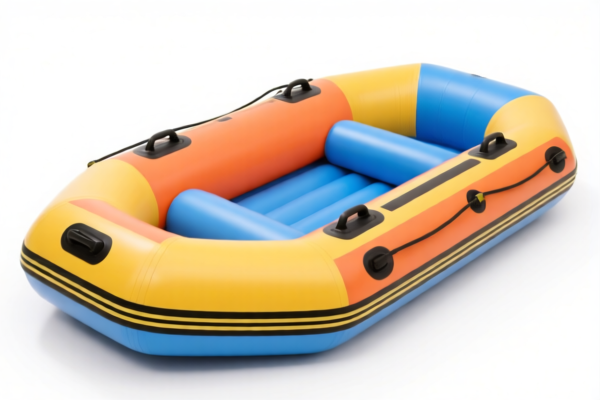

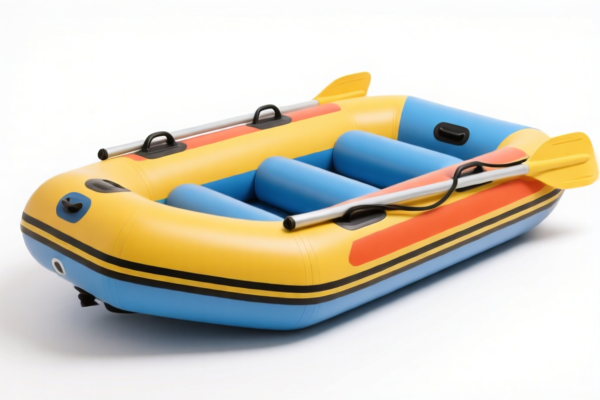
AI Analysis
💥 Inflatable Weapon (Toys & Decorations)
🌐 HS Code Reference & Customs Clearance Guide | 2026 Latest Tariff Analysis | Professional Clearance Strategy
📌 I. Product Definition & Classification: What Exactly is an "Inflatable Weapon"?
An "Inflatable Weapon" is almost exclusively classified as a toy or a decorative item in international trade. It is crucial to distinguish this from actual firearms or dangerous goods (which are banned or heavily regulated). In the context of customs, this term usually refers to:
- Inflatable Blasters/Toy Guns: PVC/vinyl water guns, foam soft-tip blasters, or party poppers that inflate.
- Inflatable Decorations: Balloons shaped like guns, swords, or shields for parties/events.
⚠️ Critical Distinction:
- If the item is a functional firearm (even if modified) → Banned/Strict Regulation (HTS 9306/9307).
- If it is an inflatable toy made of rubber → HTS 4016.95.00.00
- If it is an inflatable toy made of plastic → HTS 3926.90.75.00
📦 II. HS Code Classification Details (2026 Latest Tariff Authority Comparison)
Based on the material composition of the inflatable product, the classification splits into Rubber vs. Plastic.
| HS Code | Product Description | Material | Applicable Scenario | Tax Rate (China Origin to US) |
|---|---|---|---|---|
4016.95.00.00 |
Other articles of vulcanized rubber other than hard rubber: Other: Other inflatable articles | Vulcanized Rubber | Inflatable rubber toys (e.g., inflatable water guns, rubber balls shaped like weapons) | 0% (0% Basic + 0% Additional) |
3926.90.75.00 |
Other articles of plastics...: Pneumatic mattresses and other inflatable articles, not elsewhere specified or included | Plastic (PVC/Vinyl) | Most common inflatable toys: PVC blasters, inflatable balloons, vinyl party decorations | 4.2% (4.2% Basic + 0% Additional) |
4016.99.60.50 |
Other articles of vulcanized rubber...: Other | Other Rubber Items | Inflatable rubber items NOT classified as "inflatable articles" (e.g., non-inflatable rubber grips, seals) | 27.5% (2.5% Basic + 25% Additional) |
3926.90.99.89 |
Other articles of plastics...: Other Other | Other Plastic Items | Non-inflatable plastic parts or plastic items not meeting the "inflatable" definition | 12.8% (5.3% Basic + 7.5% Additional) |
🔍 Key Reminder:
- "Inflatable" is the key keyword. If the product is designed to be filled with air/gas to hold its shape, it falls under 4016.95 (Rubber) or 3926.90.75 (Plastic).
- Do NOT classify inflatable toys as "other rubber/plastic articles" (like4016.99or3926.99.89) unless they are structurally non-inflatable (e.g., a solid rubber grip attached to a weapon). Misclassification here can lead to massive tax spikes (e.g., 27.5% vs 0%).
💰 III. 2026 Latest Tariff Rate Breakdown (Including Surtaxes, Policy Add-ons)
✅ Applicable Country: United States (US)
✅ Origin: China (CN)
✅ Effective Time: Current rates applicable for imports.
🎯 1. 4016.95.00.00 —— Inflatable Rubber Articles (e.g., Rubber Toy Guns)
| Item | Content |
|---|---|
| Basic Duty Rate | 0% (ad valorem) |
| USITC Additional Duty | 0% |
| IEEPA Additional Duty | 0% |
| Total Tax Rate | 0% |
| Tax Calculation | CIF Value × 0% = $0 |
| De Minimis Eligibility | ✅ Yes (Under $800) |
| Legal Basis Path | HTS:4016.95.00.00 → USITC:0% |
📌 Explanation:
- This is the most favorable rate for inflatable rubber items.
- Despite high tariffs on many Chinese goods, inflatable rubber articles are currently exempt from additional surtaxes.
- Strategic Advantage: If your "inflatable weapon" can be legally manufactured using vulcanized rubber (instead of cheap PVC), you save 4.2% - 27.5% in duties compared to plastic or other rubber categories.
🎯 2. 3926.90.75.00 —— Inflatable Plastic Articles (e.g., PVC Blasters, Balloons)
| Item | Content |
|---|---|
| Basic Duty Rate | 4.2% (ad valorem) |
| USITC Additional Duty | 0% |
| IEEPA Additional Duty | 0% |
| Total Tax Rate | 4.2% |
| Tax Calculation | CIF Value × 4.2% |
| De Minimis Eligibility | ✅ Yes (Under $800) |
| Legal Basis Path | HTS:3926.90.75.00 → USITC:4.2% |
📌 Explanation:
- Most mass-market inflatable toys (PVC vinyl) fall here.
- No additional 25% or 7.5% surtax applies to "inflatable articles" under this subheading.
- Warning: Do not confuse this with3926.90.99.89(Other Plastic Articles), which has a 12.8% total rate. The word "Inflatable" in the description is your tariff shield.
🚫 3. 4016.99.60.50 & 3926.90.99.89 —— Misclassification Risk (High Tax Traps)
| Item | Content |
|---|---|
| Total Tax Rate | 27.5% (Rubber) / 12.8% (Plastic) |
| Why? | These codes are for "Other" articles that are NOT specifically identified as "inflatable articles." |
| Risk | If you describe your product as "Rubber Grip for Toy Gun" instead of "Inflatable Rubber Toy," you may be misclassified into this higher bracket. |
📌 Critical Warning:
- If Customs determines your product is not inflatable (e.g., a solid rubber hilt), it will be reclassified to4016.99.60.50→ 27.5% Tax.
- Difference: 27.5% vs 0% = 27.5% penalty on the value of the goods!
🛠️ IV. Customs Clearance Practical Advice (Combat Pit Avoidance Guide)
✅ 1. Documentation Checklist (Non-negotiable)
| Document | Must Provide | Explanation |
|---|---|---|
| ✅ Product Specifications | ✔️ | Must explicitly state "Inflatable", material (Rubber vs. PVC), and intended use (Toy). |
| ✅ Product Photos | ✔️ | Clear images showing the product in deflated and inflated states. Prove it is inflatable. |
| ✅ Age Warning Label | ✔️ | "Choking Hazard: Not for children under 3 years." (CRITICAL for inflatable toys) |
| ✅ ASTM F963 / CPSIA Report | ✔️ | US Consumer Product Safety Commission certification for toys. Mandatory for entry. |
| ✅ Commercial Invoice | ✔️ | Description must be precise: "Inflatable Rubber Toy (Not a Real Weapon)" or "PVC Inflatable Balloon." |
| ✅ Safety Data Sheet (SDS) | ✔️ | If rubber/plastic contains chemical additives, provide SDS to avoid chemical hazard delays. |
✅ 2. Declaration Tips (Key Mantras)
🔥 "Declare Inflatable, Prove It's a Toy, Avoid 27.5% Trap!"
| Scenario | Correct Declaration | Incorrect Declaration | Result |
|---|---|---|---|
| Inflatable Water Gun | 4016.95.00.00 (if rubber) or 3926.90.75.00 (if plastic) |
"Toy Gun" (Vague) | Risk of misclassification to 9403 (Furniture) or 8208 (Tools) → Higher tax |
| Inflatable Balloon (Gun Shape) | 3926.90.75.00 |
"Plastic Decoration" | Risk of 3926.90.99.89 → 12.8% Tax |
| Solid Rubber Grip (Not Inflatable) | 4016.99.60.50 |
4016.95.00.00 |
27.5% Tax if incorrectly declared as inflatable |
| Real Firearm (Even Deactivated) | 9306.29.50.00 |
4016.95.00.00 |
Illegal Entry + Criminal Charges |
✅ 3. Special Considerations for "Weapons"
| Issue | Handling Advice |
|---|---|
| Orange Tip | If selling in the US, many inflatable "toy guns" must have an orange tip to distinguish from real firearms. Ensure this is stated in specs. |
| "No Real Weapon" Clause | Invoice must include: "THIS IS A TOY/DECORATION. NOT A FIREARM. NOT INTENDED FOR REAL WEAPON USE." |
| Age Restriction | Inflatable items with small parts or choking hazards require explicit age warnings. Lack of CPSIA compliance leads to seizure. |
| Material Declaration | Be honest: If it’s PVC, say "Plastic." If it’s Rubber, say "Vulcanized Rubber." Lying about material leads to fraud penalties. |
🌍 V. Global Market Clearance Comparison (2026 Latest)
| Country/Region | Recommended HS Code | Duty Rate (China) | Certification Requirement | Note |
|---|---|---|---|---|
| 🇺🇸 USA | 4016.95.00.00 (Rubber) / 3926.90.75.00 (Plastic) |
0% / 4.2% | CPSIA/ASTM F963 (Mandatory) | Strict on toy safety. |
| 🇨🇳 China | 9503.00.00.00 (Toys) |
5-8% | CCC (for some plastics) | Import duty varies by type. |
| 🇪🇺 EU | 9503.00.70 (Toys) |
0% (if under €6) | CE Marking + EN71 Safety | High standards on chemical safety. |
| 🇬🇧 UK | 9503.00.00.00 (Toys) |
0% | UKCA Marking | Post-Brexit rules apply. |
📌 Conclusion:
- USA is the most tariff-friendly for Inflatable Rubber Toys (0%).
- USA is also reasonable for Inflatable Plastic Toys (4.2%).
- The biggest risk is NOT duty, but SAFETY COMPLIANCE (CPSIA). Non-compliance leads to 100% seizure.
📌 VI. Common Errors & Pitfalls (Blood & Tears Lessons)
❌ Error 1: Declaring "Inflatable Toy Gun" as 8208.90.00 (Knife Blades/Tools)
👉 Consequence: Misclassification. Duty jumps to 5.3% + 7.5% = 12.8%. Plus, it fails toy safety checks.
❌ Error 2: Ignoring the "Inflatable" status and using 4016.99.60.50
👉 Consequence: Tax jumps from 0% to 27.5%. $27,500 extra tax on a $100,000 shipment!
❌ Error 3: No CPSIA/ASTM Report for US Entry
👉 Consequence: CBP Seizure. Product destroyed. Fine imposed. Illegal import.
❌ Error 4: Using ambiguous terms like "Prop" or "Accessory"
👉 Consequence: Customs may classify as "Other" (3926.99.89 → 12.8%). Always use "Inflatable Article".
✅ Correct Approach:
"Inflatable PVC Balloon, Gun Shape, Party Decoration, Not a Toy, No Mechanical Parts, Compliant with CPSIA for Decorative Use"
🎯 VII. Conclusion: Professional Clearance, Save Costs, Avoid Seizures!
🎯 Remember the Mantras:
🔹 "Inflatable = 0% (Rubber) / 4.2% (Plastic). Solid = 27.5%. Choose wisely!"
🔹 "Toy Safety First! No CPSIA, No Entry!"
🔹 "Declare 'Inflatable' Explicitly to Avoid the 27.5% Trap!"
📌 Pro Tip:
If you are importing plastic inflatable toys, ensure you have ASTM F963 testing. If you can switch to vulcanized rubber manufacturing, you save 4.2% in duty. For small shipments (under $800), use Section 321 (De Minimis) to enter duty-free (if compliant).
📣 Immediate Action:
📞 Contact a Customs Broker + Provide Product Photos (Inflated/Deflated) + Obtain CPSIA/ASTM Report
🚀 Ensure Smooth Clearance, Zero Seizures, Maximized Profit!
✨ Professional Classification Starts with Precision!
💼 Every Percent of Tax Matters in Global Trade!
Customer Reviews
About HS Code Classification
The Harmonized System (HS) is an internationally standardized nomenclature developed by the World Customs Organization (WCO) to classify traded products. Over 200 countries use the HS system as the basis for customs tariffs, trade statistics, and import/export regulations.
Each HS code follows a hierarchical structure:
- Chapter (2 digits) — Broad category of goods (e.g., Chapter 84: Machinery and Mechanical Appliances)
- Heading (4 digits) — More specific grouping within the chapter
- Subheading (6 digits) — Internationally standardized breakdown, used by all WCO member countries
- National subdivisions (8-10 digits) — Country-specific extensions for further classification, such as US HTSUS 10-digit codes
Correct HS code classification is essential for smooth customs clearance, accurate duty payment, and compliance with trade regulations. Misclassification can lead to customs delays, overpayment of duties, or penalties.
When importing from CN to US, the applicable tariff rates may include:
- Most-Favored-Nation (MFN) rate — The standard duty rate applied to WTO members
- General rate — Applied to countries without trade agreements
- Trade remedy duties — Additional tariffs such as Section 301 (anti-dumping), Section 232 (national security), or countervailing duties
The information provided on this page is for reference purposes only. For official classification, please consult with your local customs authority or a licensed customs broker.