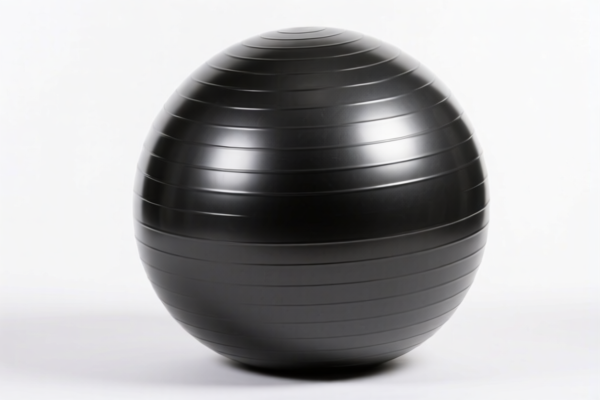
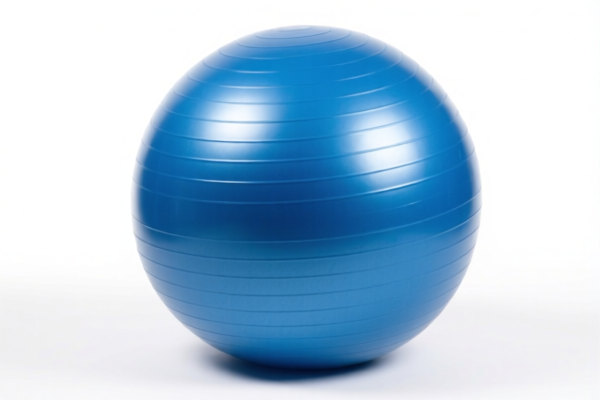
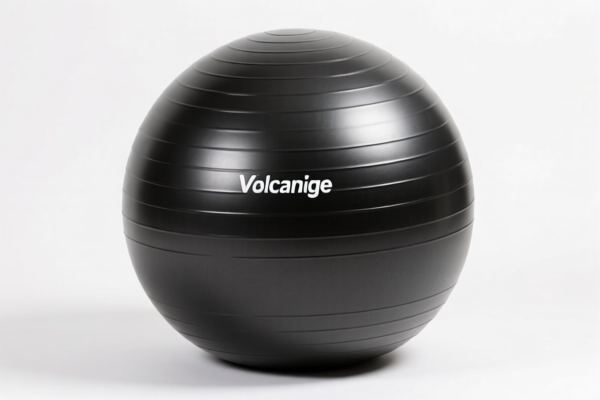
Inflatable vulcanized rubber fitness balls
CN → US| HS Code | Tariff Rate | Origin | Destination | Doc |
|---|---|---|---|---|
| 4016996050 | 37.5% | CN | US | Official Doc |
| 4016950000 | 21.7% | CN | US | Official Doc |
| 9503000013 | 10.0% | CN | US | Official Doc |
| 9503000011 | 10.0% | CN | US | Official Doc |
| 9506628060 | 22.3% | CN | US | Official Doc |
Product Images

AI Analysis
🎈 Inflatable Vulcanized Rubber Fitness Balls (Exercise Balls)
🌐 HS Code Reference & Customs Clearance Guide | 2026 Latest Tariff Analysis | Professional Clearance Strategy
📌 I. Product Definition & Classification: What Exactly Are "Fitness Balls"?
Inflatable vulcanized rubber fitness balls, often known as "Swiss Balls," "Gym Balls," or "Yoga Balls," are essential tools in physical therapy, home workouts, and professional gyms. They are defined by three key characteristics: 1. Material: Vulcanized Rubber (Elastomer). 2. State: Inflatable (Air-filled). 3. Purpose: Fitness, exercise, stability, or recreation.
In international trade, the classification hinges on whether the product is viewed as a general rubber accessory, a toymaterial, or a sports equipment. This distinction drastically affects your tax burden.
⚠️ Critical Distinction:
- If the ball is marketed strictly for adult fitness/exercise with no toy-like features → Tends towards Ch. 40 (Rubber Articles) or Ch. 95 (Sports Goods).
- If it has bright colors, cartoon shapes, or is marketed for children's play → Tends towards Ch. 95 (Toys).
- Note: Even if used for fitness, HS codes 9503 and 9506 are often applied based on specific sub-heading interpretations in the US HTSUS.
📦 II. HS Code Classification Details (2026 Latest Tariff Authority Cross-Reference)
| HS Code | Product Description | Applicable Scenario | Key Classification Logic |
|---|---|---|---|
4016.99.60.50 |
Vulcanized rubber articles, inflatable, no specific exclusive conflict | General industrial/commercial rubber inflatables | ✅ General Rubber Article (Ch. 40) |
4016.95.00.00 |
Other inflatable vulcanized rubber articles, classified according to explanation | Specific rubber interpretation | ✅ General Rubber Article (Ch. 40) |
9503.00.00.13 |
Rubber inflatable toys, meeting material & use requirements | Children's play, toy-like fitness balls | ✅ Toy (Ch. 95) |
9503.00.00.11 |
Inflatable rubber toys, inferred as rubber toy based on common sense | General inflatable toys | ✅ Toy (Ch. 95) |
9506.62.80.60 |
Inflatable balls, vulcanized rubber, for outdoor game/fitness use | Adult fitness, gym balls, yoga balls | ✅ Sports Equipment (Ch. 95) |
🔍 Key Insight:
- Ch. 40 Codes (4016...): Treat the product as a "part of a vehicle" or "general rubber good." Often subject to higher tariffs due to "Section 301" and "122 Clause" additions.
- Ch. 95 Codes (9503.../9506...): Treat the product as a "Toy" or "Sporting Goods." Toys (9503) enjoy 0% base tariff (only 122 clause applies), while Sports Goods (9506) have moderate base tariffs but face additional add-ons.
💰 III. 2026 Latest Tariff Rate Breakdown (Including Surcharges & Policy Add-ons)
✅ Applicable Country: United States (US)
✅ Origin: China (CN)
✅ Effective Date: From Nov 10, 2025 (Including subsequent imports)
🎯 1. 4016.99.60.50 —— General Inflatable Rubber Articles (Non-Exclusive)
| Item | Detail |
|---|---|
| Base Tariff | 2.5% |
| Section 301 Surcharge | +25.0% |
| Section 122 Surcharge | +10.0% |
| Total Rate | 37.5% |
| Tax Calculation | CIF Value × 37.5% |
| De Minimis Eligibility | ❌ Not Eligible (Deny de minimis) |
| Legal Basis Path | USITC:4016.99.60.50 → FOOTNOTE:301 → 122_CLAUSE |
📌 Explanation:
- This code is often used when the product is not clearly defined as a toy or specific sports gear.
- High Tax Warning: With a total of 37.5%, this is one of the most expensive classifications for rubber inflatables.
- Risk: High scrutiny on "origin" and "material composition."
🎯 2. 4016.95.00.00 —— Inflatable Vulcanized Rubber Articles (Specific Classification)
| Item | Detail |
|---|---|
| Base Tariff | 4.2% |
| Section 301 Surcharge | +7.5% |
| Section 122 Surcharge | +10.0% |
| Total Rate | 21.7% |
| Tax Calculation | CIF Value × 21.7% |
| De Minimis Eligibility | ❌ Not Eligible |
| Legal Basis Path | USITC:4016.95.00.00 → FOOTNOTE:301.2 → 122_CLAUSE |
📌 Explanation:
- This code assumes a specific classification explanation for rubber inflatables.
- Moderate Tax: At 21.7%, it is significantly cheaper than4016.99..., but still subject to heavy US China tariffs.
🎯 3. 9503.00.00.13 & 9503.00.00.11 —— Rubber Inflatable Toys
| Item | Detail |
|---|---|
| Base Tariff | 0.0% |
| Section 301 Surcharge | 0.0% |
| Section 122 Surcharge | +10.0% |
| Total Rate | 10.0% |
| Tax Calculation | CIF Value × 10.0% |
| De Minimis Eligibility | ❌ Not Eligible (Toys often excluded from 8012 exemption depending on specific ruling, but base is 0) |
| Legal Basis Path | USITC:9503.00.00.13 → 122_CLAUSE |
📌 Explanation:
- Best Tax Option: Only 10% total tax.
- Condition: The product must be classified as a "Toy." This requires marketing materials, packaging, and physical design to resemble toys (e.g., bright colors, simple shapes, marketed towards children).
- Risk: If CBP determines it is strictly for "adult fitness," they may reclassify it to4016or9506, leading to back-taxes and penalties.
🎯 4. 9506.62.80.60 —— Inflatable Balls (Sports Goods)
| Item | Detail |
|---|---|
| Base Tariff | 4.8% |
| Section 301 Surcharge | +7.5% |
| Section 122 Surcharge | +10.0% |
| Total Rate | 22.3% |
| Tax Calculation | CIF Value × 22.3% |
| De Minimis Eligibility | ❌ Not Eligible |
| Legal Basis Path | USITC:9506.62.80.60 → FOOTNOTE:301 → 122_CLAUSE |
📌 Explanation:
- This is the most accurate code for Adult Fitness Balls.
- It acknowledges the product is for "exercise" (Chapter 95, Heading 9506).
- Moderate-High Tax: At 22.3%, it is more expensive than the "Toy" code but avoids the harsh penalties of misclassifying a toy.
🛠️ IV. Customs Clearance Practical Advice (Avoid Pitfalls)
✅ 1. Documentation Checklist (Must-Have)
| Document | Mandatory? | Purpose |
|---|---|---|
| ✅ Product Specifications | ✔️ | Must state: Material (Vulcanized Rubber), Filling (Air), Use (Fitness/Exercise). |
| ✅ Product Photos | ✔️ | Show the ball, labels, and any packaging. Color and design matter for Toy vs. Sport distinction. |
| ✅ Commercial Invoice | ✔️ | Clear description: "Vulcanized Rubber Inflatable Fitness Ball, Model XYZ, for Gym Use." Avoid vague terms like "Rubber Ball." |
| ✅ Proof of Origin | ✔️ | To confirm CN origin and apply correct Section 301/122 rates. |
| ✅ Lab Test Report | ✔️ | Optional but helpful: Certify vulcanization level and material safety (especially if claiming "Toy" status). |
✅ 2. Declaration Tips (Key Mnemonics)
🔥 "Match Use to Code, Toy vs Sport is the Key!"
| Scenario | Correct HS Code | Reason |
|---|---|---|
| Adult Gym/Yoga Ball | 9506.62.80.60 |
Designed for physical exercise/sports. |
| Child's Play Ball | 9503.00.00.13 |
Designed for play, likely smaller, colorful, toy-like. |
| Unspecified Rubber Inflatable | 4016.99.60.50 |
If no clear use (e.g., industrial flotation), default to rubber article. |
| Misdeclaration: "Toy" for Adult Fitness | ⚠️ Risky | CBP may reject "Toy" claim if marketing targets adults/gyms. |
✅ 3. Special Case Handling
| Situation | Handling Advice |
|---|---|
| OEM Custom Balls | Provide end-user documentation (e.g., contract with Gym Chain) to prove "Sports" use (9506). |
| Multi-Purpose Balls | If marketed for both kids and adults, lean towards 9503 (Toy) for lower tax, but ensure packaging reflects toy nature. |
| Set with Pump/Nose Pin | Declare as a single unit. The pump/pin are accessories and do not change the HS code of the main ball. |
| "122 Clause" Risk | All codes above are subject to 10% surcharge. Ensure Section 301 exclusion (if any applies) is documented. Note: Most rubber goods do not have 301 exclusions. |
🌍 V. Global Market Clearance Comparison (2026 Latest)
| Country/Region | Recommended HS Code | Total Tariff (CN Origin) | Certification Requirements | Remarks |
|---|---|---|---|---|
| 🇺🇸 USA | 9506.62.80.60 (Fitness) 9503.00.00.13 (Toy) |
22.3% (Fitness) 10.0% (Toy) |
CPC (Toys), ASTM F963 | 122 Clause + Section 301 apply. High cost. |
| 🇨🇳 China | 9506.99.90.90 |
5% - 8% | CCC (if applicable) | Lower tariffs, different classification system. |
| 🇪🇺 EU | 9506.99 (Sports) 9503.00 (Toys) |
0% - 4.7% | CE Marking, EN71 | No Section 301/122. Friendly for trade. |
| 🇬🇧 UK | 9506.99 |
0% - 4.7% | UKCA Marking | Post-Brexit, similar to EU but separate certs. |
| 🇦🇺 Australia | 9506.99 |
5% | RCM | Moderate duties, no major surcharges. |
📌 Conclusion:
- USA is the most expensive market due to Section 301 and 122 Clause surcharges.
- Toy Classification (9503) offers the lowest tax (10%) but carries compliance risks if the product is clearly for adults.
- Sports Classification (9506) is the safest legal route for adult fitness balls, despite the 22.3% rate.
📌 VI. Common Mistakes & Pitfalls Guide (Lessons Learned)
❌ Mistake 1: Calling an adult yoga ball a "Rubber Toy" to get 10% tax
👉 Consequence: CBP reclassification to 4016 or 9506 → Back taxes of 12-27% + Penalties!
❌ Mistake 2: Using 4016.99.60.50 for clearly marketed fitness balls
👉 Consequence: Overpaying tax (37.5% vs 22.3%). Incorrect classification leads to audit flags.
❌ Mistake 3: Ignoring the "122 Clause"
👉 Consequence: Under-declaring taxes. The 10% surcharge applies to almost all Chinese rubber/plastic goods entering the US.
❌ Mistake 4: Splitting shipments (Ball + Pump in separate boxes)
👉 Consequence: If declared separately, the pump might be classified under a different tariff, potentially increasing total duty or causing inspection delays.
✅ Correct Approach:
"Inflatable Vulcanized Rubber Exercise Ball, 65cm Diameter, for Physical Therapy/Gym Use, Model FitBall-X, with Integrated Air Pump."
🎯 VII. Conclusion: Smart Classification, Lower Costs, Faster Clearance!
🎯 Remember the Strategy:
🔹 "For Adult Fitness: Use
9506.62(22.3%). For Kids Play: Use9503(10%)."
🔹 "Don't lie about the use; CBP checks marketing and packaging."
🔹 "All rates include 122 Clause (10%). Check Section 301 eligibility."
📌 Pro Tip:
If you are importing large volumes, consider applying for an HTSUS Advance Ruling from CBP. This legally binds the classification to your specific product, preventing surprise audits.
Also, explore if your specific vulcanized rubber product qualifies for any Section 301 Exclusions (check the latest USTR list).
📣 Take Action Now:
📞 Contact Your Customs Broker + Provide Product Photos & Marketing Brochures + Request HS Code Pre-Ruling
🚀 Ensure Your Inflatable Balls clear US Customs Smoothly, Legally, and Cost-Effectively!
✨ Professional Clearance Starts with Precise Classification!
💼 Every Percent of Tax Saves Dollars in Your Pocket!
Customer Reviews
About HS Code Classification
The Harmonized System (HS) is an internationally standardized nomenclature developed by the World Customs Organization (WCO) to classify traded products. Over 200 countries use the HS system as the basis for customs tariffs, trade statistics, and import/export regulations.
Each HS code follows a hierarchical structure:
- Chapter (2 digits) — Broad category of goods (e.g., Chapter 84: Machinery and Mechanical Appliances)
- Heading (4 digits) — More specific grouping within the chapter
- Subheading (6 digits) — Internationally standardized breakdown, used by all WCO member countries
- National subdivisions (8-10 digits) — Country-specific extensions for further classification, such as US HTSUS 10-digit codes
Correct HS code classification is essential for smooth customs clearance, accurate duty payment, and compliance with trade regulations. Misclassification can lead to customs delays, overpayment of duties, or penalties.
When importing from CN to US, the applicable tariff rates may include:
- Most-Favored-Nation (MFN) rate — The standard duty rate applied to WTO members
- General rate — Applied to countries without trade agreements
- Trade remedy duties — Additional tariffs such as Section 301 (anti-dumping), Section 232 (national security), or countervailing duties
The information provided on this page is for reference purposes only. For official classification, please consult with your local customs authority or a licensed customs broker.