Inflatable vulcanized rubber obstacles
CN → US| HS Code | Tariff Rate | Origin | Destination | Doc |
|---|---|---|---|---|
| 4016950000 | 21.7% | CN | US | Official Doc |
| 9404299095 | 41.0% | CN | US | Official Doc |
| 4016996050 | 37.5% | CN | US | Official Doc |
| 4016910000 | 37.7% | CN | US | Official Doc |
| 9404210095 | 38.0% | CN | US | Official Doc |
Product Images
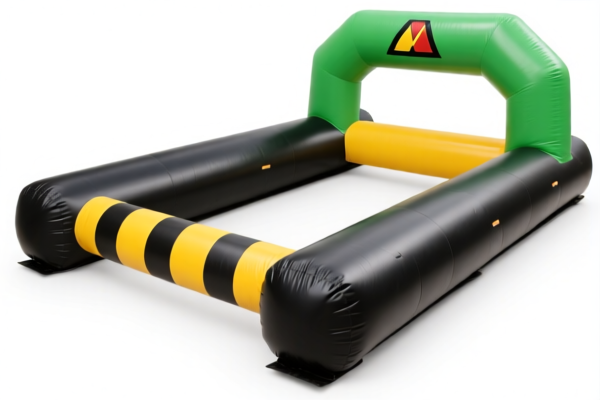
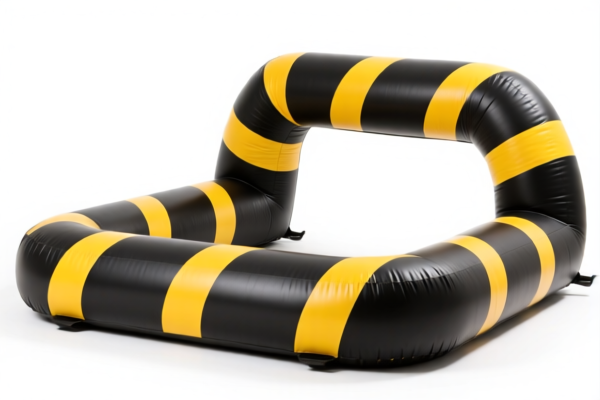
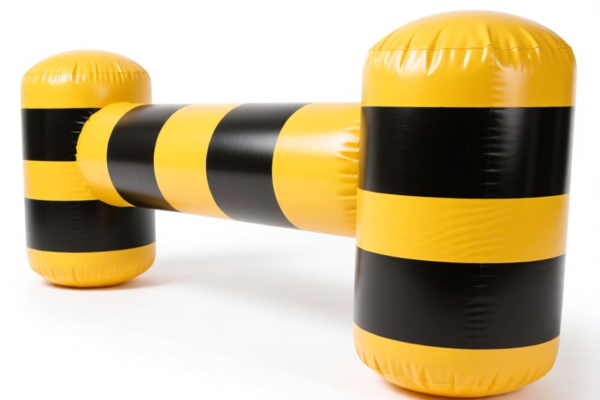
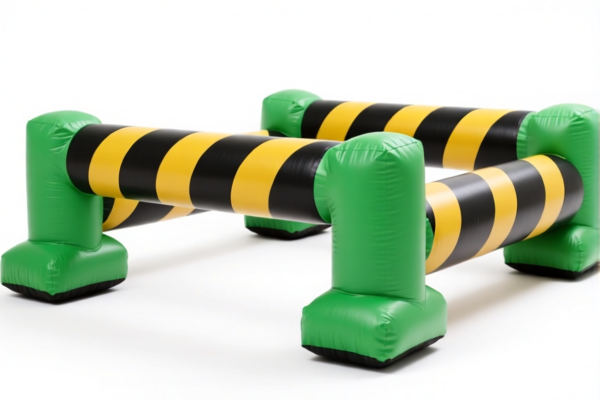
AI Analysis
🎈 Inflatable Vulcanized Rubber Obstacles (High-Performance Training Equipment)
🌐 HS Code Reference & Customs Clearance Guide | 2026 Latest Tariff Analysis | Professional Clearance Strategy
📌 I. Product Definition & Classification: Do You Really Know "Inflatable Vulcanized Rubber Obstacles"?
"Inflatable Vulcanized Rubber Obstacles" are specialized training equipment often used in military, police, fire service, or athletic training. They are defined by two critical physical characteristics: 1. Material: Vulcanized Rubber (硫化橡胶), implying durable, elastic, and weather-resistant properties. 2. Form: Inflatable (充气), meaning they rely on air pressure for structure when deployed, but are transported deflated.
In international trade, the classification hinges on whether the item is viewed primarily as an "inflatable product" (Chapter 40) or a "mattress/cushion/pad" (Chapter 94).
⚠️ Key Distinction Point:
- If the item is categorized as a general "inflatable article" due to its temporary structural form → Chapter 40 (Rubber Articles).
- If the item is categorized as a "pad/mat" due to its function (cushioning/fallen protection) → Chapter 94 (Mattresses & Similar Furnishings).
📦 II. HS Code Classification Details (2026 Latest Tariff Authority Comparison)
Based on the specific material and form, here are the 5 most likely HS Code classifications with their corresponding tax liabilities:
| HS Code | Product Description | Application Scenario | Tax Rate (Total) |
|---|---|---|---|
4016.95.00.00 |
Other inflatable articles | General inflatable rubber structures, ignoring "pad" function, focusing on "inflatable" nature | 21.7% |
9404.29.90.95 |
Other mattresses and sleeping bags (Other materials) | Rubber pads used as landing mats, viewed as "mattress/cushion" category | 41.0% |
4016.99.60.50 |
Other vulcanized rubber articles | Rubber pads treated as general rubber制品 (articles), ignoring "pad" vs "inflatable" nuance | 37.5% |
4016.91.00.00 |
Carpeting and other floor coverings | Rubber mats/pads used for floor protection or training surfaces | 37.7% |
9404.21.00.95 |
Mattresses and cushions (Other) | General "rubber pad" classified under the broader "Mattress/Cushion" umbrella | 38.0% |
🔍 Critical Reminder:
-4016.95.00.00is the lowest cost option (21.7%), relying on the argument that the product is an "inflatable article."
-9404.29.90.95is the highest cost option (41.0%), classified as a "mattress/pad" due to heavy US trade barriers.
- Misclassification Risk: Declaring a rubber obstacle as a "mattress" (9404.x) when it functions as an inflatable structure can lead to penalties. Conversely, declaring it as "inflatable" (4016.95) when it is a heavy-duty fixed pad may be challenged.
💰 III. 2026 Latest Tariff Rate Details (Including Additional Taxes & Policy Surcharges)
✅ Applicable Country: United States (US)
✅ Country of Origin: China (CN)
✅ Effective Date: November 10, 2025 onwards (including subsequent imports)
🎯 1. 4016.95.00.00 —— Other Inflatable Articles (Best Value Option)
| Item | Content |
|---|---|
| Base Tariff | 4.2% (ad valorem) |
| Section 301 Additional Tariff | +7.5% |
| Section 122 Tariff | +10% |
| Total Tax Rate | 21.7% |
| Tax Calculation | CIF Value × 21.7% |
| De Minimis Eligibility | ❌ No (deny_de_minimis) |
| Legal Basis Path | Base: 4016.95 → 301: 7.5% → 122: 10% |
📌 Explanation:
- This code benefits from a lower Section 301 rate (7.5%) compared to other rubber/mattress codes (often 25%).
- Strategy: Argue that the primary feature is its inflatable nature for transport/storage, not just its function as a cushion.
🎯 2. 9404.29.90.95 —— Other Mattresses and Sleeping Bags (High Risk/High Cost)
| Item | Content |
|---|---|
| Base Tariff | 6.0% |
| Section 301 Additional Tariff | +25.0% |
| Section 122 Tariff | +10% |
| Total Tax Rate | 41.0% |
| Tax Calculation | CIF Value × 41.0% |
| De Minimis Eligibility | ❌ No (deny_de_minimis) |
| Legal Basis Path | Base: 9404.29 → 301: 25% → 122: 10% |
📌 Warning:
- The 25% Section 301 tariff applies here. This is the standard punitive rate for many consumer goods from China.
- If Customs determines the product is essentially a "mattress/pad" (even if inflatable), this code may be applied, doubling the cost compared to4016.95.
🎯 3. 4016.99.60.50 —— Other Vulcanized Rubber Articles (Mid-Range Option)
| Item | Content |
|---|---|
| Base Tariff | 2.5% |
| Section 301 Additional Tariff | +25.0% |
| Section 122 Tariff | +10% |
| Total Tax Rate | 37.5% |
| Tax Calculation | CIF Value × 37.5% |
| De Minimis Eligibility | ❌ No (deny_de_minimis) |
| Legal Basis Path | Base: 4016.99 → 301: 25% → 122: 10% |
📌 Explanation:
- Although the base tariff is low (2.5%), the 25% Section 301 tariff makes it significantly more expensive than4016.95.
- Used if the product is seen as a solid rubber pad rather than an inflatable device.
🎯 4. 4016.91.00.00 —— Carpeting and Other Floor Coverings (Mid-Range Option)
| Item | Content |
|---|---|
| Base Tariff | 2.7% |
| Section 301 Additional Tariff | +25.0% |
| Section 122 Tariff | +10% |
| Total Tax Rate | 37.7% |
| Tax Calculation | CIF Value × 37.7% |
| De Minimis Eligibility | ❌ No (deny_de_minimis) |
| Legal Basis Path | Base: 4016.91 → 301: 25% → 122: 10% |
📌 Explanation:
- Applies if the obstacle is considered a "floor covering" or "mat."
- Similar tax burden to4016.99, but slightly higher base tariff.
🎯 5. 9404.21.00.95 —— Mattresses and Cushions (Other) (Mid-High Range Option)
| Item | Content |
|---|---|
| Base Tariff | 3.0% |
| Section 301 Additional Tariff | +25.0% |
| Section 122 Tariff | +10% |
| Total Tax Rate | 38.0% |
| Tax Calculation | CIF Value × 38.0% |
| De Minimis Eligibility | ❌ No (deny_de_minimis) |
| Legal Basis Path | Base: 9404.21 → 301: 25% → 122: 10% |
📌 Explanation:
- A "catch-all" for mattresses/cushions not specified elsewhere.
- High risk due to the 25% additional tariff.
🛠️ IV. Customs Clearance Practical Advice (Battle-Tested Pitfall Guide)
✅ 1. Preparation Checklist (Non-Negotiable)
| Document | Must Provide | Explanation |
|---|---|---|
| ✅ Product Specification Sheet | ✔️ | Must explicitly state: Material: Vulcanized Rubber, Feature: Inflatable. |
| ✅ Technical Drawings | ✔️ | Show the air valve, seam welding, and internal structure to prove "inflatable" capability. |
| ✅ Product Photos | ✔️ | Show both inflated (obstacle form) and deflated (packaged) states. |
| ✅ Commercial Invoice | ✔️ | Description: "Inflatable Training Obstacle, Vulcanized Rubber, Deflated for Shipment." |
| ✅ Packing List | ✔️ | Specify dimensions and weight in deflated state. |
| ✅ Test Reports | ✔️ | Proof of vulcanization, durability, and safety (if applicable). |
✅ 2. Declaration Tips (Key Mnemonics)
🔥 “Inflatable Structure, Rubber Body, Claim 4016, Save 20%!”
| Scenario | Correct Declaration | Wrong Action |
|---|---|---|
| Focus on Form | Use 4016.95.00.00 (Inflatable) |
Describe as "Rubber Mat" → 37-41% |
| Focus on Function | Risk 9404.29.90.95 (Mattress) |
Ignore inflatable feature → High Tax |
| Mixed Use | Provide Photos + Specs proving inflatable nature | Generic term "Rubber Pad" → Unclear |
| Packaging | Clearly state "Deflated" | "Fully Assembled" → Potential Misclassification |
📌 Strategy:
To justify4016.95.00.00(21.7%), emphasize:
1. The product is transported and stored in a deflated state.
2. It requires inflation to assume its functional shape.
3. The primary characteristic for customs purposes is its inflatable nature (Chapter 40), not just its cushioning function (Chapter 94).
✅ 3. Special Circumstances Handling
| Scenario | Handling Advice |
|---|---|
| Military/Government Contracts | Provide end-use declaration; may qualify for specific exemptions or different HS codes (e.g., 9404.90). |
| Integrated with Other Materials | If parts are plastic or fabric, ensure rubber content is dominant for Chapter 40 classification. |
| Customs Audit | Be ready to show the air valve and seam welding to prove it is an inflatable article, not a sewn rubber mattress. |
| Pre-Submission Ruling | Strongly recommend applying for an Advance Ruling (ACE Portal) for 4016.95.00.00 to avoid post-import audits. |
🌍 V. Global Market Comparison (2026 Latest)
| Country/Region | Recommended HS Code | Tariff (China Origin) | Notes |
|---|---|---|---|
| 🇺🇸 USA | 4016.95.00.00 |
21.7% (Best) | Avoid 9404 codes due to 25% Section 301. |
| 🇨🇳 China | 4016.95.00.00 |
~10-15% | Lower additional taxes. |
| 🇪🇺 EU | 4016.95.00.00 |
~0-2% | No Section 301/122 equivalents. |
| 🇦🇺 Australia | 4016.95.00.00 |
~5% | GST applies, but low duty. |
| 🇯🇵 Japan | 4016.95.00.00 |
~0-5% | Generally low duties. |
📌 Conclusion:
- The US market is the most critical for tax optimization.
-4016.95.00.00saves ~15-20% in total tax compared to mattress-classified codes.
- Always emphasize the inflatable aspect in documentation to secure the lower rate.
📌 VI. Common Errors & Pitfalls (Lessons from Blood and Tears)
❌ Error 1: Describing the product as "Rubber Mat" or "Cushion"
👉 Consequence: Customs may classify it under 9404 (Mattress) → 41.0% Tax.
👉 Fix: Use "Inflatable Obstacle" in the title and description.
❌ Error 2: Failing to show Deflated State in Photos
👉 Consequence: Customs sees a "solid rubber block" and rejects 4016.95.
👉 Fix: Include photos of the product rolled up or flattened in packaging.
❌ Error 3: Using "Vulcanized Rubber" as the only descriptor
👉 Consequence: May be misclassified as general rubber articles (4016.99) with 25% additional tax.
👉 Fix: Combine with "Inflatable" to target 4016.95 (7.5% additional tax).
❌ Error 4: Ignoring Section 122 Tariff
👉 Consequence: All these codes have a 10% Section 122 tariff. Do not forget to include it in cost calculations.
👉 Fix: Budget for an additional 10% on top of the base + Section 301 rates.
✅ Correct Declaration Example:
"Inflatable Training Obstacle, Made of Vulcanized Rubber, Deflated for Shipment, with Air Valve, Model XYZ, US Custom Code: 4016.95.00.00"
🎯 VII. Conclusion: Professional Declaration, Cost Savings, Efficiency!
🎯 Remember the Mantra:
🔹 "Inflatable = Chapter 40, Mattress = Chapter 94."
🔹 "4016.95 saves you 20%! Don't call it a mat!"
"Section 122 is 10%, Section 301 is 7.5% vs 25%, Choose Wisely!"
📌 Pro Tip:
If your inflatable obstacles are used in military or law enforcement contexts, consider if specific government contracts allow for different classification or exemptions. Always apply for an Advance Ruling if the shipment value is high.
📣 Immediate Action:
📞 Contact a professional customs broker + Provide Inflated/Deflated Photos + Apply for HS Code Advance Ruling for
4016.95.00.00.
🚀 Let your obstacles clear customs smoothly, reduce costs, and boost profit margins!
✨ Professional Clearance Starts with Accurate Classification!
💼 Every percentage point of tariff savings counts!
Customer Reviews
About HS Code Classification
The Harmonized System (HS) is an internationally standardized nomenclature developed by the World Customs Organization (WCO) to classify traded products. Over 200 countries use the HS system as the basis for customs tariffs, trade statistics, and import/export regulations.
Each HS code follows a hierarchical structure:
- Chapter (2 digits) — Broad category of goods (e.g., Chapter 84: Machinery and Mechanical Appliances)
- Heading (4 digits) — More specific grouping within the chapter
- Subheading (6 digits) — Internationally standardized breakdown, used by all WCO member countries
- National subdivisions (8-10 digits) — Country-specific extensions for further classification, such as US HTSUS 10-digit codes
Correct HS code classification is essential for smooth customs clearance, accurate duty payment, and compliance with trade regulations. Misclassification can lead to customs delays, overpayment of duties, or penalties.
When importing from CN to US, the applicable tariff rates may include:
- Most-Favored-Nation (MFN) rate — The standard duty rate applied to WTO members
- General rate — Applied to countries without trade agreements
- Trade remedy duties — Additional tariffs such as Section 301 (anti-dumping), Section 232 (national security), or countervailing duties
The information provided on this page is for reference purposes only. For official classification, please consult with your local customs authority or a licensed customs broker.