Inflated Rubber Tire with Bead Diameter Exceeding 61 cm
CN → US| HS Code | Tariff Rate | Origin | Destination | Doc |
|---|---|---|---|---|
| 8716905046 | 38.1% | CN | US | Official Doc |
| 4011801020 | 35.0% | CN | US | Official Doc |
| 4011808020 | 38.4% | CN | US | Official Doc |
Product Images
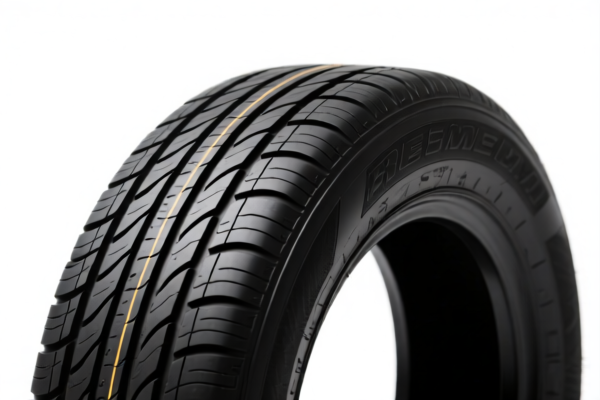
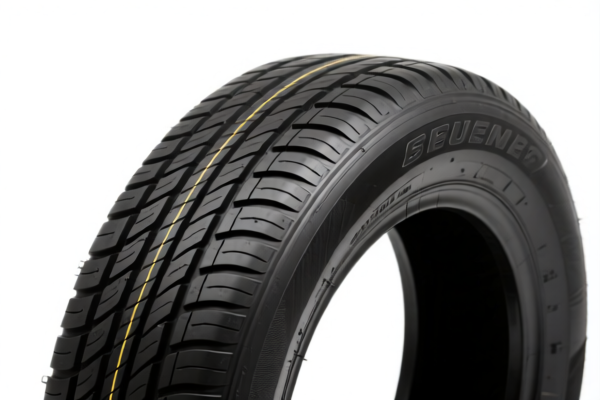
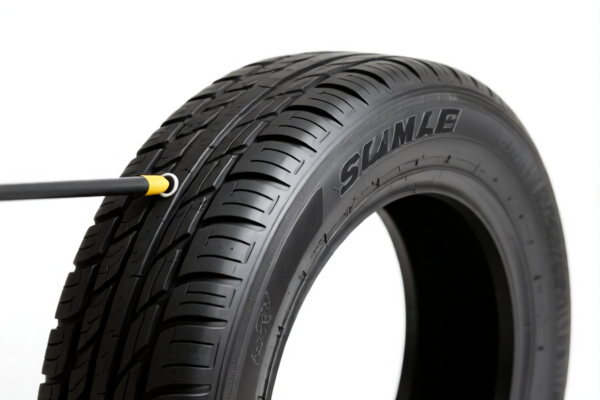
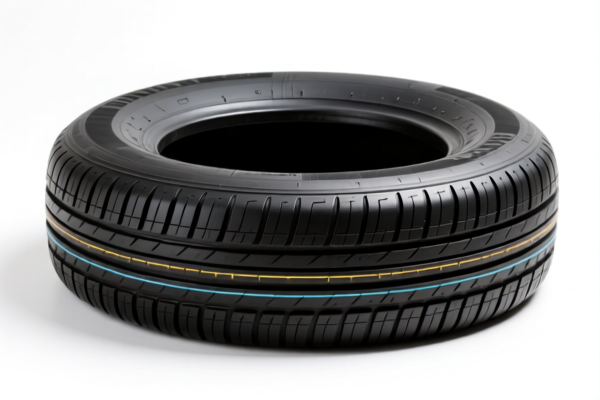
AI Analysis
🛞 Inflated Rubber Tire (Bead Diameter > 61 cm)
🌐 HS Code Reference & Customs Clearance Guide | 2026 Latest Tariff Analysis | Professional Clearance Strategy
📌 I. Product Definition & Classification: Do You Understand "Large-Diameter Tires"?
This product falls under the category of Inflated Rubber Tires. Specifically, it is characterized by: 1. Material: Rubber (Elastomeric). 2. State: Inflated (contains air/gas under pressure). 3. Specific Feature: Bead Diameter Exceeds 61 cm (Over 61 cm). 4. Typical Application: Heavy-duty vehicles, trailers, semi-trailers, or specialized industrial equipment requiring large wheel rims.
⚠️ Critical Distinction Point: * If the tire is deflated or not designed for inflation → It may fall under Chapter 40 (Articles of Rubber) but potentially different subheadings. * If it is inflated and meets the size criteria (>61cm) → It competes between Chapter 87 (Parts of Vehicles) and Chapter 40 (Rubber Tires). The key is the function and specific description in the Harmonized System (HS).
📦 II. HS Code Classification Details (2026 Latest Tariff Authority Comparison)
Based on the provided data, there are three potential HS Codes. Here is the breakdown of why each applies and the tax implications.
| HS Code | Product Description | Matching Basis & Logic | Total Tax Rate (CN Origin to US) |
|---|---|---|---|
| 8716.90.50.46 | Parts of Trailers/Semi-Trailers | Match Basis: This classification treats the tire as a part/component of a semi-trailer or similar vehicle. The rim diameter range (Over 61 cm) overlaps with the classification explanation's diameter specification (57cm to 63cm). There is no material conflict (rubber is standard for vehicle parts). Note: This is a "Parts" classification rather than a general "Tire" classification. |
38.1% |
| 4011.80.10.20 | Inflated Rubber Tires (Specific Size) | Exact Name Match: The product is an Inflated Tire made of Rubber. It features a Herringbone Tread (if applicable, or general tread pattern). The size constraint Rim Diameter > 61 cm strictly matches the HS subheading requirements for large tires not suitable for passenger cars. | 35.0% |
| 4011.80.80.20 | Inflated Rubber Tires (Other Large Sizes) | Successful Match: Product features (Herringbone tread, Inflated Tire, Rim Size > 61cm) align perfectly with the material (Rubber), form (Inflated Tire), and specific size requirements in the classification explanation. This is often the "Other" category for large tires not specifically listed in .10. | 38.4% |
🔍 Key Insight: * 4011.80.10.20 offers the lowest total tax rate (35.0%) among the three options. * 8716.90.50.46 is used if the tire is explicitly declared as a part of a trailer rather than a standalone tire product, leveraging the "vehicle parts" chapter. * 4011.80.80.20 is the fallback for large inflated tires that don't fit the specific ".10" subheading nuances but still meet the >61cm criterion.
💰 III. 2026 Latest Tariff Rate Breakdown (Including Surcharges & Policy Add-ons)
✅ Applicable Country: United States (US)
✅ Origin: China (CN)
✅ Effective Date: November 10, 2025 (and subsequent imports)
🎯 1. 4011.80.10.20 —— Inflated Rubber Tires (Lowest Tax Option)
| Item | Detail |
|---|---|
| Base Rate | 0.0% (ad valorem) |
| USITC Surtax | +25.0% (Under Section 301 / USITC Footnote) |
| IEEPA Surtax | +10.0% (Against Chinese/HK products, effective Nov 10, 2025) |
| Total Rate | 35.0% |
| Tax Calculation | CIF Value × 35.0% |
| De Minimis Eligibility | ❌ No (deny_de_minimis) |
| Legal Basis Path | IEEPA:9903.01.25 → USITC:4011.80.10.20 → FOOTNOTE:301_Tariffs |
📌 Explanation: * "Base Rate 0%": Standard MFN rate for this specific tire subheading is often 0%. * "USITC +25%": Additional tariff imposed under Section 301 trade remedy measures. * "IEEPA +10%": New surcharge under the International Emergency Economic Powers Act targeting Chinese goods. * Total 35%: This is the most competitive rate among the three codes provided.
🎯 2. 8716.90.50.46 —— Parts of Trailers
| Item | Detail |
|---|---|
| Base Rate | 3.1% (ad valorem) |
| USITC Surtax | +25.0% |
| IEEPA Surtax | +10.0% (122 Clause Tariff) |
| Total Rate | 38.1% |
| Tax Calculation | CIF Value × 38.1% |
| De Minimis Eligibility | ❌ No |
| Legal Basis Path | IEEPA:122_Clauses → USITC:8716.90.50.46 |
📌 Explanation: * "Base Rate 3.1%": Vehicle parts often carry a small base duty. * "122 Clause Tariff 10%": Specific surcharge under Clause 122, distinct from general IEEPA measures. * Total 38.1%: Slightly higher than the tire-specific code due to the base rate.
🎯 3. 4011.80.80.20 —— Other Inflated Rubber Tires
| Item | Detail |
|---|---|
| Base Rate | 3.4% (ad valorem) |
| USITC Surtax | +25.0% |
| IEEPA Surtax | +10.0% (122 Clause Tariff) |
| Total Rate | 38.4% |
| Tax Calculation | CIF Value × 38.4% |
| De Minimis Eligibility | ❌ No |
| Legal Basis Path | IEEPA:122_Clauses → USITC:4011.80.80.20 |
📌 Explanation: * "Base Rate 3.4%": Slightly higher base rate than .10.20. * "122 Clause Tariff 10%": Same surcharge as the trailer parts. * Total 38.4%: The highest tax rate among the three options.
🛠️ IV. Customs Clearance Practical Advice (Battle-Tested Pitfall Avoidance)
✅ 1. Documentation Checklist (Non-Negotiable)
| Document | Required | Description |
|---|---|---|
| ✅ Product Specification Sheet | ✔️ | Must explicitly state "Bead Diameter > 61 cm", "Inflated", and "Rubber Material". |
| ✅ Technical Drawings | ✔️ | Show rim diameter measurement points to prove compliance with >61cm. |
| ✅ Commercial Invoice | ✔️ | Clearly label as "Inflated Rubber Tire" or "Parts of Semi-Trailers" (depending on HS chosen). |
| ✅ Packing List | ✔️ | Detail quantity, weight, and dimensions. |
| ✅ Country of Origin Certificate | ✔️ | Critical for applying surcharges. If from China, surcharges apply. |
| ✅ Third-Party Test Report | ✔️ | DOT, ECE, or ISO certification proving it is a functional inflated tire. |
✅ 2. Declaration Tips (Key Mantra)
🔥 "Size Matters, Inflate or Not, Choose the 35% Code if Possible!"
| Scenario | Correct Declaration | Incorrect Practice |
|---|---|---|
| Standalone Tire (>61cm) | HS 4011.80.10.20 (35%) |
Declaring as "Trailer Part" (8716) → 38.1% (Higher cost) |
| Tire Mounted on Wheel | Declare as "Tire" or "Wheel Assembly"? If declared as assembly, ensure HS matches. |
Splitting tire and wheel → Complex scrutiny, potential penalties. |
| Deflated Tire | Cannot use 4011 (Inflated). Must use different HS. |
Using 4011 for deflated tires → Severe Misclassification. |
| Small Tires (<61cm) | Do NOT use these codes. | Using >61cm codes for small tires → Refusal/Seizure. |
✅ 3. Special Situation Handling
| Situation | Handling Advice |
|---|---|
| OEM Tires for Trailer Manufacturers | Consider using 8716.90.50.46 if sold directly as parts for trailers. However, 4011.80.10.20 (35%) is cheaper. Check if the end-user allows "Tire" classification even for trailer use. |
| Herringbone Tread Pattern | If the tire has a herringbone tread, 4011.80.10.20 is the strongest match for "Exact Name Match". Highlight this in documentation. |
| Mixed Sizes in Shipment | If a shipment contains both >61cm and <61cm tires, you must split the declaration. Do not combine them. |
| Avoid De Minimis | These items are not eligible for de minimis exemption (Section 321). Full formal entry is required. |
🌍 V. Global Market Comparison (2026 Latest)
| Country/Region | Recommended HS Code | Tariff (CN Origin) | Certification | Notes |
|---|---|---|---|---|
| 🇺🇸 USA | 4011.80.10.20 |
35.0% (Best Option) | DOT, FMVSS | High surcharges (301 + IEEPA). |
| 🇨🇳 China | 4011.80.10.20 |
~10-12% | CCC | No US surcharges. |
| 🇪🇺 EU | 4011.80.10.20 |
~12-15% | ECE 54 (if for trucks/trailers) | No Section 301 tariffs. |
| 🇬🇧 UK | 4011.80.10.20 |
~12-15% | UKCA | Post-Brexit rules apply. |
📌 Conclusion: * The US market is the most expensive due to the 35% total rate. * Cost Optimization: Always aim for
4011.80.10.20(35%) over8716(38.1%) or4011.80.80.20(38.4%) if the product description allows. * Documentation is Key: Explicitly stating "Bead Diameter > 61 cm" and "Inflated" in the invoice and packing list is crucial for accurate classification and avoiding delays.
📌 VI. Common Mistakes & Pitfall Guide (Lessons Learned)
❌ Mistake 1: Declaring a >61cm Tire as "Parts of Motor Vehicles" (8708)
👉 Consequence: Wrong HS code (8708 has different rates and legal paths). Leads to audit risk.
❌ Mistake 2: Ignoring the "Inflated" Status
👉 Consequence: If the tire is not inflated at time of import, 4011 may be rejected. Must be functional.
❌ Mistake 3: Combining Large Tires with Small Tires in One Line Item
👉 Consequence: HS code mismatch. Small tires do not fit 4011.80. Split the shipment.
❌ Mistake 4: Using 8716 (Trailer Parts) When 4011 (Tires) is More Appropriate
👉 Consequence: You pay 38.1% instead of 35.0%. A 3.1% waste on CIF value.
✅ Correct Practice:
"Inflated Rubber Tire, Herringbone Tread, Bead Diameter 62 cm, for Semi-Trailers, Model XYZ, DOT Certified"
🎯 VII. Conclusion: Professional Declaration, Cost Savings!
🎯 Remember the Mantra:
🔹 ">61 cm is Large, 'Inflated' is Key, '4011.80.10.20' is King (35%)."
🔹 "3.1% difference is huge. Don't pay 38% if 35% works."
🔹 "Documents must scream 'Inflated' and '>61cm' to pass US Customs."
📌 Pro Tip:
If your tires are sourced from Vietnam, Thailand, or Malaysia, you may qualify for IEEPA Exemptions or lower Section 301 rates. Always verify Origin.
For large shipments, consider applying for an Advance Ruling (Binding Tariff Information) from US CBP to lock in the 4011.80.10.20 classification and 35% rate.
📣 Immediate Action:
📞 Contact your Customs Broker + Provide Specs + Request HS Pre-classification for
4011.80.10.20
🚀 Clear Customs Smoothly, Minimize Duty, Maximize Profit!
✨ Professional Clearance Starts with Accurate Classification!
💼 Every percentage point counts in the age of trade wars!
Customer Reviews
About HS Code Classification
The Harmonized System (HS) is an internationally standardized nomenclature developed by the World Customs Organization (WCO) to classify traded products. Over 200 countries use the HS system as the basis for customs tariffs, trade statistics, and import/export regulations.
Each HS code follows a hierarchical structure:
- Chapter (2 digits) — Broad category of goods (e.g., Chapter 84: Machinery and Mechanical Appliances)
- Heading (4 digits) — More specific grouping within the chapter
- Subheading (6 digits) — Internationally standardized breakdown, used by all WCO member countries
- National subdivisions (8-10 digits) — Country-specific extensions for further classification, such as US HTSUS 10-digit codes
Correct HS code classification is essential for smooth customs clearance, accurate duty payment, and compliance with trade regulations. Misclassification can lead to customs delays, overpayment of duties, or penalties.
When importing from CN to US, the applicable tariff rates may include:
- Most-Favored-Nation (MFN) rate — The standard duty rate applied to WTO members
- General rate — Applied to countries without trade agreements
- Trade remedy duties — Additional tariffs such as Section 301 (anti-dumping), Section 232 (national security), or countervailing duties
The information provided on this page is for reference purposes only. For official classification, please consult with your local customs authority or a licensed customs broker.