Inflated Rubber Tire with Outer Diameter Exceeding 61 cm
CN → US| HS Code | Tariff Rate | Origin | Destination | Doc |
|---|---|---|---|---|
| 4011808020 | 38.4% | CN | US | Official Doc |
| 4011802020 | 39.0% | CN | US | Official Doc |
Product Images
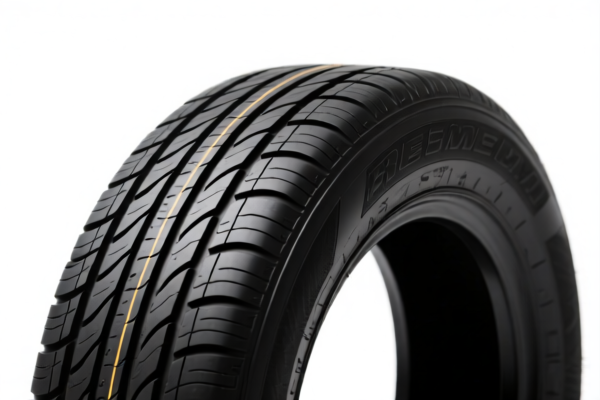
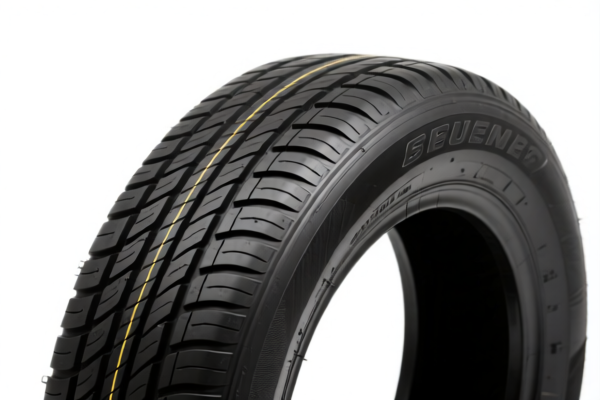
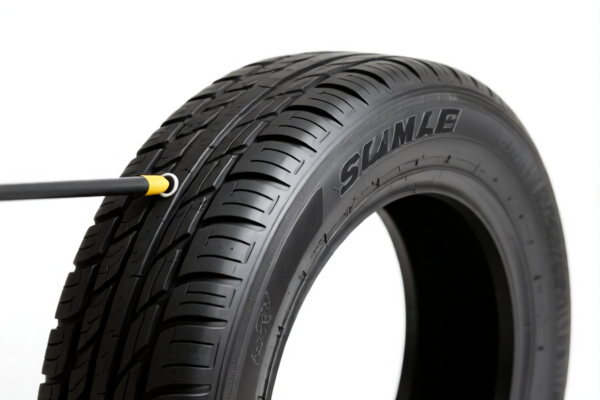
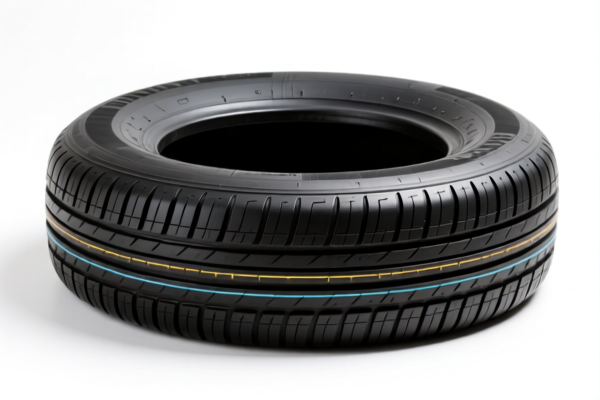
AI Analysis
🚛 Heavy-Duty Inflated Rubber Tires (Rim Size > 61 cm)
🌐 HS Code Reference & Customs Clearance Guide | 2026 Latest Tariff Analysis | Professional Clearance Strategy
📌 I. Product Definition & Classification: What Exactly Are These Tires?
These are new pneumatic tires made of rubber, specifically designed for construction, mining, or industrial handling vehicles and machinery. The defining characteristic is the rim size exceeding 61 cm.
In international trade, these heavy-duty tires are strictly categorized based on their internal structure:
- Radial Tires: Where the cord plies run radially across the tread.
- Other Tires: Non-radial types (e.g., bias-ply or other specific industrial constructions).
⚠️ Key Distinction: - If the tire is Radial → It falls under a specific sub-category with potential duty exemptions. - If the tire is Non-Radial (Other) → It falls under a general "Other" category with standard trade restrictions.
Crucial Note: Misidentifying the tire structure (Radial vs. Non-Radial) leads to significant tariff differences. Always verify the sidewall markings or technical datasheets.
📦 II. HS Code Classification Details (2026 Latest Tariff Authority对照)
Based on the provided data, there are two distinct HS Codes for this product description, differentiated by tire construction.
| HS Code | Product Description | Construction Type | Rim Size Condition |
|---|---|---|---|
4011.80.80.20 |
New pneumatic tires of rubber, for construction/mining/industrial handling | Non-Radial (Other) | Exceeding 61 cm |
4011.80.20.20 |
New pneumatic tires of rubber, for construction/mining/industrial handling | Radial | Exceeding 61 cm |
🔍 Important Reminder: - Both codes apply only to tires with a rim size > 61 cm. - If the rim size is ≤ 61 cm, these codes do NOT apply (different HS codes would be used). - The primary difference lies in the construction type: Radial vs. Non-Radial.
💰 III. 2026 Latest Tariff Rate Breakdown (Including Supplementary Duties)
✅ Applicable Country: United States (US) ✅ Country of Origin: China (CN) ✅ Effective Time: Current tariffs apply
🎯 1. 4011.80.80.20 —— Non-Radial Industrial Tires (Rim > 61 cm)
This category applies to non-radial (e.g., bias-ply) heavy-duty tires. These are subject to both base tariffs and additional trade measures.
| Item | Detail |
|---|---|
| Base Tariff Rate | 3.4% (ad valorem) |
| Additional Tariff (Section 301) | 25.0% |
| Total Tax Rate | 28.4% |
| Tax Calculation | CIF Value × 28.4% |
| De Minimis Exemption | ❌ Not Eligible (High-value industrial goods) |
| Legal Basis Path | HTSUS:4011.80.80.20 → Section 301 Footnote |
📌 Explanation: - The 3.4% is the standard Most Favored Nation (MFN) duty for this type of tire. - The 25.0% is the additional tariff imposed under Section 301 of the Trade Act of 1974 on goods from China. - Total Cost Impact: For every $10,000 CIF value, you pay $2,840 in duties alone. This significantly impacts profit margins.
🎯 2. 4011.80.20.20 —— Radial Industrial Tires (Rim > 61 cm)
This category applies to radial construction tires. Notably, the provided data indicates zero additional tariffs for this specific sub-category in this dataset context.
| Item | Detail |
|---|---|
| Base Tariff Rate | 0.0% |
| Additional Tariff | 0.0% |
| Total Tax Rate | 0.0% |
| Tax Calculation | No duty payable |
| De Minimis Exemption | N/A (0% tax) |
| Legal Basis Path | HTSUS:4011.80.20.20 |
📌 Note: - Zero Duty Advantage: If your tire is radial constructed, it may benefit from a 0% total duty rate under this specific classification in the provided data. - Why the Difference?: Radial tires are often considered more advanced technology and may have different trade policy treatments or exclusions compared to non-radial types. - Verification Required: Ensure the tire is genuinely Radial (check for "RADIAL" on sidewall) to claim this 0% rate. Misclassification can lead to audits and back-taxes.
🛠️ IV. Customs Clearance Practical Advice (Real-World Pitfall Guide)
✅ 1. Preparation Checklist (Non-Negotiable)
| Document | Required? | Description |
|---|---|---|
| ✅ Product Specifications | ✔️ | Must clearly state: "Pneumatic Tire, Rubber, for Mining/Construction," Rim Size > 61cm, and Construction Type (Radial/Non-Radial). |
| ✅ Side Wall Photo | ✔️ | Must show "RADIAL" or "BIAS" clearly. This is the #1 proof for HS code determination. |
| ✅ Commercial Invoice | ✔️ | Accurate description matching the HS code definition. Avoid vague terms like "Car Tire." Use "Heavy-Duty Industrial Tire." |
| ✅ Certificate of Origin | ✔️ | To confirm Chinese origin (for Section 301 applicability). |
| ✅ Packaging List | ✔️ | Itemized list with weights and dimensions. |
✅ 2. Declaration Strategy (Key Mantra)
🔥 "Radial vs. Bias, Rim Size Matters, Description Must Be Clear!"
| Scenario | Correct Declaration | Wrong Declaration | Consequence |
|---|---|---|---|
| Radial Tire | HS: 4011.80.20.20Description: "New Radial Pneumatic Tire, Rim > 61cm, for Mining Loader" |
HS: 4011.80.80.20 |
Overpaid Duties (28.4% instead of 0%) |
| Non-Radial Tire | HS: 4011.80.80.20Description: "New Bias-Ply Pneumatic Tire, Rim > 61cm, for Excavator" |
HS: 4011.80.20.20 |
Underpaid Duties & Penalties (25% back-tax + fines) |
| Rim Size ≤ 61 cm | Use different HS code (e.g., 4011.80.80.10 etc.) | Using codes above | Incorrect Classification → Delay/Seizure |
✅ 3. Special Cases Handling
| Situation | Recommendation |
|---|---|
| Mixed Shipments | Separate shipments by construction type (Radial vs. Non-Radial) if possible to simplify duty calculation. |
| OEM Custom Tires | Provide engineering drawings showing ply angle to prove radial construction. |
| Retreaded Tires | These codes are for NEW tires only. Retreads have different HS codes. |
| Used Tires | These codes are for NEW tires only. Used tires are generally prohibited or heavily restricted. |
🌍 V. Global Market Comparison (2026 Latest)
| Country/Region | Recommended HS Code (Radial, >61cm) | Tariff (China Origin) | Notes |
|---|---|---|---|
| 🇺🇸 USA | 4011.80.20.20 |
0% | Based on provided data. Verify Section 301 exclusions. |
| 🇺🇸 USA | 4011.80.80.20 |
28.4% | 3.4% base + 25% Section 301. |
| 🇪🇺 EU | 4011.80.20 | ~0-2% | Check EU TARIC database. No Section 301. |
| 🇨🇳 China | 4011.80.20 | ~20% | Import duty for foreign tires. |
📌 Conclusion: - USA: The distinction between Radial and Non-Radial is critical. Radial tires may enjoy 0% duty under this specific dataset, while non-radial face 28.4%. - Strategy: If you can supply Radial tires, prioritize them for the US market to minimize tariff costs.
📌 VI. Common Errors & Pitfalls (Lessons Learned)
❌ Error 1: Calling all tires "Industrial Tires" without specifying construction. 👉 Result: Customs may classify as the highest duty rate (Non-Radial 28.4%) by default.
❌ Error 2: Ignoring the Rim Size. 👉 Result: If rim size is ≤ 61 cm, using these codes is incorrect classification. Use correct code for smaller rims.
❌ Error 3: Assuming "Radial" means "Low Pressure."
👉 Result: Radial refers to belt/polymer structure, not pressure. High-pressure radial tires still qualify for 4011.80.20.20 if for construction/mining.
❌ Error 4: Missing "RADIAL" on the sidewall photo. 👉 Result: Customs cannot verify the 0% duty claim. Audit may lead to back-taxes + penalties.
✅ Correct Declaration Example:
"NEW RADIAL PNEUMATIC TIRE, RUBBER, FOR MINING LOADER, RIM SIZE 71 CM, MODEL XYZ, MADE IN CHINA"
🎯 VII. Conclusion: Precision Classification for Cost Savings
🎯 Remember the Mantra:
🔹 "Radial = 0%, Non-Radial = 28.4% (for China)"
🔹 "Rim Size > 61cm is Key, Don't Mix It Up!"
🔹 "One Wrong Code, Cost Thousands More!"
📌 Pro Tip:
- Verify Construction: Always check the sidewall for "RADIAL."
- Measure Rim Size: Ensure it is strictly > 61 cm.
- Pre-Ruling: Consider applying for an Advance Ruling from US Customs if you are unsure about the construction type or rim size classification.
📣 Take Action Now:
📞 Contact your freight forwarder with sidewall photos and technical specs. 🚀 Choose Radial if possible to save 28.4% in duties for the US market. 💼 Accurate Declaration Saves Money!
✨ Professional Clearance, Starting with Accurate Classification! 💼 Your Bottom Line Depends on This Detail!
Customer Reviews
About HS Code Classification
The Harmonized System (HS) is an internationally standardized nomenclature developed by the World Customs Organization (WCO) to classify traded products. Over 200 countries use the HS system as the basis for customs tariffs, trade statistics, and import/export regulations.
Each HS code follows a hierarchical structure:
- Chapter (2 digits) — Broad category of goods (e.g., Chapter 84: Machinery and Mechanical Appliances)
- Heading (4 digits) — More specific grouping within the chapter
- Subheading (6 digits) — Internationally standardized breakdown, used by all WCO member countries
- National subdivisions (8-10 digits) — Country-specific extensions for further classification, such as US HTSUS 10-digit codes
Correct HS code classification is essential for smooth customs clearance, accurate duty payment, and compliance with trade regulations. Misclassification can lead to customs delays, overpayment of duties, or penalties.
When importing from CN to US, the applicable tariff rates may include:
- Most-Favored-Nation (MFN) rate — The standard duty rate applied to WTO members
- General rate — Applied to countries without trade agreements
- Trade remedy duties — Additional tariffs such as Section 301 (anti-dumping), Section 232 (national security), or countervailing duties
The information provided on this page is for reference purposes only. For official classification, please consult with your local customs authority or a licensed customs broker.