Infrared Lamp Equipment
CN → US| HS Code | Tariff Rate | Origin | Destination | Doc |
|---|---|---|---|---|
| 8543707100 | 37.0% | CN | US | Official Doc |
| 8539490040 | 37.4% | CN | US | Official Doc |
| 9405426000 | 41.0% | CN | US | Official Doc |
| 8543709860 | 37.6% | CN | US | Official Doc |
| 8539490080 | 37.4% | CN | US | Official Doc |
| 9405490000 | 38.9% | CN | US | Official Doc |
Product Images
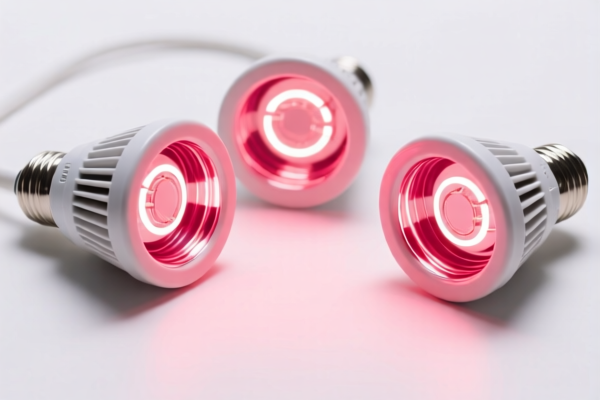
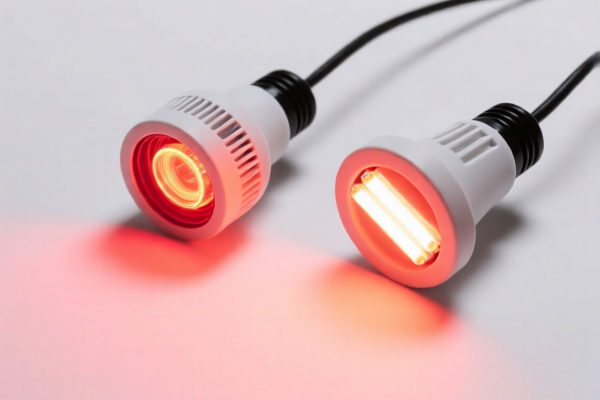
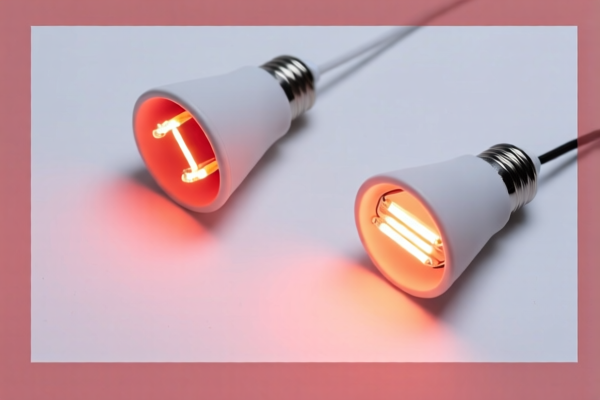
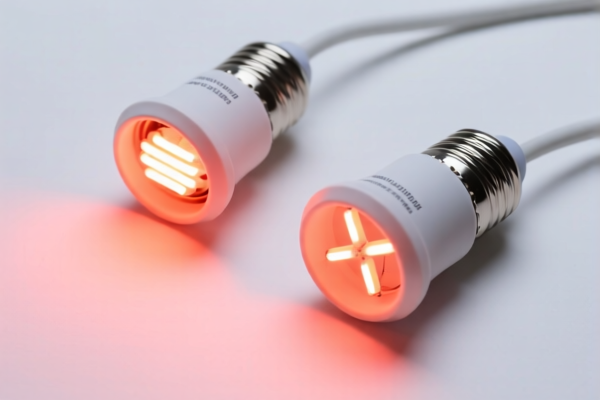
AI Analysis
🌡️ Infrared Lamp Equipment (红外灯设备)
🌐 HS Code Reference & Customs Clearance Guide | 2026 Latest Tariff Analysis | Professional Clearance Strategy
📌 I. Product Definition & Classification: Do You Really Understand "Infrared Lamps"?
Infrared Lamp Equipment refers to devices that emit infrared radiation for heating, lighting, or therapeutic purposes. In international trade, the classification is complex because it sits at the intersection of lighting sources and general electrical apparatus. The key distinction lies in whether the device is classified primarily as a light source (lamp) or as a general functional machine/device.
⚠️ Critical Distinction Point:
- If the product is primarily an electric luminescent lamp or infrared lamp used for illumination/heating → It likely falls under Chapter 85 (Electrical Machinery) or Chapter 94 (Furniture/Lighting Fixtures).
- The specific HS Code depends on the structural form (e.g., is it a standalone lamp bulb, a fixture, or a heating device?) and function.
📦 II. HS Code Classification Details (Based on Provided Data)
The following classifications are derived from the provided dataset. Note that different codes reflect different interpretations of the product's primary function (Lamp vs. Machine vs. Lighting Fixture).
| HS Code | Product Description & Matching Logic | Total Tax Rate | Tax Breakdown |
|---|---|---|---|
8543.70.71.00 |
Matching Basis: Goods are classified as "Infrared Lamp Equipment." Its function (lighting/heating) aligns with "Electric luminescent lamps." Since it falls under "Other" categories without obvious material conflict, it is deemed a possible match. | 37.0% | Base Duty: 2.0% Section 301 Duty: 25.0% Section 122 Duty: 10% |
8539.49.00.40 |
Matching Usage: The name "Infrared Lamp" falls under the category of "Ultraviolet or Infrared Lamps" in this code. Since the specific form is unclear, it is inferred as a light source product based on "Equipment," with no material or usage conflicts. | 37.4% | Base Duty: 2.4% Section 301 Duty: 25.0% Section 122 Duty: 10% |
9405.42.60.00 |
Matching Point: Usage is for lighting/heating equipment. Inference: Infrared lamps belong to electric lamps and lighting apparatus. Based on common sense, the casing is often made of base metal, fitting the fallback category of "Other electric lamps and lighting fittings." | 41.0% | Base Duty: 6.0% Section 301 Duty: 25.0% Section 122 Duty: 10% |
8543.70.98.60 |
Matching Basis: The goods are independent electrical appliances. Their function (infrared heating/lighting) does not belong to amplifiers or instrument effects pedals, fitting the fallback category of "Other machines and apparatus." No material or form conflicts. | 37.6% | Base Duty: 2.6% Section 301 Duty: 25.0% Section 122 Duty: 10% |
8539.49.00.80 |
Matching Basis: The product name explicitly belongs to the infrared lamp category, matching the usage definition of "Infrared Lamps" in the classification, with no material conflicts. | 37.4% | Base Duty: 2.4% Section 301 Duty: 25.0% Section 122 Duty: 10% |
9405.49.00.00 |
Matching Basis: The "Lamp Equipment" in the product name is fully consistent with "Electric lamps and lighting fittings" in usage. "Infrared" is a functional characteristic, not conflicting with "Other electric lamps." Fits the fallback category logic. | 38.9% | Base Duty: 3.9% Section 301 Duty: 25.0% Section 122 Duty: 10% |
🔍 Key Observation:
- The Base Duty varies significantly (2.0% to 6.0%) depending on whether Customs views it as a Lamp (8539,8543) or a Lighting Fixture (9405).
- All options incur high Section 301 (25%) and Section 122 (10%) tariffs due to US trade policies on Chinese goods.
- The Total Tax Range is 37.0% – 41.0%.
💰 III. 2026 Latest Tariff Rate Details (Detailed Policy Breakdown)
✅ Applicable Country: United States (US)
✅ Origin: China (CN)
✅ Effective Time: November 10, 2025 (and subsequent imports)
🎯 1. The "Lamp" Category (8539.49.00.40 / 8539.49.00.80)
These codes classify the item specifically as an Ultraviolet or Infrared Lamp.
| Item | Content |
|---|---|
| Base Duty | 2.4% |
| USITC Additional Duty | +25% (Section 301 Tariff) |
| IEEPA Additional Duty | +10% (Section 122, targeting China/HK products) |
| Total Rate | 37.4% |
| Tax Calculation | CIF Value × 37.4% |
| De Minimis Exemption? | ❌ No (High duty goods are typically excluded from Section 321 de minimis benefits) |
| Legal Basis Path | USITC:8539.49.00.40/80 → FOOTNOTE:9903.88.01 → IEEPA:9903.01.24 |
📌 Explanation:
- These codes are the most direct match for "Infrared Lamp."
- The 37.4% rate is standard for this category.
- Risk: If the product is deemed a "fixture" rather than a "lamp," it might be misclassified, leading to penalties.
🎯 2. The "General Machine" Category (8543.70.71.00 / 8543.70.98.60)
These codes classify the item as Other Electric Machinery/Apparatus.
| Item | Content |
|---|---|
| Base Duty | 2.0% - 2.6% |
| USITC Additional Duty | +25% |
| IEEPA Additional Duty | +10% |
| Total Rate | 37.0% - 37.6% |
| Tax Calculation | CIF Value × Rate |
| De Minimis Exemption? | ❌ No |
📌 Explanation:
- This classification is used when the device is seen as a heating apparatus or general equipment rather than a standard lighting bulb.
-8543.70.71.00has the lowest base duty (2.0%), resulting in the lowest total tax (37.0%).
🎯 3. The "Lighting Fixture" Category (9405.42.60.00 / 9405.49.00.00)
These codes classify the item as Electric Lamps and Lighting Fittings.
| Item | Content |
|---|---|
| Base Duty | 3.9% - 6.0% |
| USITC Additional Duty | +25% |
| IEEPA Additional Duty | +10% |
| Total Rate | 38.9% - 41.0% |
| Tax Calculation | CIF Value × Rate |
| De Minimis Exemption? | ❌ No |
📌 Explanation:
- This is the most expensive classification.
- It applies if the product is sold as a complete lighting unit (with housing, reflectors, etc.) rather than just the lamp element.
- Avoid this classification if possible due to the 6.0% base duty.
🛠️ IV. Customs Clearance Practical Advice (Battle-Tested Pitfall Guide)
✅ 1. Preparation Checklist (Non-Negotiable)
| Document | Required | Explanation |
|---|---|---|
| ✅ Product Specification Sheet | ✔️ | Must detail: Power (Watts), Voltage, Infrared Wavelength, Intended Use (Heating vs. Lighting). |
| ✅ Technical Drawings | ✔️ | Show if the item is a standalone bulb/lamp or a complete fixture with housing. |
| ✅ Product Photos | ✔️ | Clear images of the device, label, and any markings (CE, UL, FCC). |
| ✅ Commercial Invoice | ✔️ | Must accurately describe the item. Avoid vague terms like "Part." Use "Infrared Heating Lamp" or "Infrared Lighting Fixture." |
| ✅ Certifications | ✔️ | UL, ETL, FCC (if electronic), or CE (for reference). Safety certifications are crucial for electrical goods. |
✅ 2. Declaration Strategy (Key Mnemonics)
🔥 "Define Function, Not Just Name! Lamp vs. Machine is the Key!"
| Scenario | Recommended HS Code | Reasoning |
|---|---|---|
| Standalone Infrared Bulb/Lamp | 8539.49.00.40 or 8539.49.00.80 |
Clearly an "Infrared Lamp." Best if sold as a replacement bulb. |
| Infrared Heater Device | 8543.70.71.00 |
If the primary function is heating and it has controls/stand, it may be an "Electric Apparatus." Lowest base duty (2.0%). |
| Complete Lighting Fixture | 9405.49.00.00 |
If it includes the housing, reflector, and is sold as a "Lamp/Fixture." Highest tax risk. |
| General Purpose Electrical Device | 8543.70.98.60 |
If it doesn't fit strictly as a lamp or fixture but is an independent electrical device. |
✅ 3. Special Considerations
| Situation | Handling Advice |
|---|---|
| Heating vs. Lighting | If the device is primarily for industrial heating, argue for 8543 (Machinery). If for illumination, argue for 8539 (Lamps) or 9405 (Fixtures). |
| Material Composition | If the housing is metal, 9405 becomes more likely (fits "base metal" description in some interpretations), but 8543 is safer for "machinery." |
| OEM Products | Provide customer orders and design specs to prove intended use. If marketed as a "Heat Lamp for Pets," it may lean towards 8543. If "Industrial Infrared Lamp," it leans towards 8539. |
🌍 V. Global Market Clearance Comparison (2026 Latest)
| Country/Region | Recommended HS Code | Estimated Tariff (China Origin) | Certification Requirements | Notes |
|---|---|---|---|---|
| 🇺🇸 USA | 8539.49.00.40 |
37.4% | FCC, UL/ETL | High tariffs apply. Section 301 + 122. |
| 🇨🇳 China | 8539.49.00.00 |
~2.4% | CCC (if applicable) | Low duty, but requires CCC for certain electrical goods. |
| 🇪🇺 EU | 8539.49.00 |
0% - 4% | CE, RoHS | No Section 301. Ecodesign directives may apply. |
| 🇬🇧 UK | 8539.49.00 |
0% - 4% | UKCA | Post-Brexit regulations. |
📌 Conclusion:
- USA is the most challenging market due to the cumulative 25% + 10% additional duties.
- Europe and China are significantly cheaper but have strict safety/electrical certifications (CE/CCC).
- Cost Saving Tip: If the device can be classified as8543.70.71.00(37.0%), it saves 0.4% compared to8539(37.4%). While small, every percentage point counts in high-volume trade.
📌 VI. Common Errors & Pitfall Guide (Lessons from Experience)
❌ Error 1: Declaring as "Lighting Fixture" (9405) when it is a "Lamp" (8539).
👉 Consequence: Higher base duty (6.0% vs 2.4%) → Total tax increases by 3.6%.
👉 Fix: Emphasize the "lamp" aspect if it is a replaceable bulb.
❌ Error 2: Declaring as "Part of a Machine" to avoid duty.
👉 Consequence: Customs may reclassify as a complete product with higher duty or demand proof of integration.
👉 Fix: If it is a standalone unit, declare as a standalone unit.
❌ Error 3: Ignoring Section 122 (10%).
👉 Consequence: Underestimating landed cost.
👉 Fix: Always include the 10% IEEPA tariff in your cost model for Chinese-origin goods entering the US.
✅ Correct Practice:
"Infrared Heating Lamp, 500W, 120V, with E26 Base, for Industrial Drying, Model XYZ, UL Listed"
🎯 VII. Conclusion: Professional Declaration for Cost Efficiency
🎯 Remember the Mnemonic:
🔹 "Lamp is 37.4%, Machine is 37.0%, Fixture is 41.0%!"
🔹 "Base Duty Matters: 2.0% vs 6.0% is the difference!"
📌 Pro Tip:
If your infrared lamps are shipped in bulk as components (e.g., for assembly into a larger device), consult a customs broker about "Parts" classification which might have lower duties, but ensure they are not readily usable as finished goods.
📣 Immediate Action:
📞 Contact a Professional Customs Broker
📄 Provide Detailed Specs & Photos
🚀 Apply for Advance Ruling if importing in large volumes to lock in the HS Code and duty rate.
✨ Professional Clearance Starts with Precise Classification!
💼 Your Every Cent Counts in Global Trade!
Customer Reviews
About HS Code Classification
The Harmonized System (HS) is an internationally standardized nomenclature developed by the World Customs Organization (WCO) to classify traded products. Over 200 countries use the HS system as the basis for customs tariffs, trade statistics, and import/export regulations.
Each HS code follows a hierarchical structure:
- Chapter (2 digits) — Broad category of goods (e.g., Chapter 84: Machinery and Mechanical Appliances)
- Heading (4 digits) — More specific grouping within the chapter
- Subheading (6 digits) — Internationally standardized breakdown, used by all WCO member countries
- National subdivisions (8-10 digits) — Country-specific extensions for further classification, such as US HTSUS 10-digit codes
Correct HS code classification is essential for smooth customs clearance, accurate duty payment, and compliance with trade regulations. Misclassification can lead to customs delays, overpayment of duties, or penalties.
When importing from CN to US, the applicable tariff rates may include:
- Most-Favored-Nation (MFN) rate — The standard duty rate applied to WTO members
- General rate — Applied to countries without trade agreements
- Trade remedy duties — Additional tariffs such as Section 301 (anti-dumping), Section 232 (national security), or countervailing duties
The information provided on this page is for reference purposes only. For official classification, please consult with your local customs authority or a licensed customs broker.