Ingrown Nail Pad
CN → US| HS Code | Tariff Rate | Origin | Destination | Doc |
|---|---|---|---|---|
| 9021100090 | 10.0% | CN | US | Official Doc |
| 4818900080 | 17.5% | CN | US | Official Doc |
| 4818500080 | 10.0% | CN | US | Official Doc |
| 9021908100 | 10.0% | CN | US | Official Doc |
| 3926909989 | 22.8% | CN | US | Official Doc |
Product Images

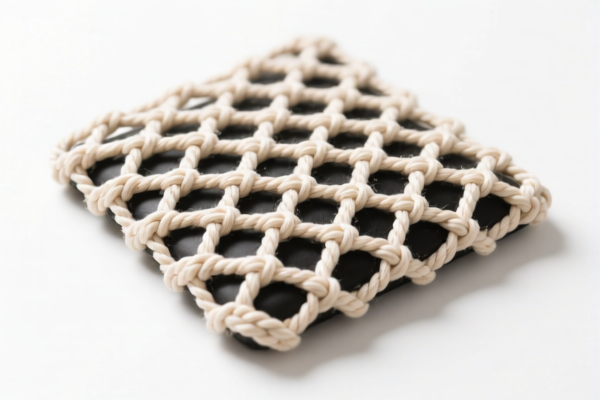
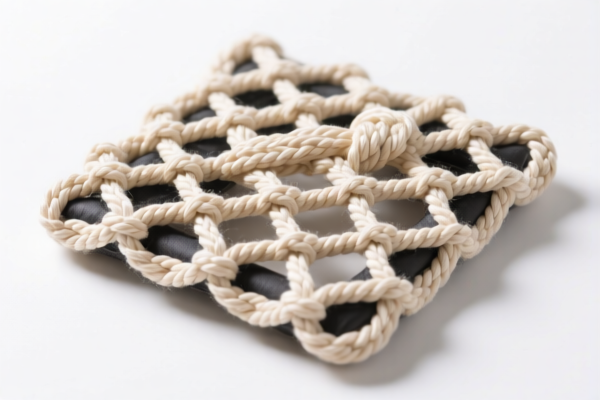
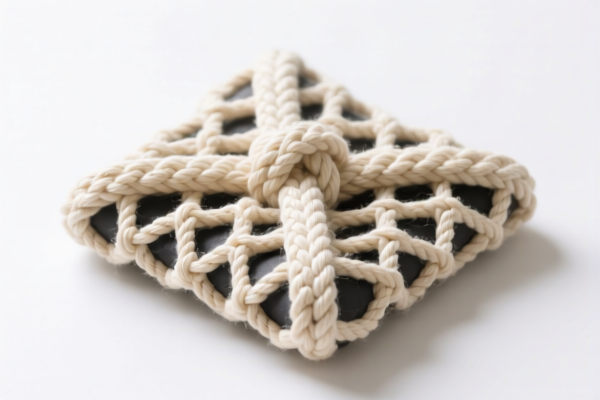
AI Analysis
💅 Ingrown Nail Pad (Onychocryptosis Correction Pads)
🌐 HS Code Reference & Customs Clearance Guide | 2026 Latest Tariff Analysis | Professional Clearance Strategy
📌 I. Product Definition & Classification: Do You Really Understand "Ingrown Nail Pads"?
An Ingrown Nail Pad is a small, often curved or tapered device made of plastic, silicone, or sometimes paper/fiber materials, designed to be inserted under the edge of a fingernail or toenail. Its primary purpose is to lift the nail plate away from the skin, relieving pressure and correcting the shape to prevent or treat onychocryptosis (ingrown nails).
In international trade, these products are often ambiguous because they sit at the intersection of medical devices, cosmetic accessories, and consumable hygiene products. Correct classification depends heavily on the material composition and the primary function claimed in the commercial invoice.
⚠️ Key Distinction:
- If the product is a rigid or semi-rigid plastic device used for structural correction of the nail → It is classified as a Orthopedic/Prosthetic Appliance.
- If the product is paper, cellulose, or fiber-based (e.g., cotton pads infused with medicated solutions) used for temporary hygiene/correction → It is classified as a Paper/Cellulose Product.
- If the product is a simple plastic spacer with no medical claim, just a cosmetic aid → It may fall under Plastics Articles.
📦 二、HS Code Classification Details (2026 Latest Tariff Authority Comparison)
Based on the provided data, here are the 5 potential HS Codes for "Ingrown Nail Pads," depending on material and function.
| HS Code | Product Description | Key Characteristics | Primary Use Case |
|---|---|---|---|
9021.10.00.90 |
Orthopedic/Fracture Appliances | Rigid/Flexible materials used as prosthetics/orthotics for body parts. Classified based on the "Parts/Accessories" principle for orthopedic devices. | High-end silicone/plastic braces that structurally correct nail growth. Treated as medical orthopedic aids. |
4818.90.00.80 |
Paper/Cellulose Sanitary/Cosmetic Articles | Made of paper, fibers, or cellulose nets. Used for nail beauty/care. Consumable nature. | Medicated cotton pads, paper-based lifters, or disposable fiber pads used for hygiene and temporary correction. |
4818.50.00.80 |
Paper/Cellulose Network Materials | Material is paper, cellulose, or other fiber nets. Classified as apparel accessories or related care items. | Similar to above, but specifically fiber-net based wipes or liners used in nail care routines. |
9021.90.81.00 |
Other Orthopedic/Appliances | Specifically for correcting defects. Used for ingrown nail correction or nail shape adjustment. | Medical-grade correction devices (plastic/silicone) that are not full braces but are distinct medical tools. |
3926.90.99.89 |
Other Plastic Articles | Made of plastic. No specific subheading for "nail pads." General residual category for plastic goods. | Basic plastic spacers or simple plastic tools with no medical certification, purely cosmetic. |
🔍 Critical Note:
- Medical vs. Cosmetic: If the product is marketed as a medical device (FDA-cleared, CE-marked as Class I/II), prefer9021codes.
- Consumable vs. Durable: If it’s disposable (cotton/paper), prefer4818. If it’s reusable (plastic/silicone), prefer9021or3926.
- Material Dictates Code: Plastic →9021or3926; Paper/Fiber →4818.
💰 三、2026 Latest Tariff Rate Breakdown (Including Additional Taxes & Policy Surcharges)
✅ Applicable Country: USA (US)
✅ Origin: China (CN)
✅ Effective Date: From Nov 10, 2025 (including subsequent imports)
✅ Note: The "122 Clause Tariff" refers to specific US trade remedy provisions (Section 301/IEEPA) applying to Chinese goods.
🎯 1. 9021.10.00.90 —— Orthopedic/Fracture Appliances
| Item | Content |
|---|---|
| Base Tariff | 0% (ad valorem) |
| USITC Surcharge | 0% |
| Section 301 / IEEPA Surcharge | +10% |
| Total Tariff Rate | 10.0% |
| Tax Calculation | CIF Value × 10% |
| De Minimis Exemption | ❌ Not Applicable (High value medical devices usually exceed de minimis thresholds or are excluded) |
| Legal Basis Path | HS:9021.10.00.90 → Section 301: Footnote 9903.88.01 → IEEPA:9903.01.24 |
📌 Explanation:
- Orthopedic appliances often enjoy 0% base duty.
- However, Section 301 tariffs (10% for this category) still apply to Chinese-origin goods.
- Total Cost Impact: Moderate.
🎯 2. 4818.90.00.80 —— Paper/Cellulose Sanitary/Cosmetic Articles
| Item | Content |
|---|---|
| Base Tariff | 0% |
| USITC Surcharge | +7.5% |
| Section 301 / IEEPA Surcharge | +10% |
| Total Tariff Rate | 17.5% |
| Tax Calculation | CIF Value × 17.5% |
| De Minimis Exemption | ❌ Not Applicable (Subject to Section 301) |
| Legal Basis Path | HS:4818.90.00.80 → Section 301: Footnote 9903.88.01 → IEEPA:9903.01.24 |
📌 Explanation:
- Paper-based cosmetic consumables have a 7.5% USITC surcharge.
- Plus 10% IEEPA tariff.
- Total Cost Impact: High. These are heavily taxed.
🎯 3. 4818.50.00.80 —— Paper/Cellulose Network Materials
| Item | Content |
|---|---|
| Base Tariff | 0% |
| USITC Surcharge | 0% |
| Section 301 / IEEPA Surcharge | +10% |
| Total Tariff Rate | 10.0% |
| Tax Calculation | CIF Value × 10% |
| De Minimis Exemption | ❌ Not Applicable |
| Legal Basis Path | HS:4818.50.00.80 → Section 301: Footnote 9903.88.01 → IEEPA:9903.01.24 |
📌 Explanation:
- This subheading has no USITC surcharge.
- Only the 10% IEEPA tariff applies.
- Total Cost Impact: Lower than4818.90. Ideal if product can be classified here.
🎯 4. 9021.90.81.00 —— Other Orthopedic/Appliances (Defect Correction)
| Item | Content |
|---|---|
| Base Tariff | 0% |
| USITC Surcharge | 0% |
| Section 301 / IEEPA Surcharge | +10% |
| Total Tariff Rate | 10.0% |
| Tax Calculation | CIF Value × 10% |
| De Minimis Exemption | ❌ Not Applicable |
| Legal Basis Path | HS:9021.90.81.00 → Section 301: Footnote 9903.88.01 → IEEPA:9903.01.24 |
📌 Explanation:
- Similar to9021.10, this is a medical/orthopedic classification.
- 0% Base + 10% IEEPA = 10% Total.
- Strategic Advantage: If your product is a plastic/silicone correction device, this is a strong candidate due to low tariff.
🎯 5. 3926.90.99.89 —— Other Plastic Articles
| Item | Content |
|---|---|
| Base Tariff | 5.3% |
| USITC Surcharge | +7.5% |
| Section 301 / IEEPA Surcharge | +10% |
| Total Tariff Rate | 22.8% |
| Tax Calculation | CIF Value × 22.8% |
| De Minimis Exemption | ❌ Not Applicable |
| Legal Basis Path | HS:3926.90.99.89 → Section 301: Footnote 9903.88.01 → IEEPA:9903.01.24 |
📌 Explanation:
- This is the worst-case scenario.
- Base duty (5.3%) + USITC (7.5%) + IEEPA (10%) = 22.8%.
- Only use this code if the product is clearly not medical and not paper. Avoid if possible.
🛠️ 四、Customs Clearance Practical Advice (Battle-Tested Pitfall Guide)
✅ 1. Documentation Checklist (All Required)
| Document | Required | Notes |
|---|---|---|
| ✅ Product Specification Sheet | ✔️ | Must detail Material (Plastic vs. Paper/Silicone), Usage (Medical vs. Cosmetic), Reusability. |
| ✅ Intended Use Statement | ✔️ | Clearly state if it’s for medical correction (supports 9021) or cosmetic hygiene (supports 4818). |
| ✅ Product Photos | ✔️ | Show the pad in use (under nail) and material texture. |
| ✅ Clinical/Medical Clearance | ✔️ | If claiming 9021, provide FDA 510(k) or CE MDD/MDR documentation. |
| ✅ Commercial Invoice | ✔️ | Describe product accurately. Avoid vague terms like "Beauty Tool." Use "Orthopedic Nail Corrector" or "Cellulose Nail Pad." |
| ✅ Material Safety Data Sheet (MSDS) | ✔️ | Required if chemicals are infused in paper pads. |
✅ 2. Declaration Strategy (Key Mantra)
🔥 "Material First, Function Second. Medical Claims Need Proof. Paper is High Tax."
| Scenario | Correct HS Code | Risk of Misclassification |
|---|---|---|
| Silicone/Plastic Correction Bracket | 9021.10.00.90 or 9021.90.81.00 |
✅ Low (10% tariff). Strong medical justification. |
| Paper/Cotton Medicated Pad | 4818.90.00.80 |
⚠️ High (17.5% tariff). No medical claim, just hygiene. |
| Simple Plastic Spacer (No Medical) | 3926.90.99.89 |
❌ Avoid (22.8% tariff). Highest tax. |
| Fiber-Net Liner | 4818.50.00.80 |
✅ Medium (10% tariff). Good for consumables. |
📌 Tip:
- If you want to minimize tariff, try to classify as9021(Medical Orthopedic) with 10% total tax, rather than3926(Plastic Articles) with 22.8% tax.
- To qualify for9021, the product must have a medical purpose (correcting deformity, not just cleaning).
✅ 3. Special Cases & Handling
| Situation | Handling Advice |
|---|---|
| Mixed Materials | If the pad has a paper wick + plastic frame, declare based on essential character. If plastic frame dominates, 9021/3926. If paper dominates, 4818. |
| OEM Custom Braces | Provide design drawings showing the orthopedic structure. This supports 9021 classification. |
| Cosmetic Only Marketing | If marketed only as "Beauty Accessory," customs may force 3926 or 4818. Avoid medical terms in marketing if you want to avoid FDA scrutiny, but note higher taxes. |
| Disposable vs. Reusable | Disposable = 4818. Reusable = 9021 or 3926. |
🌍 五、Global Market Clearance Comparison (2026 Latest)
| Country/Region | Recommended HS Code | Estimated Tariff (CN Origin) | Key Requirement | Notes |
|---|---|---|---|---|
| 🇺🇸 USA | 9021.10.00.90 or 9021.90.81.00 |
10.0% | FDA/CE Medical Claim | Best option. Low tax. |
| 🇺🇸 USA | 4818.90.00.80 |
17.5% | None (Cosmetic) | Higher tax for paper pads. |
| 🇺🇸 USA | 3926.90.99.89 |
22.8% | None | Worst option. Avoid. |
| 🇨🇳 China | 9021.90.81.00 |
0-5% | N/A | No Section 301 taxes. |
| 🇪🇺 EU | 9021.90 |
0-4% | CE Mark (Medical Device) | Strict medical device regulations. |
📌 Conclusion:
- USA Market: The 10% tariff on medical orthopedic devices (9021) is significantly better than the 22.8% on generic plastics (3926).
- Strategy: Position the product as a medical orthopedic appliance if possible. Provide clinical evidence to support9021classification.
📌 六、Common Mistakes & Pitfalls (Lessons Learned from Experience)
❌ Mistake 1: Calling a plastic correction brace "Beauty Accessory" → Customs classifies as 3926 → 22.8% Tax.
👉 Fix: Call it "Orthopedic Nail Corrector" and provide medical usage docs → 10% Tax.
❌ Mistake 2: Using paper pads but claiming medical device status without certification → Customs rejects 9021, forces 4818 → 17.5% Tax + Delays.
👉 Fix: Be honest. If it’s paper, use 4818. If you need 9021, switch to plastic/silicone.
❌ Mistake 3: Not declaring Section 301 applicability → Unexpected 10% IEEPA surcharge at port → Cash flow issues.
👉 Fix: Always include Section 301 in tariff calculations for Chinese imports.
✅ Correct Declaration Example:
"Orthopedic Nail Corrector Pad, Silicone, Reusable, For Treatment of Onychocryptosis, Class I Medical Device."
🎯 七、Conclusion: Precise Classification = Cost Savings!
🎯 Remember the Mantra:
🔹 "Plastic + Medical = 9021 (10% Tax)"
🔹 "Paper + Cosmetic = 4818 (17.5% Tax)"
🔹 "Plastic + Cosmetic = 3926 (22.8% Tax)"
🔹 "Choose 9021 if you can prove medical purpose!"
📌 Pro Tip:
If your product is reusable and made of silicone/plastic, insist on
9021classification. It saves 12.8% in tariffs compared to3926.
Submit a Pre-Ruling Request to US Customs (CBP) with product samples and medical justification to lock in the 10% rate.
📣 Immediate Action:
📞 Contact a Customs Broker + Provide Product Photos + Submit for Pre-Ruling.
🚀 Lower Your Tax, Speed Up Clearance, Maximize Profit!
✨ Professional Clearance Starts with Accurate Classification!
💼 Every Dollar Saved in Tariffs is Pure Profit!
Customer Reviews
About HS Code Classification
The Harmonized System (HS) is an internationally standardized nomenclature developed by the World Customs Organization (WCO) to classify traded products. Over 200 countries use the HS system as the basis for customs tariffs, trade statistics, and import/export regulations.
Each HS code follows a hierarchical structure:
- Chapter (2 digits) — Broad category of goods (e.g., Chapter 84: Machinery and Mechanical Appliances)
- Heading (4 digits) — More specific grouping within the chapter
- Subheading (6 digits) — Internationally standardized breakdown, used by all WCO member countries
- National subdivisions (8-10 digits) — Country-specific extensions for further classification, such as US HTSUS 10-digit codes
Correct HS code classification is essential for smooth customs clearance, accurate duty payment, and compliance with trade regulations. Misclassification can lead to customs delays, overpayment of duties, or penalties.
When importing from CN to US, the applicable tariff rates may include:
- Most-Favored-Nation (MFN) rate — The standard duty rate applied to WTO members
- General rate — Applied to countries without trade agreements
- Trade remedy duties — Additional tariffs such as Section 301 (anti-dumping), Section 232 (national security), or countervailing duties
The information provided on this page is for reference purposes only. For official classification, please consult with your local customs authority or a licensed customs broker.