Ink Absorbing Pen
CN → US| HS Code | Tariff Rate | Origin | Destination | Doc |
|---|---|---|---|---|
| 9608992000 | 0.0% | CN | US | Official Doc |
| 9608600000 | 0.0% | CN | US | Official Doc |
| 9608300031 | 0.0% | CN | US | Official Doc |
| 9608300039 | 0.0% | CN | US | Official Doc |
Product Images
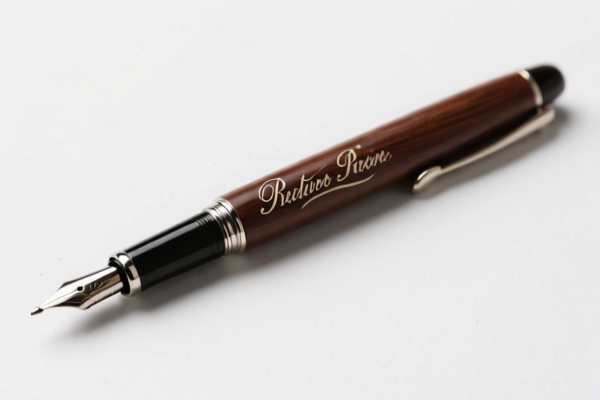

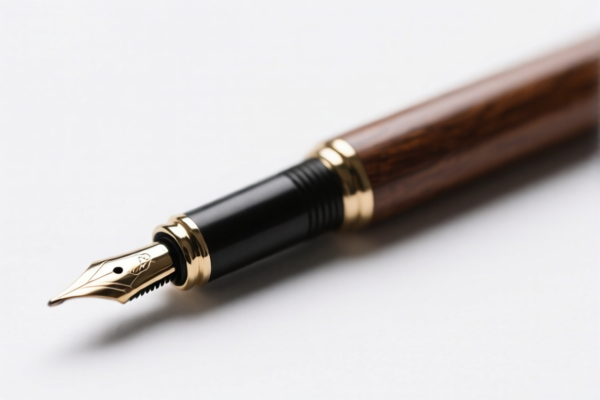
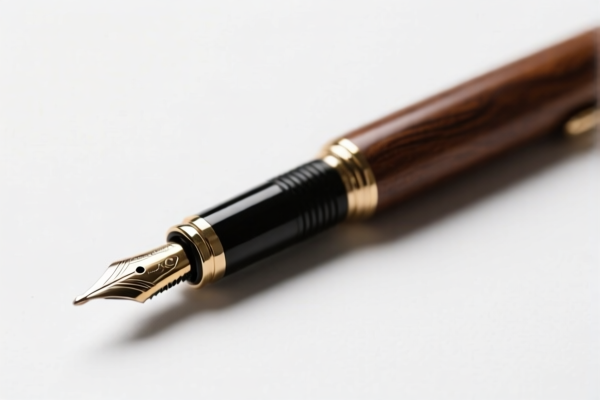
AI Analysis
🖊️ Ink Absorbing Pen (吸墨笔)
🌐 HS Code Reference & Customs Clearance Guide | 2026 Latest Tariff Analysis | Professional Compliance Strategy
📌 I. Product Definition & Classification: What Exactly is an "Ink Absorbing Pen"?
The "Ink Absorbing Pen" is a niche writing or artistic tool primarily designed to draw up liquid ink via capillary action or vacuum pressure. In international trade, its classification depends heavily on its primary function and physical form. It is not a standard disposable ballpoint but rather a specialized instrument often used for calligraphy, scientific diagramming, or artistic rendering.
There are two main interpretations in the HS Code system: 1. The Pen Itself: If the item is the physical writing instrument (body + nib/mechanism) used for drawing or writing, it falls under Chapter 96 (Articles of Apparel, Accessories, etc.), specifically Heading 9608 (Ball-point pens, felt-tip pens and other pens; copying kits...). 2. The Refill/Component: If the item is purely a replaceable ink cartridge, nib assembly, or refill unit without the main body, it may be classified under subheadings for parts or accessories, or specific refill types.
⚠️ Critical Distinction:
- If it is a complete tool used for writing/drawing → Chapter 96 (Pens)
- If it is a replaceable ink component → Chapter 96 (Parts/Accessories)
- Material/Shape Conflict Check: Ensure the product is not classified as a medical suction device (Chapter 90) or a laboratory pipette (Chapter 90) if it is used for scientific sampling. However, if marketed as a "pen" for artistic/writing purposes, Chapter 96 prevails.
📦 II. HS Code Classification Details (2026 Latest Tariff Authority)
Based on the provided data, here are the specific HS Codes applicable to different forms of "Ink Absorbing Pens":
| HS Code | Product Description | Application Scenario | Key Characteristic |
|--------|--------------------------|--------------------------|
| 9608.60.00.00 | Ink-Absorbing Pen (Complete Tool) | General writing, calligraphy, artistic sketching | Function: Ink absorption & writing. Classified similarly to fountain pens/retracable pens. |
| 9608.99.20.00 | Refill/Ink Cartridge Assembly | Replacement units for the above pens | Function: Replaceable ink supply. Classified as pen components/refills. |
| 9608.30.00.31 | Drawing/Artistic Absorbing Pen | Professional artistic creation, technical drawing | Form: Pen shape. Used for liquid ink application in art. |
| 9608.30.00.39 | Other Absorbing Pens (Non-Specified) | Miscellaneous liquid ink tools not fitting 31 | Form: Pen shape. Used for absorbing liquids, no material conflict. |
🔍 Key Insight:
-9608.60.00.00is the most common classification for the complete pen itself, treating it as a specialized "ball-point or similar pen" variant.
-9608.99.20.00is strictly for refills/cartridges. Do not ship refills under the complete pen code.
-9608.30series applies if the pen is explicitly marketed for drawing/art rather than general writing.
💰 III. 2026 Latest Tariff Rate Breakdown (Detailed Tax Analysis)
✅ Applicable Country: United States (US)
✅ Origin: China (CN)
✅ Effective Date: Current tariffs apply based on the provided data structure.
All four HS codes listed above share the exact same tax structure in the provided dataset. This simplifies compliance but highlights the heavy burden on Chinese-origin stationery/art supplies.
🎯 1. Common Tax Structure for All Listed HS Codes (9608.60.00.00, 9608.99.20.00, 9608.30.00.31, 9608.30.00.39)
| Item | Content |
|---|---|
| Basic Tariff (MFN) | 0.4¢ each + 2.7% (Specific + Ad Valorem) |
| Section 301 Tariff | +7.5% (Retaliatory tariff on Chinese goods) |
| Section 122 Tariff | +10% (Specific provision for certain imports) |
| Total Effective Rate | Approx. 20.2% + 0.4¢ per unit |
| Tax Calculation | (CIF Value × 20.2%) + (0.4¢ × Number of Units) |
| De Minimis Eligibility | ❌ High Risk |
| Legal Authority Path | USITC:9608.XX.XX.XX → FOOTNOTE:301 → FOOTNOTE:122 |
📌 Explanation:
- Base Rate: The U.S. has a low base duty for pens (0.4 cents/unit + 2.7% ad valorem).
- Section 301 (7.5%): This is the standard retaliatory tariff applied to most Chinese consumer goods, including stationery.
- Section 122 (10%): This is a critical additional layer. Unlike Section 301 which is tariff-code specific, Section 122 can apply broadly to imports under certain national security or balance-of-payments justifications. Note: Ensure your customs broker verifies if Section 122 is currently active for this specific subheading, as tariff codes evolve.
- Total Burden: The combination results in a ~20%+ effective tax rate, significantly higher than non-China origins.
🛠️ IV. Customs Clearance Practical Advice (Real-World Pitfall Guide)
✅ 1. Required Documentation Checklist (Non-Negotiable)
| Document | Required | Description |
|---|---|---|
| ✅ Product Specification Sheet | ✔️ | Must clearly state: "Ink Absorbing Pen" for writing/drawing, NOT "lab suction device". |
| ✅ Commercial Invoice | ✔️ | Must list HS Code precisely (e.g., 9608.60.00.00). Value must be accurate to avoid audits. |
| ✅ Product Photos | ✔️ | Show the pen and any refills separately if sold as a set. Include nib detail. |
| ✅ Material Declaration | ✔️ | Confirm no restricted materials (e.g., specific inks with hazardous chemicals). |
| ✅ Origin Certificate (CO) | ✔️ | Critical for Section 301 calculation. If not China-origin, rates drop significantly. |
| ✅ Packaging List | ✔️ | Clearly distinguish between pens (9608.60) and refills (9608.99) if shipped together. |
✅ 2. Declaration Best Practices (Key Mantra)
🔥 "Function Defines Code, Refill ≠ Pen, Origin Defines Tax!"
| Scenario | Correct Declaration | Wrong Action | Consequence |
|---|---|---|---|
| Complete Pen | HS: 9608.60.00.00 |
Misdeclare as "Art Supply" generic | Potential misclassification penalty |
| Refill Only | HS: 9608.99.20.00 |
Declare as "Pen" (9608.60) | Overpaying tariff on small item |
| Mixed Shipment | Split into two lines: 9608.60 (Pen) + 9608.99 (Refill) | Lump sum under one code | Customs audit, delay, or reclassification |
| Non-China Origin | Provide CO to claim exemption from Section 301 | Assume same tax rate | Missed savings! |
✅ 3. Special Considerations
| Situation | Handling Advice |
|---|---|
| Artistic Kits | If sold as a "Calligraphy Set" with pen + ink bottle + brush, the pen is still 9608.60. The ink bottle may be 3215.90. Separate items in invoice! |
| Liquid Ink | Ensure the ink is non-hazardous. If flammable or toxic, additional hazmat declarations are needed, which can delay clearance. |
| Section 122 Verification | URGENT: Confirm with your broker if Section 122 tariffs are currently enforced for HS 9608. This 10% layer is volatile and policy-dependent. |
🌍 V. Global Market Comparison (2026 Perspective)
| Country/Region | Recommended HS Code | Est. Tariff (China Origin) | Key Certification | Remarks |
|---|---|---|---|---|
| 🇺🇸 USA | 9608.60.00.00 |
~20.2% + 0.4¢ | None standard | High Tax Due to 301/122 |
| 🇨🇳 China | 9608.60.00.00 |
~6-9% | CCC (if applicable) | No retaliatory tariffs |
| 🇪🇺 EU | 9608.60.00 |
~2.5% - 4.5% | CE (if electrical, unlikely) | Lower base rate, no Section 301 |
| 🇬🇧 UK | 9608.60.00 |
~2.5% - 4.5% | UKCA | Post-Brexit rules apply |
📌 Conclusion:
- USA is the most expensive market due to layered tariffs (Base + 301 + 122).
- EU/UK are more cost-effective for Chinese-made pens, with significantly lower total duty burdens.
- Mitigation Strategy: If targeting the US, consider transshipment (if legal) or sourcing from Vietnam/Thailand to avoid Section 301, but beware of US Customs' anti-circumvention checks.
📌 VI. Common Errors & Pitfall Guide (Blood-Teach Lessons)
❌ Error 1: Declaring Refills as Complete Pens (9608.60.00.00)
👉 Result: You pay the "each" fee (0.4¢) and potentially higher ad valorem rates on cheap refills. Worse, it triggers a mismatch in inventory tracking.
✅ Fix: Always use 9608.99.20.00 for refills/cartridges.
❌ Error 2: Ignoring Section 122 Tariff
👉 Result: Underpayment of 10%. Customs issues a Bill of Taxation + late fees.
✅ Fix: Verify Section 122 applicability with your customs broker for every shipment.
❌ Error 3: Vague Description: "Writing Tool"
👉 Result: Customs officer may classify it under a higher-risk or different category.
✅ Fix: Use precise description: "Ink-Absorbing Fountain Pen for Calligraphy, Plastic Body, Nib Material: Stainless Steel"
❌ Error 4: Packing Refills with Pens in the Same Box Without Separate Line Items
👉 Result: Customs may reclassify the entire box to the highest-tariff or most complex code.
✅ Fix: If possible, ship separately. If together, clearly itemize on the commercial invoice with separate HS Codes.
🎯 VII. Conclusion: Professional Declaration, Cost Optimization
🎯 Remember the Mantra:
🔹 "Pen is 9608.60, Refill is 9608.99"
🔹 "China Origin? Expect 301 + 122"
🔹 "Separate Items, Save Money, Avoid Delays!"
📌 Pro Tip:
If your volume is high, consider applying for a Section 301 Exclusion (if still available/relevant) or explore Bonded Warehouse strategies to defer duty payments until the goods are sold or distributed within the US.
📣 Immediate Action:
📞 Consult your Customs Broker: Confirm if Section 122 tariffs are active for HS 9608 in the current fiscal year.
📦 Prepare Accurate Invoices: Ensure separate line items for pens and refills.
🚀 Optimize Supply Chain: Evaluate non-China sourcing options if the 20%+ US duty erodes your margin.
✨ Professional Customs Compliance Starts with Precise Classification!
💼 Every Cent Saved is Pure Profit!
Customer Reviews
About HS Code Classification
The Harmonized System (HS) is an internationally standardized nomenclature developed by the World Customs Organization (WCO) to classify traded products. Over 200 countries use the HS system as the basis for customs tariffs, trade statistics, and import/export regulations.
Each HS code follows a hierarchical structure:
- Chapter (2 digits) — Broad category of goods (e.g., Chapter 84: Machinery and Mechanical Appliances)
- Heading (4 digits) — More specific grouping within the chapter
- Subheading (6 digits) — Internationally standardized breakdown, used by all WCO member countries
- National subdivisions (8-10 digits) — Country-specific extensions for further classification, such as US HTSUS 10-digit codes
Correct HS code classification is essential for smooth customs clearance, accurate duty payment, and compliance with trade regulations. Misclassification can lead to customs delays, overpayment of duties, or penalties.
When importing from CN to US, the applicable tariff rates may include:
- Most-Favored-Nation (MFN) rate — The standard duty rate applied to WTO members
- General rate — Applied to countries without trade agreements
- Trade remedy duties — Additional tariffs such as Section 301 (anti-dumping), Section 232 (national security), or countervailing duties
The information provided on this page is for reference purposes only. For official classification, please consult with your local customs authority or a licensed customs broker.