Inkjet Coding Machine
CN → US| HS Code | Tariff Rate | Origin | Destination | Doc |
|---|---|---|---|---|
| 8443321040 | 17.5% | CN | US | Official Doc |
| 8471601050 | 35.0% | CN | US | Official Doc |
| 8471609050 | 35.0% | CN | US | Official Doc |
| 8485909000 | 35.0% | CN | US | Official Doc |
| 8443321040 | 17.5% | CN | US | Official Doc |
Product Images
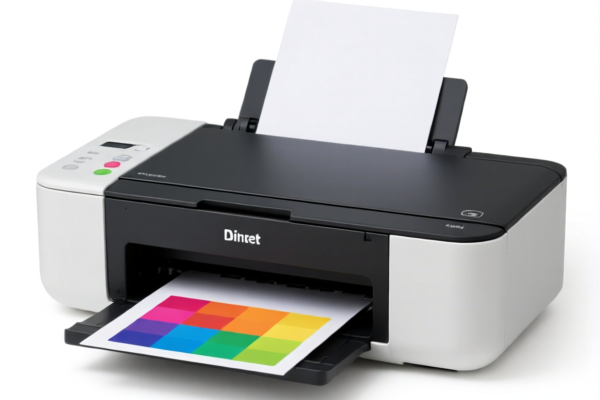
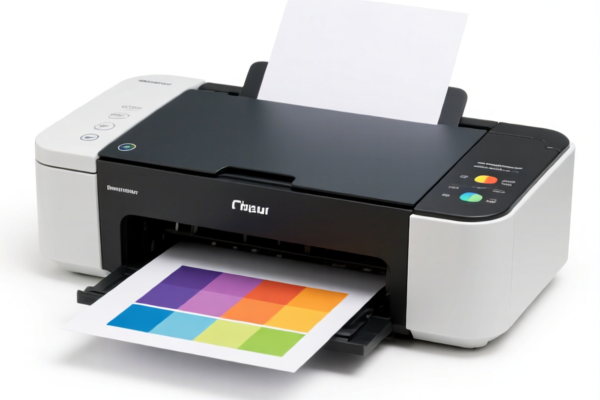
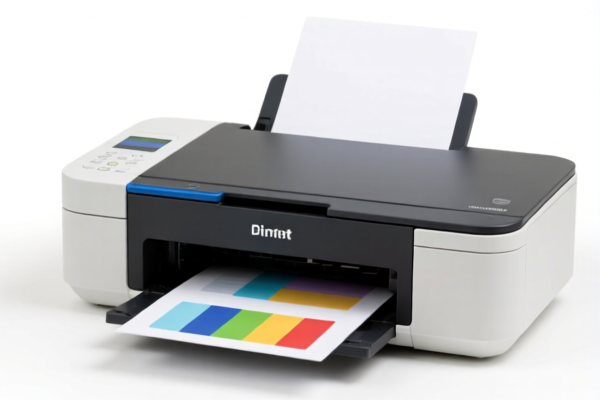
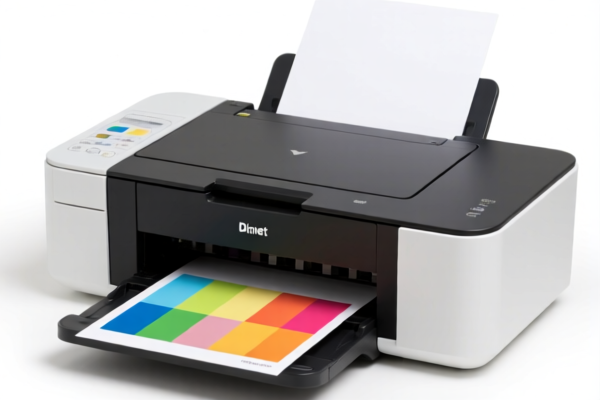
AI Analysis
🖨️ Inkjet Coding Machine (Industrial Inkjet Printers)
🌐 HS Code Reference & Customs Clearance Guide | 2026 Latest Tariff Analysis | Professional Strategy
📌 I. Product Definition & Classification: Do You Really Understand "Inkjet Coding"?
Inkjet Coding Machines are industrial devices primarily used for printing dates, batch numbers, barcodes, and logos on production lines (food, beverages, pharmaceuticals, electronics). In international trade, their classification hinges on two critical factors: Technology (Inkjet) and Function (Standalone Printing Unit vs. PC Peripheral).
1. Standalone Industrial Coding Machines:
Designed for autonomous operation on production lines, utilizing piezoelectric or thermal inkjet technology. They are not merely peripherals of a computer but independent processing units for marking.
2. Office/Computer Peripherals:
Consumer-grade inkjet printers connected to PCs for document output.
⚠️ Critical Distinction Point:
- If the device is an industrial coding machine (often with external ink reservoirs, industrial chassis, and specific coding software), it generally falls under 8443.32.
- If it is marketed strictly as a printer unit for Automatic Data Processing (ADP) machines (connecting directly to a computer as an output device), it falls under 8471.60.
- Key Question: Is it a "Coding Machine" (industrial marking) or a "Printer" (document output)?
📦 II. HS Code Classification Details (2026 Latest Tariff Authority Mapping)
Based on the provided data, here are the applicable HS Codes for "Inkjet Coding Machine" scenarios:
| HS Code | Product Description | Application Scenario | Key Feature |
|---|---|---|---|
8443.32.10.40 |
Inkjet printers and office printers; matches inkjet technical characteristics and printer unit usage. | Industrial coding machines, standalone inkjet coders, label printers. | Primary Match: Industrial coding often treated here due to "inkjet technical characteristics." |
8471.60.10.50 |
Inkjet printers as output units for Automatic Data Processing (ADP) machines. | Consumer/Office printers connected to PCs. | Treats the printer as a PC peripheral (Input/Output Unit). |
8471.60.90.50 |
Inkjet printers as output components for ADP machines. | Similar to above, broader category for output parts. | Treats the printer as a generic ADP output component. |
8485.90.90.00 |
Metal print nozzles as parts for Additive Manufacturing Equipment. | Specific Part Only: Metal nozzles intended for 3D printing/additive manufacturing. | NOT a complete machine. Only applies to specific spare parts for additive manufacturing. |
🔍 Important Note:
- For most Industrial Inkjet Coding Machines (e.g., Markem-Imaje,Videojet, Domino style),8443.32.10.40is the most technically accurate classification because it captures the "inkjet technical characteristics" and "printer unit usage" independent of a computer.
- Misclassifying an industrial coder as a standard PC printer (8471.60) can lead to audits, as the duty implications differ significantly due to additional tariffs.
-8485.90.90.00is only for the metal nozzles themselves if used in additive manufacturing contexts, not for the whole machine.
💰 III. 2026 Latest Tariff Rate Breakdown (Detailed Tax Clauses)
✅ Applicable Country: United States (US)
✅ Origin: China (CN)
✅ Effective Time: 2025/2026 (Current Trade Policy)
🎯 1. 8443.32.10.40 —— Inkjet Printers / Industrial Coding Machines (Best Fit)
| Item | Details |
|---|---|
| Base Tariff | 0.0% (Most Favored Nation rate) |
| Section 301 Surcharge | +7.5% (List 4B products) |
| Section 122 Tariff | +10.0% (Specific provision for certain Chinese goods) |
| Total Effective Rate | 17.5% |
| Tax Calculation | CIF Value × 17.5% |
| De Minimis Exemption | ❌ Not Eligible (Under current enforcement) |
| Legal Basis Path | HTSUS:8443.32.10.40 → Section 301 (7.5%) → Section 122 (10%) |
📌 Explanation:
- This is the most favorable classification for industrial coding machines among the options provided.
- The "Section 301" tariff is the standard US-China trade war surcharge.
- The "Section 122" tariff is an additional specific levy.
- Total 17.5% is significantly lower than the 35% rate for ADP peripherals.
🎯 2. 8471.60.10.50 & 8471.60.90.50 —— Inkjet Printers as ADP Output Units
| Item | Details |
|---|---|
| Base Tariff | 0.0% |
| Section 301 Surcharge | +25.0% (List 4A/4B products for ADP peripherals) |
| Section 122 Tariff | +10.0% |
| Total Effective Rate | 35.0% |
| Tax Calculation | CIF Value × 35.0% |
| De Minimis Exemption | ❌ Not Eligible |
| Legal Basis Path | HTSUS:8471.60.x0.x0 → Section 301 (25%) → Section 122 (10%) |
📌 Explanation:
- If Customs determines your "Coding Machine" is functionally equivalent to a PC Printer (i.e., it lacks independent processing capabilities for industrial tasks), it may be classified here.
- Warning: This results in a 35% tax rate, which is double the rate of8443.32.10.40.
- To avoid this, emphasize the industrial automation, standalone operation, and specific coding application in your commercial invoice and technical specs.
🎯 3. 8485.90.90.00 —— Metal Print Nozzles (Additive Manufacturing Parts)
| Item | Details |
|---|---|
| Base Tariff | 0.0% |
| Section 301 Surcharge | +25.0% |
| Section 122 Tariff | +10.0% |
| Total Effective Rate | 35.0% |
| Applicability | Parts Only: Metal nozzles for additive manufacturing. |
📌 Explanation:
- This code is not for the whole machine.
- If you are shipping spare metal nozzles for 3D printers, this code applies.
- Do not use this for complete coding machines.
🛠️ IV. Customs Clearance Practical Advice (Pitfall Avoidance)
✅ 1. Documentation Checklist (Non-Negotiable)
| Document | Must Provide | Purpose |
|---|---|---|
| ✅ Product Spec Sheet | ✔️ | Must detail: Printing technology (Inkjet), Resolution, Speed, Connectivity (Ethernet/USB), and Intended Use (Industrial Coding vs. Document Printing). |
| ✅ Technical Diagram | ✔️ | Show internal components. Highlight if it has an independent CPU/controller (supports 8443) or is purely a printer engine (risks 8471). |
| ✅ Photos (Label/Nameplate) | ✔️ | Clear view of model number, input voltage, and any industrial certifications (CE, UL). |
| ✅ Commercial Invoice | ✔️ | Description should read: "Industrial Inkjet Coding Machine for Production Line Marking" rather than just "Printer." |
| ✅ Packing List | ✔️ | List all accessories (ink cartridges, cables, nozzles). Ensure no split shipment that implies separate components. |
✅ 2. Declaration Tips (Key Mantra)
🔥 "Industrial Coder, Independent Control, Avoid ADP Pitfall!"
| Scenario | Correct Declaration | Wrong Declaration |
|---|---|---|
| Industrial Coding Machine | 8443.32.10.40Desc: "Industrial Inkjet Coding System" |
"Printer for Computer" → Risk: 8471.60 (35%) |
| Office Inkjet Printer | 8471.60.10.50 |
"Industrial Machine" → Risk: Misclassification Audit |
| Spare Nozzles (Additive) | 8485.90.90.00 |
"Complete Machine" → Risk: Severe Penalty |
💡 Strategy: In the invoice description, use terms like "Production Line Coding", "Batch Marking", and "Industrial Automation Equipment" to steer customs toward
8443.32.10.40. Avoid terms like "Document Printing" or "Computer Peripheral."
✅ 3. Special Circumstances
| Situation | Advice |
|---|---|
| Hybrid Devices | If the machine can also print documents, declare the primary function (Industrial Coding) to secure the 17.5% rate. |
| Complete Sets | If shipping with computers, declare separately. Do not bundle a coding machine with a PC in one HS Code unless explicitly allowed. |
| Spare Parts | Ensure nozzles are declared as "Parts" (8485.90.90.00) if for additive manufacturing, or "Printer Parts" if for 8443 printers. |
🌍 V. Global Market Comparison (2026)
| Country/Region | Recommended HS Code | Tariff Rate (China Origin) | Notes |
|---|---|---|---|
| 🇺🇸 USA | 8443.32.10.40 |
17.5% | Best rate for industrial coders. Avoid 8471 (35%). |
| 🇪🇺 EU | 8443.32 |
0% - 4% | Generally low tariffs for inkjet tech. No Section 122/301 equivalent. |
| 🇨🇳 China | 8443.32 |
5% - 7% | Import tax for domestic use. |
| 🇬🇧 UK | 8443.32 |
0% | Post-Brexit rates often favorable for tech. |
📌 Conclusion:
- The USA is the only major market with significant punitive tariffs (301 + 122).
- Correct classification (8443.32.10.40) saves 17.5% in duties compared to misclassification as an ADP peripheral.
📌 VI. Common Errors & Pitfalls (Lessons Learned)
❌ Error 1: Calling an Industrial Coder a "Printer"
👉 Consequence: Customs may reclassify to 8471.60 → 35% Tax.
👉 Fix: Use "Coding Machine" or "Marking System" in description.
❌ Error 2: Missing Section 122 Tariff in Cost Calculation
👉 Consequence: Unexpected 10% charge at border.
👉 Fix: Always budget for Base + 301 + 122.
❌ Error 3: Shipping Nozzles as "Complete Machines"
👉 Consequence: Delayed clearance, need for re-invoicing.
👉 Fix: Clearly label as "Spare Parts" with specific HS for parts.
✅ Correct Declaration Example:
"Industrial Inkjet Coding Machine, Model XYZ, for marking production codes on packaging, standalone operation, Inkjet Technology"
🎯 VII. Conclusion: Precision Classification, Maximum Profit!
🎯 Remember the Mantra:
🔹 "Industrial Use = 8443 (17.5%)
🔹 "PC Peripheral = 8471 (35%)
🔹 "Parts Only = 8485 (35%)"
🔹 "Choose Wisely, Save 17.5%!"
📌 Pro Tip:
If your inkjet machine has advanced AI features or is marketed as a 3D printing nozzle system, verify if 8485.90.90.00 is applicable for parts, but never for the whole unit. For standard coding, stick to 8443.32.10.40.
📣 Immediate Action:
📞 Contact a licensed customs broker.
📤 Provide technical datasheets highlighting independent processing.
🚀 Secure the 17.5% rate. Avoid the 35% trap!
✨ Professional Clearance Starts with Accurate Classification!
💼 Every Percentage Point Counts in Global Trade!
Customer Reviews
About HS Code Classification
The Harmonized System (HS) is an internationally standardized nomenclature developed by the World Customs Organization (WCO) to classify traded products. Over 200 countries use the HS system as the basis for customs tariffs, trade statistics, and import/export regulations.
Each HS code follows a hierarchical structure:
- Chapter (2 digits) — Broad category of goods (e.g., Chapter 84: Machinery and Mechanical Appliances)
- Heading (4 digits) — More specific grouping within the chapter
- Subheading (6 digits) — Internationally standardized breakdown, used by all WCO member countries
- National subdivisions (8-10 digits) — Country-specific extensions for further classification, such as US HTSUS 10-digit codes
Correct HS code classification is essential for smooth customs clearance, accurate duty payment, and compliance with trade regulations. Misclassification can lead to customs delays, overpayment of duties, or penalties.
When importing from CN to US, the applicable tariff rates may include:
- Most-Favored-Nation (MFN) rate — The standard duty rate applied to WTO members
- General rate — Applied to countries without trade agreements
- Trade remedy duties — Additional tariffs such as Section 301 (anti-dumping), Section 232 (national security), or countervailing duties
The information provided on this page is for reference purposes only. For official classification, please consult with your local customs authority or a licensed customs broker.