Inkjet Printer Ink
CN → US| HS Code | Tariff Rate | Origin | Destination | Doc |
|---|---|---|---|---|
| 8471601050 | 35.0% | CN | US | Official Doc |
| 8443321040 | 17.5% | CN | US | Official Doc |
| 8471609050 | 35.0% | CN | US | Official Doc |
Product Images
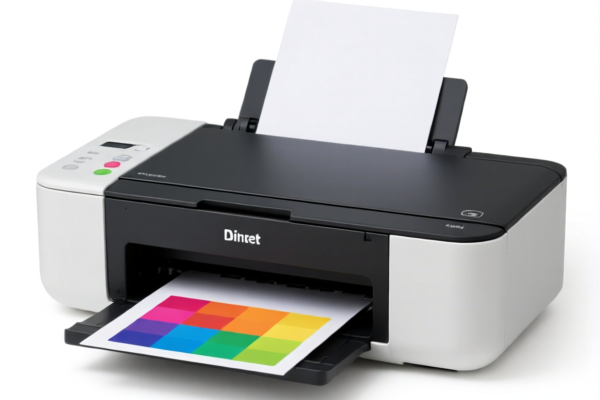
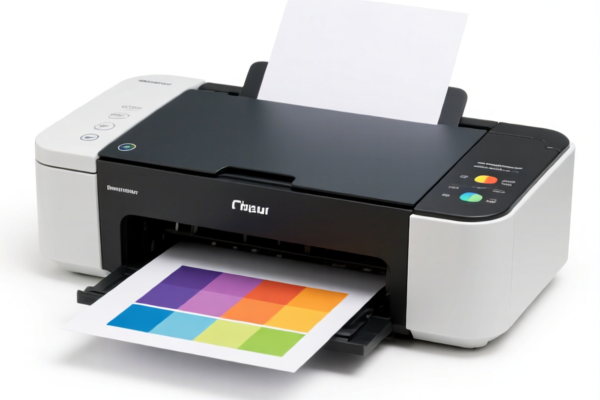
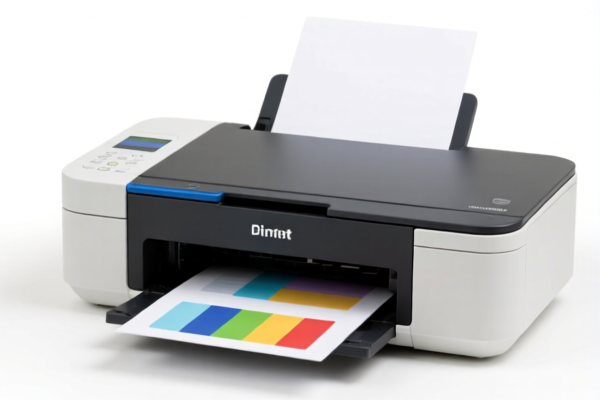
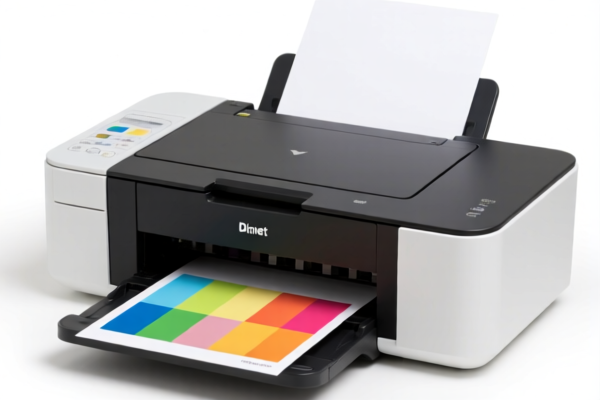
AI Analysis
🖨️ Inkjet Printer (Inkjet Printers)
🌐 HS Code Reference & Customs Clearance Guide | 2026 Latest Tariff Analysis | Professional Clearance Strategy
📌 I. Product Definition & Classification: What Exactly is an "Inkjet Printer"?
Inkjet printers are core output devices in modern digital office, AI computing, and industrial printing systems. In international trade, they are primarily classified under Chapter 84 (Nuclear reactors, boilers, machinery and mechanical appliances; parts thereof). The critical distinction lies in whether the device is considered a standalone peripheral of Automatic Data Processing (ADP) machines or a general-purpose printing unit.
Two Main Classification Paths: 1. Output Unit of ADP Machines (8471.60): If the printer is specifically designed as an output unit for computers or data processing systems (e.g., standard office USB/Network printers). 2. General Printing Apparatus (8443.32): If the printer is defined by its inkjet technology and printing function, potentially independent of a direct ADP link (e.g., industrial inkjet coders, or specific printer units).
⚠️ Key Distinction Point:
- If marketed as a "PC Peripheral" or "Computer Output Device" → Tends toward 8471.60
- If marketed primarily by its "Inkjet Printing Technology" and "Printing Unit" function → Tends toward 8443.32
- Note: Customs authorities often scrutinize this distinction heavily due to significant tariff differences.
📦 II. HS Code Classification Details (2026 Latest Tariff Authority Comparison)
| HS Code | Product Description | Applicable Scenario | Primary Function Basis |
|---|---|---|---|
8471.60.10.50 |
Output unit of automatic data processing machines; Inkjet printers | Office printers, PC peripherals | ✅ ADP Output Unit (Per Summary 1) |
8443.32.10.40 |
Printing unit using ink-jet technology | General inkjet printers, specialized printing units | ✅ Inkjet Technology Match (Per Summary 2) |
8471.60.90.50 |
Other output units for ADP machines (including inkjet) | General ADP output devices not specifically listed | ✅ ADP Output Unit (Per Summary 3) |
🔍 Important Reminder:
- 8471.60.10.50 and 8471.60.90.50 both classify the printer as an ADP output unit. The difference lies in the specific sub-category (10 vs 90), but both share the same high-risk tariff profile for Chinese origin.
- 8443.32.10.40 classifies based on the inkjet technology itself. This classification offers a lower total tax rate but requires strong evidence that the product fits the "printing unit" definition under Chapter 84, Heading 8443.
💰 III. 2026 Latest Tariff Rate Details (Including Surcharges & Policy Add-ons)
✅ Applicable Country: United States (US)
✅ Country of Origin: China (CN)
✅ Effective Date: From November 10, 2025 (including subsequent imports)
🎯 1. 8471.60.10.50 — Output Unit of ADP Machines (Inkjet)
| Item | Content |
|---|---|
| Base Tariff | 0.0% (ad valorem) |
| Section 301 Surcharge | +25.0% |
| Section 122 Tariff | +10.0% |
| Total Tax Rate | 35.0% |
| Tax Calculation | CIF Value × 35% |
| De Minimis Exemption | ❌ Not Applicable (Due to total tax > 0% and specific exclusions for Section 301/122 goods) |
| Legal Basis Path | Base: 0% → Sec 301: 25% → Sec 122: 10% → Total 35% |
📌 Explanation:
- This classification is treated as a high-tariff ADP peripheral.
- The 25% Section 301 tariff is the standard surcharge for Chinese IT peripherals.
- The 10% Section 122 tariff applies to specific industrial and office equipment from China.
- Combined Total: 35%. This is a high-cost category. Pre-calculation of landed cost is essential.
🎯 2. 8443.32.10.40 — Printing Unit Using Ink-Jet Technology
| Item | Content |
|---|---|
| Base Tariff | 0.0% (ad valorem) |
| Section 301 Surcharge | +7.5% |
| Section 122 Tariff | +10.0% |
| Total Tax Rate | 17.5% |
| Tax Calculation | CIF Value × 17.5% |
| De Minimis Exemption | ❌ Not Applicable |
| Legal Basis Path | Base: 0% → Sec 301: 7.5% → Sec 122: 10% → Total 17.5% |
📌 Note:
- This classification offers a significant cost advantage (35% vs 17.5%).
- The Section 301 rate is lower (7.5%) for this specific sub-category compared to the general ADP output unit.
- Risk: You must prove the product fits the "Inkjet Printing Unit" description. If customs re-classes it as8471.60, you will face a 17.5% tax difference plus penalties.
🎯 3. 8471.60.90.50 — Other ADP Output Units
| Item | Content |
|---|---|
| Base Tariff | 0.0% (ad valorem) |
| Section 301 Surcharge | +25.0% |
| Section 122 Tariff | +10.0% |
| Total Tax Rate | 35.0% |
| Tax Calculation | CIF Value × 35% |
| De Minimis Exemption | ❌ Not Applicable |
| Legal Basis Path | Base: 0% → Sec 301: 25% → Sec 122: 10% → Total 35% |
📌 Warning:
- This is a "catch-all" for ADP output units not specifically listed in 8471.60.10. It carries the same high tariff (35%) as 8471.60.10.50.
- Avoid this code unless your product clearly does not fit8471.60.10.50but is still an ADP output unit.
🛠️ IV. Customs Clearance Practical Advice (Battle-Tested Pitfall Avoidance)
✅ 1. Required Documentation Checklist (Non-negotiable)
| Document | Required | Description |
|---|---|---|
| ✅ Product Specification Sheet | ✔️ | Must explicitly state: "Inkjet Technology", "Printing Unit", "Output Device for ADP" |
| ✅ Product Photos (with Nameplate) | ✔️ | Show model number, brand, input/output ports |
| ✅ Commercial Invoice | ✔️ | Clearly describe as "Inkjet Printer" or "Printing Unit". Avoid vague terms like "Office Equipment" |
| ✅ Packing List | ✔️ | Detail contents to avoid "missing parts" queries |
| ✅ Origin Certificate (if applicable) | ✔️ | To verify Chinese origin (triggering Section 301/122) |
| ✅ Declaration of Function | ✔️ | Written statement confirming if it is an ADP output unit or standalone printing unit |
✅ 2. Declaration Tips (Key Mantra)
🔥 "Classify by Technology for Savings, Prove ADP Link for 8471!"
| Scenario | Correct Declaration | Wrong Practice |
|---|---|---|
| Standard Office Inkjet Printer | 8471.60.10.50 or 8471.60.90.50 (35%) |
Misdeclaring as 8443.32 (17.5%) → High Risk of Re-classification & Penalty |
| Industrial/Non-ADP Inkjet Printer | 8443.32.10.40 (17.5%) |
Misdeclaring as ADP output → Overpaying 17.5% unnecessarily |
| Printer + Scanner Combo | Still 8471.60 (if ADP output) or 8443.32 |
Splitting declaration → Complexity & Delays |
| Vague Description "Printer" | ❌ Never | Customs will likely choose the highest tariff code (8471) |
✅ 3. Special Situations
| Situation | Handling Advice |
|---|---|
| OEM Custom Printers | Provide design specs. If it lacks standard ADP interfaces (USB/Ethernet), argue for 8443.32 |
| All-in-One (Print/Scan/Copy) | If marketed as ADP output, it falls under 8471.60 (35%). If marketed as multifunction printing unit, try 8443.32 (17.5%) but be prepared to justify |
| Low-Volume Samples | Still subject to tariffs. No de minimis exemption for Section 301/122 goods |
| Components vs. Complete Unit | Do not ship "parts" to avoid full tariff. Ensure it is a "complete printing unit" for 8443.32 or "output unit" for 8471 |
🌍 V. Global Market Clearance Comparison (2026 Latest)
| Country/Region | Recommended HS Code | Tariff (China Origin) | Certification | Notes |
|---|---|---|---|---|
| 🇺🇸 USA | 8471.60.10.50 / 8443.32.10.40 |
35% (ADP) / 17.5% (Inkjet Unit) | No special cert required for HS | Section 301 & 122 apply. High cost. |
| 🇨🇳 China | 8471.60 / 8443.32 |
0% - 5% | CCC (if applicable) | No Section 301/122 |
| 🇪🇺 EU | 8471.60 / 8443.32 |
0% - 1.7% | CE, RoHS | No major surcharges |
| 🇯🇵 Japan | 8471.60 / 8443.32 |
0% - 3% | PSE (if electrical) | Low tariffs |
📌 Conclusion:
- USA is the most challenging market due to Section 301 (25% or 7.5%) and Section 122 (10%) tariffs.
- Choosing the right HS Code (8443.32.10.40vs8471.60) can save up to 17.5% in duties.
- Evidence is Key: To qualify for 17.5%, you must prove it is a "Printing Unit" using inkjet tech, not just an "ADP Output".
📌 VI. Common Errors & Pitfall Guide (Lessons Learned)
❌ Error 1: Using "Printer" as the product name without technical details
👉 Consequence: Customs defaults to 8471.60 (35%) because it assumes ADP output.
✅ Fix: Use "Inkjet Printing Unit, Model XYZ" and highlight "Inkjet Technology".
❌ Error 2: Claiming 17.5% tariff for a standard PC USB Printer
👉 Consequence: Audit reveals it’s an ADP output → Back-taxes + Penalties (17.5% difference).
✅ Fix: Only use 8443.32 if the printer is not primarily an ADP peripheral (e.g., industrial coders, standalone units).
❌ Error 3: Ignoring Section 122 Tariff
👉 Consequence: Forgetting the additional 10% on top of Section 301.
✅ Fix: Always add 10% to your cost calculation for Section 122 goods.
❌ Error 4: Splitting Declaration (Printer + Ink)
👉 Consequence: Ink may have different tariffs/sections, leading to complex scrutiny.
✅ Fix: Declare the printer as a complete unit. Ship ink separately if necessary, but be aware of different codes.
🎯 VII. Conclusion: Smart Classification Saves Money
🎯 Key Takeaway:
🔹 35% vs 17.5%: The difference between
8471.60and8443.32is 17.5% on the CIF value.
🔹 Justify Your Code: To get 17.5%, you must provide evidence that the product is an "Inkjet Printing Unit" (Chapter 84, Heading 8443) and not just an "ADP Output Unit" (Chapter 84, Heading 8471).
🔹 Prepare for Audit: Keep all technical datasheets and marketing materials that support the "Inkjet Technology" classification.
📌 Pro Tip:
If your printer is a standard home/office model connected to a PC, accept the 35% tariff (8471.60) unless you have a strong legal opinion supporting 8443.32. Misclassification can lead to seizures.
For industrial or specialized inkjet units, aggressively pursue 8443.32.10.40 to save 17.5%.
📣 Action Required:
📞 Consult a customs broker with technical expertise to review your product specs.
📄 Prepare a Technical Data Sheet highlighting "Inkjet" and "Printing Unit" functions.
🚀 Optimize your tariff classification to protect your profit margins!
✨ Precision Classification, Profitable Trade!
💼 Don’t let a 17.5% mistake eat your margins!
Customer Reviews
About HS Code Classification
The Harmonized System (HS) is an internationally standardized nomenclature developed by the World Customs Organization (WCO) to classify traded products. Over 200 countries use the HS system as the basis for customs tariffs, trade statistics, and import/export regulations.
Each HS code follows a hierarchical structure:
- Chapter (2 digits) — Broad category of goods (e.g., Chapter 84: Machinery and Mechanical Appliances)
- Heading (4 digits) — More specific grouping within the chapter
- Subheading (6 digits) — Internationally standardized breakdown, used by all WCO member countries
- National subdivisions (8-10 digits) — Country-specific extensions for further classification, such as US HTSUS 10-digit codes
Correct HS code classification is essential for smooth customs clearance, accurate duty payment, and compliance with trade regulations. Misclassification can lead to customs delays, overpayment of duties, or penalties.
When importing from CN to US, the applicable tariff rates may include:
- Most-Favored-Nation (MFN) rate — The standard duty rate applied to WTO members
- General rate — Applied to countries without trade agreements
- Trade remedy duties — Additional tariffs such as Section 301 (anti-dumping), Section 232 (national security), or countervailing duties
The information provided on this page is for reference purposes only. For official classification, please consult with your local customs authority or a licensed customs broker.