Inkjet office printer
CN → US| HS Code | Tariff Rate | Origin | Destination | Doc |
|---|---|---|---|---|
| 8443321040 | 17.5% | CN | US | Official Doc |
| 8471601050 | 35.0% | CN | US | Official Doc |
| 8471609050 | 35.0% | CN | US | Official Doc |
| 8471601050 | 35.0% | CN | US | Official Doc |
| 8443321040 | 17.5% | CN | US | Official Doc |
Product Images
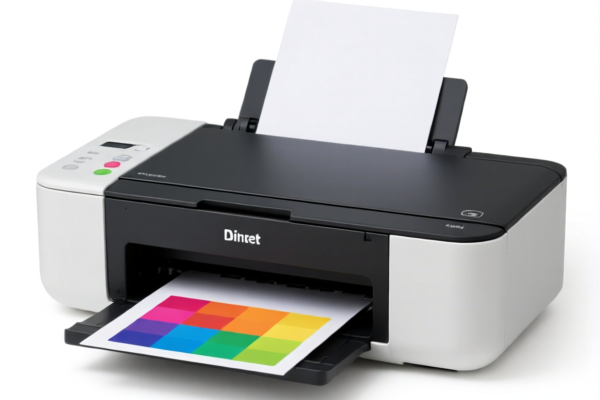
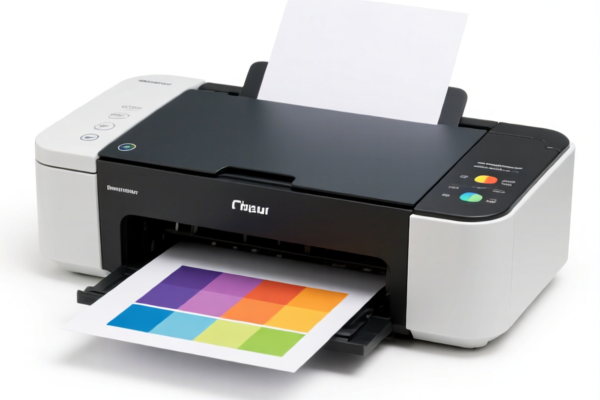
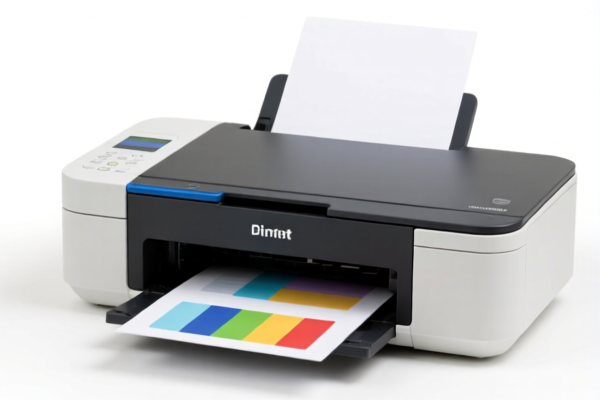
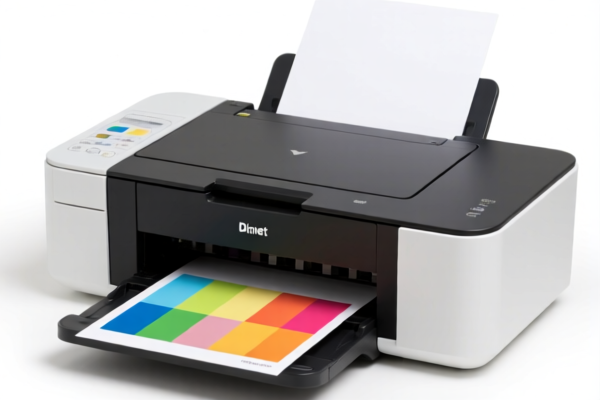
AI Analysis
🖨️ Inkjet Office Printer: HS Code Classification & Taxation Guide 2026
🌐 HS Code Reference & Customs Clearance Strategy | 2026 Latest Tariff Analysis | Professional Compliance Guide
📌 I. Product Definition & Classification: Which "Inkjet Printer" Are You Declaring?
An "Inkjet Office Printer" is a versatile device, but its HS Code classification depends entirely on its functional design in international trade. In the US Customs Tariff (HTSUS), inkjet printers are split into two distinct categories:
- Specifically Designed Office Printers (8443.32.10.40):
Devices explicitly designed for office documentation, matching the technical characteristics of inkjet printing and serving as a dedicated printer unit. - Output Units of Automatic Data Processing Machines (8471.60.10.50 / 8471.60.90.50):
Devices classified as output components/peripherals for computers (ADP equipment), regardless of whether they are single-function or multi-function devices integrated into a computer system.
⚠️ Critical Distinction Point:
- If the device is marketed and designed as a standalone "Office Printer" with specific inkjet features → 8443.32.10.40
- If the device is marketed as a "Computer Output Unit" or "Peripheral" for data processing → 8471.60.10.50 or 8471.60.90.50
📦 II. HS Code Classification Matrix (2026 Latest Tariff Authority)
| HS Code | Product Description (from Data) | Application Scenario | Tax Impact |
|---|---|---|---|
8443.32.10.40 |
Inkjet Office Printer matching inkjet technical characteristics and printer unit purpose | Standalone office printer, dedicated document output device | 17.5% |
8471.60.10.50 |
Inkjet Office Printer as output unit of automatic data processing equipment | Computer peripheral, multi-function printer connected to PC | 35.0% |
8471.60.90.50 |
Inkjet Office Printer belonging to output parts of automatic data processing equipment | Other ADP output components, general printer peripherals | 35.0% |
🔍 Key Reminder:
- 8443.32.10.40 applies when the printer is defined by its technology (inkjet) and dedicated purpose (office printing).
- 8471.60.x0.50 applies when the printer is defined by its role as a computer peripheral/output device.
- Misclassification Risk: Declaring a dedicated office printer as a "computer peripheral" triggers a 2x higher tax rate (17.5% vs. 35.0%).
💰 III. 2026 Tariff Rate Breakdown (Detailed Tax Clauses)
✅ Applicable Country: United States (US)
✅ Origin: China (CN)
✅ Effective Date: 2025-2026 (Subject to ongoing trade policies)
🎯 1. 8443.32.10.40 — Dedicated Inkjet Office Printer
| Item | Detail |
|---|---|
| Base Tariff | 0.0% (Ad Valorem) |
| Section 301 Surcharge | 7.5% |
| Section 122 Tariff | 10% |
| Total Effective Tax Rate | 17.5% |
| Tax Calculation | CIF Value × 17.5% |
| De Minimis Exemption | ❌ Not Applicable (High-value goods usually excluded, verify threshold) |
| Legal Basis Path | HTSUS:8443.32.10.40 → Section 301: 7.5% → Section 122: 10% |
📌 Explanation:
- This is the lower-cost classification for dedicated inkjet printers.
- The 7.5% Section 301 rate is specific to certain office machinery from China.
- The 10% Section 122 is an additional tariff on specific imported goods.
🎯 2. 8471.60.10.50 — Output Unit of ADP Equipment
| Item | Detail |
|---|---|
| Base Tariff | 0.0% (Ad Valorem) |
| Section 301 Surcharge | 25.0% |
| Section 122 Tariff | 10% |
| Total Effective Tax Rate | 35.0% |
| Tax Calculation | CIF Value × 35.0% |
| De Minimis Exemption | ❌ Not Applicable |
| Legal Basis Path | HTSUS:8471.60.10.50 → Section 301: 25% → Section 122: 10% |
📌 Explanation:
- Computer peripherals (including printers classified as ADP output units) face a higher Section 301 surcharge of 25% (vs. 7.5% for dedicated printers).
- Total tax is double that of the dedicated printer classification.
🎯 3. 8471.60.90.50 — Other ADP Output Parts
| Item | Detail |
|---|---|
| Base Tariff | 0.0% (Ad Valorem) |
| Section 301 Surcharge | 25.0% |
| Section 122 Tariff | 10% |
| Total Effective Tax Rate | 35.0% |
| Tax Calculation | CIF Value × 35.0% |
| De Minimis Exemption | ❌ Not Applicable |
| Legal Basis Path | HTSUS:8471.60.90.50 → Section 301: 25% → Section 122: 10% |
📌 Explanation:
- Covers other output components not specifically listed under 8471.60.10.50.
- Same high tax burden due to the 25% Section 301 rate.
🛠️ IV. Customs Clearance Practical Advice (Avoid Pitfalls)
✅ 1. Preparation Checklist (Mandatory Documents)
| Document | Required? | Purpose |
|---|---|---|
| ✅ Product Specification Sheet | ✔️ | Must clearly state: "Inkjet Technology," "Office Use," or "Computer Peripheral" |
| ✅ Marketing Materials/Brochure | ✔️ | To prove intended use (Office vs. ADP Peripheral) |
| ✅ Technical Diagrams | ✔️ | Shows connection ports (USB/Ethernet) to justify ADP classification if needed |
| ✅ Commercial Invoice | ✔️ | Must match the declared HS Code description exactly |
| ✅ Packing List | ✔️ | Itemize printer, ink cartridges, power cord separately if applicable |
| ✅ Certificate of Origin | ✔️ | For verifying China origin and applying specific tariffs |
✅ 2. Classification Strategy (Key Rules)
🔥 "Office Purpose = 17.5%, ADP Purpose = 35.0%! Choose Wisely!"
| Scenario | Correct Classification | Wrong Classification | Consequence |
|---|---|---|---|
| Standalone Inkjet Printer for Office Docs | 8443.32.10.40 |
8471.60.10.50 |
Overpay 17.5% extra tax |
| Printer explicitly sold as "Computer Peripheral" | 8471.60.10.50 |
8443.32.10.40 |
Underpayment Risk (Penalties + Back Taxes) |
| Multi-function Device (Scan/Print/Copy) | Depends on Primary Function | Mismatched Description | Customs Hold for review |
✅ 3. Special Case Handling
| Situation | Handling Advice |
|---|---|
| Multi-function Printer (MFP) | If primary function is printing, argue for 8443.32.10.40 based on "printer unit purpose." If integrated tightly with PC, consider 8471.60.x0.50. |
| Labeling & Packaging | Ensure packaging clearly states "Inkjet Printer for Office Use" to support 8443.32.10.40. Avoid terms like "Computer Output Unit" unless intended. |
| Ink Cartridges | Declared separately under 4841.00 or 4841.10. Do not bundle into printer value unless shipped as a set. |
| Software Bundled | If software is essential for printer function, it may be included in the value. If standalone, declare separately. |
🌍 V. Global Market Comparison (2026 Update)
| Country/Region | Recommended HS Code | Tariff Rate (China Origin) | Notes |
|---|---|---|---|
| 🇺🇸 USA | 8443.32.10.40 |
17.5% (Base 0% + 301 7.5% + 122 10%) | Lowest US tariff for dedicated printers |
| 🇺🇸 USA | 8471.60.10.50 |
35.0% (Base 0% + 301 25% + 122 10%) | High tax for ADP peripherals |
| 🇨🇳 China | 8443.32.10.40 |
~5-8% | Standard import duty, no Section 301 |
| 🇪🇺 EU | 8443.32.90 |
0% (Most FTA eligible) | CE Marking required |
| 🇬🇧 UK | 8443.32.90 |
0% (Post-Brexit FTAs) | UKCA Marking required |
📌 Conclusion:
- The USA has the most complex tariff structure for printers due to Section 301 and 122 tariffs.
- Classification accuracy saves 17.5% in tax for dedicated office printers.
- For other markets, focus on CE/UKCA/RoHS compliance rather than tariff optimization.
📌 VI. Common Mistakes & Pitfalls (Lessons Learned)
❌ Mistake 1: Using "Printer" without specifying "Inkjet" or "Office"
👉 Result: Customs may default to higher-duty categories or request additional documentation.
❌ Mistake 2: Classifying a standalone office printer as "ADP Output Unit" (8471.60)
👉 Result: Pay 35% instead of 17.5% unnecessarily.
❌ Mistake 3: Ignoring Section 122 Tariff (10%)
👉 Result: Under-declaration leads to penalties and interest.
❌ Mistake 4: Bundling ink cartridges with printer value without separation
👉 Result: Incorrect valuation, potential rejection of shipment.
✅ Correct Approach:
"Declare as 'Inkjet Office Printer' with clear technical specs to support HS 8443.32.10.40 and 17.5% total duty."
🎯 VII. Conclusion: Precision in Classification, Maximization in Savings!
🎯 Key Takeaway:
🔹 Dedicated Office Printer = 17.5% Total Tax (
8443.32.10.40)
🔹 ADP Peripheral Printer = 35.0% Total Tax (8471.60.10.50/8471.60.90.50)
🔹 Always align product description with intended use and marketing materials.
📌 Pro Tip:
- Apply for an ACE Ruling (Advance Custom Ruling) from US CBP if unsure about classification.
- Keep product datasheets and marketing brochures ready for customs audits.
- For high-volume imports, consider supply chain optimization to leverage lower-tariff origins if possible.
📣 Act Now:
📞 Engage a licensed customs broker + Provide product specs + Apply for pre-classification
🚀 Optimize your tax burden, ensure smooth clearance, and maximize profit margins!
✨ Customs Compliance: The Difference Between Cost and Profit!
💼 Your Tariff Rate is Determined by Your Documentation Accuracy!
Customer Reviews
About HS Code Classification
The Harmonized System (HS) is an internationally standardized nomenclature developed by the World Customs Organization (WCO) to classify traded products. Over 200 countries use the HS system as the basis for customs tariffs, trade statistics, and import/export regulations.
Each HS code follows a hierarchical structure:
- Chapter (2 digits) — Broad category of goods (e.g., Chapter 84: Machinery and Mechanical Appliances)
- Heading (4 digits) — More specific grouping within the chapter
- Subheading (6 digits) — Internationally standardized breakdown, used by all WCO member countries
- National subdivisions (8-10 digits) — Country-specific extensions for further classification, such as US HTSUS 10-digit codes
Correct HS code classification is essential for smooth customs clearance, accurate duty payment, and compliance with trade regulations. Misclassification can lead to customs delays, overpayment of duties, or penalties.
When importing from CN to US, the applicable tariff rates may include:
- Most-Favored-Nation (MFN) rate — The standard duty rate applied to WTO members
- General rate — Applied to countries without trade agreements
- Trade remedy duties — Additional tariffs such as Section 301 (anti-dumping), Section 232 (national security), or countervailing duties
The information provided on this page is for reference purposes only. For official classification, please consult with your local customs authority or a licensed customs broker.