Inkless Pen Top
CN → US| HS Code | Tariff Rate | Origin | Destination | Doc |
|---|---|---|---|---|
| 3926901000 | 20.9% | CN | US | Official Doc |
| 9608994000 | 17.5% | CN | US | Official Doc |
| 9608996000 | 17.5% | CN | US | Official Doc |
| 3926100000 | 15.3% | CN | US | Official Doc |
Product Images
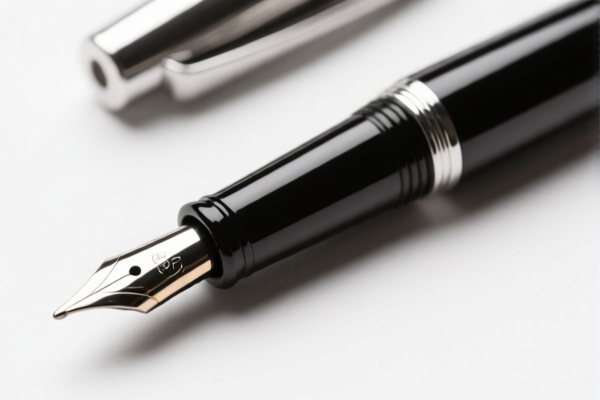
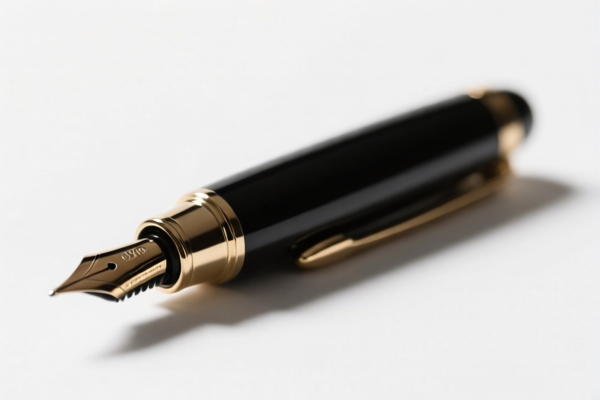
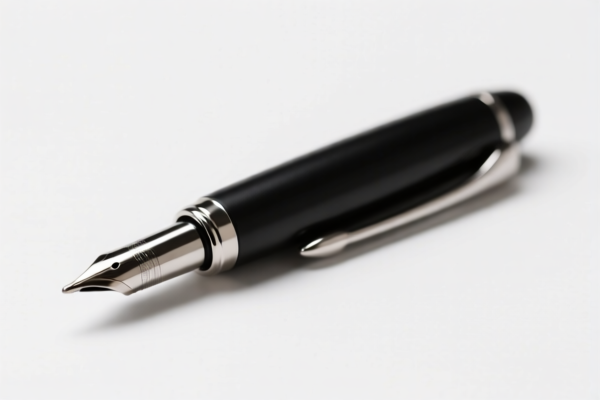
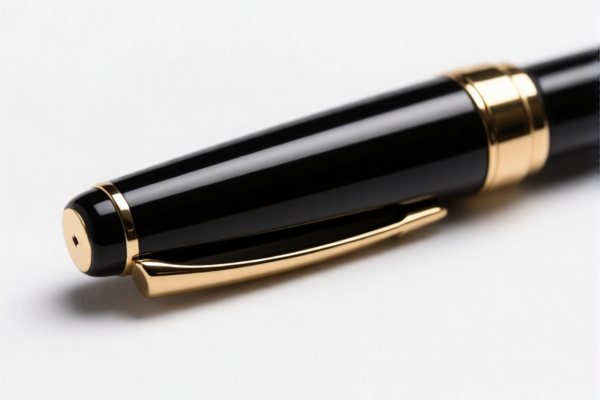
AI Analysis
🖊️ Inkless Pen Top / Empty Pen Body (The "Shell" Without Ink)
🌐 HS Code Reference & Customs Clearance Guide | 2026 Latest Tariff Analysis | Professional Entry Strategy
📌 Part 1: Product Definition & Classification: What Exactly is an "Inkless Pen Top"?
An "Inkless Pen Top" or "Empty Pen Body" refers to the external casing, cap, or barrel of a writing instrument that does not contain ink, gel, or any writing core. In international trade, this product is a classic "borderline" item because it can be classified either as a Plastic Accessory or as a Writing Instrument Part, depending on its material and specific design intent.
⚠️ Key Distinction Point:
- If viewed as a generic plastic container/accessory → Falls under Chapter 39 (Plastics)
- If viewed specifically as a component for pens/pencils → Falls under Chapter 96 (Articles of Pen-making)
📦 Part 2: HS Code Classification Details (2026 Latest Tariff Authority Comparison)
| HS Code | Product Description | Classification Logic | Total Duty Rate* |
|---|---|---|---|
3926.90.10.00 |
Other Articles of Plastics (Plastic Accessories/Vessels) | Classified as a plastic article/accessory because it is essentially a plastic vessel/container part. Lacks specific "pen-part" exclusivity in this view. | 20.9% |
9608.99.40.00 |
Parts and Accessories of Pens (Specific Pen Parts) | Classified as a part of pens (ref. 9608.10/9608.30). The "inkless" attribute confirms it is a structural component, not the functional writing element itself. | 17.5% |
9608.99.60.00 |
Parts and Accessories of Pens (Barrels/Holders) | Explicitly covers "pen barrels, cases, and similar holders." Shape and usage perfectly match the definition of pen parts. | 17.5% |
3926.10.00.00 |
Office or School Supplies of Plastics | Infers material is plastic and matches the "office supply" attribute of Chapter 39. Often used when the "pen part" classification is contested. | 15.3% |
🔍 Key Reminder:
-9608Series (17.5%): Best for items clearly designed for writing instruments. Recognized as "parts."
-3926Series (15.3% - 20.9%): Used if the item is generic plastic or lacks specific pen-part certification.
- ⚠️ Crucial Note: All these HS Codes involve US Additional Duties due to trade restrictions on Chinese goods.
💰 Part 3: 2026 Latest Tariff Rate Breakdown (Including Add-ons & Policy Surcharges)
✅ Applicable Country: United States (US)
✅ Origin: China (CN)
✅ Effective Time: 2025-11-10 onwards (for subsequent imports)
🎯 1. 3926.90.10.00 —— Other Articles of Plastics
| Item | Content |
|---|---|
| Base Duty | 3.4% (Ad Valorem) |
| Section 301 Add-on | +7.5% |
| 122 Section Tariff | +10% |
| Total Duty Rate | 20.9% |
| Tax Calculation | CIF Value × 20.9% |
| De Minimis Eligibility | ❌ Not Eligible (Subject to strict scrutiny) |
| Legal Basis Path | General Tariff: 3.4% + Sec 301: 7.5% + 122 Tariff: 10% |
📌 Explanation:
- The "122 Section Tariff" refers to specific enforcement actions often targeting plastic imports or specific trade routes.
- This rate is higher than the pen-part classification, making it less favorable for clear pen accessories.
🎯 2. 9608.99.40.00 & 9608.99.60.00 —— Parts of Pens
| Item | Content |
|---|---|
| Base Duty | 0.0% (Free) |
| Section 301 Add-on | +7.5% |
| 122 Section Tariff | +10% |
| Total Duty Rate | 17.5% |
| Tax Calculation | CIF Value × 17.5% |
| De Minimis Eligibility | ❌ Not Eligible |
| Legal Basis Path | General Tariff: 0.0% + Sec 301: 7.5% + 122 Tariff: 10% |
📌 Note:
- Lower Base Duty: Since the base duty is 0%, the total tax burden is lower compared to3926.90.10.00.
- Justification: These codes explicitly recognize the item as a pen part, leveraging the 0% base rate for instrument accessories.
- Risk: Must prove the item is exclusively for pens (not generic plastic containers).
🎯 3. 3926.10.00.00 —— Office Supplies of Plastics
| Item | Content |
|---|---|
| Base Duty | 5.3% |
| Section 301 Add-on | 0.0% (Exempt or specific exclusion applies here) |
| 122 Section Tariff | +10% |
| Total Duty Rate | 15.3% |
| Tax Calculation | CIF Value × 15.3% |
| De Minimis Eligibility | ❌ Not Eligible |
| Legal Basis Path | General Tariff: 5.3% + Sec 301: 0.0% + 122 Tariff: 10% |
📌 Warning:
- While the total rate (15.3%) is the lowest, this code relies on the exclusion of Section 301 duties.
- High Audit Risk: Customs may challenge this classification if the item is clearly a pen part, demanding9608instead. Only use if you have strong precedent or exclusion documentation.
🛠️ Part 4: Customs Clearance Practical Advice (Battle-Tested Pitfall Guide)
✅ 1. Required Documentation Checklist (All are Mandatory)
| Document | Mandatory? | Description |
|---|---|---|
| ✅ Product Specifications | ✔️ | Must explicitly state "Inkless," "Empty," "Barrel Only," or "Cap Only." |
| ✅ Product Photos | ✔️ | Clear images showing no ink cartridge, no refill, and no writing tip. |
| ✅ Commercial Invoice | ✔️ | Description must match HS Code logic (e.g., "Plastic Pen Parts" vs. "Plastic Articles"). |
| ✅ Packing List | ✔️ | Item count must match invoice. No mixed shipments with ink pens unless declared separately. |
| ✅ Material Declaration | ✔️ | Confirm plastic type (PP, ABS, etc.) for Chapter 39 accuracy. |
✅ 2. Declaration Tips (Key Mantra)
🔥 “No Ink = Part; Plastic Shell = Accessory. Be Specific!”
| Scenario | Correct Declaration | Wrong Practice | Consequence |
|---|---|---|---|
| Clear Pen Barrel | 9608.99.60.00 |
"Plastic Tube" | Risk of 3926 classification (Higher Tax) |
| Pen Cap | 9608.99.40.00 |
"Plastic Lid" | Risk of 3926 classification |
| Mixed Box (Pen + Shell) | Split Declaration | Combine in one line | Severe Penalty for undervaluation/misclassification |
| Generic Plastic Tube | 3926.90.10.00 |
"Pen Part" | Rejection if not clearly for pens |
✅ 3. Special Case Handling
| Situation | Handling Advice |
|---|---|
| OEM Pen Parts | Provide design drawings showing it fits a specific pen model. Proves it is a "part" (9608). |
| Generic Plastic Shells | If not pen-specific, use 3926.90.10.00. Do not force 9608. |
| Shipped with Ink Refills | Separate Lines! Declare ink refills under 9608.20 (Pens) and shells under 9608.99. Mixing them confuses Customs. |
| Sample Shipments | Even samples are subject to duty. Do not mark "No Commercial Value" to avoid duty; declare value accurately. |
🌍 Part 5: Global Market Comparison (2026 Latest)
| Country/Region | Recommended HS Code | Duty Rate | Certification | Remarks |
|---|---|---|---|---|
| 🇺🇸 USA | 9608.99.40.00 / 60.00 |
17.5% | No specific cert | 122 Section applies. High scrutiny on "parts." |
| 🇨🇳 China | 9608.99.00.00 |
0% | No specific cert | Import duty often 0% for parts. |
| 🇪🇺 EU | 9608.99.00 |
0% | CE (if plastic contact) | No additional tariffs for pen parts. |
| 🇦🇺 Australia | 9608.99.00 |
5% | None | Low duty, simple clearance. |
| 🇯🇵 Japan | 9608.99.00 |
0% | None | No additional tariffs. |
📌 Conclusion:
- USA is the most complex market due to Section 301 and 122 tariffs.
- EU/Asia are straightforward with low/no duties.
- For USA exports, accurate classification under9608saves 3.4% vs.3926.90.10.00.
📌 Part 6: Common Errors & Pitfalls (Blood-Tears Lessons)
❌ Error 1: Declaring "Pen Top" as "Plastic Cup" or "Container"
👉 Result: Customs applies 3926.90.10.00 → 20.9% Tax. Higher than necessary!
❌ Error 2: Shipping Ink Refills and Shells Mixed in One Box Without Separate Declaration
👉 Result: Customs may assess the whole box at the highest duty rate or flag for fraud. Split the lines!
❌ Error 3: Using "Inkless Pen" in Description
👉 Result: Confusing. "Pen" implies functionality. Use "Pen Barrel," "Pen Cap," or "Pen Parts."
❌ Error 4: Ignoring the 122 Section Tariff
👉 Result: Underpayment of duties. The 10% surcharge is mandatory for these Chinese-origin plastic/pen items.
✅ Correct Practice:
"Plastic Pen Barrel, Inkless, Model XYZ, Material: ABS, For Pen Assembly Only"
🎯 Part 7: Conclusion: Precision Classification Saves Money!
🎯 Remember the Mantra:
🔹 "Inkless is a Part, Not a Pen. Use 9608. Save 3.4%!"
🔹 "122 Section Adds 10%, No Matter the Code. Plan for It!"
🔹 "Base Duty 0% (9608) vs. 3.4% (3926). Choose Wisely!"
📌 Pro Tip:
If your pen parts are originally from Vietnam or Thailand, you may qualify for tariff exemptions under trade agreements. Chinese origin attracts the full 17.5% (or 20.9%).
Recommendation: Apply for a Pre-Ruling (Advance Ruling) from US CBP if shipping large volumes, to lock in the 9608 classification.
📣 Immediate Action:
📞 Contact your freight forwarder + Provide Photos of Empty Shell + Specify "Inkless" in Description
🚀 Clear Customs Smoothly, Avoid Delays, Maximize Profit!
✨ Professional Customs Clearance Starts with Accurate Classification!
💼 Your Cost Per Unit Deserves Exact Calculation!
Customer Reviews
About HS Code Classification
The Harmonized System (HS) is an internationally standardized nomenclature developed by the World Customs Organization (WCO) to classify traded products. Over 200 countries use the HS system as the basis for customs tariffs, trade statistics, and import/export regulations.
Each HS code follows a hierarchical structure:
- Chapter (2 digits) — Broad category of goods (e.g., Chapter 84: Machinery and Mechanical Appliances)
- Heading (4 digits) — More specific grouping within the chapter
- Subheading (6 digits) — Internationally standardized breakdown, used by all WCO member countries
- National subdivisions (8-10 digits) — Country-specific extensions for further classification, such as US HTSUS 10-digit codes
Correct HS code classification is essential for smooth customs clearance, accurate duty payment, and compliance with trade regulations. Misclassification can lead to customs delays, overpayment of duties, or penalties.
When importing from CN to US, the applicable tariff rates may include:
- Most-Favored-Nation (MFN) rate — The standard duty rate applied to WTO members
- General rate — Applied to countries without trade agreements
- Trade remedy duties — Additional tariffs such as Section 301 (anti-dumping), Section 232 (national security), or countervailing duties
The information provided on this page is for reference purposes only. For official classification, please consult with your local customs authority or a licensed customs broker.