Inner Page
CN → US| HS Code | Tariff Rate | Origin | Destination | Doc |
|---|---|---|---|---|
| 4820900000 | 35.0% | CN | US | Official Doc |
| 4911998000 | 17.5% | CN | US | Official Doc |
| 4911996000 | 17.5% | CN | US | Official Doc |
| 4820104000 | 10.0% | CN | US | Official Doc |
| 4823908680 | 35.0% | CN | US | Official Doc |
| 4823906700 | 35.0% | CN | US | Official Doc |
Product Images
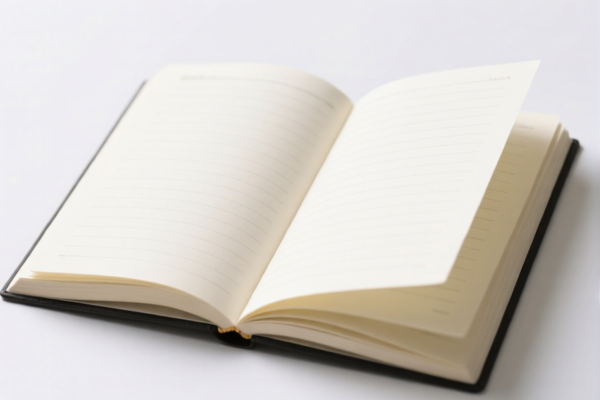
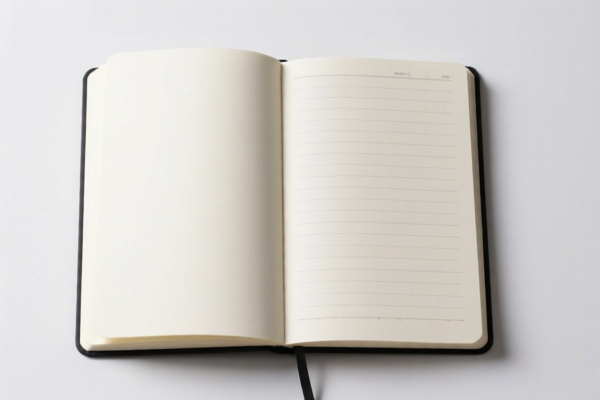

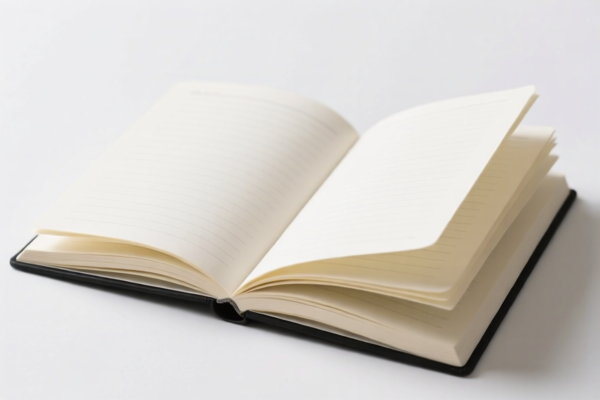
AI Analysis
📓 Inner Pages: The Hidden Heart of Paper Goods | HS Code & Tariff Deep Dive (2026)
🌐 HS Code Classification & Customs Clearance Guide | 2026 Latest Tariff Analysis | Precision Strategy for "Inner Pages"
📌 I. Product Definition: What Exactly Are "Inner Pages"?
In international trade, "Inner Pages" are not a standalone finished product but a component or material often embedded within notebooks, registration books, file folders, or printed documents. Their classification depends entirely on material composition, state of processing (cut/shaped vs. printed), and functional purpose.
⚠️ Critical Distinction:
- If the pages are blank or lightly formatted structural components of notebooks/folders → Classified under Chapter 48 (Paper/Paperboard Articles)
- If the pages are fully printed/text-rich documents or part of printed matter → Classified under Chapter 49 (Printed Books/Newspapers/Other Printed Matter)
📦 II. HS Code Classification Matrix (2026 Authorized Codes from Data)
Based on the provided data, here are the 6 specific HS codes assigned to "Inner Pages" with their respective tariff structures:
| HS Code | Summary Description | Product Category | Key Characteristic |
|---|---|---|---|
4820.90.00.00 |
Paper/cardboard material for registration books, notebooks, binders | Paper Stationery | Structural component of binding systems |
4911.99.80.00 |
Inner pages as part of printed matter, other printed items | Other Printed Matter | Fully printed, informational content |
4911.99.60.00 |
Inner pages as paper-based printed matter | Printed on Paper | Standard printed text/images on paper |
4820.10.40.00 |
Paper/cardboard inner pages for notebooks/registration books | Notebook/Register Components | Blank or ruled paper for writing |
4823.90.86.80 |
Cut/sized paper products, other paper articles | Cut Paper Products | Pre-cut to specific dimensions/shapes |
4823.90.67.00 |
Paper/cardboard cut to size/shape | Shaped Paper Items | Geometrically cut paper materials |
🔍 Key Insight:
- Chapters 48 vs. 49:
- 48: Focuses on physical form (cut, bound, blank, structural).
- 49: Focuses on content (printed, intellectual, informational).
- Tax Implication: Codes under 4820 and 4823 carry higher total taxes (35% or 10%) due to higher "Section 301" or "122 Clause" duties compared to 4911 codes (17.5%).
💰 III. 2026 Tariff Rate Breakdown (Detailed & Transparent)
✅ Applicable Country: USA (US)
✅ Origin: China (CN)
✅ Effective Date: 2025–2026 (Including recent "122 Clause" adjustments)
🎯 1. 4820.90.00.00 — Paper/Cardboard Inner Pages for Books/Binders
| Item | Detail |
|---|---|
| Base Tariff | 0.0% |
| Section 301 Add-on | 25.0% |
| 122 Clause Tariff | 10.0% |
| Total Tax Rate | 35.0% |
| Tax Calculation | CIF Value × 35% |
| De Minimis Eligibility | ❌ No (High risk of rejection under Section 301) |
| Legal Basis | USITC Footnote: Section 301 (25%) + 122 Clause (10%) |
📌 Explanation:
- This code covers structural inner pages (blank or lightly ruled) used in notebooks or binders.
- The 25% Section 301 tariff applies to most Chinese-origin paper products.
- The 10% 122 Clause is an additional punitive tariff targeting specific Chinese imports.
- Total burden: 35% — HIGH COST.
🎯 2. 4820.10.40.00 — Notebook/Register Inner Pages (Paper/Cardboard)
| Item | Detail |
|---|---|
| Base Tariff | 0.0% |
| Section 301 Add-on | 0.0% |
| 122 Clause Tariff | 10.0% |
| Total Tax Rate | 10.0% |
| Tax Calculation | CIF Value × 10% |
| De Minimis Eligibility | ❌ No (Due to 122 Clause) |
| Legal Basis | 122 Clause Tariff Only |
📌 Explanation:
- This is a LOW-COST alternative for notebook/register components.
- No Section 301 duty applies here, only the 10% 122 Clause.
- Ideal for standard lined or blank notebook paper without complex printing.
- Savings: 25% vs.4820.90.00.00.
🎯 3. 4823.90.86.80 — Cut Paper Products (Other Paper Articles)
| Item | Detail |
|---|---|
| Base Tariff | 0.0% |
| Section 301 Add-on | 25.0% |
| 122 Clause Tariff | 10.0% |
| Total Tax Rate | 35.0% |
| Tax Calculation | CIF Value × 35% |
| De Minimis Eligibility | ❌ No |
| Legal Basis | USITC Footnote: Section 301 (25%) + 122 Clause (10%) |
📌 Explanation:
- Applies to pre-cut, shaped paper not specifically for notebooks (e.g., decorative cutouts, templates).
- High tax (35%) due to Section 301 + 122 Clause.
- Use only if product is not a notebook component.
🎯 4. 4823.90.67.00 — Cut Paper/Cardboard to Size/Shape
| Item | Detail |
|---|---|
| Base Tariff | 0.0% |
| Section 301 Add-on | 25.0% |
| 122 Clause Tariff | 10.0% |
| Total Tax Rate | 35.0% |
| Tax Calculation | CIF Value × 35% |
| De Minimis Eligibility | ❌ No |
| Legal Basis | USITC Footnote: Section 301 (25%) + 122 Clause (10%) |
📌 Explanation:
- Similar to4823.90.86.80, but for different cut specifications.
- Same high tax rate (35%).
- Ensure product description matches "cut to size" not "printed matter".
🎯 5. 4911.99.80.00 — Other Printed Matter (Inner Pages as Printed)
| Item | Detail |
|---|---|
| Base Tariff | 0.0% |
| Section 301 Add-on | 7.5% |
| 122 Clause Tariff | 10.0% |
| Total Tax Rate | 17.5% |
| Tax Calculation | CIF Value × 17.5% |
| De Minimis Eligibility | ❌ No |
| Legal Basis | USITC Footnote: Section 301 (7.5%) + 122 Clause (10%) |
📌 Explanation:
- Applies when inner pages are fully printed (e.g., workbooks, educational materials, manuals).
- Moderate tax (17.5%) — lower than paper-only codes.
- Section 301 rate is only 7.5% (not 25%), making it more cost-effective for printed goods.
🎯 6. 4911.99.60.00 — Printed Matter on Paper (Inner Pages)
| Item | Detail |
|---|---|
| Base Tariff | 0.0% |
| Section 301 Add-on | 7.5% |
| 122 Clause Tariff | 10.0% |
| Total Tax Rate | 17.5% |
| Tax Calculation | CIF Value × 17.5% |
| De Minimis Eligibility | ❌ No |
| Legal Basis | USITC Footnote: Section 301 (7.5%) + 122 Clause (10%) |
📌 Explanation:
- Standard code for paper-based printed items.
- Same 17.5% total rate as4911.99.80.00.
- Best for text-heavy inner pages (e.g., textbooks, printed forms).
🛠️ IV. Customs Clearance Practical Advice (Pitfall Avoidance)
✅ 1. Document Checklist (Mandatory)
| Document | Required | Purpose |
|---|---|---|
| ✅ Product Specification Sheet | ✔️ | Define material (paper/cardboard), state (printed/blank), usage |
| ✅ Product Photos | ✔️ | Show inner pages, binding, printing quality |
| ✅ Commercial Invoice | ✔️ | Clearly state "Inner Pages for Notebook/Printed Matter" |
| ✅ Packing List | ✔️ | Specify weight, dimensions, cut size if applicable |
| ✅ Proof of Printing | ✔️ | If claiming Chapter 49, provide sample printed pages |
| ✅ Origin Certificate (CO) | ✔️ | For potential preferential treatment (if non-CN origin) |
✅ 2. Classification Strategy (Key Rules)
🔥 "Printed = Chapter 49 (17.5%) | Blank/Cut = Chapter 48 (10%–35%)"
| Scenario | Recommended HS Code | Total Tax | Why? |
|---|---|---|---|
| Blank notebook inner pages | 4820.10.40.00 |
10% | No Section 301, only 122 Clause |
| Lined/ruled notebook pages | 4820.10.40.00 |
10% | Still considered "paper articles" |
| Printed workbook pages | 4911.99.60.00 |
17.5% | Printed matter, lower Section 301 |
| Fully printed manual pages | 4911.99.80.00 |
17.5% | Other printed matter |
| Cut decorative paper shapes | 4823.90.67.00 |
35% | High tax, avoid if possible |
| Cardboard binder inner layers | 4820.90.00.00 |
35% | High tax, only if necessary |
✅ 3. Special Cases & Mitigation
| Case | Handling Advice |
|---|---|
| Mixed Contents (Blank + Printed) | Declare as Printed Matter (Chapter 49) if printing is dominant → 17.5% vs. 35% |
| OEM Custom Inner Pages | Provide client design + printing specs to prove Chapter 49 eligibility |
| Pre-cut vs. Raw Sheets | Pre-cut may trigger 4823 codes (35%); raw sheets may fit 4820 (10%) — choose wisely |
| Small Quantity Samples | Still subject to full tariffs; De Minimis exemption does NOT apply due to 122 Clause |
🌍 V. Global Market Comparison (2026)
| Country | Recommended HS Code | Base Tax | China-Specific Add-on | Total Tax (China Origin) | Notes |
|---|---|---|---|---|---|
| 🇺🇸 USA | 4820.10.40.00 / 4911.99.60.00 |
0% | 10% (122) + 0–7.5% (301) | 10% – 17.5% | Section 301 varies by sub-code |
| 🇨🇳 China | 4820.10.40.00 / 4911.99.60.00 |
0% – 10% | None | 0% – 10% | No punitive tariffs |
| 🇪🇺 EU | 4820.10.40.00 / 4911.99.60.00 |
0% | None | 0% – 0.5% | Low duty for paper/print |
| 🇦🇺 Australia | 4820.10.40.00 / 4911.99.60.00 |
5% | None | 5% | Standard GST applies |
| 🇯🇵 Japan | 4820.10.40.00 / 4911.99.60.00 |
0% | None | 0% – 8% | Depends on paper type |
📌 Conclusion:
- USA is the most expensive market due to Section 301 and 122 Clause.
- Chapter 49 (Printed) codes are cheaper (17.5%) than Chapter 48 (Paper) codes (10%–35%).
- Opt for4820.10.40.00(10%) or4911.99.60.00(17.5%) for cost efficiency.
📌 VI. Common Mistakes & Pitfalls (Lessons Learned)
❌ Mistake 1: Declaring printed pages as blank paper (4820 instead of 4911)
👉 Consequence: Misclassification → Penalties + Back Taxes (海关可能认定为低报税率)
❌ Mistake 2: Using 4823.90 codes for notebook inner pages
👉 Consequence: 35% tax instead of 10% → 25% extra cost
❌ Mistake 3: Ignoring 122 Clause impact
👉 Consequence: All codes above face 10% punitive tariff regardless of Section 301
❌ Mistake 4: Assuming De Minimis exemption applies
👉 Consequence: Denied due to 122 Clause → Full tax charged on small shipments
✅ Correct Approach:
"Inner Pages, Printed, A4 Size, for Educational Notebooks, Paper Material, Model XYZ"
🎯 VII. Conclusion: Optimize Classification, Reduce Costs!
🎯 Key Takeaways:
🔹 "Printed = Chapter 49 (17.5%) | Blank Notebook = Chapter 48 (10%)"
🔹 "Avoid 4823 codes (35%) unless necessary"
🔹 "122 Clause adds 10% to ALL Chinese-origin paper/print goods"
🔹 "De Minimis exemption DOES NOT apply"
📌 Pro Tip:
- For notebooks, declare as
4820.10.40.00(10%) — Lowest tax.- For workbooks/manuals, declare as
4911.99.60.00(17.5%) — Balanced cost.- Always provide printing samples to justify Chapter 49 if applicable.
📣 Immediate Action:
📞 Consult Customs Broker + Provide Product Samples + Apply for Advance Ruling
🚀 Save up to 25% in taxes by choosing the right HS code!
✨ Precision in Classification, Profit in Clearance!
💼 Every Percent Saved is Pure Profit!
Customer Reviews
About HS Code Classification
The Harmonized System (HS) is an internationally standardized nomenclature developed by the World Customs Organization (WCO) to classify traded products. Over 200 countries use the HS system as the basis for customs tariffs, trade statistics, and import/export regulations.
Each HS code follows a hierarchical structure:
- Chapter (2 digits) — Broad category of goods (e.g., Chapter 84: Machinery and Mechanical Appliances)
- Heading (4 digits) — More specific grouping within the chapter
- Subheading (6 digits) — Internationally standardized breakdown, used by all WCO member countries
- National subdivisions (8-10 digits) — Country-specific extensions for further classification, such as US HTSUS 10-digit codes
Correct HS code classification is essential for smooth customs clearance, accurate duty payment, and compliance with trade regulations. Misclassification can lead to customs delays, overpayment of duties, or penalties.
When importing from CN to US, the applicable tariff rates may include:
- Most-Favored-Nation (MFN) rate — The standard duty rate applied to WTO members
- General rate — Applied to countries without trade agreements
- Trade remedy duties — Additional tariffs such as Section 301 (anti-dumping), Section 232 (national security), or countervailing duties
The information provided on this page is for reference purposes only. For official classification, please consult with your local customs authority or a licensed customs broker.