Inorganic Catalyst Precursor
CN → US| HS Code | Tariff Rate | Origin | Destination | Doc |
|---|---|---|---|---|
| 8112999100 | 39.0% | CN | US | Official Doc |
| 8112926500 | 39.4% | CN | US | Official Doc |
| 3815901000 | 41.5% | CN | US | Official Doc |
| 3815903000 | 35.0% | CN | US | Official Doc |
| 2825909000 | 38.7% | CN | US | Official Doc |
| 2841905000 | 38.7% | CN | US | Official Doc |
Product Images
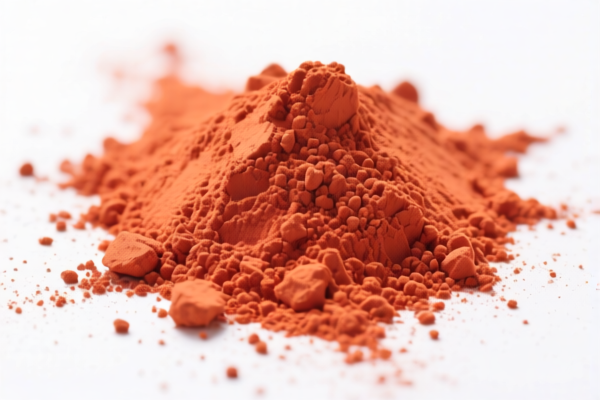
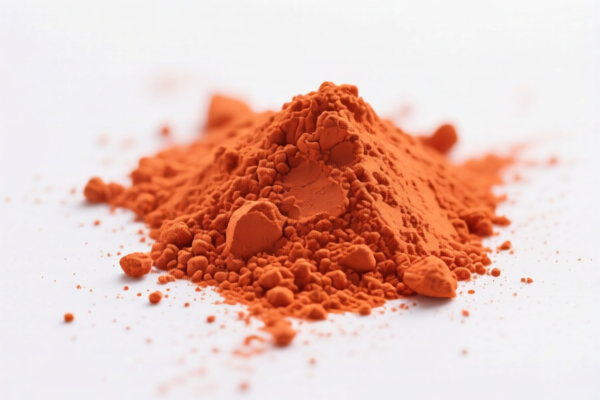
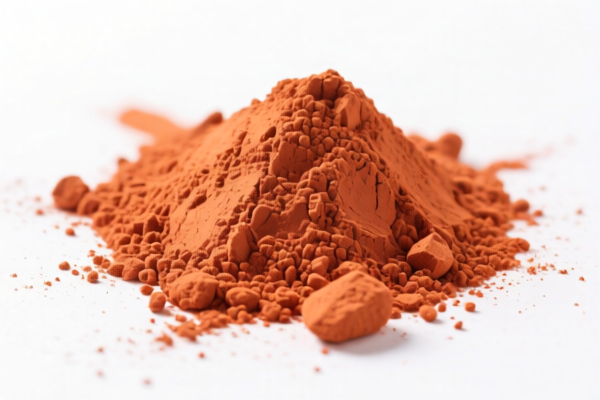
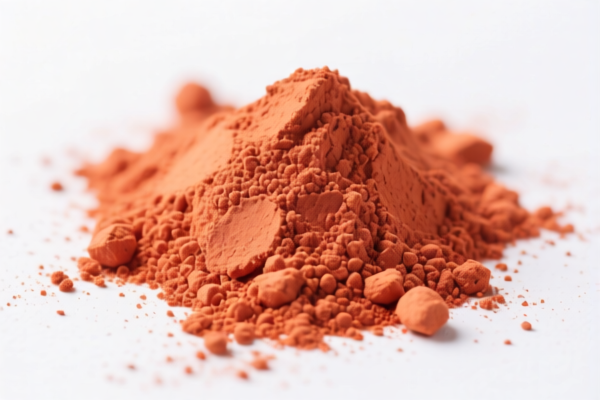
AI Analysis
⚗️ Inorganic Catalyst Precursors (Inorganic Reaction Initiators & Accelerators)
🌐 HS Code Reference & Customs Clearance Guide | 2026 Latest Tariff Breakdown | Professional-Level Compliance Strategy
📌 I. Product Definition & Classification: Do You Really Understand "Inorganic Catalyst Precursors"?
In chemistry, an "Inorganic Catalyst Precursor" is not a single finished product but a broad category of compounds used to generate catalytic activity during chemical processes. In international trade, these are primarily classified under two main chapters depending on their form and function:
1. Intermediate Chemical Compounds (Chapters 28-29):
These include metal oxides, inorganic bases, salts of oxometallic acids, and hydrazine derivatives. They are the raw "ingredients" before they become active catalysts or are used as bases in reactions.
Key Characteristics: High purity, specific chemical composition, often in powder or liquid form.
2. Catalytic Preparations (Chapter 38):
These are preparations consisting wholly of inorganic substances, specifically designed as reaction initiators, accelerators, or catalysts.
Key Characteristics: Formulated for specific industrial chemical processes, often containing mixtures of inorganic metals (e.g., Bismuth, Tungsten, Vanadium).
⚠️ Critical Distinction:
- If the item is a pure chemical compound (e.g., Vanadium Pentoxide, Germanium salts) → It generally falls under Chapter 28 (Inorganic Chemicals).
- If the item is a formulated preparation explicitly described as a "catalyst," "initiator," or "accelerator" consisting wholly of inorganic substances → It falls under 3815.90.
📦 2. HS Code Classification Details (2026 Latest Tariff Authority Comparison)
Based on the provided data, here are the specific HS Codes and their corresponding tax implications for Inorganic Catalyst Precursors.
| HS Code | Product Description | Classification Logic | Key Components |
|---|---|---|---|
2825.90.90.00 |
Hydrazine, hydroxylamine, inorganic bases, metal oxides, hydroxides, peroxides (Other) | Used for generic inorganic oxides, bases, or peroxides that are not specifically listed elsewhere. | Metal Oxides, Inorganic Bases, Peroxides |
2841.90.50.00 |
Salts of oxometallic or peroxometallic acids (Other) | Specifically for salts derived from oxometallic acids. | Oxometallic Salts |
3815.90.10.00 |
Reaction initiators, accelerators, and catalytic preparations: Of bismuth, tungsten, or vanadium | For formulations explicitly acting as catalysts/initiators made from these specific metals. | Bi, W, V-based catalysts |
3815.90.30.00 |
Reaction initiators, accelerators, and catalytic preparations: Other (Inorganic substances) | For inorganic catalyst preparations not made of Bi, W, or V. | Other Inorganic Catalysts |
8112.99.91.00 |
Beryllium, Chromium, Hafnium, Rhenium, Thallium, Cadmium, Germanium, Vanadium, Gallium, Indium, Niobium (Other) | For the raw metals, alloys, or waste/scrap of these specific strategic metals. | Raw Metals, Scrap, Alloys |
8112.92.65.00 |
Germanium: Unwrought; waste and scrap; powders | Specifically for Germanium in its raw, powdery, or scrap form. | Germanium (Raw/Powder/Scrap) |
🔍 Key Reminder:
- Metallic Form vs. Chemical Form:
- If you are importing Vanadium powder/metal →8112.99.91.00(0% Tax).
- If you are importing a Vanadium-based Catalyst Preparation →3815.90.10.00(0% Tax).
- If you are importing a Generic Metal Oxide (e.g., Titanium Oxide not listed elsewhere) →2825.90.90.00(28.7% Tax).
- Germanium Special Case: Germanium has a specific subheading (8112.92.65.00) for unwrought/powder form (0% Tax).
💰 3. 2026 Latest Tariff Rate Detail (Including Surtaxes & Policy Add-ons)
✅ Applicable Country: USA (US)
✅ Origin: China (CN)
✅ Effective Date: Current rates as per provided data (Note: Surtax rates may vary by specific USITC/Footnote rules not fully detailed in the snippet, but we will use the providedtotal_taxfor accuracy).
🎯 1. 2825.90.90.00 —— Other Inorganic Bases/Oxides/Peroxides
| Item | Content |
|---|---|
| Base Tariff | 3.7% (ad valorem) |
| Surtax / Additional Tariff | 25.0% (As per provided data) |
| Total Effective Tax Rate | 28.7% |
| Tax Calculation | CIF Value × 28.7% |
| De Minimis Exemption | ❌ Not Eligible (High tariff rates usually exclude Section 321/De Minimis relief for duty evasion checks) |
| Legal Basis Path | USHTS:2825.90.90 → Additional Tariff Footnote |
📌 Explanation:
- This is the only item in the list with a significant tax burden.
- The 25% surtax suggests it may fall under specific trade remedies or general Section 301 tariffs (depending on the specific chemical and origin).
- Cost Impact: High. Importers must budget for nearly 30% in duties.
🎯 2. 2841.90.50.00 —— Salts of Oxometallic Acids
| Item | Content |
|---|---|
| Base Tariff | 0.0% |
| Surtax / Additional Tariff | 0.0% |
| Total Effective Tax Rate | 0.0% |
| Tax Calculation | CIF Value × 0% = $0 |
| De Minimis Exemption | ✅ Eligible (if value < $800 and no other restrictions) |
🎯 3. 3815.90.10.00 & 3815.90.30.00 —— Inorganic Catalyst Preparations
| Item | Content |
|---|---|
| Base Tariff | 0.0% |
| Surtax / Additional Tariff | 0.0% |
| Total Effective Tax Rate | 0.0% |
| Tax Calculation | CIF Value × 0% = $0 |
| De Minimis Exemption | ✅ Eligible |
📌 Explanation:
- Catalyst preparations (whether Bi/W/V-based or other inorganic) are currently duty-free in this dataset.
- Strategic Advantage: If your product can be classified as a "Catalytic Preparation" (3815) rather than a generic "Metal Oxide" (2825), you save 28.7% in taxes.
- Key: Ensure the product is described as a "Preparation" or "Catalyst" and not just a chemical raw material.
🎯 4. 8112.99.91.00 & 8112.92.65.00 —— Strategic Metals (Be, Cr, Hf, Re, Tl, Cd, Ge, V, Ga, In, Nb)
| Item | Content |
|---|---|
| Base Tariff | 0.0% |
| Surtax / Additional Tariff | 0.0% |
| Total Effective Tax Rate | 0.0% |
| Tax Calculation | CIF Value × 0% = $0 |
| De Minimis Exemption | ✅ Eligible (Subject to FDA/DEA/Customs inspection for controlled substances) |
📌 Explanation:
- Raw strategic metals (including Germanium powder, Vanadium metal, etc.) are duty-free.
- Caution: While taxes are 0%, these materials are often subject to strict export controls and customs scrutiny due to their use in defense/aerospace. Ensure proper export licenses are in place.
🛠️ 4. Customs Clearance Practical Advice (Battle-Tested Pitfall Avoidance Guide)
✅ 1. Document Checklist (Indispensable)
| Document | Required? | Description |
|---|---|---|
| ✅ Certificate of Analysis (COA) | ✔️ | Must specify chemical composition, purity %, and CAS numbers. Critical for distinguishing 2825 vs 3815. |
| ✅ MSDS/SDS | ✔️ | Safety Data Sheet. Required for all chemicals. Indicates hazard class. |
| ✅ Product Specification Sheet | ✔️ | Details physical form (powder, liquid, solid), molecular structure, and intended use. |
| ✅ Commercial Invoice | ✔️ | Must clearly state: "Inorganic Catalyst Preparation" or "Metal Oxide," NOT generic "Chemical." |
| ✅ Export License | ✔️ | Critical for Germanium, Vanadium, Beryllium, etc. Ensure compliance with BIS/EAR regulations. |
| ✅ HS Code Pre-Ruling | ✔️ | Recommended for large shipments to avoid disputes on 2825 vs 3815. |
✅ 2. Classification Strategy (Key Mantra)
🔥 “Form Defines Function, Description Defines Duty!”
| Scenario | Correct Classification | Incorrect Classification | Consequence |
|---|---|---|---|
| Vanadium Powder (Raw Metal) | 8112.99.91.00 |
2825.90.90.00 |
Tax Jump: 0% → 28.7% |
| Vanadium Oxide Catalyst | 3815.90.10.00 |
2825.90.90.00 |
Tax Jump: 0% → 28.7% |
| Germanium Powder | 8112.92.65.00 |
8112.99.91.00 |
Minor Error: Same tax, but inaccurate declaration risk |
| Generic Metal Oxide (e.g., TiO2) | 2825.90.90.00 |
3815.90.30.00 |
Tax Savings Missed: If it’s a catalyst, use 3815 (0%). If not, 28.7% is unavoidable. |
✅ 3. Special Cases Handling
| Situation | Handling Advice |
|---|---|
| Product is both a Chemical & Catalyst | Describe it as a "Catalyst Preparation" if it has been formulated/treated for catalytic use. This may allow classification under 3815 (0% tax) instead of 2825 (28.7% tax). |
| Importing Germanium | Ensure it’s declared as Germanium specifically (8112.92.65.00). Do not use the general "Other Metals" code. Provide CAS number 7440-56-4. |
| Importing Vanadium | Verify if it’s Vanadium Metal (8112) or Vanadium Compound (2825/3815). Metal is 0%, Compound may be 28.7%. |
| Controlled Substances | Beryllium, Cadmium, and Germanium may require BIS (Bureau of Industry and Security) checks. Ensure no dual-use violations. |
🌍 5. Global Market Comparison (2026 Latest)
| Country/Region | Recommended HS Code | Tariff (China Origin) | Certification Requirements | Notes |
|---|---|---|---|---|
| 🇺🇸 USA | 3815.90.10.00 (Catalyst) |
0% | EPA TSCA, OSHA HazCom | Avoid 2825 if possible (28.7% tax) |
| 🇨🇳 China | 2825.90.90.00 |
Varies (Usually Low) | GB Standards | Import duties may differ from US |
| 🇪🇺 EU | 3815.10.00 (Catalysts) |
0% (Most) | REACH Registration | REACH compliance is critical for inorganics |
| 🇯🇵 Japan | 2825.90.90.00 |
0-3% | JIS Standards | Check specific chemical laws |
📌 Conclusion:
- USA: 0% tax for Catalysts (3815) and Raw Metals (8112). 28.7% tax for generic Inorganic Oxides (2825).
- Strategy: Optimize supply chain to classify as Catalyst or Raw Metal rather than generic Oxide/Base where possible.
📌 6. Common Errors & Pitfall Guide (Blood & Tears Lessons)
❌ Error 1: Declaring a Vanadium Catalyst as Vanadium Oxide (2825)
👉 Consequence: Pay 28.7% tax instead of 0%. Loss: 28.7% of CIF value.
✅ Fix: Provide proof of catalytic formulation to support 3815.90.10.00.
❌ Error 2: Declaring Germanium Powder as Other Metals (8112.99.91.00)
👉 Consequence: Same tax, but incorrect HS Code leads to customs delays, audits, and potential penalties for misdeclaration.
✅ Fix: Use specific Germanium code 8112.92.65.00.
❌ Error 3: Ignoring Export Controls for Beryllium/Germanium
👉 Consequence: Cargo seized by BIS/Customs. 100% Loss of Goods.
✅ Fix: Verify EAR/ITAR status before shipment.
🎯 7. Conclusion: Precision Classification Saves Millions!
🎯 Remember the Mantra:
🔹 “Catalyst = 0%, Oxide = 28.7%, Metal = 0%!”
🔹 “Describe it as a Preparation, not a Raw Chemical, to save 28.7%!”
📌 Pro Tip:
If your product is a mixed catalyst containing Vanadium, Tungsten, or Bismuth, ensure it is explicitly labeled as a "Reaction Initiator/Accelerator/Catalyst" in the commercial invoice. This supports classification under 3815.90.10.00 (0% Tax) rather than 2825.90.90.00 (28.7% Tax).
📣 Immediate Action:
📞 Request a Pre-Ruling from US CBP for complex catalyst mixtures.
📄 Ensure SDS and COA match the HS Code description exactly.
🚀 Classify correctly, pay less tax, clear customs faster!
✨ Professional Customs Clearance Starts with Precise Classification!
💼 Your Duty Bill is Directly Proportional to Your Description Accuracy!
Customer Reviews
About HS Code Classification
The Harmonized System (HS) is an internationally standardized nomenclature developed by the World Customs Organization (WCO) to classify traded products. Over 200 countries use the HS system as the basis for customs tariffs, trade statistics, and import/export regulations.
Each HS code follows a hierarchical structure:
- Chapter (2 digits) — Broad category of goods (e.g., Chapter 84: Machinery and Mechanical Appliances)
- Heading (4 digits) — More specific grouping within the chapter
- Subheading (6 digits) — Internationally standardized breakdown, used by all WCO member countries
- National subdivisions (8-10 digits) — Country-specific extensions for further classification, such as US HTSUS 10-digit codes
Correct HS code classification is essential for smooth customs clearance, accurate duty payment, and compliance with trade regulations. Misclassification can lead to customs delays, overpayment of duties, or penalties.
When importing from CN to US, the applicable tariff rates may include:
- Most-Favored-Nation (MFN) rate — The standard duty rate applied to WTO members
- General rate — Applied to countries without trade agreements
- Trade remedy duties — Additional tariffs such as Section 301 (anti-dumping), Section 232 (national security), or countervailing duties
The information provided on this page is for reference purposes only. For official classification, please consult with your local customs authority or a licensed customs broker.