Inorganic Disinfectant Spray
CN → US| HS Code | Tariff Rate | Origin | Destination | Doc |
|---|---|---|---|---|
| 3808945095 | 40.0% | CN | US | Official Doc |
| 3402905030 | 38.7% | CN | US | Official Doc |
| 3924104000 | 13.4% | CN | US | Official Doc |
| 3402505100 | 35.0% | CN | US | Official Doc |
| 3808594000 | 40.0% | CN | US | Official Doc |
| 3924905650 | 20.9% | CN | US | Official Doc |
Product Images
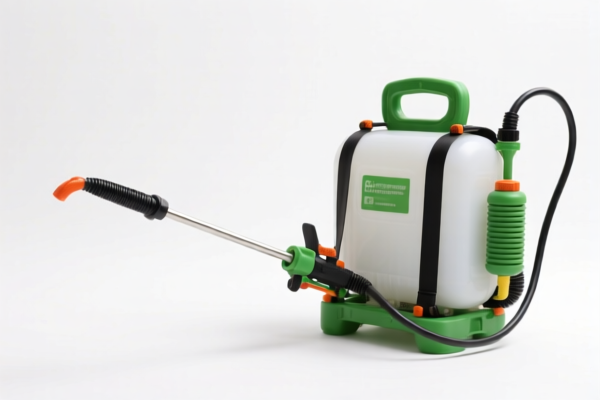
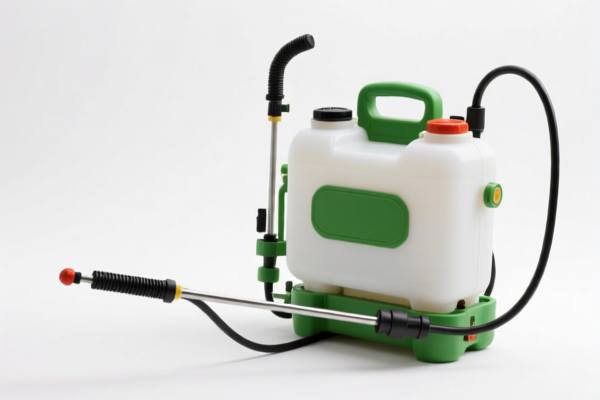
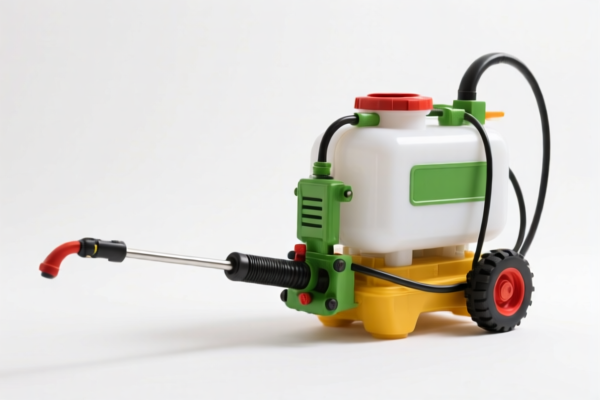

AI Analysis
🧴 Inorganic Disinfectant Spray: HS Code Classification & US Customs Clearance Guide (2026)
🌐 HS Code Reference & Customs Clearance Guide | 2026 Latest Tariff Analysis | Professional Clearance Strategy
📌 I. Product Definition & Classification: What Exactly is "Inorganic Disinfectant Spray"?
"Inorganic Disinfectant Spray" refers to liquid or aerosol preparations used for killing or inhibiting the growth of microorganisms (bacteria, viruses, fungi). The key identifier here is "Inorganic," which typically implies active ingredients such as: * Chlorine-based compounds (e.g., Sodium Hypochlorite/Bleach) * Quaternary Ammonium Compounds (Quats) * Alcohols (though sometimes classified differently, often grouped with cleaning/preparations if not pure ethanol)
In international trade, the classification hinges on whether the product is viewed primarily as a chemical disinfectant or as a cleaning preparation/spray container.
⚠️ Critical Distinction: - If the primary function is disinfection/sterilization via chemical action → It falls under Chapter 38 (Miscellaneous Chemical Products). - If the primary function is general cleaning with minor disinfectant properties, or if the packaging (plastic bottle) is the dominant feature in some loose interpretations → It might be misclassified under Chapter 34 or 39, but this is risky for pure disinfectants.
📦 II. HS Code Classification Details (Based on Provided Data)
Below are the five possible HS Codes derived from the provided dataset, ranked by logical fit for an Inorganic Disinfectant Spray.
| HS Code | Product Description | Matching Logic (Why it fits) | Total Tax Rate (US/CN) |
|---|---|---|---|
3808.94.50.95 |
Other Disinfectants | Best Fit. The product is explicitly a disinfectant. Although it is a "spray" (liquid/aerosol), it fits the category of "other disinfectants" where no specific inorganic chemical sub-code applies. | 40.0% |
3808.59.40.00 |
Other Disinfectants | Strong Fit. Specifically targets disinfectants that are not organo-halogen compounds. "Inorganic" often falls here if not covered by 3808.94. It explicitly matches the "disinfectant" purpose. | 40.0% |
3402.90.50.30 |
Other Surface Active Agents / Cleaning Preparations | Alternative Fit. If the spray is marketed as a "cleaning spray with disinfectant properties" or if the inorganic agent is a surfactant-based quat, it may be classified as a cleaning preparation. The logic notes high consistency with "Cleaning preparations." | 38.7% |
3402.50.51.00 |
Organic Surface Active Agents | Weak/Contextual Fit. The dataset notes "inferred material as organic surfactant or cleaning preparation." Note: This is contradictory for an "Inorganic" spray unless the carrier/surfactant is organic, but the active agent is inorganic. Use with caution. | 35.0% |
3924.10.40.00 |
Tableware & Kitchenware, Household Articles (Plastic) | Packaging Misclassification Risk. This code is for plastic household articles (like bottles/trays). It is only relevant if you are importing the empty plastic spray bottles without liquid, or if a customs broker mistakenly classifies the container as the primary good. Do not use for the liquid product. | 13.4% |
3924.90.56.50 |
Other Household Plastic Articles | Packaging Misclassification Risk. Similar to above. The dataset infers "plastic container" but notes the content is liquid/chemical. Only applicable for empty containers. | 20.9% |
🔍 Key Insight: - Correct Classification: The product should primarily be classified under HS 3808 (Disinfectants) because the function is disinfection, not just packaging. - Avoid: HS 3924 (Plastic articles) unless you are importing empty bottles. Classifying liquid disinfectant under plastic codes is a common error that leads to seizures or penalties.
💰 III. 2026 Latest Tariff Rate Breakdown (Detailed)
✅ Applicable Country: United States (US) ✅ Origin: China (CN) ✅ Effective Date: November 10, 2025 (and subsequent imports)
🎯 1. 3808.94.50.95 & 3808.59.40.00 —— Primary Disinfectant Codes
These two codes have identical tax structures in the provided data. They represent the most accurate classification for "Inorganic Disinfectant Spray."
| Item | Content |
|---|---|
| Base Tariff (MFN) | 5.0% (Ad Valorem) |
| Section 301 Tariff (USITC) | +25.0% (Due to being from China) |
| IEEPA Tariff (122 Clause) | +10.0% (Additional surcharge on Chinese goods) |
| Total Effective Rate | 40.0% |
| Calculation | CIF Value × 40% |
| De Minimis Exemption | ❌ Not Eligible (Value > $800 triggers duties) |
| Legal Authority Path | IEEPA:9903.01.25 → USITC:3808.59.40.00 / 3808.94.50.95 → FOOTNOTE:3808 |
📌 Explanation: - The 5% is the standard Most Favored Nation (MFN) rate for chemical disinfectants. - The 25% is the Section 301 tariff applied to Chinese-origin goods. - The 10% is the IEEPA surcharge. - Total 40% is a significant cost. Accurate classification is vital to avoid over/under-payment.
🎯 2. 3402.90.50.30 —— Cleaning Preparation Code
If classified as a "Cleaning Preparation" rather than a pure "Disinfectant":
| Item | Content |
|---|---|
| Base Tariff | 3.7% |
| Section 301 Tariff | +25.0% |
| IEEPA Tariff | +10.0% |
| Total Effective Rate | 38.7% |
| Calculation | CIF Value × 38.7% |
| De Minimis Exemption | ❌ Not Eligible |
📌 Note: This rate is 1.3% lower than the disinfectant code. However, using this code for a pure disinfectant risks customs scrutiny if the product lacks "cleaning" properties or has a high concentration of biocides.
🎯 3. 3402.50.51.00 —— Organic Surfactant Code
| Item | Content |
|---|---|
| Base Tariff | 0.0% |
| Section 301 Tariff | +25.0% |
| IEEPA Tariff | +10.0% |
| Total Effective Rate | 35.0% |
| Calculation | CIF Value × 35.0% |
📌 Warning: This is the lowest tax rate in the list. However, the summary states "Inferred material as organic surfactant." If your spray is Inorganic (e.g., bleach/quats), this classification may be incorrect and lead to audits. Only use if the active agent is an organic surfactant.
🎯 4. & 5. 3924.10.40.00 & 3924.90.56.50 —— Plastic Containers (Empty Only)
| Item | Content |
|---|---|
| Base Tariff | 3.4% |
| Section 301 Tariff | 0.0% (for 3924.10) / 7.5% (for 3924.90) |
| IEEPA Tariff | +10.0% |
| Total Effective Rate | 13.4% (3924.10) / 20.9% (3924.90) |
📌 CRITICAL WARNING: These codes apply ONLY to empty plastic bottles/packaging. If you ship liquid disinfectant under these codes, Customs will classify it as "Smuggling of Chemicals" or "Misdeclaration," leading to severe penalties.
🛠️ IV. Customs Clearance Practical Advice
✅ 1. Required Documentation Checklist
| Document | Mandatory? | Description |
|---|---|---|
| Product Label | ✔️ | Must clearly state: "Disinfectant," Active Ingredients (e.g., Sodium Hypochlorite 5%), EPA Registration Number (if US market). |
| Safety Data Sheet (SDS) | ✔️ | Required for hazardous materials. Must identify the product as non-flammable or flammable liquid (depending on inorganic type). |
| EPA Registration | ✔️ | For the US Market, disinfectants require EPA approval. Without an EPA Reg. Number, the product cannot be legally sold/imported as a disinfectant. |
| Commercial Invoice | ✔️ | Must specify: "Inorganic Disinfectant Spray," HS Code, Country of Origin (China). |
| Bill of Lading | ✔️ | Mark as "Hazardous Material" if applicable (e.g., corrosive liquids). |
✅ 2. Declaration Best Practices
🔥 "Declare by Function, Not by Container!"
| Scenario | Correct Declaration | Risk of Misclassification |
|---|---|---|
| Liquid Disinfectant | 3808.94.50.95 or 3808.59.40.00 |
Low (if EPA Reg. is present) |
| Empty Plastic Bottles | 3924.10.40.00 |
Low (if clearly empty) |
| Disinfectant in Plastic Bottle | DO NOT USE 3924 |
High Risk: Customs will reclassify to 3808 + penalties |
| Cleaning Spray with Disinfectant | 3402.90.50.30 |
Medium (Requires proof of cleaning primary function) |
✅ 3. Special Handling for "Inorganic" Sprays
-
Hazardous Goods Declaration:
- Many inorganic disinfectants (like bleach) are corrosive.
- You must declare them as Hazmat on the Bill of Lading.
- Failure to do so results in fines and delays.
-
EPA Compliance:
- The US Environmental Protection Agency (EPA) regulates disinfectants.
- Ensure the product has an EPA Registration Number on the label.
- Customs may hold the shipment if the EPA number is missing or invalid.
-
Material Safety Data Sheet (MSDS/SDS):
- Provide a 16-section SDS.
- Section 14 (Transport Information) is critical for confirming proper shipping name (e.g., "Corrosive Liquid, Acidic, n.o.s.").
🌍 V. Global Market Comparison (2026)
| Country/Region | Recommended HS Code | Estimated Duty | Key Requirement |
|---|---|---|---|
| 🇺🇸 USA | 3808.94.50.95 |
40.0% | EPA Registration + Hazmat Decl |
| 🇨🇳 China | 3808.94.50.95 |
5-10% | GB Standard Certification |
| 🇪🇺 EU | 3808.94.50.95 |
6.5% | CLP Labeling + BPR Compliance |
| 🇬🇧 UK | 3808.94.50.95 |
6.5% | UKCA Marking |
📌 Conclusion: - The US has the highest effective duty (40%) due to Section 301 and IEEPA tariffs. - EPA Compliance is the biggest non-tariff barrier for disinfectants in the US.
📌 VI. Common Errors & Pitfalls (Lessons Learned)
❌ Error 1: Classifying liquid disinfectant under 3924 (Plastic Packaging).
👉 Consequence: Customs seizure, fines, and forced reclassification to 3808 + back taxes.
❌ Error 2: Not declaring Hazmat status for corrosive inorganic sprays. 👉 Consequence: Shipment rejected at port, demurrage charges, and safety violations.
❌ Error 3: Missing EPA Registration Number on the label. 👉 Consequence: Entry refused by CBP/EPA. The product cannot be imported for sale.
❌ Error 4: Using 3402 (Cleaning Prep) for a pure disinfectant.
👉 Consequence: If audited, you may face penalties for underreporting duties if the product is deemed a disinfectant first.
✅ Correct Approach:
"EPA Reg. Number on Label, HS 3808 for Disinfection, Hazmat Declared, 40% Tax Budgeted."
🎯 VII. Conclusion: Professional Clearance, Safe & Efficient!
🎯 Remember the Golden Rule:
🔹 "Disinfectant is a Chemical, not a Container." 🔹 "No EPA No Entry." 🔹 "40% Tax is the Price of Accuracy."
📌 Pro Tip: If you are importing large quantities, consider applying for an Advance Ruling from US Customs and Border Protection (CBP) to confirm the HS Code. This provides legal certainty and prevents surprise duties.
📣 Immediate Action:
📞 Contact your broker with: 1. EPA Registration Number 2. SDS (Section 14) 3. Label Image 4. Invoice with HS Code
3808.94.50.95
🚀 Ensure your Inorganic Disinfectant Sprays clear customs smoothly, avoid penalties, and reach the market on time!
✨ Professional Customs Clearance Starts with Accurate Classification! 💼 Every cent of duty is worth calculating correctly!
Customer Reviews
About HS Code Classification
The Harmonized System (HS) is an internationally standardized nomenclature developed by the World Customs Organization (WCO) to classify traded products. Over 200 countries use the HS system as the basis for customs tariffs, trade statistics, and import/export regulations.
Each HS code follows a hierarchical structure:
- Chapter (2 digits) — Broad category of goods (e.g., Chapter 84: Machinery and Mechanical Appliances)
- Heading (4 digits) — More specific grouping within the chapter
- Subheading (6 digits) — Internationally standardized breakdown, used by all WCO member countries
- National subdivisions (8-10 digits) — Country-specific extensions for further classification, such as US HTSUS 10-digit codes
Correct HS code classification is essential for smooth customs clearance, accurate duty payment, and compliance with trade regulations. Misclassification can lead to customs delays, overpayment of duties, or penalties.
When importing from CN to US, the applicable tariff rates may include:
- Most-Favored-Nation (MFN) rate — The standard duty rate applied to WTO members
- General rate — Applied to countries without trade agreements
- Trade remedy duties — Additional tariffs such as Section 301 (anti-dumping), Section 232 (national security), or countervailing duties
The information provided on this page is for reference purposes only. For official classification, please consult with your local customs authority or a licensed customs broker.