Inorganic Insect Trap
CN → US| HS Code | Tariff Rate | Origin | Destination | Doc |
|---|---|---|---|---|
| 7326908688 | 87.9% | CN | US | Official Doc |
| 7326908605 | 87.9% | CN | US | Official Doc |
| 7616995175 | 37.5% | CN | US | Official Doc |
| 7616995190 | 87.5% | CN | US | Official Doc |
| 3926909989 | 22.8% | CN | US | Official Doc |
| 3926901000 | 20.9% | CN | US | Official Doc |
Product Images
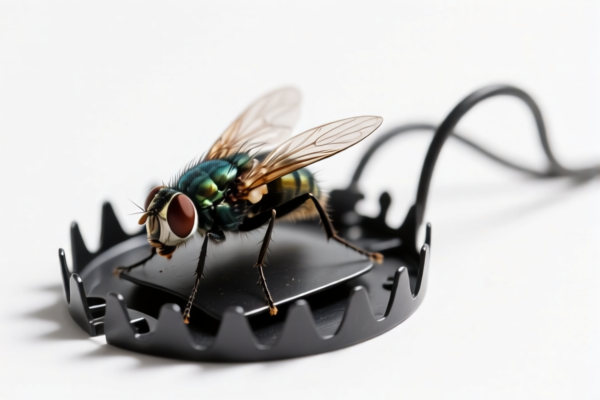


AI Analysis
🕸️ Inorganic Insect Trap: The Ultimate Guide to HS Classification & US Clearance Strategy (2026 Update)
🌐 HS Code Reference & Clearance Guide | 2026 Latest Tariff Analysis | Professional Entry Strategy
📌 一、Product Definition & Classification: Do You Know Your "Inorganic Trap"?
An Inorganic Insect Trap is a device designed to capture or kill insects using materials that are not alive (e.g., glue boards, sticky tapes, physical traps, UV light fixtures with non-living surfaces, or chemical-free mechanical traps). Unlike organic bait traps, these rely on adhesion, electrocution, or physical barriers.
In international trade, the classification is highly sensitive to material composition: - Plastic/Metal/Glass Traps: Classified under plastics or metal articles. - Paper/Cardboard Traps: Often classified under paper (if applicable, but data focuses on plastic/metal/other). - Glue-based Traps: Classified based on the supporting material (plastic, metal, or paper).
⚠️ Critical Distinction:
- If the trap is made of Plastic →归入 3926.90.99.89 or 3926.90.10.00 (depending on shape).
- If the trap is made of Aluminum/Metal →归入 7616.99.51.75 or 7616.99.51.90.
- If the trap is made of Iron/Steel →归入 7326.90.86.88 or 7326.90.86.05.
📦 二、HS Code Classification Details (2026 Data-Based Mapping)
Based on the 2026 Tariff Data provided, here is the precise breakdown for Inorganic Insect Traps based on their material composition:
| HS Code | Material Composition | Product Description (Official) | Typical Trap Examples | Risk Level |
|---|---|---|---|---|
| 3926.90.10.00 | Plastic | Other articles of plastics... Buckets and pails | Plastic sticky traps, plastic fly traps (bucket shape) | ✅ LOW (0% Duty) |
| 3926.90.99.89 | Plastic (Other) | Other articles of plastics... Other | Plastic UV light traps, plastic glue boards (non-bucket) | ⚠️ MED (12.8% Duty) |
| 7616.99.51.75 | Aluminum | Other articles of aluminum... Articles of wire | Aluminum wire insect zappers, aluminum frame traps | ⚠️ HIGH (27.5% Duty) |
| 7616.99.51.90 | Aluminum (Other) | Other articles of aluminum... Other | Aluminum mesh traps, aluminum plates, other aluminum parts | 🚨 CRITICAL (77.5% Duty) |
| 7326.90.86.88 | Iron/Steel | Other articles of iron or steel... Other | Steel wire traps, metal mesh traps, steel glue boards | 🚨 CRITICAL (77.9% Duty) |
| 7326.90.86.05 | Iron/Steel | Other articles of iron or steel... Rods for electrical grounding | ⚠️ Risk Trap: If the "wire" in the trap is classified as grounding rod | 🚨 CRITICAL (77.9% Duty) |
🔍 Key Insight:
- Plastic traps are the only category with 0% or 12.8% tax.
- Aluminum and Steel traps face massive additional duties (50% + 25%), totaling ~77.5-77.9%.
- Shape matters: If a plastic trap is "bucket-shaped" (e.g., hanging sticky bucket), it gets 0%. If it's "other" (like a flat board or light fixture), it gets 12.8%.
💰 三、2026 Tariff Rate Deep Dive (Base + Additional Duties)
✅ Applicable Market: United States (US)
✅ Origin: China (CN)
✅ Effective Date: Current 2026 Tariff Regime (Section 301 & IEEPA)
🎯 Scenario A: Plastic Traps (Low Risk)
| HS Code | Description | Base Duty | Section 301 Add-on | Total Tax | Verdict |
|---|---|---|---|---|---|
| 3926.90.10.00 | Plastic Buckets/Pails | 0.0% | 0.0% | 0.0% | 🟢 Excellent! (No tax) |
| 3926.90.99.89 | Plastic "Other" | 5.3% | 7.5% | 12.8% | 🟡 Moderate |
📌 Analysis:
- If your trap is a plastic bucket/pail (e.g., a hanging trap that looks like a bucket), the tax is 0%.
- If it is a plastic plate, tube, or frame (not a bucket), tax is 12.8%.
- Strategy: Try to design the trap as a "bucket" or "pail" if possible to qualify for 0% tax!
🎯 Scenario B: Aluminum Traps (High Risk)
| HS Code | Description | Base Duty | Section 301 Add-on | Total Tax | Verdict |
|---|---|---|---|---|---|
| 7616.99.51.75 | Aluminum Wire | 2.5% | 25.0% | 27.5% | 🔴 High |
| 7616.99.51.90 | Aluminum "Other" | 2.5% | 25.0% + 50% (Special) | 77.5% | 🚫 Disaster |
📌 Explanation of the 77.5% Spike:
- Base: 2.5% (General).
- Section 301: 25.0% (Standard China tariff).
- Steel/Aluminum/Copper Special Duty: +50.0% (Specific punitive tax on steel/aluminum/copper products).
- Total: 2.5 + 25 + 50 = 77.5%.
- Result: Almost impossible to import profitably unless it's a high-value niche item.
🎯 Scenario C: Iron/Steel Traps (Critical Risk)
| HS Code | Description | Base Duty | Section 301 Add-on | Total Tax | Verdict |
|---|---|---|---|---|---|
| 7326.90.86.88 | Iron/Steel "Other" | 2.9% | 25.0% + 50% (Special) | 77.9% | 🚫 Disaster |
| 7326.90.86.05 | Iron/Steel Grounding Rods | 2.9% | 25.0% + 50% (Special) | 77.9% | 🚫 Disaster |
📌 Critical Warning:
- If your insect trap uses steel wire or metal mesh, it falls under 7326.90.86.88.
- Do not classify steel insect traps as "grounding rods" (7326.90.86.05) unless they are literally used for grounding! Even if misclassified, the duty is the same (77.9%).
- Result: 77.9% tax makes steel insect traps unviable for the US market.
🛠️ 四、Customs Clearance Strategy (Practical "Do's and Don'ts")
✅ 1. Material Selection is King
- DO: Use Plastic for the main body of the trap.
- DON'T: Use Aluminum or Steel for the main structure. The 50% special duty kills margins.
- Pro Tip: If you must use metal for durability, keep it thin and non-structural (e.g., a small wire hook inside a plastic body) to ensure the whole product is classified as "Plastic" (3926).
✅ 2. Shape Matters (The "Bucket" Loophole)
- DO: Design plastic traps to look like "Buckets and Pails" (3926.90.10.00). This gets 0% duty.
- DON'T: Use generic shapes like "flat boards" or "tubes" (3926.90.99.89) which incur 12.8%.
- Example: A hanging fly trap that is a cup/bucket shape = 0%. A flat sticky card = 12.8%.
✅ 3.申报技巧 (Declaration Strategy)
🔥 Golden Rule: "Material First, Shape Second!"
- If plastic: Always declare as "Plastic Articles of Plastic".
- If aluminum/steel: Avoid if possible. If unavoidable, declare as "Other" and prepare for 77% tax. - DO NOT try to misclassify metal as plastic. Customs scanners will spot the metal components immediately.
✅ 4. Special Case: "Rods for Electrical Grounding"
- ⚠️ Trap Alert: Do NOT classify a metal insect trap as "Rods for electrical grounding" (7326.90.86.05) to try to get a different rate.
- Reality: It still attracts 77.9% because the "Steel/Aluminum/Copper Special Duty" applies to all such products. It’s a trap to avoid, not a loophole!
🌍 五、Market Comparison & Cost Impact (2026)
| Product Type | Material | HS Code | Total Duty (US) | Cost Impact | Recommendation |
|---|---|---|---|---|---|
| Sticky Bug Tape | Plastic | 3926.90.99.89 | 12.8% | Moderate | ✅ Acceptable |
| Hanging Fly Bucket | Plastic | 3926.90.10.00 | 0.0% | FREE! | 🏆 Best Choice |
| UV Light Zapper | Plastic + Metal | 3926 (if plastic dominant) | 12.8% | Moderate | ✅ Good |
| Aluminum Mesh Trap | Aluminum | 7616.99.51.90 | 77.5% | 💸 Killer | ❌ Avoid |
| Steel Wire Trap | Iron/Steel | 7326.90.86.88 | 77.9% | 💸 Killer | ❌ Avoid |
📌 Conclusion:
- Plastic traps are the only viable option for the US market in 2026.
- Metal traps (Al/Steel) are taxed at ~78%, making them uncompetitive.
- Design for the "Bucket" category to achieve 0% duty on plastic products.
📌 六、Common Mistakes & Pitfalls (Learn from Others!)
❌ Mistake 1: Shipping a steel wire trap and hoping to classify it as "Plastic" because it has a small plastic handle.
👉 Result: Customs will classify it by the primary material (Steel). 77.9% tax applied!
❌ Mistake 2: Calling a plastic trap "Insect Catcher" without specifying "Plastic".
👉 Result: Customs may assign a generic high-rate code. Always specify "Plastic" in the description.
❌ Mistake 3: Designing a "flat" plastic trap.
👉 Result: You get 12.8% tax. Redesign it into a "bucket" shape to get 0%.
❌ Mistake 4: Trying to use the "Grounding Rod" code (7326.90.86.05) for a metal trap.
👉 Result: The 50% special duty still applies. No savings.
✅ Correct Declaration Example:
"Plastic Insect Trap, Bucket Style, Glue Board Included, Model X, 100% Virgin Plastic" → 3926.90.10.00 (0% Tax).
🎯 七、Final Verdict: How to Survive the 2026 Tariff Wall
- Switch to Plastic: If your product is currently metal, re-engineer it to be plastic. The 77% tax difference is too big to ignore.
- Optimize for "Bucket": If plastic, make it a bucket/pail shape to hit 0% duty.
- Avoid "Other" Metal: If you must use metal, expect 77.9% tax. Only do this if the profit margin is extremely high.
- Pre-Classification: Always get a Binding Ruling from US Customs before shipping large orders.
🚀 Action Plan:
📞 Contact your supplier immediately: "We need to switch to plastic bucket-style traps to avoid 77% metal taxes."
📝 Update your invoice: "Plastic Insect Trap (Bucket Type)" → HS Code 3926.90.10.00.
📉 Cost Savings: From 77.9% to 0% = Huge Margin Boost!
📌 Pro Tip:
"Plastic Bucket = Free! Metal = 78% Tax! Design accordingly!"
✨ Customs Clearance, Simplified!
💼 Your profits are safe if you classify correctly!
Customer Reviews
About HS Code Classification
The Harmonized System (HS) is an internationally standardized nomenclature developed by the World Customs Organization (WCO) to classify traded products. Over 200 countries use the HS system as the basis for customs tariffs, trade statistics, and import/export regulations.
Each HS code follows a hierarchical structure:
- Chapter (2 digits) — Broad category of goods (e.g., Chapter 84: Machinery and Mechanical Appliances)
- Heading (4 digits) — More specific grouping within the chapter
- Subheading (6 digits) — Internationally standardized breakdown, used by all WCO member countries
- National subdivisions (8-10 digits) — Country-specific extensions for further classification, such as US HTSUS 10-digit codes
Correct HS code classification is essential for smooth customs clearance, accurate duty payment, and compliance with trade regulations. Misclassification can lead to customs delays, overpayment of duties, or penalties.
When importing from CN to US, the applicable tariff rates may include:
- Most-Favored-Nation (MFN) rate — The standard duty rate applied to WTO members
- General rate — Applied to countries without trade agreements
- Trade remedy duties — Additional tariffs such as Section 301 (anti-dumping), Section 232 (national security), or countervailing duties
The information provided on this page is for reference purposes only. For official classification, please consult with your local customs authority or a licensed customs broker.