Inorganic Insecticide Soluble Powder
CN → US| HS Code | Tariff Rate | Origin | Destination | Doc |
|---|---|---|---|---|
| 2853905000 | 35.0% | CN | US | Official Doc |
| 3808913000 | 40.0% | CN | US | Official Doc |
| 2853909090 | 37.8% | CN | US | Official Doc |
| 3808915001 | 40.0% | CN | US | Official Doc |
| 3808999501 | 40.0% | CN | US | Official Doc |
Product Images
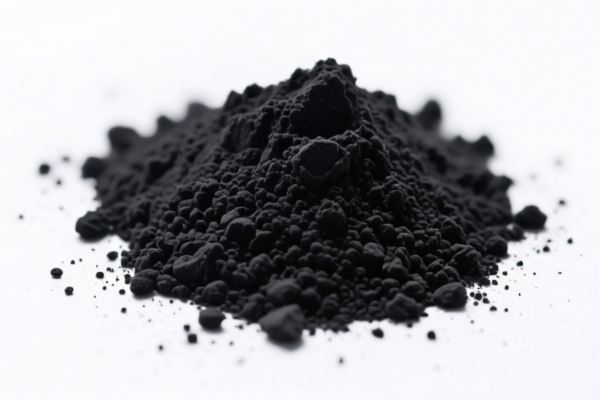
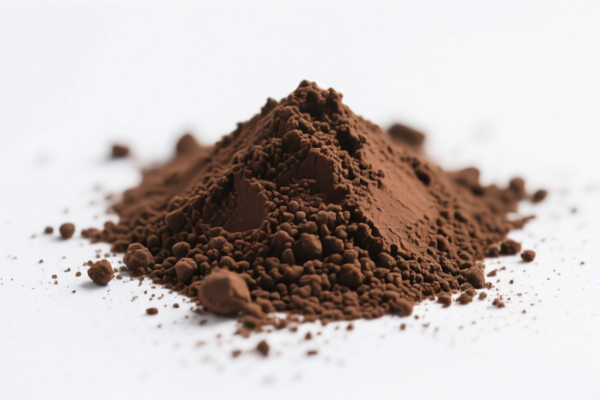
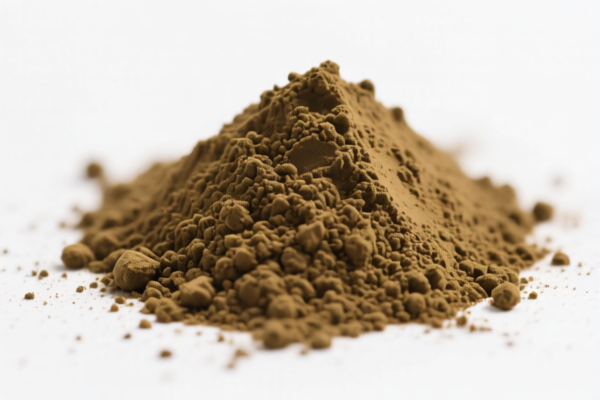

AI Analysis
🕷️ Inorganic Insecticide Soluble Powder (无机杀虫可溶性粉剂)
🌐 HS Code Reference & Customs Clearance Guide | 2026 Latest Tariff Analysis | Professional Entry Strategy
📌 1. Product Definition: What exactly is "Inorganic Insecticide Soluble Powder"?
Insecticides are chemical substances used to destroy pests. They are broadly categorized into Organic (carbon-based, e.g., pyrethroids, organophosphates) and Inorganic (non-carbon-based, e.g., sulfur, arsenic compounds, metal salts, phosphides).
- Inorganic Insecticide: The active ingredient does not contain carbon-hydrogen bonds. Common examples include sulfur powder, calcium arsenate, or metal phosphides.
- Soluble Powder (可溶性粉剂): A pesticide formulation form where the active ingredient is dissolved or suspended in water to form a spray. It is distinct from "Wettable Powder" (WP) which may not fully dissolve.
⚠️ Key Classification Challenge:
The critical distinction lies in whether the product is classified as a raw chemical compound (Chapter 28) or a prepared pesticide formulation (Chapter 38).
* If it is a pure chemical substance used primarily for its chemical properties → Chapter 28.
* If it is a mixed formulation prepared for retail/pest control use → Chapter 38.
📦 2. HS Code Classification Details (2026 Latest Tariff Alignment)
Based on the provided data, there are 5 potential HS Codes. The correct choice depends on the precise chemical composition and regulatory status of the product.
| HS Code | Product Description | Applicability & Logic | Total Tax Rate |
|---|---|---|---|
2853.90.50.00 |
Other Phosphides (Inorganic) | Fits if the active ingredient is a metal/non-metal phosphide (e.g., Aluminum Phosphide). It is an inorganic compound in powder form. | 35.0% |
3808.91.30.00 |
Insecticides (Preparations) | Fits if the product is a commercial preparation containing inorganic active ingredients specifically formulated for killing insects. Explicitly matches "Inorganic + Insecticide Use". | 40.0% |
2853.90.90.90 |
Other Inorganic Compounds | Fits for other inorganic compounds (non-phosphides) in powder form, no material conflict. General category for inorganic chemicals not elsewhere specified. | 37.8% |
3808.91.50.01 |
Insecticide Preparations (Powder) | Matches Insecticide Use + Powder Formulation. No material conflict. Specific sub-heading for prepared insecticides. | 40.0% |
3808.99.95.01 |
Other Pesticide Preparations | Fits if classified broadly under "Chemical Pesticide Preparations" (Powder form). No material conflict. Broader category under Chapter 38. | 40.0% |
🔍 Critical Distinction:
- Chapter 28 (2853.xxxx): Treats the item as a raw chemical. Lower base tariffs, but strict purity/definition requirements.
- Chapter 38 (3808.xxxx): Treats the item as a pesticide product. Higher base tariffs (5%), but applies to commercial formulations.
💰 3. 2026 Latest Tariff Rate Breakdown (Including Surtaxes & Policy Add-ons)
✅ Applicable Country: USA (US)
✅ Origin: China (CN)
✅ Effective Date: November 10, 2025 (and subsequent imports)
🎯 1. 2853.90.50.00 – Phosphides (Inorganic Compound)
| Item | Content |
|---|---|
| Base Tariff | 0.0% (ad valorem) |
| USITC Surtax | +25.0% (Section 301) |
| IEEPA Surtax | +10.0% (Section 122/China-specific) |
| Total Rate | 35.0% |
| Tax Calculation | CIF Value × 35% |
| De Minimis Exemption | ❌ Not Available |
| Legal Basis Path | IEEPA:122 → USITC:2853.90.50.00 |
📌 Explanation:
- Base 0%: Raw inorganic phosphides often have low base duties.
- +25%: Standard Section 301 surtax on Chinese goods.
- +10%: Additional surtax under IEEPA (122 clauses) targeting specific Chinese chemical imports.
- Total 35%: High effective rate despite 0% base.
🎯 2. 3808.91.30.00 – Insecticides (Preparations, Inorganic)
| Item | Content |
|---|---|
| Base Tariff | 5.0% |
| USITC Surtax | +25.0% (Section 301) |
| IEEPA Surtax | +10.0% (Section 122/China-specific) |
| Total Rate | 40.0% |
| Tax Calculation | CIF Value × 40% |
| De Minimis Exemption | ❌ Not Available |
| Legal Basis Path | IEEPA:122 → USITC:3808.91.30.00 |
📌 Explanation:
- Base 5%: Commercial pesticide preparations carry a standard base duty.
- +25% +10%: Same surtax structure as above.
- Total 40%: Highest among the options. Justifiable only if clearly a prepared pesticide and not a pure chemical.
🎯 3. 2853.90.90.90 – Other Inorganic Compounds
| Item | Content |
|---|---|
| Base Tariff | 2.8% |
| USITC Surtax | +25.0% (Section 301) |
| IEEPA Surtax | +10.0% (Section 122/China-specific) |
| Total Rate | 37.8% |
| Tax Calculation | CIF Value × 37.8% |
| De Minimis Exemption | ❌ Not Available |
| Legal Basis Path | IEEPA:122 → USITC:2853.90.90.90 |
📌 Explanation:
- Base 2.8%: Slightly higher base than phosphides, but still lower than Chapter 38.
- Total 37.8%: Middle ground option for non-phosphide inorganic chemicals.
🎯 4. 3808.91.50.01 – Insecticide Preparations (Powder)
| Item | Content |
|---|---|
| Base Tariff | 5.0% |
| USITC Surtax | +25.0% (Section 301) |
| IEEPA Surtax | +10.0% (Section 122/China-specific) |
| Total Rate | 40.0% |
| Tax Calculation | CIF Value × 40% |
| De Minimis Exemption | ❌ Not Available |
| Legal Basis Path | IEEPA:122 → USITC:3808.91.50.01 |
📌 Explanation:
- Same tax structure as3808.91.30.00.
- Use this if the product is explicitly labeled as a powder formulation for insecticide use.
🎯 5. 3808.99.95.01 – Other Pesticide Preparations
| Item | Content |
|---|---|
| Base Tariff | 5.0% |
| USITC Surtax | +25.0% (Section 301) |
| IEEPA Surtax | +10.0% (Section 122/China-specific) |
| Total Rate | 40.0% |
| Tax Calculation | CIF Value × 40% |
| De Minimis Exemption | ❌ Not Available |
| Legal Basis Path | IEEPA:122 → USITC:3808.99.95.01 |
📌 Explanation:
- Broadest category under Chapter 38.
- Use only if the product does not fit more specific sub-headings in 3808.91.
🛠️ 4. Customs Clearance Practical Advice (Pitfall Avoidance Guide)
✅ 1. Documentation Checklist (Mandatory)
| Document | Required | Explanation |
|---|---|---|
| ✅ Safety Data Sheet (SDS) | ✔️ | Must clearly state chemical composition, confirming Inorganic nature. |
| ✅ Formula/Composition List | ✔️ | Detail the active ingredient and percentage. Crucial for distinguishing Chapter 28 vs. 38. |
| ✅ Product Photographs | ✔️ | Show packaging, label, and powder texture. |
| ✅ Label/Labeling Compliance | ✔️ | Must include EPA registration number (if applicable) or chemical identification. |
| ✅ Commercial Invoice | ✔️ | Clearly state "Inorganic Insecticide, Soluble Powder". Avoid vague terms like "Pest Control Chemical". |
| ✅ Origin Certificate | ✔️ | Required for surtax determination. |
| ✅ Packing List | ✔️ | Detail net/gross weight and packaging type. |
✅ 2. Declaration Strategy (Key Mantra)
🔥 "Chemical vs. Preparation: Define First! Chapter 28 for Pure, Chapter 38 for Mix!"
| Scenario | Correct Declaration | Wrong Practice |
|---|---|---|
| Pure Phosphide (e.g., AlP) | 2853.90.50.00 (35%) |
Misdeclare as "Pesticide" → 40% |
| Pure Inorganic Salt (Non-Phosphide) | 2853.90.90.90 (37.8%) |
Misdeclare as "Pesticide" → 40% |
| Commercial Insecticide Mix (Inorganic Active) | 3808.91.30.00 or 3808.91.50.01 (40%) |
Misdeclare as "Raw Chemical" → Risk of audit/fine |
| General Pesticide Powder (Vague) | 3808.99.95.01 (40%) |
No specific description → Delayed clearance |
📌 Note:
- Chapter 28 codes have lower total taxes (35-37.8%) but require proof that the product is a pure chemical compound, not a formulated pesticide.
- Chapter 38 codes have higher taxes (40%) but are safer for commercially packaged insecticides with additives.
✅ 3. Special Cases & Handling
| Case | Handling Advice |
|---|---|
| EPA Registered Product | If the product is registered with the US EPA as a pesticide, it must be classified under Chapter 38 (3808.xxxx). Do not attempt Chapter 28. |
| Industrial Use Only | If the inorganic chemical is used for industrial purposes (not pest control), classify under Chapter 28. |
| Mixed Package (Chemical + Applicator) | Declare the chemical under its correct HS Code. The applicator may be separate. Do not bundle. |
| Unclear Composition | Provide SDS. If unclear, customs may assess at Chapter 38 (40%) as the default for "pesticide-like" goods. |
🌍 5. Global Market Comparison (2026 Latest)
| Country/Region | Recommended HS Code | Tariff | Certification Requirement | Notes |
|---|---|---|---|---|
| 🇺🇸 USA | 2853.90.50.00 or 3808.91.30.00 |
35-40% | EPA Registration (if pesticide) | Highest surtaxes (35-40%). Strict SDS review. |
| 🇨🇳 China | 2853.90.50.00 or 3808.91.30.00 |
5-10% | Pesticide Registration License | No US surtaxes. Lower overall cost. |
| 🇪🇺 EU | 2853.90.50.00 or 3808.91.30.00 |
0-6.5% | REACH + BPR Registration | No Section 301 taxes. REACH compliance critical. |
| 🇦🇺 Australia | 2853.90.50.00 or 3808.91.30.00 |
5% | APVMA Registration | Moderate tariffs. APVMA approval required. |
| 🇯🇵 Japan | 2853.90.50.00 or 3808.91.30.00 |
0-5% | Fertilizer & Pesticide Control Law | Low tariffs. Strict residue limits. |
📌 Conclusion:
- USA is the most expensive market due to Section 301 (25%) + IEEPA (10%) surtaxes.
- EU/Japan offer lower tariffs but have stricter chemical registration (REACH, APVMA).
- Chapter 28 offers a 2.2-5% tax saving over Chapter 38, but only if the product qualifies as a pure chemical.
📌 6. Common Errors & Pitfalls (Lessons Learned)
❌ Error 1: Declaring a commercial pesticide as a raw chemical (2853.xxxx)
👉 Consequence: Customs audit, penalty, and forced reclassification to 3808.xxxx → Extra 5% tax + delays.
❌ Error 2: Not providing SDS for inorganic compounds
👉 Consequence: Customs cannot verify "inorganic" status → Delays, potential seizure.
❌ Error 3: Using vague terms like "Pest Control Powder" without specifying Inorganic
👉 Consequence: Customs may assume Organic (Chapter 38) and apply higher scrutiny or different sub-headings.
❌ Error 4: Ignoring EPA Registration for US imports
👉 Consequence: Illegal import. Products will be seized and destroyed.
✅ Correct Practice:
"Aluminum Phosphide, Inorganic Insecticide, Soluble Powder, Pure Chemical Form, Not a Formulated Pesticide, EPA Not Required"
or
"Inorganic Insecticide Spray, Soluble Powder, Formulated Product, EPA Reg. No. XXXXX"
🎯 7. Conclusion: Professional Declaration, Cost Savings, Risk Mitigation
🎯 Remember the Mantra:
🔹 "Pure Chemical = Chapter 28 (35-37.8%), Formulated Pesticide = Chapter 38 (40%)."
🔹 "SDS is King! No SDS, No Entry."
🔹 "EPA Registration Mandatory for Pesticides in the USA!"
📌 Pro Tip:
If your product is a pure inorganic chemical (e.g., technical grade phosphide) used by professionals, argue for Chapter 28 to save 2.2-5% in tariffs.
If it is a ready-to-use pesticide mix, declare under Chapter 38 to avoid compliance issues.
Always consult a customs broker for pre-classification rulings if unsure.
📣 Immediate Action:
📞 Contact a licensed customs broker + Provide SDS + Apply for Pre-classification Ruling (if high value)
🚀 Ensure smooth clearance, cost efficiency, and regulatory compliance for your Inorganic Insecticide Soluble Powder.
✨ Professional Customs Clearance Starts with Accurate Classification!
💼 Every Percent Saved is Profit Gained!
Customer Reviews
About HS Code Classification
The Harmonized System (HS) is an internationally standardized nomenclature developed by the World Customs Organization (WCO) to classify traded products. Over 200 countries use the HS system as the basis for customs tariffs, trade statistics, and import/export regulations.
Each HS code follows a hierarchical structure:
- Chapter (2 digits) — Broad category of goods (e.g., Chapter 84: Machinery and Mechanical Appliances)
- Heading (4 digits) — More specific grouping within the chapter
- Subheading (6 digits) — Internationally standardized breakdown, used by all WCO member countries
- National subdivisions (8-10 digits) — Country-specific extensions for further classification, such as US HTSUS 10-digit codes
Correct HS code classification is essential for smooth customs clearance, accurate duty payment, and compliance with trade regulations. Misclassification can lead to customs delays, overpayment of duties, or penalties.
When importing from CN to US, the applicable tariff rates may include:
- Most-Favored-Nation (MFN) rate — The standard duty rate applied to WTO members
- General rate — Applied to countries without trade agreements
- Trade remedy duties — Additional tariffs such as Section 301 (anti-dumping), Section 232 (national security), or countervailing duties
The information provided on this page is for reference purposes only. For official classification, please consult with your local customs authority or a licensed customs broker.