Inorganic Insecticide Trap
CN → US| HS Code | Tariff Rate | Origin | Destination | Doc |
|---|---|---|---|---|
| 7326908688 | 87.9% | CN | US | Official Doc |
| 3808913000 | 40.0% | CN | US | Official Doc |
| 7326190080 | 87.9% | CN | US | Official Doc |
| 3808997000 | 40.0% | CN | US | Official Doc |
| 3808911000 | 37.8% | CN | US | Official Doc |
Product Images
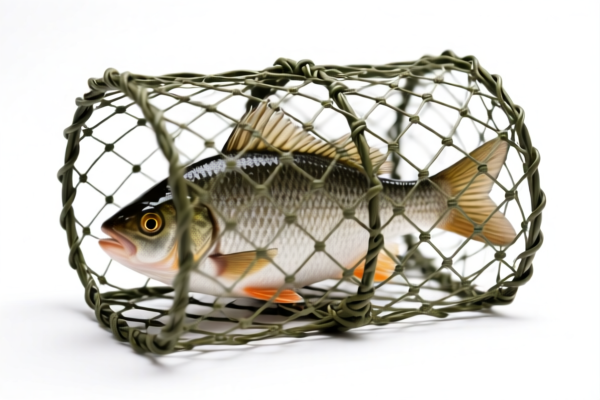
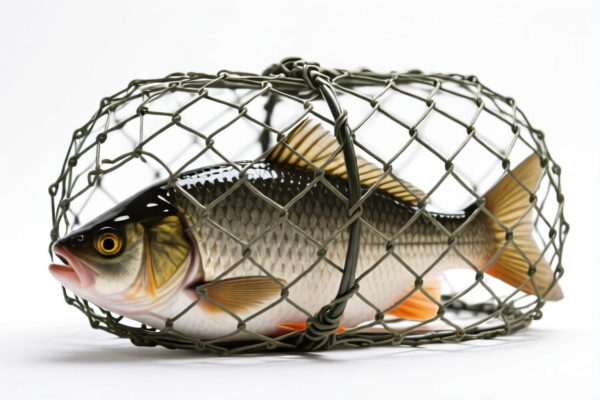
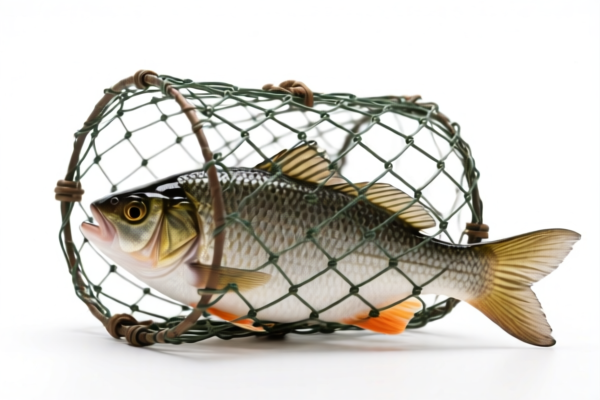

AI Analysis
🐛 Inorganic Insecticide Trap – HS Code & Tariff Guide (2026 Update)
🌐 HS Code Classification & Customs Clearance Strategy | 2026 Latest Tariff Rules | Expert-Level Compliance Blueprint
📌 One Product, Multiple Codes — Know the Difference to Avoid 40%+ Tariffs!
📦 1. Product Definition & Classification Breakdown
An Inorganic Insecticide Trap is a pest control device that uses inorganic chemical substances (e.g., borax, silica gel, metal salts) to attract, kill, or repel insects. It is not a simple bait or adhesive trap — it contains active inorganic ingredients designed to disrupt insect physiology.
⚠️ Key Classification Clue:
- If the product contains inorganic substances AND is used for insect control → Must be classified under 3808.91 or 3808.99
- If it's purely mechanical (e.g., sticky pad, electric grid) → May fall under other categories (e.g., 8509.80), but not applicable here
🔍 2. HS Code Classification Table (2026 Official Tariff Schedule)
| HS Code | Product Description | Tax Rate | Key Features |
|---|---|---|---|
3808.91.30.00 |
Inorganic insecticides, containing inorganic substances, used for pest control | 40.0% | Contains inorganic active ingredient; trap format |
3808.99.70.00 |
Other insecticides, not elsewhere specified, with inorganic components | 40.0% | Non-specific insecticide trap with inorganic agents |
3808.91.10.00 |
Insecticides (inorganic-based), used for pest control, often in sticky or chemical formulations | 37.8% | Lower base tariff, but still subject to major add-ons |
✅ All three codes are valid for inorganic insecticide traps — the difference lies in specificity of formulation and active ingredient type.
💰 3. 2026 Tariff Breakdown – Detailed & Compliant
✅ Applicable Country: United States (US)
✅ Origin: China (CN)
✅ Effective Date: November 10, 2025 (inclusive)
🎯 1. 3808.91.30.00 – Inorganic Insecticide Trap (Specific)
| Tax Component | Rate | Legal Basis | Notes |
|---|---|---|---|
| Base Duty | 5.0% | HTSUS 3808.91.30.00 | Standard rate for inorganic insecticides |
| Section 301 (USITC) Add-on | +25.0% | USITC Footnote 9903.88.01 | Applies to all Chinese-origin chemical products |
| IEEPA (Emergency Powers) Add-on | +10.0% | IEEPA:9903.01.24 | Applies to all goods from China/HK under national emergency |
| Total Effective Rate | 40.0% | — | No de minimis exemption |
| Tax Calculation | CIF × 40.0% | — | Must include freight, insurance, and value |
| De Minimis? | ❌ No | 19 CFR § 10.17 | Even $100 worth triggers full tariff |
📌 Legal Pathway:
IEEPA:9903.01.24→USITC:3808.91.30.00→FOOTNOTE:9903.88.01
All three layers apply — no escape!
🎯 2. 3808.99.70.00 – Other Inorganic Insecticide Traps
| Tax Component | Rate | Legal Basis | Notes |
|---|---|---|---|
| Base Duty | 5.0% | HTSUS 3808.99.70.00 | General category for unspecified insecticides |
| Section 301 Add-on | +25.0% | USITC Footnote 9903.88.01 | Applies to all Chinese chemical imports |
| IEEPA Add-on | +10.0% | IEEPA:9903.01.24 | Applies to all China-origin goods under emergency powers |
| Total Effective Rate | 40.0% | — | Same as above |
| De Minimis? | ❌ No | 19 CFR § 10.17 | No relief even for small shipments |
📌 Why this code?
Used when the exact formulation is not specified or when the trap is not listed under 3808.91.10.00/30.00.
🎯 3. 3808.91.10.00 – Inorganic Insecticides (General Use)
| Tax Component | Rate | Legal Basis | Notes |
|---|---|---|---|
| Base Duty | 2.8% | HTSUS 3808.91.10.00 | Slightly lower base rate |
| Section 301 Add-on | +25.0% | USITC Footnote 9903.88.01 | Applies to all Chinese chemical goods |
| IEEPA Add-on | +10.0% | IEEPA:9903.01.24 | Applies to all China-origin products |
| Total Effective Rate | 37.8% | — | Still very high |
| De Minimis? | ❌ No | 19 CFR § 10.17 | No exemption for small shipments |
📌 Best for: Traps with inorganic-based active ingredients but not specifically listed in 3808.91.30.00.
🛠️ 4. Customs Clearance Best Practices (Pro Tips)
✅ 1. Required Documentation (Must-Have)
| Document | Why It’s Critical |
|---|---|
| ✅ Product Specification Sheet | Must clearly state: "Contains inorganic insecticide (e.g., sodium silicate, borax)" |
| ✅ Chemical Composition Report | Proof of inorganic content (e.g., lab test, SDS) |
| ✅ Product Photos (with label) | Show packaging, active ingredient list, trap mechanism |
| ✅ Commercial Invoice | Must use exact HS Code and correct product name |
| ✅ Certificate of Origin (CO) | Required for tariff claims; China origin = full 40% |
| ✅ Safety Data Sheet (SDS) | Proves chemical safety and compliance |
| ✅ Test Report (e.g., EPA, FDA) | If applicable for pest control claims |
✅ 2.申报技巧(申报口诀)
🔥 "Inorganic + Trap = 3808.91/99.70 | No de minimis | 40% or 37.8% | Never guess!"
| Scenario | Correct HS Code | Wrong Code | Risk |
|---|---|---|---|
| Trap with borax/silica gel | 3808.91.30.00 |
3808.99.70.00 |
Lower tax? No — same rate |
| Generic inorganic trap | 3808.99.70.00 |
3808.91.10.00 |
Risk of audit |
| Trap with unspecified inorganic agent | 3808.99.70.00 |
8543.70.00 (electrical trap) |
Major misclassification! |
| Trap with only glue/sticky pad | ❌ Not eligible | 3808.91.30.00 |
Wrong! — no inorganic active ingredient |
✅ 3. Special Case Handling
| Situation | Recommended Action |
|---|---|
| OEM/White-label trap | Provide customer order + ingredient list to prove origin |
| Multiple traps in one box | Declare per unit — don’t combine values |
| Used for agricultural use | Apply for "Non-commercial" exemption — requires documentation |
| Export to EU/UK/AU | Lower or zero tariffs — check local rules (e.g., REACH, CLP) |
🌍 5. Global Market Comparison (2026)
| Country | Recommended HS Code | Tariff | Certification | Notes |
|---|---|---|---|---|
| 🇺🇸 USA | 3808.91.30.00 or 3808.99.70.00 |
40.0% | EPA, SDS, FCC | No de minimis |
| 🇨🇳 China | 3808.91.30.00 |
5% | CCC, RoHS | No extra tariffs |
| 🇪🇺 EU | 3808.91.30.00 |
0% (if REACH compliant) | REACH, CLP | No IEEPA/301 |
| 🇦🇺 Australia | 3808.91.30.00 |
5% | APVMA, RCM | No 301/IEEPA |
| 🇯🇵 Japan | 3808.91.30.00 |
0% | PSE, JIS | No extra duties |
📌 Insight:
- Only the US imposes 40%+ tariffs on inorganic insecticide traps from China.
- Vietnam/Mexico/Thailand origin may qualify for IEEPA exemption → 0% tariff.
🚨 6. Common Mistakes & Costly Errors
❌ Mistake 1: Declaring as “sticky trap” or “glue trap” → 3808.91.30.00 ❌
👉 Result: If no inorganic ingredient → misclassification, fines, delay
❌ Mistake 2: Using 8543.70.00 (electrical pest trap)
👉 Result: If contains inorganic chemical, wrong code → audit, penalty, reclassification
❌ Mistake 3: Not providing SDS or lab report
👉 Result: Customs may reject or delay shipment
❌ Mistake 4: Assuming de minimis applies
👉 Result: Even $100 shipment → 40% tax → huge surprise
✅ Correct Declaration Example:
"Inorganic Insecticide Trap, containing sodium silicate (inorganic), for indoor pest control, Model XYZ, SDS Attached, Origin: China"
🎯 7. Final Verdict: Avoid the 40% Trap!
🔹 HS Code is NOT optional — it determines your profit margin
🔹 Inorganic + Insecticide = 3808.91/99.70 → 40.0% tariff in US
🔹 No de minimis, no exemptions, no escape
🔹 Even 1kg shipment = $400+ tax (if $1,000 value)
📌 8. Pro Tip: How to Reduce Tariff Risk
✅ Switch origin to Vietnam, Mexico, or Thailand → Eligible for IEEPA exemption → 0% tariff
✅ Apply for Advance Ruling (Pre-Approval) → Get official HS Code confirmation
✅ Use a U.S.-based customs broker with 3808.91.30.00 experience
✅ Label clearly: “Contains inorganic insecticide” — avoid ambiguity
📣 Act Now!
📞 Contact a specialized customs broker + provide product specs + SDS + photos
🚀 Apply for HS Code pre-ruling before shipping
💼 Save thousands in tariffs — don’t gamble with compliance!
✨ Professional Compliance Starts Here
💼 Your product’s HS Code isn’t just a number — it’s your profit margin.
🎯 Get it right. Ship it fast. Win the market.
Customer Reviews
About HS Code Classification
The Harmonized System (HS) is an internationally standardized nomenclature developed by the World Customs Organization (WCO) to classify traded products. Over 200 countries use the HS system as the basis for customs tariffs, trade statistics, and import/export regulations.
Each HS code follows a hierarchical structure:
- Chapter (2 digits) — Broad category of goods (e.g., Chapter 84: Machinery and Mechanical Appliances)
- Heading (4 digits) — More specific grouping within the chapter
- Subheading (6 digits) — Internationally standardized breakdown, used by all WCO member countries
- National subdivisions (8-10 digits) — Country-specific extensions for further classification, such as US HTSUS 10-digit codes
Correct HS code classification is essential for smooth customs clearance, accurate duty payment, and compliance with trade regulations. Misclassification can lead to customs delays, overpayment of duties, or penalties.
When importing from CN to US, the applicable tariff rates may include:
- Most-Favored-Nation (MFN) rate — The standard duty rate applied to WTO members
- General rate — Applied to countries without trade agreements
- Trade remedy duties — Additional tariffs such as Section 301 (anti-dumping), Section 232 (national security), or countervailing duties
The information provided on this page is for reference purposes only. For official classification, please consult with your local customs authority or a licensed customs broker.