Inorganic Low Alkali Cement Additive
CN → US| HS Code | Tariff Rate | Origin | Destination | Doc |
|---|---|---|---|---|
| 381590 | 0.0% | CN | US | Official Doc |
| 381510 | 0.0% | CN | US | Official Doc |
| 3824402000 | 35.0% | CN | US | Official Doc |
| 3824405000 | 40.0% | CN | US | Official Doc |
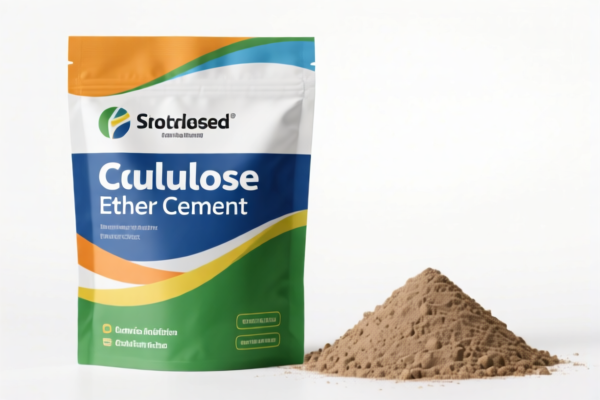
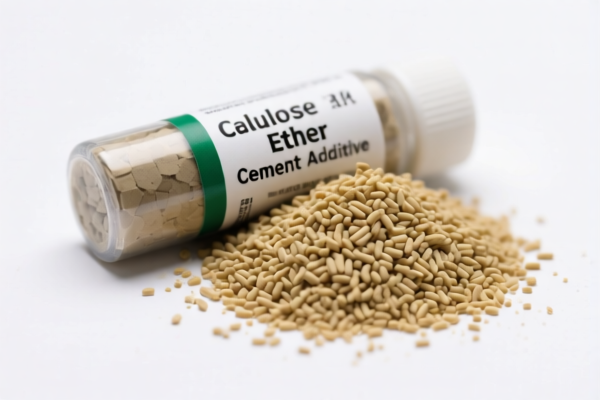
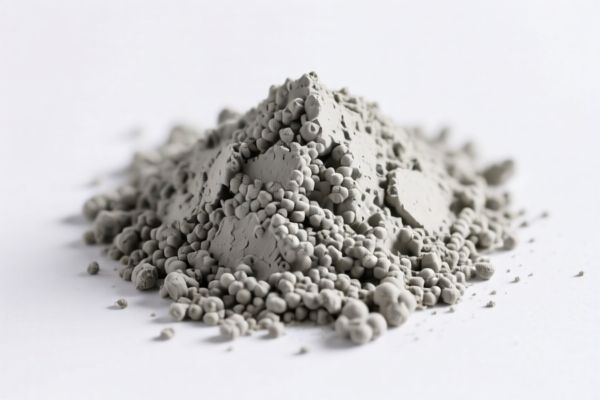
Product Images
AI Analysis
🏗️ Inorganic Low Alkali Cement Additives
Chemical Products for Cement Modification | Admixtures & Binders
🌐 HS Code Classification & Customs Clearance Guide | 2026 Tariff Analysis | Expert Compliance Strategy
📌 I. Product Definition & Classification: What Exactly Are You Importing?
"Inorganic Low Alkali Cement Additives" are specialized chemical preparations used in the construction industry to modify the properties of cement. Their primary functions include: * Controlling Setting Time: Accelerating or retarding the hardening process. * Enhancing Strength: Improving compressive and tensile strength. * Improving Workability: Increasing fluidity or reducing water content. * Chemical Stability: Specifically "Low Alkali" additives help prevent Alkali-Aggregate Reaction (AAR), a destructive expansion in concrete.
In international trade, these products fall under Chapter 38 (Miscellaneous Chemical Products). The critical distinction lies in how they are prepared: 1. Prepared Binders/Additives for Cement: Classified under 3824.40. 2. Other Chemical Preparations (General): Classified under 3815 or 3816 (if not specifically for cement binding).
⚠️ Key Distinction:
- If the product is explicitly a preparation for use in cement/concrete (admixtures, modifiers) → Likely 3824.40.
- If the product is a general chemical additive (e.g., catalysts, activators) not specifically formulated as a "cement additive" but used in cement manufacturing → May fall under 3815 or 3816.
- Binding Agents vs. Admixtures: "Binders" (3824.40) typically refer to substances that hold materials together (like resins or specialized glues for molds), while "Additives" (also 3824.40) modify properties. The HS Code 3824.40 explicitly covers "Prepared additives for cements, mortars or concretes."
📦 II. HS Code Classification Details (2026 Latest Tariff Reference)
Based on the provided data, here are the applicable HS Codes for Inorganic Low Alkali Cement Additives:
| HS Code | Product Description | Applicable Scenario | Tax Rate (Total) |
|---|---|---|---|
3824.40.20.00 |
Prepared additives for cements, mortars or concretes: Consisting wholly of inorganic substances | Purely inorganic additives (e.g., silica fume, limestone powder, inorganic polymers) used to modify cement properties | 25.0% (Base: 0% + Additional: 25%) |
3824.40.50.00 |
Prepared additives for cements, mortars or concretes: Other | Additives containing organic components or mixtures not wholly inorganic (e.g., organic-inorganic hybrid admixtures) | 30.0% (Base: 5% + Additional: 25%) |
3815.90 |
Other chemical products not elsewhere specified or included: Inorganic low alkali cement additives, used as admixtures in cement to modify setting time, strength, or workability | Generic "Other" Category: If the product does not fit strictly into "prepared binders/additives for cements" under 3824, or is classified as a general chemical preparation. Note: Tax retrieval failed. | Error (See Section III) |
3815.10 |
Chemical products for use in the manufacture of cement, including additives that modify cement properties | Manufacturing Process Additives: Chemicals used during the cement manufacturing process (e.g., kiln additives) rather than as admixtures in the final concrete mix. Note: Tax retrieval failed. | Error (See Section III) |
🔍 Critical Analysis:
-3824.40is the Primary Target: Most "Inorganic Low Alkali Cement Additives" used as admixtures (added to wet concrete) should fall under 3824.40.20.00 if they are wholly inorganic. This is the most common and likely classification. -3815.xas Alternative: If the product is not considered a "prepared additive for cement" but rather a "chemical product for use in cement manufacturing" (e.g., raw material processing aids), it might fall under 3815. However, tax data is unavailable, requiring manual verification. - ⚠️ Warning: Misclassification between 3824.40 and 3815 can lead to significant tax discrepancies (25% vs. Unknown/Error). Always prioritize 3824.40 for end-use admixtures.
💰 III. 2026 Tariff Rate Detail Explanation (Including Additional Duties & Policy Surcharge)
✅ Applicable Country: United States (US)
✅ Origin: China (CN)
✅ Effective Date: 2025/2026 Tariff Rates
🎯 1. 3824.40.20.00 —— Inorganic Cement Additives (Wholly Inorganic)
| Item | Detail |
|---|---|
| Base Tariff | 0.0% (Ad Valorem) |
| Additional Tariff (Section 301) | +25.0% |
| Total Effective Rate | 25.0% |
| Tax Calculation Basis | CIF Value × 25% |
| De Minimis Exemption | ❌ Not Applicable (Section 301 duties apply regardless of value) |
| Legal Basis Path | HTSUS:3824.40.20.00 → USITC:301:3824.40.20.00 |
📌 Explanation:
- The 0% base rate reflects the standard MFN (Most Favored Nation) duty for prepared cement additives.
- The +25% additional tariff is imposed under Section 301 of the Trade Act of 1974 on specific Chinese-origin goods.
- No base tariff means the entire 25% is an additional surcharge. This is a high-cost import category.
🎯 2. 3824.40.50.00 —— Other Cement Additives (Non-Wholly Inorganic)
| Item | Detail |
|---|---|
| Base Tariff | 5.0% (Ad Valorem) |
| Additional Tariff (Section 301) | +25.0% |
| Total Effective Rate | 30.0% |
| Tax Calculation Basis | CIF Value × 30% |
| De Minimis Exemption | ❌ Not Applicable |
| Legal Basis Path | HTSUS:3824.40.50.00 → USITC:301:3824.40.50.00 |
📌 Explanation:
- Products not wholly inorganic (e.g., containing organic polymers, surfactants, or binders) face a higher total duty (30%).
- Cost Impact: A $10,000 shipment incurs $3,000 in duties vs. $2,500 for wholly inorganic products.
🎯 3. 3815.90 & 3815.10 —— General Chemical Preparations
| Item | Detail |
|---|---|
| Tax Status | ❌ Error / Failed to Retrieve |
| Action Required | Manual Verification Needed |
| Risk | High uncertainty. May be subject to different Section 301 lists or general duties (typically 0-10% base + potential 25% surcharge). |
| Recommendation | Do NOT rely on this classification for initial budgeting. Consult a customs broker for a Binding Ruling if the product does not fit 3824.40. |
⚠️ Critical Note:
- The "Error" in tax data for3815codes indicates incomplete database coverage.
- General Rule: Most chemical products from China are subject to Section 301 additional duties (25%). Base rates vary (0-10%).
- Conservative Estimate: Assume 25-35% total duty for3815codes until verified.
🛠️ IV. Customs Clearance Practical Advice (Pitfall Avoidance Guide)
✅ 1. Required Documentation Checklist
| Document | Mandatory? | Purpose |
|---|---|---|
| ✅ Product Specification Sheet | ✔️ | Must clearly state: "Wholly Inorganic" or "Contains Organic Components". This determines 3824.40.20.00 vs. 3824.40.50.00. |
| ✅ Certificate of Composition | ✔️ | Detailed chemical breakdown (percentages of inorganic vs. organic substances). |
| ✅ Function Description | ✔️ | Explicitly state: "Used as an admixture in cement/concrete to modify setting time/strength." Avoid vague terms like "chemical filler." |
| ✅ Commercial Invoice | ✔️ | HS Code 3824.40.20.00 or 3824.40.50.00. Must match physical product. |
| ✅ Packing List | ✔️ | Ensure no mixed shipments (e.g., inorganic powder + organic liquid) in one container without separate declaration. |
| ✅ MSDS (Material Safety Data Sheet) | ✔️ | Required for chemical imports. Confirms non-hazardous status (if applicable). |
✅ 2. Classification Strategy (Key Decision Points)
🔥 Golden Rule: "Inorganic = 25%, Other = 30%. Prove your composition!"
| Scenario | Correct HS Code | Duty Rate | Why? |
|---|---|---|---|
| Pure Inorganic Powder (e.g., limestone, silica, clay) | 3824.40.20.00 |
25% | Consists wholly of inorganic substances. |
| Hybrid Additive (e.g., inorganic + organic polymer) | 3824.40.50.00 |
30% | Contains organic components → "Other" category. |
| Cement Manufacturing Aid (e.g., kiln dust modifier) | 3815.x |
Unknown/Error | Not an "admixtures for concrete" → May be misclassified if forced into 3824. |
| Unspecified Chemical | 3815.90 |
Error | High risk. Avoid unless proven. |
📌 Warning:
- Do NOT declare "Inorganic Additives" if they contain trace organics (e.g., anti-foaming agents, surfactants). This will push you into 3824.40.50.00 (30%).
- Preparation Matters: If the product is a mixture of natural inorganic substances (e.g., blended mineral powders), it may still qualify for 3824.40.20.00 if it is "wholly inorganic."
✅ 3. Special Cases & Risk Mitigation
| Case | Handling Advice |
|---|---|
| OEM Custom Blend | Provide batch-specific composition analysis. If organic content <1%, still classify as "Other" (3824.40.50.00) unless legally defined as "wholly inorganic" by national standards. |
| Liquid vs. Powder | Both fall under 3824.40 if they are prepared additives. Ensure MSDS is up-to-date. |
| Origin Fraud Risk | Ensure Certificate of Origin proves China Origin. If transshipped via Vietnam, ensure no substantial transformation occurred to avoid Section 301 liability. |
| Section 301 Exclusion | Check if 3824.40 products are excluded from Section 301 tariffs. Current Status: Most cement additives are NOT excluded. |
🌍 V. Global Market Comparison (2026 Tariff Overview)
| Country/Region | Recommended HS Code | Duty Rate | Certification | Notes |
|---|---|---|---|---|
| 🇺🇸 USA | 3824.40.20.00 |
25% | SDS, CO | Highest duty due to Section 301. |
| 🇨🇳 China (Import) | 3824.40.20.00 |
5% | None | Standard import duty. |
| 🇪🇺 EU | 3824.40 |
0-6.5% | REACH, CLP | No Section 301 equivalent. |
| 🇯🇵 Japan | 3824.40 |
3-6% | JIS | Moderate duty. |
| 🇦🇺 Australia | 3824.40 |
5% | ACS | Low duty. |
📌 Conclusion:
- USA is the most expensive market for these products due to 25% additional tariff.
- EU/Asia markets are significantly cheaper (0-6.5%).
- Supply Chain Strategy: Consider sourcing from non-China origins (e.g., Turkey, India) for US-bound shipments to avoid 25% duty.
📌 VI. Common Mistakes & Pitfalls (Lessons Learned)
❌ Mistake 1: Declaring "Cement Additive" without specifying composition.
👉 Result: Customs may classify as 3824.40.50.00 (30%) by default if inorganic proof is lacking.
👉 Fix: Always include "Wholly Inorganic" in description if applicable.
❌ Mistake 2: Using 3815.90 for cement admixtures.
👉 Result: Potential audit for misclassification. 3824.40 is the specific heading for cement additives.
👉 Fix: Use 3824.40 unless the product is strictly for cement manufacturing (not concrete use).
❌ Mistake 3: Ignoring Section 301 impact.
👉 Result: Underestimating landed cost by 25%.
👉 Fix: Factor 25-30% duty into pricing models for US imports.
❌ Mistake 4: Mixing organic and inorganic products in one shipment.
👉 Result: Complex declaration required, potential delays.
👉 Fix: Separate shipments by composition type.
🎯 VII. Conclusion: Precision Saves Money!
🎯 Key Takeaways:
🔹 "Wholly Inorganic = 25%, Otherwise = 30%."
🔹 "Prove your composition!" (Certificate of Composition is critical).
🔹 "Use HS Code 3824.40 for cement admixtures."
🔹 "Avoid 3815 unless you are sure it's not a cement additive."
📌 Pro Tip:
If your additive is >99% inorganic, declare as
3824.40.20.00to save 5% on duties ($500 per $10,000 shipment).
Always verify with a customs broker if your product contains any organic components.
📣 Immediate Action:
📞 Contact Customs Broker + Provide MSDS + Composition Report + Apply for Pre-Ruling if unsure.
🚀 Optimize your supply chain: Consider non-China sourcing for US-bound cement additives to eliminate 25% duty.
✨ Smart Classification, Higher Profits!
💼 Your Landed Cost Starts with the Right HS Code!
Customer Reviews
About HS Code Classification
The Harmonized System (HS) is an internationally standardized nomenclature developed by the World Customs Organization (WCO) to classify traded products. Over 200 countries use the HS system as the basis for customs tariffs, trade statistics, and import/export regulations.
Each HS code follows a hierarchical structure:
- Chapter (2 digits) — Broad category of goods (e.g., Chapter 84: Machinery and Mechanical Appliances)
- Heading (4 digits) — More specific grouping within the chapter
- Subheading (6 digits) — Internationally standardized breakdown, used by all WCO member countries
- National subdivisions (8-10 digits) — Country-specific extensions for further classification, such as US HTSUS 10-digit codes
Correct HS code classification is essential for smooth customs clearance, accurate duty payment, and compliance with trade regulations. Misclassification can lead to customs delays, overpayment of duties, or penalties.
When importing from CN to US, the applicable tariff rates may include:
- Most-Favored-Nation (MFN) rate — The standard duty rate applied to WTO members
- General rate — Applied to countries without trade agreements
- Trade remedy duties — Additional tariffs such as Section 301 (anti-dumping), Section 232 (national security), or countervailing duties
The information provided on this page is for reference purposes only. For official classification, please consult with your local customs authority or a licensed customs broker.