Inorganic Low Alkali Cement Admixture
CN → US| HS Code | Tariff Rate | Origin | Destination | Doc |
|---|---|---|---|---|
| 3824402000 | 35.0% | CN | US | Official Doc |
| 3824405000 | 40.0% | CN | US | Official Doc |
| 381510 | 0.0% | CN | US | Official Doc |
| 381590 | 0.0% | CN | US | Official Doc |
Product Images
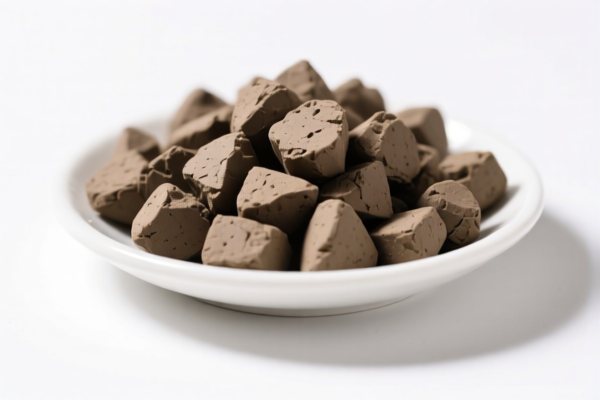
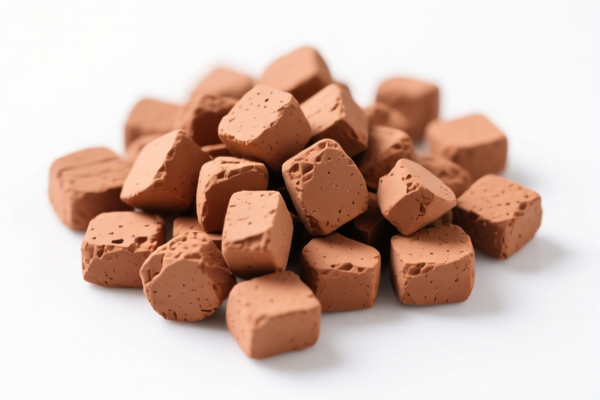
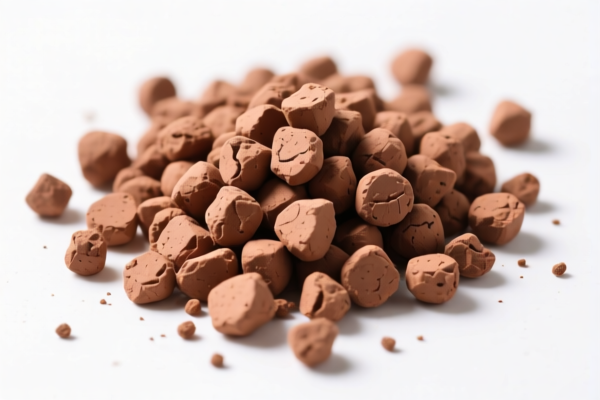
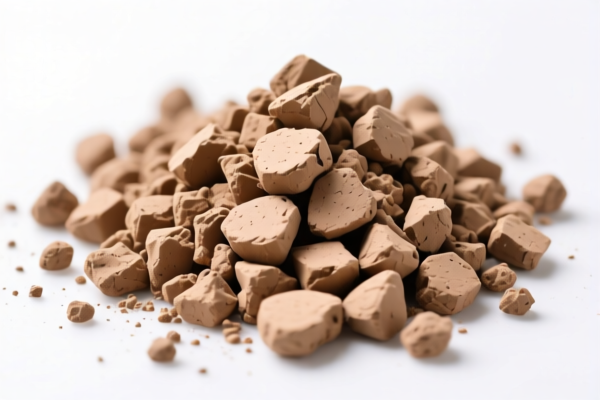
AI Analysis
🏗️ Inorganic Low Alkali Cement Admixture
🌐 HS Code Reference & Customs Clearance Guide | 2026 Latest Tariff Analysis | Professional Clearance Strategy
📌 I. Product Definition & Classification: What Exactly is a "Low Alkali Cement Admixture"?
Inorganic low alkali cement admixtures are specialized chemical preparations used in the construction industry to modify the properties of cement-based materials. Their primary function is to reduce the alkali content in concrete or cement mortar, thereby preventing or mitigating Alkali-Silica Reaction (ASR), a destructive expansion process that compromises structural durability.
In international trade, these products fall under Chapter 38 (Miscellaneous Chemical Products), specifically within headings related to prepared additives for cements or preparations of a kind used in other chemical industries.
⚠️ Key Distinction:
- If the product is a preparation of natural or synthetic substances specifically designed as an additive for cements/mortars → It typically falls under Heading 38.24.
- If the product is a specific chemical catalyst or activator (often organic or complex inorganic compounds) classified as "preparations of catalytic nature" or "other chemical products" → It may fall under Heading 38.15.
- Crucial Note: The classification depends heavily on the primary function and chemical composition as declared by the manufacturer. "Inorganic" does not automatically exclude it from Chapter 38 if it is a preparation (mixture) rather than a pure substance.
📦 II. HS Code Classification Details (2026 Latest Tariff Reference)
Based on the provided data, here are the four possible HS Codes and their corresponding descriptions and tax rates.
| HS Code | Product Description | Applicable Scenario | Tax Rate (Total) | Tax Details |
|---|---|---|---|---|
3824.40.20.00 |
Prepared additives for cements, mortars or concretes: Consisting wholly of inorganic substances | Pure inorganic chemical mixes (e.g., silica fume, fly ash blends) specifically marketed as cement additives | 25.0% | Base: 0%, Additional: 25% |
3824.40.50.00 |
Prepared additives for cements, mortars or concretes: Other | Cement additives containing organic components, or inorganic mixtures not meeting the "wholly inorganic" criteria | 30.0% | Base: 5%, Additional: 25% |
3815.10 |
Catalysts; preparations of a kind used as catalysts | If the admixture functions primarily as a chemical catalyst to accelerate/hinder reactions (less common for simple alkali reducers) | Error | Failed to retrieve tax information |
3815.90 |
Other chemical products not elsewhere specified | If the product is a unique inorganic compound not classified elsewhere, potentially used as a performance enhancer | Error | Failed to retrieve tax information |
🔍 Critical Analysis:
- Most Likely Classification: For a standard "Inorganic Low Alkali Cement Admixture,"3824.40.20.00is the most accurate fit if the product is strictly inorganic. This is because Chapter 38.24 explicitly covers "Prepared additives for cements, mortars or concretes." - Risk with 3815: Classifying as3815(Catalysts) is risky unless you can prove the product is a true catalytic preparation. Most alkali-reducing agents are fillers or chemical reactants, not catalysts. Misclassification here can lead to customs delays. - Tax Implication: The difference between3824.40.20.00(25%) and3824.40.50.00(30%) is 5%. However, both incur significant additional tariffs compared to base rates.
💰 III. 2026 Latest Tariff Rate Details (Including Additional Duties)
✅ Applicable Country: USA (US)
✅ Country of Origin: China (CN)
✅ Effective Time: Post-2025 Tariff Structures (Based on provided data)
🎯 1. 3824.40.20.00 —— Inorganic Cement Additives (Wholly Inorganic)
| Item | Content |
|---|---|
| Base Tariff | 0% (ad valorem) |
| Additional Tariff (Section 301) | +25% |
| Total Tariff | 25.0% |
| Tax Calculation | CIF Value × 25% |
| De Minimis Exemption | ❌ Not Eligible (Section 301 tariffs generally apply to all entries, regardless of value, unless specific exemptions exist) |
| Legal Basis | Section 301 Tariff List for Chapter 38 |
📌 Explanation:
- The "0% base" reflects the standard Most Favored Nation (MFN) rate for this subheading.
- The "+25%" is the Section 301 additional tariff applied to Chinese-origin goods.
- This is a high-cost import. The total duty is 25% of the declared value.
🎯 2. 3824.40.50.00 —— Other Cement Additives
| Item | Content |
|---|---|
| Base Tariff | 5% (ad valorem) |
| Additional Tariff (Section 301) | +25% |
| Total Tariff | 30.0% |
| Tax Calculation | CIF Value × 30% |
| De Minimis Exemption | ❌ Not Eligible |
| Legal Basis | Section 301 Tariff List for Chapter 38 |
📌 Explanation:
- If your product contains any organic binder or is not "wholly inorganic," it falls into the "Other" category.
- The base rate is higher (5%), leading to a higher total tariff (30%).
- Always ensure your product specification clearly states "100% Inorganic" to qualify for the lower 25% rate.
⚠️ Note on 3815.10 and 3815.90
- Tax Status: Error/Unavailable in current database.
- Recommendation: Avoid using these codes unless you have a specific US Customs Ruling confirming classification under Chapter 38.15. Using them without confirmed tax data risks customs holds, audits, and penalties for misdeclaration.
🛠️ IV. Customs Clearance Practical Advice (Real-World Pitfall Guide)
✅ 1. Document Checklist (Essential)
| Document | Required? | Description |
|---|---|---|
| ✅ Product Specification Sheet | ✔️ | Must clearly state: Chemical Composition (confirming inorganic nature), Function (alkali reduction), Usage (cement additive). |
| ✅ Safety Data Sheet (SDS) | ✔️ | Required for chemical products. Ensure Section 15 (Regulatory Info) aligns with HS Code 38.24. |
| ✅ Certificate of Analysis (COA) | ✔️ | Proves the product meets "wholly inorganic" criteria if claiming 3824.40.20.00. |
| ✅ Commercial Invoice | ✔️ | Clearly describe as: "Inorganic Cement Admixture, HS 3824.40.20.00, Made in China". |
| ✅ Bill of Lading/Air Waybill | ✔️ | Standard shipping docs. |
| ✅ Customs Ruling (if available) | ✔️ | Highly recommended for chemical products to avoid disputes. |
✅ 2. Declaration Tips (Key Mnemonic)
🔥 "Inorganic is Key, Function is King, 3824 is the Home!"
| Scenario | Correct Declaration | Incorrect Practice |
|---|---|---|
| 100% Inorganic Mix | 3824.40.20.00 + "Wholly Inorganic Cement Additive" |
Declaring as 3815 (Catalyst) → Risk of misclassification penalty |
| Contains Organic Binders | 3824.40.50.00 + "Cement Admixture" |
Claiming "Inorganic" falsely → Fraud risk |
| Pure Chemical Compound | 25xx (if pure substance, e.g., sodium silicate) |
Declaring as 3824 (Preparation) → Wrong chapter |
⚠️ Critical Warning:
- Do not declare as "Building Material" or "Concrete" (Chapter 25/30). These are wrong.
- Do not use vague terms like "Chemical Mix." Use precise terminology: "Prepared Additive for Cements."
✅ 3. Special Circumstances Handling
| Situation | Handling Advice |
|---|---|
| OEM/Private Label | Provide the manufacturer's spec sheet showing the same inorganic composition as the original brand. |
| Mixed Shipment | If shipping with other chemicals, declare separately. Do not combine under one HS Code. |
| Container Load (LCL) | Ensure packaging is labeled with HS Code, Product Name, and Net Weight. |
🌍 V. Global Market Comparison (2026 Latest)
| Country/Region | Recommended HS Code | Tariff Rate | Certification | Remarks |
|---|---|---|---|---|
| 🇺🇸 USA | 3824.40.20.00 |
25% (CN Origin) | No special certification | High tariff due to Section 301 |
| 🇨🇳 China | 3824.40.20.00 |
5% | GB Standards | Base rate applies |
| 🇪🇺 EU | 3824.40.90 |
0% - 5% | REACH Registration | May require REACH compliance for chemicals |
| 🇮🇳 India | 3824.40 |
10% - 15% | BIS Standard | Varies by specific formulation |
📌 Conclusion:
- The USA imposes a 25% additional tariff on this product from China.
- EU and India have lower or variable rates but may require chemical compliance certifications (REACH, BIS).
- Cost Optimization: Consider sourcing from non-China origins (e.g., Vietnam, Mexico) if eligible, to avoid Section 301 tariffs.
📌 VI. Common Errors & Pitfalls (Lessons Learned)
❌ Error 1: Classifying as 2524 (Natural Sulfur) or 28xx (Inorganic Chemicals)
👉 Consequence: Customs rejects the declaration because the product is a preparation/mixture, not a pure chemical. Penalty & Delay.
❌ Error 2: Claiming "Organic" but labeling as "Inorganic"
👉 Consequence: If the product contains organic polymers, it falls under 3824.40.50.00 (30% tariff). Misdeclaration leads to back-taxes + fines.
❌ Error 3: Using 3815 (Catalyst) without proof
👉 Consequence: Customs will question the "catalytic" nature. 3824 is safer for cement additives.
✅ Correct Approach:
"Inorganic Low Alkali Cement Admixture, 100% Inorganic Composition, For Use in Concrete to Reduce ASR, HS 3824.40.20.00, Origin: China"
🎯 VII. Conclusion: Professional Declaration, Cost Savings!
🎯 Remember the Key Points:
🔹 "Wholly Inorganic = 3824.40.20.00 (25% Total)"
🔹 "Other/Non-Inorganic = 3824.40.50.00 (30% Total)"
🔹 "Avoid 3815 unless you have a Ruling"
🔹 "Always declare as 'Cement Additive', not 'Chemical Mix'"
📌 Pro Tip:
If your product is exclusively inorganic, ensure your Certificate of Analysis (COA) explicitly states "No Organic Content" or "100% Inorganic Ingredients" to firmly support the 3824.40.20.00 classification and avoid the 5% base rate hike.
📣 Immediate Action:
📞 Consult a Customs Broker to confirm your product's exact composition against HS Code
3824.40.20.00.
📄 Prepare a Detailed Product Specification highlighting the inorganic nature.
🚀 Optimize Your Supply Chain to mitigate the 25% additional tariff impact.
✨ Professional Customs Clearance Starts with Accurate Classification!
💼 Your Cost Efficiency Depends on the Right HS Code!
Customer Reviews
About HS Code Classification
The Harmonized System (HS) is an internationally standardized nomenclature developed by the World Customs Organization (WCO) to classify traded products. Over 200 countries use the HS system as the basis for customs tariffs, trade statistics, and import/export regulations.
Each HS code follows a hierarchical structure:
- Chapter (2 digits) — Broad category of goods (e.g., Chapter 84: Machinery and Mechanical Appliances)
- Heading (4 digits) — More specific grouping within the chapter
- Subheading (6 digits) — Internationally standardized breakdown, used by all WCO member countries
- National subdivisions (8-10 digits) — Country-specific extensions for further classification, such as US HTSUS 10-digit codes
Correct HS code classification is essential for smooth customs clearance, accurate duty payment, and compliance with trade regulations. Misclassification can lead to customs delays, overpayment of duties, or penalties.
When importing from CN to US, the applicable tariff rates may include:
- Most-Favored-Nation (MFN) rate — The standard duty rate applied to WTO members
- General rate — Applied to countries without trade agreements
- Trade remedy duties — Additional tariffs such as Section 301 (anti-dumping), Section 232 (national security), or countervailing duties
The information provided on this page is for reference purposes only. For official classification, please consult with your local customs authority or a licensed customs broker.