Inorganic Molybdenum Catalyst Powder
CN → US| HS Code | Tariff Rate | Origin | Destination | Doc |
|---|---|---|---|---|
| 3815903000 | 35.0% | CN | US | Official Doc |
| 3815901000 | 41.5% | CN | US | Official Doc |
| 3824993400 | 37.8% | CN | US | Official Doc |
| 3824992900 | 41.5% | CN | US | Official Doc |
| 2825700000 | 13.2% | CN | US | Official Doc |
Product Images
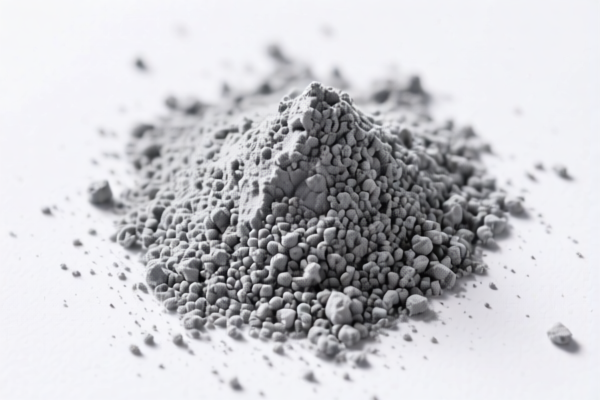
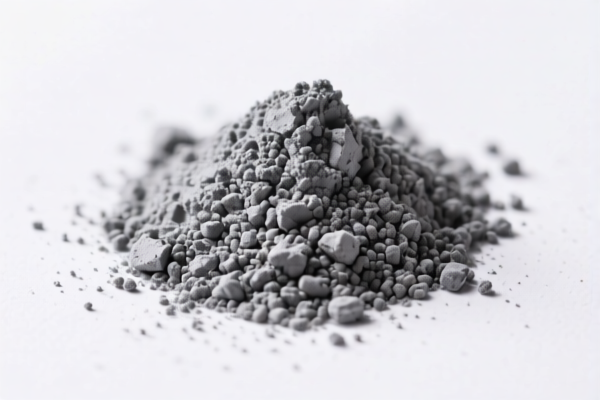
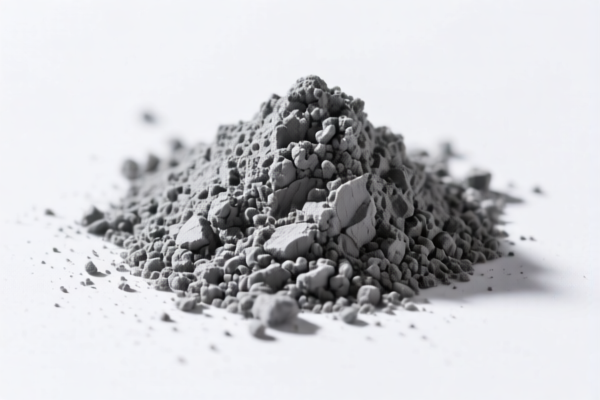
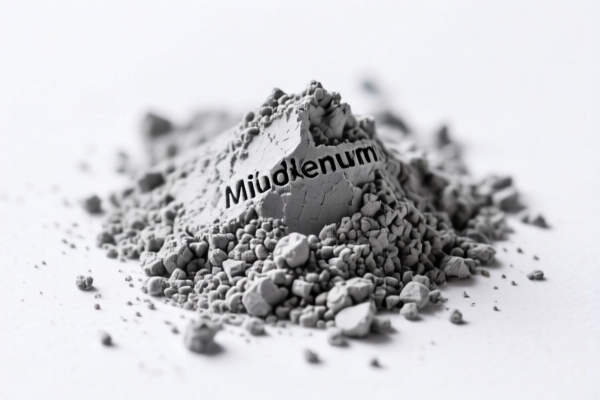
AI Analysis
🧪 Inorganic Molybdenum Catalyst Powder
🌐 HS Code Reference & Customs Clearance Guide | 2026 Latest Tariff Analysis | Strategic Classification Strategy
📌 I. Product Definition & Classification: Do You Really Understand "Inorganic Molybdenum Catalyst Powder"?
Inorganic Molybdenum Catalyst Powder is a critical chemical reagent used in petroleum refining, chemical synthesis, and environmental protection industries. In international trade, its classification is complex because it depends on its chemical composition (pure inorganic vs. mixed), state (powder vs. solid), and specific function.
Key Distinction:
- Pure Inorganic Compounds: If the product consists entirely of inorganic molybdenum oxides/hydroxides, it may fall under Chapter 28 (Inorganic Chemicals).
- Mixed Catalyst Preparations: If it contains carbon carriers, supports, or other organic/inorganic mixtures designed specifically for catalytic activity, it falls under Chapter 38 (Miscellaneous Chemical Products).
⚠️ Critical Classification Point:
- If the primary component is Molybdenum Oxide/Hydroxide without complex carrier structures →归入 2825.70.00.00
- If it is a catalyst powder (inorganic basis, pure) → 归入 3815.90.30.00 or 3815.90.10.00
- If it is a Molybdenum-based catalyst (prepared preparation, possibly containing other elements/carriers) → 归入 3824.99.34.00 or 3824.99.29.00
📦 II. HS Code Classification Details (2026 Official Tariff Correspondence)
| HS Code | Product Description | Applicable Scenario | Composition Key |
|---|---|---|---|
2825.70.00.00 |
Inorganic compounds of molybdenum (e.g., oxides, hydroxides) | Pure molybdenum oxide powder, basic chemical raw material | ✅ High Purity Inorganic |
3815.90.30.00 |
Inorganic catalyst powder, fully inorganic composition | Pure inorganic catalyst, no organic binders/carriers | ✅ Pure Inorganic Catalyst |
3815.90.10.00 |
Inorganic catalyst powder, for catalytic use | Standard inorganic catalysts for chemical processes | ✅ Inorganic Catalyst |
3824.99.34.00 |
Molybdenum-based catalyst, corresponding to molybdenum material & chemical preparations | Specific molybdenum catalyst preparations, often with supports | ✅ Prepared Catalyst |
3824.99.29.00 |
Molybdenum-based catalyst, other unlisted chemical products | General molybdenum catalysts not specifically listed elsewhere | ✅ General Prepared Catalyst |
🔍 Important Note:
- Chapter 28 vs. Chapter 38: If the product is a pure chemical compound (like MoO3), it is Chapter 28. If it is a prepared catalyst (mixed, supported, or formulated for specific catalytic activity), it is Chapter 38.
- Tariff Impact: The difference between Chapter 28 and Chapter 38 can significantly affect the base tariff rate, impacting the total landed cost.
💰 III. 2026 Latest Tariff Rate Breakdown (Including Surcharges & Policy Add-ons)
✅ Applicable Country: United States (US)
✅ Origin: China (CN)
✅ Effective Date: November 10, 2025 (and subsequent imports)
🎯 1. 2825.70.00.00 —— Molybdenum Inorganic Compounds (e.g., Oxides)
| Item | Content |
|---|---|
| Base Tariff | 3.2% (ad valorem) |
| USITC Surcharge (Section 301) | 0% (No additional 301 tariff for this specific HTS) |
| IEEPA Surcharge (Section 122) | +10% (Targeting China/HK products) |
| Total Tariff | 13.2% |
| Tax Calculation | CIF Value × 13.2% |
| De Minimis Eligibility | ❌ Not Applicable (Deny De Minimis) |
| Legal Authority Path | IEEPA:9903.01.24 → USITC:2825.70.00.00 |
📌 Explanation:
- This is the lowest tax bracket among all listed codes.
- "Base Tariff 3.2%" is the standard MFN rate for molybdenum inorganic compounds.
- Total 13.2% makes this the most cost-effective classification if the product qualifies as a pure inorganic compound.
🎯 2. 3815.90.30.00 —— Inorganic Catalyst Powder (Pure Inorganic Composition)
| Item | Content |
|---|---|
| Base Tariff | 0.0% |
| USITC Surcharge (Section 301) | +25% |
| IEEPA Surcharge (Section 122) | +10% |
| Total Tariff | 35.0% |
| Tax Calculation | CIF Value × 35.0% |
| De Minimis Eligibility | ❌ Not Applicable |
| Legal Authority Path | IEEPA:9903.01.25 → USITC:3815.90.30.00 → FOOTNOTE:9903.88.01 |
📌 Explanation:
- "Base Tariff 0%" is misleadingly low; the 301 surcharge of 25% and 122 surcharge of 10% drive the cost up.
- Total 35% is a mid-high range tariff.
- Applies to catalysts that are purely inorganic but classified as "miscellaneous chemical products" due to their catalytic function rather than pure chemical identity.
🎯 3. 3815.90.10.00 —— Inorganic Catalyst Powder (For Catalytic Use)
| Item | Content |
|---|---|
| Base Tariff | 6.5% |
| USITC Surcharge (Section 301) | +25% |
| IEEPA Surcharge (Section 122) | +10% |
| Total Tariff | 41.5% |
| Tax Calculation | CIF Value × 41.5% |
| De Minimis Eligibility | ❌ Not Applicable |
| Legal Authority Path | IEEPA:9903.01.25 → USITC:3815.90.10.00 → FOOTNOTE:9903.88.01 |
📌 Explanation:
- Higher base tariff (6.5%) compared to3815.90.30.00.
- Total 41.5% is a high-cost classification.
- Likely applies to inorganic catalysts that are more broadly defined or have additional unspecified attributes.
🎯 4. 3824.99.34.00 —— Molybdenum-Based Catalyst (Molybdenum Material & Chemical Preparations)
| Item | Content |
|---|---|
| Base Tariff | 2.8% |
| USITC Surcharge (Section 301) | +25% |
| IEEPA Surcharge (Section 122) | +10% |
| Total Tariff | 37.8% |
| Tax Calculation | CIF Value × 37.8% |
| De Minimis Eligibility | ❌ Not Applicable |
| Legal Authority Path | IEEPA:9903.01.25 → USITC:3824.99.34.00 → FOOTNOTE:9903.88.01 |
📌 Explanation:
- Specific HTS for "Molybdenum-based catalysts" under Chapter 38.
- Total 37.8% is slightly higher than pure inorganic catalysts (3815.90.30.00) due to the slightly higher base rate (2.8% vs 0%).
- Applies when the catalyst is clearly identified as molybdenum-based but falls under the broader "prepared preparations" category.
🎯 5. 3824.99.29.00 —— Molybdenum-Based Catalyst (Other Unlisted Chemical Products)
| Item | Content |
|---|---|
| Base Tariff | 6.5% |
| USITC Surcharge (Section 301) | +25% |
| IEEPA Surcharge (Section 122) | +10% |
| Total Tariff | 41.5% |
| Tax Calculation | CIF Value × 41.5% |
| De Minimis Eligibility | ❌ Not Applicable |
| Legal Authority Path | IEEPA:9903.01.25 → USITC:3824.99.29.00 → FOOTNOTE:9903.88.01 |
📌 Explanation:
- A "catch-all" category for molybdenum catalysts not specifically listed elsewhere in Chapter 38.
- Total 41.5% is the highest tax bracket (tied with3815.90.10.00).
- Use this only if no more specific code fits, as it carries the maximum surcharges.
🛠️ IV. Customs Clearance Practical Advice (Battle-Tested Pitfall Avoidance)
✅ 1. Required Documentation Checklist (Non-Negotiable)
| Document | Required | Explanation |
|---|---|---|
| ✅ Material Safety Data Sheet (MSDS/SDS) | ✔️ | Critical for determining chemical nature (inorganic vs. mixed) |
| ✅ Certificate of Analysis (COA) | ✔️ | Specifies purity, composition, and whether it's a "preparation" or "pure compound" |
| ✅ Product Specification Sheet | ✔️ | Details physical form (powder), particle size, and catalytic activity |
| ✅ Commercial Invoice | ✔️ | Must clearly state "Inorganic Molybdenum Catalyst Powder" or "Molybdenum Oxide" |
| ✅ Packing List | ✔️ | Weight and dimensions for accurate CIF calculation |
| ✅ Country of Origin Certificate | ✔️ | Required to apply US/China trade rules (Section 301/122) |
| ✅ Third-Party Test Report | ✔️ | If challenged, provide lab analysis proving "Inorganic" status |
✅ 2. Declaration Strategy (Key Mantras)
🔥 “Pure Inorganic = Ch28, Catalyst = Ch38, Details Define Rate!”
| Scenario | Correct Declaration | Incorrect Approach |
|---|---|---|
| Pure MoO3 Powder | 2825.70.00.00 (13.2%) |
Misdeclared as Catalyst → 35-41% |
| Pure Inorganic Catalyst | 3815.90.30.00 (35.0%) |
Over-classified as 3824 → 37.8-41.5% |
| Molybdenum-Based Catalyst (with support) | 3824.99.34.00 (37.8%) |
Under-classified as 2825 → Rejection |
| General Molybdenum Catalyst | 3824.99.29.00 (41.5%) |
Vague description → Audit Risk |
✅ 3. Special Situation Handling
| Situation | Handling Advice |
|---|---|
| OEM Custom Catalyst | Provide formulation details; if <50% molybdenum, it may not be "molybdenum-based" |
| Mixed with Organic Binders | May shift from Ch28 to Ch38; consult with a customs broker |
| High Purity (>99%) | Strong case for 2825.70.00.00 (13.2%) |
| Catalytic Preparation | Use 3815 or 3824 codes; ensure COA supports "catalyst" function |
🌍 V. Global Market Comparison (2026 Latest)
| Country/Region | Recommended HS Code | Tariff | Certification | Notes |
|---|---|---|---|---|
| 🇺🇸 USA | 2825.70.00.00 |
13.2% (CN Origin) | SDS + COA | Highest cost for Ch38 codes (35-41.5%) |
| 🇨🇳 China | 2825.70.00.00 |
5% | None | No additional surcharges |
| 🇪🇺 EU | 2825.70.00.00 |
5.5% | REACH | No 301/122 surcharges |
| 🇬🇧 UK | 2825.70.00.00 |
5.5% | UKCA | Stable rates |
| 🇯🇵 Japan | 2825.70.00.00 |
4.0% | PSE | Low base rate |
📌 Conclusion:
- USA imposes the highest effective tariffs on chemical imports from China due to Section 301 and 122.
- Chapter 28 (2825.70.00.00) is the most tax-efficient for pure inorganic molybdenum compounds.
- Chapter 38 codes carry heavy surcharges (35-41.5%), making them significantly more expensive.
📌 VI. Common Errors & Pitfall Avoidance (Lessons Learned)
❌ Error 1: Declaring pure Molybdenum Oxide as "Catalyst" under Ch38
👉 Consequence: Tax jumps from 13.2% to 35-41.5% → Overpayment!
❌ Error 2: Vague description "Chemical Powder"
👉 Consequence: Customs may assign the highest default rate or require additional documentation → Delays
❌ Error 3: Ignoring Section 122 and 301 surcharges
👉 Consequence: Unexpected costs at customs → Budget Overrun
❌ Error 4: Not providing COA
👉 Consequence: Cannot prove "Inorganic" status → Misclassification Risk
✅ Correct Approach:
“Molybdenum Trioxide Powder, 99.5% Purity, Inorganic Chemical, No Organic Binders, CAS 1313-27-5”
🎯 VII. Conclusion: Professional Classification, Cost Savings, Risk Mitigation
🎯 Remember the Mantra:
🔹 “Pure Inorganic = Ch28, Catalyst = Ch38, Details Define Rate!”
🔹 “HS Code Determines Cost, 301/122 Add 35%, Declare Accurately, Save Thousands!”
📌 Pro Tip:
If your molybdenum powder is not from China (e.g., USA, Canada, Australia), you may avoid Section 122 and 301 surcharges, reducing the tariff to the base rate only (0%-6.5%).
Recommendation: Apply for a Binding Tariff Ruling from US Customs before shipment to ensure correct classification and avoid surprises.
📣 Immediate Action:
📞 Contact a licensed customs broker + Provide MSDS/COA + Apply for HS Code Pre-Ruling
🚀 Ensure your Inorganic Molybdenum Catalyst Powder clears customs smoothly, efficiently, and cost-effectively!
✨ Professional Customs Clearance Starts with Accurate Classification!
💼 Every cent of your cost deserves precise calculation!
Customer Reviews
About HS Code Classification
The Harmonized System (HS) is an internationally standardized nomenclature developed by the World Customs Organization (WCO) to classify traded products. Over 200 countries use the HS system as the basis for customs tariffs, trade statistics, and import/export regulations.
Each HS code follows a hierarchical structure:
- Chapter (2 digits) — Broad category of goods (e.g., Chapter 84: Machinery and Mechanical Appliances)
- Heading (4 digits) — More specific grouping within the chapter
- Subheading (6 digits) — Internationally standardized breakdown, used by all WCO member countries
- National subdivisions (8-10 digits) — Country-specific extensions for further classification, such as US HTSUS 10-digit codes
Correct HS code classification is essential for smooth customs clearance, accurate duty payment, and compliance with trade regulations. Misclassification can lead to customs delays, overpayment of duties, or penalties.
When importing from CN to US, the applicable tariff rates may include:
- Most-Favored-Nation (MFN) rate — The standard duty rate applied to WTO members
- General rate — Applied to countries without trade agreements
- Trade remedy duties — Additional tariffs such as Section 301 (anti-dumping), Section 232 (national security), or countervailing duties
The information provided on this page is for reference purposes only. For official classification, please consult with your local customs authority or a licensed customs broker.